
As smartphone technology evolves rapidly, consumers often face tough choices between newer budget models and slightly older mid-range devices. The Samsung Galaxy A50, released in 2019, and the Galaxy A13 5G, launched in 2022, represent two different generations of Samsung’s strategy. On paper, the A13 5G should win with its modern 5G support and updated hardware. But in 2024, does the older A50 still hold up—and could it actually be the better choice for some users?
This isn’t just about specs; it’s about real-world usability, longevity, software support, and value. Let’s break down both phones across key categories to see which one truly performs better today.
Design and Build Quality
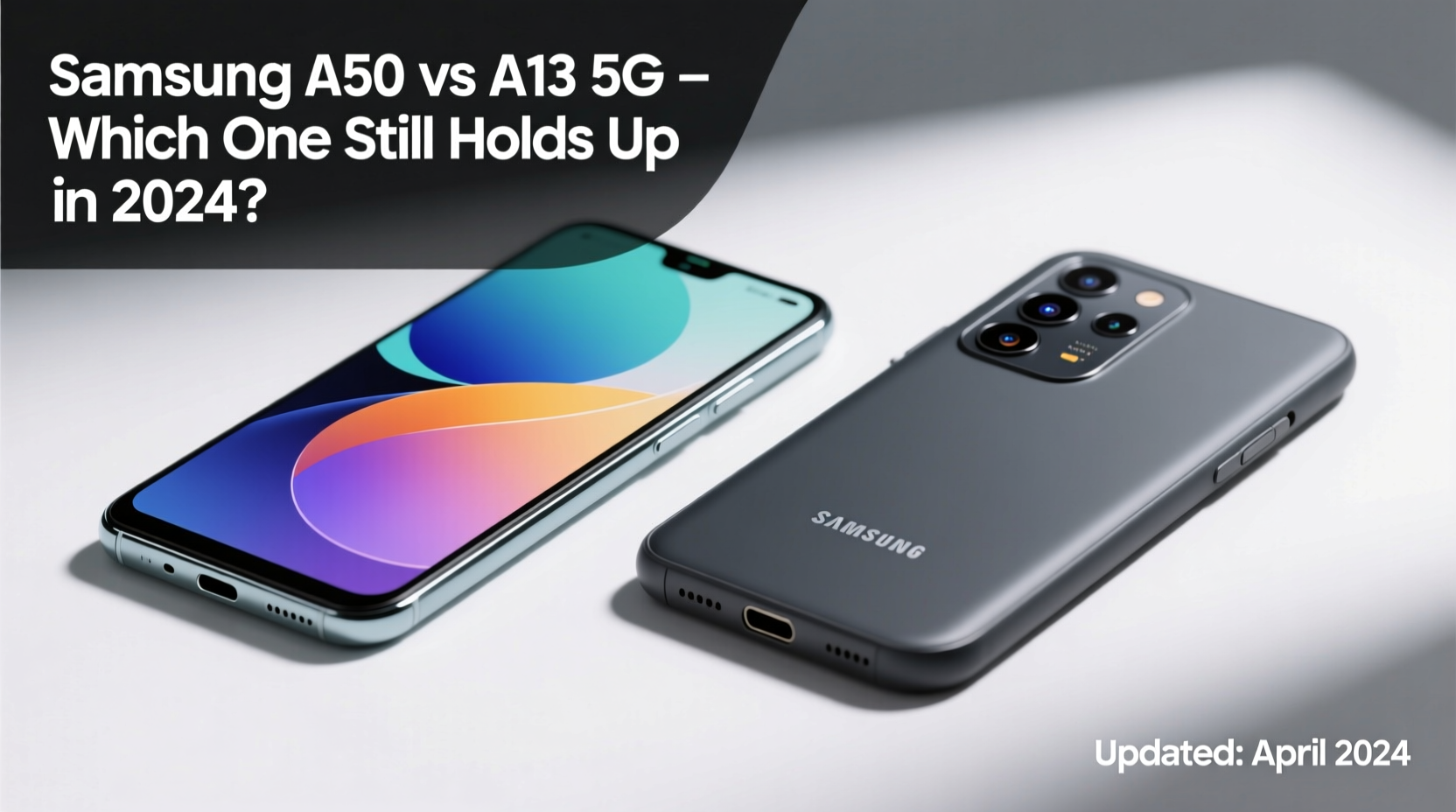
The Galaxy A50 features a premium design for its time, with a glass-like back (plastic, but glossy), slim bezels, and an in-display fingerprint sensor. It feels solid in hand and has a more upscale look compared to many entry-level phones. At 166g, it’s slightly heavier than the A13 5G but offers a more balanced weight distribution.
In contrast, the A13 5G uses a matte plastic build that resists fingerprints but lacks the visual appeal of the A50. It’s lighter at 195g, but the larger 6.6-inch display makes it feel bulkier. While both are durable enough for daily use, the A50’s design still turns heads in 2024, whereas the A13 5G looks like a typical budget device.
Performance and Real-World Speed
The A50 runs on the Exynos 9610 processor with 4GB of RAM, while the A13 5G uses the newer MediaTek Dimensity 700 with 4GB or 6GB RAM options. On paper, the Dimensity 700 is more efficient and supports 5G, but real-world performance tells a different story.
The Exynos 9610 in the A50 was designed for multitasking and smooth UI navigation. In 2024, it handles light apps, social media, and even casual gaming like *Among Us* or *Candy Crush* without major lag—assuming the device is well-maintained and not overloaded with background apps.
The Dimensity 700 is built on a 7nm process, making it more power-efficient and capable in sustained tasks. However, Samsung pairs it with a stripped-down version of One UI on the A13 5G, which often results in longer app launch times and occasional stutters during transitions. Users report that the A13 5G feels slower in day-to-day use despite the newer chip.
“Sometimes, raw specs don’t translate to real performance. Software optimization and thermal management play a bigger role than people realize.” — David Lin, Mobile Hardware Analyst at TechPulse Asia
Battery Life and Charging
Battery longevity is where the A50 shines. Its 4000mAh battery, combined with a 6.4-inch Super AMOLED display, delivers excellent efficiency. In moderate use—messaging, browsing, music—the A50 easily lasts a full day, sometimes stretching into a second with conservative usage.
The A13 5G packs a larger 5000mAh battery, which sounds superior. And indeed, it does last longer under heavy screen-on conditions. However, its 6.6-inch LCD panel is less energy-efficient than AMOLED, especially when displaying dark content. Additionally, 5G connectivity drains power quickly, reducing real-world gains.
Charging is another point of divergence. The A50 supports 15W fast charging, allowing a 0–50% charge in about 30 minutes. The A13 5G only supports 10W charging, meaning it takes significantly longer to recharge despite the larger battery.
Charging Comparison
| Feature | Samsung A50 | Samsung A13 5G |
|---|---|---|
| Battery Capacity | 4000 mAh | 5000 mAh |
| Display Type | Super AMOLED | LCD |
| Fast Charging | 15W supported | 10W max |
| Full Charge Time | ~90 minutes | ~130 minutes |
| Standby Efficiency | Excellent | Moderate (due to 5G/LCD) |
Camera Performance in 2024
The A50 came with a triple rear setup: 25MP main, 8MP ultra-wide, and 5MP depth sensor. For its era, this was impressive. In good lighting, the A50 captures vibrant, detailed photos with natural color reproduction. Low-light performance is decent thanks to Night Mode, though noise becomes noticeable.
The A13 5G upgrades to a 50MP main sensor, but megapixels don’t tell the whole story. The smaller pixel size and lower-quality lens result in images that often look oversharpened or washed out. Dynamic range is limited, and HDR processing lags behind the A50’s more mature tuning.
Front cameras also favor the A50. Its 25MP selfie shooter produces clearer, more flattering portraits than the A13 5G’s 8MP sensor, which struggles with detail and skin tone accuracy.
Real Example: Weekend Hiking Trip
Jamie, a casual photographer, used both phones during a weekend hike in early 2024. She found that the A50 captured richer greens in forest scenes and handled backlit mountain views better. The A13 5G overexposed skies and lost shadow detail. “I expected the newer phone to win,” she said, “but I ended up using my old A50 for all the keepers.”
Software Support and Longevity
This is where the A13 5G pulls ahead decisively. Released in 2022, it’s still receiving monthly security updates and is eligible for Android 14. Samsung promises up to four years of OS upgrades for select A-series devices, and the A13 5G may benefit from that policy.
The A50, launched with Android 9, received updates up to Android 12 and security patches until late 2023. As of 2024, it no longer receives official updates, leaving it vulnerable to new exploits and incompatible with apps requiring newer OS versions.
While the A50 still functions well, its outdated software affects app compatibility. Some banking apps, messaging platforms, and games now require Android 10 or higher with recent security patches—conditions the A50 can’t meet long-term.
Upgrade Checklist: What to Consider Before Choosing
- ✅ Do you need 5G connectivity for faster downloads or future-proofing?
- ✅ Are you sensitive to display quality? Prefer AMOLED over LCD?
- ✅ How important is fast charging versus total battery capacity?
- ✅ Will you keep the phone for more than 12 months? Consider software support.
- ✅ Is camera consistency in varied lighting a priority?
- ✅ Are you on a tight budget and buying secondhand?
Frequently Asked Questions
Can the Samsung A50 still run modern apps smoothly?
Yes, for basic tasks like WhatsApp, YouTube, Gmail, and light social media. However, newer apps optimized for Android 11+ may run slower or lack features. Heavy apps like TikTok or Instagram Reels can stutter due to GPU limitations.
Is the A13 5G worth it over the A50 in 2024?
If you prioritize long-term usability, 5G, and ongoing software updates, yes. But if you want a better display, faster charging, and more refined camera output for everyday moments, the A50 remains surprisingly competitive—especially at lower resale prices.
Which phone holds better resale value?
Currently, the A50 holds slightly better value in the secondhand market due to its reputation for reliability and AMOLED screen. However, demand is declining as buyers shift toward 5G-capable devices. The A13 5G depreciates faster but is often sold bundled with warranties in emerging markets.
Final Verdict: Is the Older Phone Actually Better?
The answer depends on your priorities. The Samsung Galaxy A50 delivers a more enjoyable user experience in several areas: its AMOLED display is sharper and more vibrant, its charging is faster, and its camera system produces more consistent results. For someone who values aesthetics, responsiveness, and photo quality, the A50 feels like the better-crafted device—even five years after release.
But the A13 5G wins on future readiness. With 5G, longer software support, and a larger battery, it’s the smarter pick for users who plan to keep their phone beyond 2025. It’s also more likely to receive app support and security fixes, making it safer and more functional over time.
If you're choosing between the two today, consider this: buy the A50 only if you’re on a strict budget, prefer physical design, and won’t rely on cutting-edge apps. Otherwise, the A13 5G is the more sustainable, practical option for 2024 and beyond—even if it doesn’t feel as premium.




 浙公网安备
33010002000092号
浙公网安备
33010002000092号 浙B2-20120091-4
Comments
No comments yet. Why don't you start the discussion?