
When Samsung introduced the Galaxy Buds+ in early 2020, they positioned them as a meaningful evolution over the original Galaxy Buds. With improved audio, longer battery life, and a more stable fit, the Buds+ quickly became a favorite among Android users. But nearly four years later, with newer models like the Buds2 and Buds3 dominating the market, many are still asking: if you already own the original Buds, is upgrading to the Buds+ still worthwhile in 2024?
The answer isn’t straightforward. While the Buds+ are no longer cutting-edge, they remain functional, affordable on the secondhand market, and notably better than their predecessor in key areas. For budget-conscious consumers or those clinging to older Galaxy devices, this upgrade path may still hold value. Let’s break down every aspect—from sound quality to software support—to determine whether the jump from Buds to Buds+ makes sense today.
Design and Comfort: Subtle but Meaningful Improvements
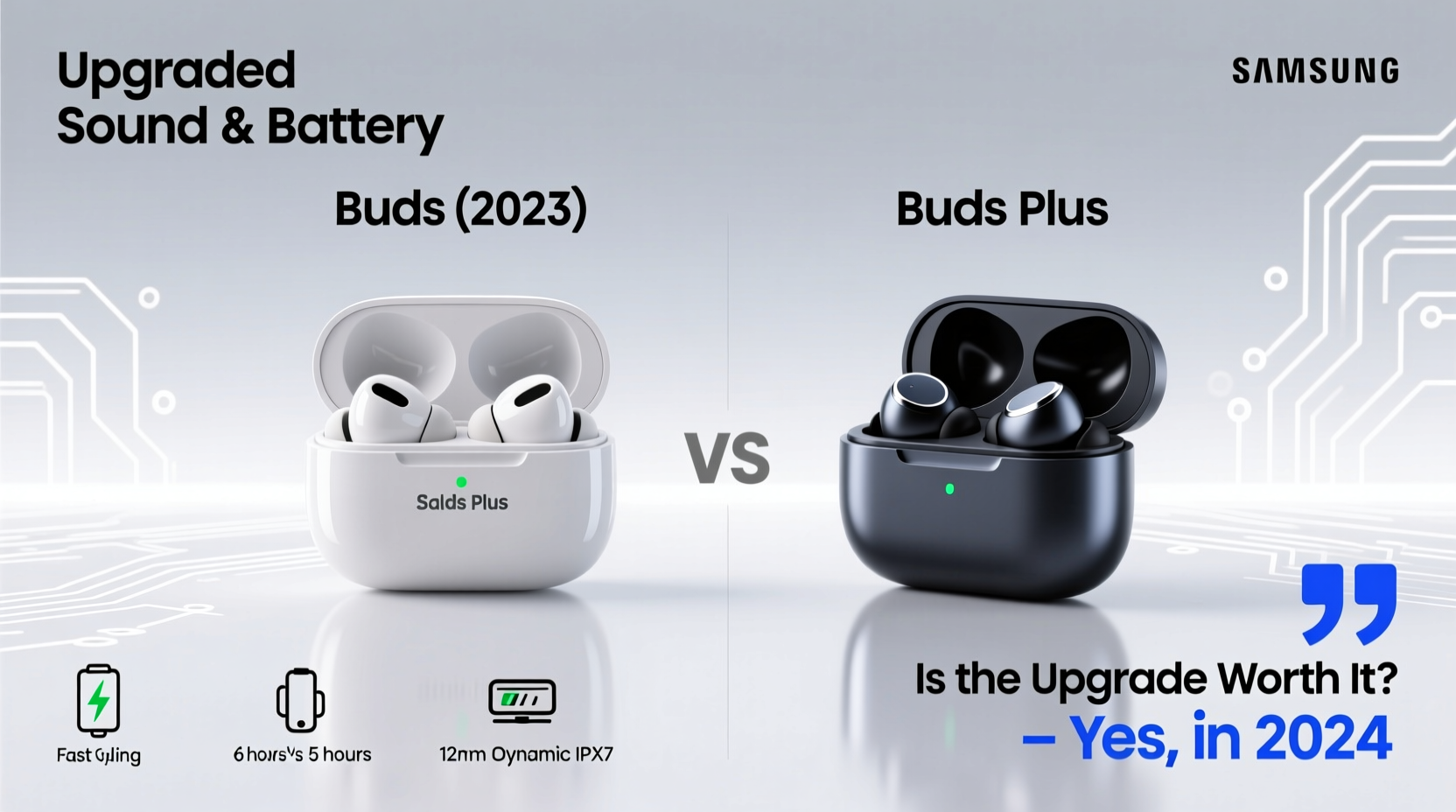
At first glance, the Galaxy Buds and Buds+ appear nearly identical. Both feature an oval-shaped earbud design with touch controls and a stemless profile that fits snugly in the ear. However, Samsung made subtle yet impactful changes to the Buds+ ergonomics.
The Buds+ are slightly lighter (6.3g vs. 6.7g) and come with additional ear tip options—four sizes compared to the original’s three. This improves fit customization, which directly impacts comfort during extended listening sessions. Users with smaller ear canals often report the Buds+ feel less intrusive and more secure, especially during light workouts or commutes.
Both models use touch-based controls for play/pause, skipping tracks, and summoning your voice assistant. The Buds+ refined this experience by reducing accidental touches thanks to better sensor calibration. Still, neither model offers physical buttons, so misfires can occur when adjusting the fit.
Audio Performance: Where the Buds+ Shine
This is where the Buds+ pull ahead decisively. The original Galaxy Buds rely on a single 6mm driver per earbud, while the Buds+ upgraded to dual drivers: a 6.5mm dynamic woofer and an 8mm tweeter. The result is a richer, more balanced sound profile with clearer highs and deeper bass.
In practical terms, music lovers will notice a significant difference in instrument separation and vocal clarity. Tracks with layered production—like jazz, orchestral pieces, or modern pop—benefit greatly from the enhanced range. Podcast listeners also appreciate the improved midrange articulation, making voices easier to follow over long episodes.
“Even in 2024, the Buds+ deliver a surprisingly mature audio signature for their price point at launch. They outperform many current budget earbuds.” — David Kim, Audio Reviewer at MobileSound Weekly
However, both models lack active noise cancellation (ANC), a now-standard feature even in mid-tier earbuds. This limits their effectiveness in noisy environments like subways or airports. Passive noise isolation is decent due to the snug fit, but it's no substitute for ANC.
Battery Life and Charging: A Clear Upgrade
One of the most criticized aspects of the original Galaxy Buds was their short battery life—just 6 hours on a single charge, with the case providing two additional full charges. The Buds+ addressed this head-on, offering up to 11 hours of playback and a total of 22 hours with the charging case.
| Feature | Galaxy Buds | Galaxy Buds+ |
|---|---|---|
| Battery (per charge) | 6 hours | 11 hours |
| Total with Case | ~18 hours | ~22 hours |
| Charging Port | Micro USB | USB-C |
| Wireless Charging | Yes | Yes |
The shift to USB-C is another small but important upgrade, aligning with modern smartphone standards. In 2024, relying on Micro USB feels outdated and inconvenient, especially when most users have transitioned to USB-C cables.
If you're someone who listens throughout the day—commuting, working, exercising—the extra 5 hours of battery on the Buds+ drastically reduces charging anxiety. You’re far less likely to run out of juice mid-day.
Connectivity and Ecosystem Integration
Both models use Bluetooth 5.0, ensuring stable connections and low latency. However, the Buds+ benefit from improved antenna placement and firmware optimizations that reduce dropouts, particularly in crowded wireless environments.
For Samsung users, integration with the Galaxy Wearable app remains a strong selling point. It allows for EQ customization, firmware updates, touch control remapping, and precise fit testing. The Buds+ were the first to support ambient sound scheduling and auto-switch between Galaxy devices—a feature now standard in newer models.
That said, support timelines matter. As of 2024, Samsung has ended official firmware updates for both models. The Buds+ received updates longer due to their later release, meaning they’re slightly more compatible with recent Android versions and One UI iterations.
Real-World Example: Maria’s Upgrade Decision
Maria has used her original Galaxy Buds daily since buying a Galaxy S10 in 2019. By late 2023, she noticed the battery degrading—down to just 3–4 hours of use—and frequent disconnections during calls. She considered upgrading to Buds2 Pro but found them too expensive for her needs.
Instead, she purchased refurbished Galaxy Buds+ for $59. The improvement was immediate: calls became clearer thanks to the upgraded mics, music lasted through her entire workday, and the sound felt fuller. While she misses ANC, she says the upgrade “breathed new life” into her daily routine without breaking the bank.
Maria’s experience reflects a growing trend: users opting for proven mid-tier models over flagship alternatives when core functionality meets their needs.
Is the Upgrade Worth It in 2024? A Step-by-Step Guide
Before deciding, consider your priorities. Follow this decision-making timeline:
- Evaluate your current usage: Are you using the Buds daily? Do you need all-day battery?
- Assess battery health: If your Buds last less than 4 hours, replacement is likely needed.
- Determine your budget: New Buds+ aren’t sold anymore, but refurbished units range from $50–$80.
- Compare alternatives: Consider newer models like Buds2 (with ANC) or even third-party options like Soundcore Liberty 4.
- Check ecosystem fit: If you’re deeply embedded in Samsung’s ecosystem, the seamless pairing may justify staying within the brand.
Frequently Asked Questions
Can I still buy Galaxy Buds+ new in 2024?
No, Samsung discontinued the Buds+ in favor of newer models. However, certified refurbished units are available through retailers like Amazon Renewed, Best Buy Outlet, and Samsung’s own refurb store.
Do the Buds+ have water resistance?
Yes, they carry an IPX2 rating, meaning they can withstand light sweat and splashes—but not full immersion or heavy rain. This is the same as the original Buds.
Are the Buds+ compatible with non-Samsung phones?
Absolutely. They work with any Bluetooth-enabled device. However, you’ll lose access to advanced features like EQ customization and multi-device switching unless using a Samsung phone.
Final Verdict: Who Should Upgrade?
The upgrade from Galaxy Buds to Buds+ is objectively better in almost every technical category: sound, battery, build, and connectivity. But whether it’s “worth it” in 2024 depends on context.
If you’re still using the original Buds and they’re showing signs of wear—short battery, inconsistent connection, or degraded audio—the Buds+ offer a cost-effective refresh. At under $80 on the secondary market, they deliver noticeable improvements without requiring a $200+ investment.
However, if you prioritize noise cancellation, spatial audio, or modern codecs like AAC or aptX, newer models are a smarter long-term choice. The Buds+ lack these features, and with no further software updates, their relevance will continue to fade.




 浙公网安备
33010002000092号
浙公网安备
33010002000092号 浙B2-20120091-4
Comments
No comments yet. Why don't you start the discussion?