
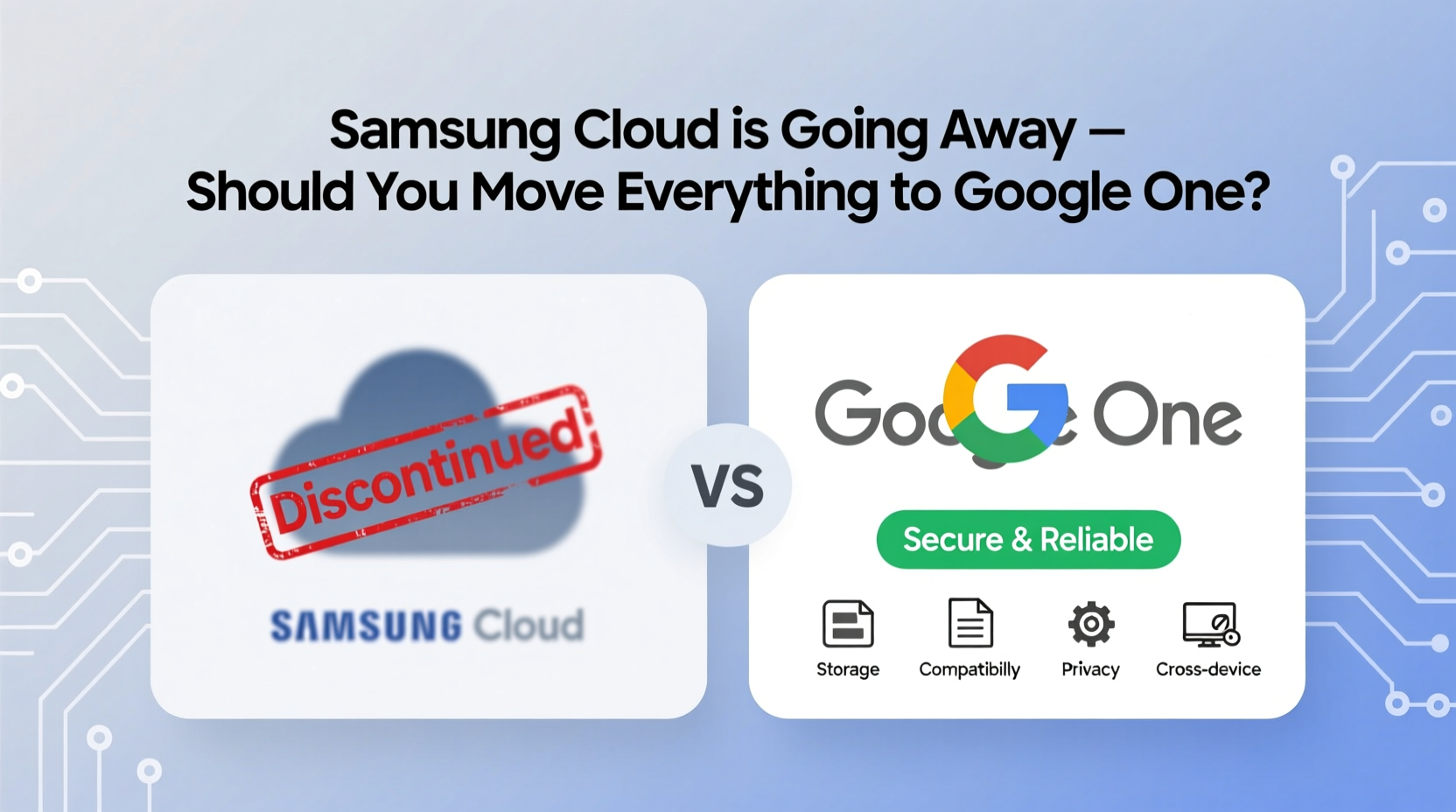
Samsung has announced the discontinuation of Samsung Cloud for most users, marking the end of an era for Galaxy device owners who’ve relied on the service for backup, photo storage, and file syncing. As of June 2025, key features like photo and video backups are no longer available, and full account closure looms in the near future. This raises a critical question: where should you go next? For many, Google One appears to be the natural successor—especially since most Samsung phones run on Android and integrate tightly with Google services. But is it the right move for you?
Migrating your digital life isn’t just about copying files from one place to another. It’s about ensuring continuity, security, accessibility, and value. Making an informed decision requires understanding what you’re losing, what you stand to gain, and how to transition without losing precious memories or work.
Why Samsung Cloud Is Shutting Down
Samsung’s shift away from its proprietary cloud ecosystem reflects broader industry trends. Maintaining a standalone cloud platform is expensive, especially when competing against tech giants like Google, Apple, and Microsoft, who offer deeply integrated services across devices and operating systems.
In recent years, Samsung has increasingly partnered with Google to enhance the Android experience on Galaxy devices. Features like seamless Google Drive integration, default Gmail setup, and native Google Photos backup have made Google’s ecosystem more central than ever. With declining user adoption and rising operational costs, continuing Samsung Cloud at scale became unsustainable.
“Cloud consolidation is inevitable. Users benefit from unified experiences, and companies save on infrastructure.” — David Lin, Senior Analyst at TechInsight Group
The shutdown doesn’t happen overnight, but time is limited. Users were given ample notice, but many still haven’t migrated their data. If you haven’t acted yet, now is the time.
What Happens to Your Data When Samsung Cloud Closes?
Your files won’t vanish immediately—but they may become inaccessible or permanently deleted if not moved. Here’s what’s at stake:
- Photos and videos: No longer backed up after June 2024; existing backups remain until full decommissioning.
- Contacts and calendars: Synced contacts may revert to device-only unless migrated.
- Notes (S Note): All S Notes stored in Samsung Cloud must be exported manually.
- Device backups: Full phone backups (settings, app data) will no longer be supported.
Samsung has provided tools to download your data via the “Download My Data” portal, but the process is manual and time-consuming for large libraries. Once downloaded, you’ll need a new home for everything.
Google One: A Viable Replacement?
Google One isn’t just cloud storage—it’s a subscription service that bundles Google Drive, Gmail, and Google Photos into a single plan with added benefits like family sharing, expert support, and VPN access (on higher tiers).
For Samsung users, switching to Google One offers several advantages:
- Natural integration with Android devices
- Seamless photo backup via Google Photos
- Real-time sync across phones, tablets, and computers
- Generous free tier (15 GB shared across all Google services)
But it’s not perfect. The 15 GB free tier fills up quickly with high-resolution photos and videos. Paid plans start at $1.99/month for 100 GB, which may be cost-effective for individuals but adds up for families needing more space.
Key Differences: Samsung Cloud vs. Google One
| Feature | Samsung Cloud | Google One |
|---|---|---|
| Free Storage | 5–15 GB (depending on device) | 15 GB (shared across Google services) |
| Paid Plans | Up to 2 TB (discontinued) | 100 GB – 2 TB, plus enterprise options |
| Photo Backup | Limited quality options | High-quality (free) or original (counts toward storage) |
| Cross-Platform Access | Android-focused | iOS, Windows, macOS, Android |
| Additional Benefits | None | VPN, AI features, family sharing, support |
Step-by-Step Migration Plan
Moving your data from Samsung Cloud to Google One doesn’t have to be overwhelming. Follow this timeline to ensure a smooth transition:
- Inventory Your Data (Day 1–2): Log into Samsung Cloud and review what’s stored—photos, notes, contacts, backups.
- Download Everything (Day 3–5): Use Samsung’s “Download My Data” tool to export files. Save them to a computer or external drive.
- Set Up Google Account & Enable Backups (Day 6): Ensure your Samsung phone is linked to your Google account. Go to Settings > Google > Backup and turn on backup to Google One.
- Upload Photos and Videos (Day 7–10): Open Google Photos, sign in, and let it upload your library. Choose “Storage Saver” mode to avoid using too much space.
- Migrate Contacts and Calendar (Day 11): Export contacts from Samsung Cloud as a .vcf file and import into Google Contacts.
- Transfer S Notes (Day 12): Open Samsung Notes, select notes stored in the cloud, and export them as PDFs or text files. Re-upload to Google Keep or Drive.
- Verify and Test (Day 13–14): Check that everything is accessible on your phone and web. Perform a test restore on a new device if possible.
Mini Case Study: How Maria Saved Her Family Photos
Maria, a long-time Galaxy S10 user, had over 8,000 photos in Samsung Cloud, including her children’s first years. When she heard about the shutdown, she panicked—she hadn’t backed up elsewhere. She waited two months, hoping Samsung would reverse course. By the time she acted, photo syncing was already disabled.
She used Samsung’s data export tool and downloaded 22 GB of photos to her laptop. The process took three days due to slow server speeds. Then, she uploaded everything to Google Photos using her desktop app. She opted for “Storage Saver” mode to keep backups free. Within a week, all photos were safely stored and accessible from her new Pixel phone.
Her lesson? Don’t wait. Even if you’re unsure about Google One, download your data first. You can decide later where to keep it.
Checklist: Migrate from Samsung Cloud to Google One
- ✅ Log into Samsung Cloud and verify stored data
- ✅ Download all photos, videos, and documents
- ✅ Export contacts as a .vcf file
- ✅ Save S Notes as PDFs or text files
- ✅ Sign in to Google Photos and enable backup
- ✅ Import contacts into Google Contacts
- ✅ Upload notes to Google Drive or Keep
- ✅ Subscribe to Google One if you exceed 15 GB
- ✅ Test access from another device
Frequently Asked Questions
Can I use another cloud service instead of Google One?
Absolutely. Alternatives like Microsoft OneDrive, Dropbox, or Apple iCloud (via web) are viable. However, Google One offers the best integration with Android devices and often better value for money.
Will my Samsung apps still work after the cloud shuts down?
Yes. Apps like Samsung Notes and Contacts will continue to function, but they’ll rely on local storage or third-party sync (like Google). Make sure your preferred sync method is configured before Samsung Cloud fully closes.
Is Google One worth paying for?
If you regularly take photos, use multiple devices, or want automatic backups, yes. The $1.99/month 100 GB plan covers most individual needs. Families can share a 200 GB plan ($2.99/month) among six people, making it highly cost-effective.
Final Thoughts: Act Now, Avoid Regret Later
The end of Samsung Cloud isn’t just a technical change—it’s a wake-up call about digital ownership. Your photos, messages, and personal data are valuable, and relying on a single provider carries risk. Whether you choose Google One or another platform, the key is action.
Migration takes effort, but the peace of mind is worth it. Imagine losing years of memories because you assumed they were “safe in the cloud.” That cloud is evaporating. Don’t let your data go with it.




 浙公网安备
33010002000092号
浙公网安备
33010002000092号 浙B2-20120091-4
Comments
No comments yet. Why don't you start the discussion?