
When Samsung introduced The Frame TV, it redefined what a television could be—not just a screen, but a piece of art that blends into your home decor. One of its most talked-about features is the optional matte screen, designed to mimic the texture and appearance of canvas artwork. But with this innovation comes a trade-off: reduced reflectivity at the cost of slightly softer image clarity. For buyers deciding between the standard glossy panel and the premium matte upgrade, the question isn't just about price—it's about whether the matte finish delivers enough real-world benefits to justify moving away from the traditional high-gloss look.
Understanding the Matte Screen: More Than Just Anti-Glare
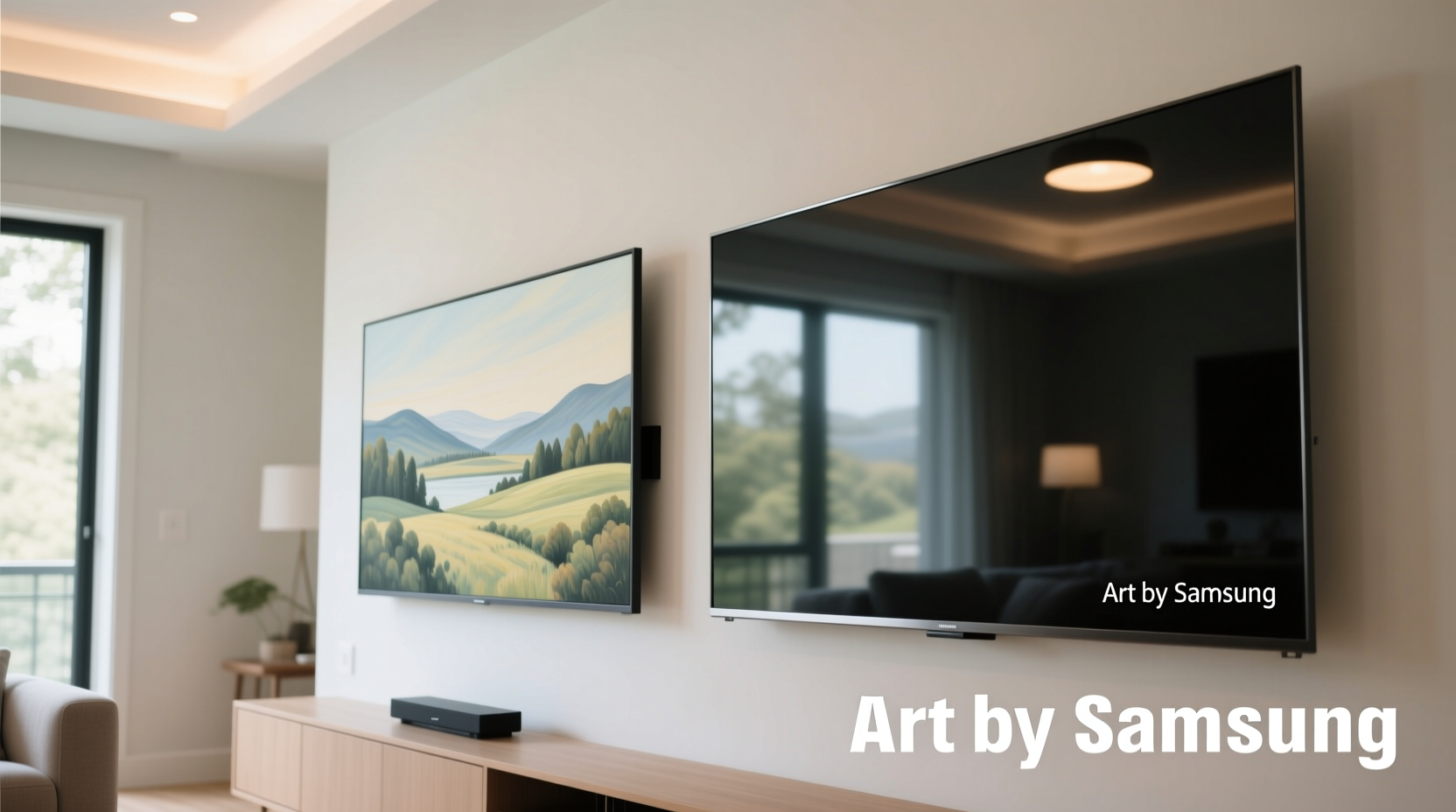
The matte screen on The Frame TV isn’t merely a coating slapped onto the display. It’s an engineered diffusion layer that scatters ambient light, reducing harsh reflections and making the screen appear more like a printed canvas when displaying artwork. This design choice directly supports the TV’s core identity: to disappear into the wall when not in active use.
In rooms with large windows, overhead lighting, or strong artificial sources, glossy screens often become mirrors—reflecting lamps, furniture, and even viewers themselves. The matte finish combats this by diffusing those reflections into soft, low-contrast haze rather than sharp, distracting images. However, this scattering effect also subtly alters how content appears during video playback, particularly in terms of contrast, black levels, and fine detail.
Performance Comparison: Matte vs. Glossy
To evaluate whether the matte screen is worth the added cost (typically $300–$500 extra depending on size), it helps to compare key performance aspects side by side. Below is a detailed breakdown:
| Feature | Matte Screen | Glossy Screen |
|---|---|---|
| Glare & Reflections | Greatly reduced; scattered light minimizes hotspots | Pronounced reflections, especially in bright rooms |
| Image Sharpness | Slightly softened due to diffusion layer | Crisper edges and finer details visible |
| Contrast & Black Levels | Moderate reduction; blacks appear more grayish | Deeper blacks and higher perceived contrast |
| Art Mode Realism | High—resembles physical canvas prints | Lower—glassy surface looks digital |
| Viewing Angles | Consistent across angles, minimal color shift | Better front-on, but reflections worsen off-axis |
| Price Premium | Yes ($300–$500) | No additional cost |
The data shows a clear pattern: the matte screen excels in environments where ambient light control is poor, while the glossy version performs better in dimmer, controlled settings. Your decision should hinge less on specs and more on how and where you plan to use the TV.
Real-World Use Case: A Living Room Dilemma
Consider Sarah, a designer who installed a 65-inch Frame TV in her open-concept living room. Floor-to-ceiling windows flood the space with natural light each morning. Initially, she opted for the glossy model to save money. Within days, she noticed that her favorite morning shows were nearly unwatchable due to intense glare from the east-facing sun. Even pulling sheer curtains didn’t eliminate the reflection.
After consulting with an interior tech specialist, she upgraded to the matte version. The difference was immediate. While the image wasn’t quite as “poppy” as before, she found movies and streaming content perfectly watchable—and far more comfortable. More importantly, when the TV displayed curated art pieces, they looked convincingly like framed paintings, enhancing her minimalist aesthetic.
“It’s not just a TV anymore,” she said. “It’s part of the room’s personality.”
“With The Frame, the matte screen transforms functionality into form. In well-lit homes, it’s not a compromise—it’s the point.” — David Lin, AV Integration Consultant at Luxe Home Systems
When the Matte Screen Makes Sense: A Buyer’s Checklist
Not every viewer will benefit equally from the matte upgrade. Use this checklist to determine if it aligns with your lifestyle and environment:
- ✅ Your TV faces a window or receives direct sunlight at any time of day
- ✅ You prioritize Art Mode as a design feature, not just a gimmick
- ✅ The TV is mounted in a brightly lit common area (living room, dining room, entryway)
- ✅ You watch TV during daylight hours regularly
- ✅ You value seamless integration with home decor over maximum HDR punch
- ❌ You have full control over lighting (blackout shades, dimmable LEDs)
- ❌ Your primary use is cinematic content in a darkened media room
- ❌ You’re highly sensitive to image softness or loss of fine detail
If most of your answers fall under the \"✅\" conditions, the matte screen is likely a worthwhile investment. If your setup leans toward the \"❌\" items, the glossy panel may serve you better.
Step-by-Step: How to Test Whether You Need the Matte Finish
Before committing to the upgrade, follow this practical evaluation process:
- Assess Light Exposure: Spend a full day observing the intended TV location. Note when and how sunlight hits the wall.
- Simulate Reflections: Hold a mirror where the screen will be. If you see windows, lamps, or seating areas reflected clearly, glare will be an issue.
- Test Art Mode Visibility: View digital art samples on a tablet behind glass versus a printed photo. Which feels more natural in your space?
- Compare Video Quality Needs: Are you watching sports and YouTube daily, or mostly movies at night? High-motion content benefits less from matte finishes.
- Rent or Demo: Some retailers offer in-home trials. Use this to compare both versions side by side, if possible.
Frequently Asked Questions
Does the matte screen affect 4K resolution?
No, the matte screen does not reduce the native 4K resolution. However, the diffusion layer can make images appear slightly less sharp, particularly in text and fine patterns. Most viewers adapt within minutes, but those with keen eyes may notice a subtle softening.
Can I add a matte filter later?
Third-party anti-glare filters exist, but they don’t replicate Samsung’s integrated solution. Aftermarket films often degrade image quality more severely, introduce air gaps, and detract from The Frame’s slim profile. They also void warranties and complicate the illusion of a real painting. The factory matte option remains the only seamless choice.
Is the matte screen available on all Frame TV sizes?
As of 2024, the matte finish is available on select models and sizes (typically 55\", 65\", and 75\"). Availability varies by region and year, so check Samsung’s official configurator before purchasing. Not all Frame TVs support the upgrade.
Final Verdict: Function Follows Form
The Samsung Frame TV was never meant to be the ultimate performance machine. It’s a hybrid device—a convergence of technology and interior design. The matte screen isn’t about improving picture specs; it’s about fulfilling the promise of invisibility when idle and comfort when active.
If your priority is cinematic HDR explosions in a pitch-black room, go glossy. But if your TV lives in a sunlit living space where it doubles as décor, the matte screen transforms The Frame from a clever gadget into a genuine part of your home. Yes, you sacrifice a bit of vibrancy. But in return, you gain usability, elegance, and a display that doesn’t fight against its surroundings.
The real question isn’t whether the matte screen is technically superior—it’s whether it serves your life better. And for many, the answer is a clear yes.




 浙公网安备
33010002000092号
浙公网安备
33010002000092号 浙B2-20120091-4
Comments
No comments yet. Why don't you start the discussion?