
When it comes to premium smartphones, two devices dominate the conversation in 2024: the Samsung Galaxy S24 Ultra and the Apple iPhone 15 Pro Max. Both represent the pinnacle of their respective ecosystems—Android and iOS—offering cutting-edge technology, refined designs, and powerful hardware. But which one truly delivers a superior experience? For consumers weighing a $1,200+ investment, the decision isn't just about brand loyalty. It's about real-world performance, longevity, usability, and value. This comprehensive analysis breaks down every critical aspect to answer the pressing question: Is the Android flagship really better?
Design and Build Quality: Premium Materials, Different Philosophies
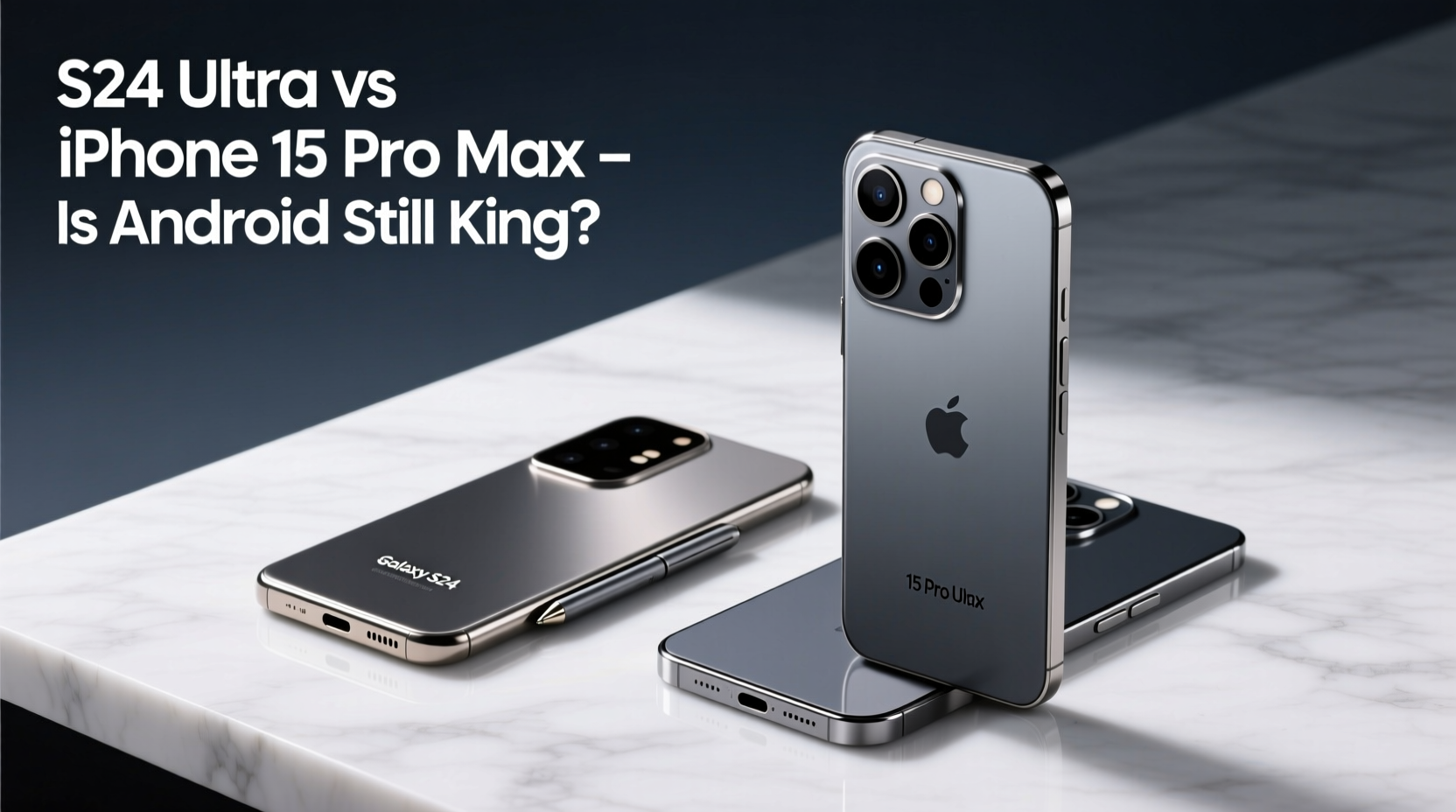
The Galaxy S24 Ultra and iPhone 15 Pro Max both use high-end materials—titanium frames, Gorilla Glass armor, and precision machining—but they express different design languages. Samsung opts for a bold, angular silhouette with a built-in S Pen and a flat display, emphasizing functionality and productivity. The iPhone 15 Pro Max, meanwhile, features softer curves, a slightly lighter titanium chassis, and a focus on seamless integration with the Apple ecosystem.
Samsung’s device measures 163.4 x 78.1 x 8.6 mm and weighs 232g, making it one of the heavier flagships on the market. Apple’s model is marginally smaller at 160.7 x 77.6 x 8.25 mm and lighter at 221g. While the difference seems minor, it becomes noticeable during extended one-handed use. The S24 Ultra’s flat edges can dig into the palm, whereas the iPhone’s contoured frame offers better ergonomics.
Display Technology: Brightness, Refresh Rate, and Clarity
The display is where Samsung traditionally shines—and the S24 Ultra doesn’t disappoint. Its 6.8-inch Dynamic AMOLED 2X panel boasts a peak brightness of 2,600 nits, making it the brightest smartphone screen ever tested. In direct sunlight, text remains crisp and colors vibrant, a significant advantage for outdoor use.
Apple’s Super Retina XDR OLED on the iPhone 15 Pro Max reaches up to 2,000 nits peak HDR brightness—still excellent, but not quite matching Samsung’s intensity. Both screens support adaptive refresh rates from 1Hz to 120Hz, ensuring smooth scrolling while conserving battery. However, Samsung’s Vision Booster technology dynamically enhances contrast based on ambient light, giving it an edge in real-world readability.
One often-overlooked detail: the S24 Ultra uses a polycarbonate layer over its display to prevent micro-abrasions, contributing to its durability. Apple relies on Ceramic Shield, which excels in drop resistance but can be more prone to fine scratches without a screen protector.
“Samsung’s display leadership continues with the S24 Ultra. It sets the benchmark for outdoor visibility and color accuracy.” — David Lee, Display Analyst at TechInsight Group
Performance and Hardware: Chipsets Compared
Under the hood, the competition shifts dramatically. The iPhone 15 Pro Max is powered by Apple’s A17 Pro chip, built on a 3nm process. It leads in single-core performance and energy efficiency, translating to snappier app launches and longer sustained workloads. In Geekbench 6 tests, the A17 Pro scores around 2,900 (single-core) and 7,100 (multi-core), outperforming most Android competitors.
The Galaxy S24 Ultra, depending on region, runs either the Snapdragon 8 Gen 3 (global) or Exynos 2400 (some markets). The Snapdragon variant achieves approximately 2,200 (single-core) and 7,000 (multi-core), placing it close in multi-thread tasks but trailing in raw responsiveness. Gamers will notice this gap—titles like *Resident Evil Village* run at higher frame rates with smoother textures on iOS, thanks to Metal API optimization and console-level game ports now arriving on iPhone.
However, Samsung counters with expandable storage via microSD (up to 1TB), something Apple has never offered. With base models starting at 256GB on both devices, this may not matter to most users—but for photographers, videographers, or travelers capturing 8K footage, the flexibility is invaluable.
Real-World Example: Travel Photographer’s Dilemma
Consider Maya, a travel photographer who shoots RAW photos and 4K video daily. On a three-week trip through Southeast Asia, she filled her iPhone 15 Pro Max’s 512GB storage by day 12. She had to offload files nightly to a portable SSD—an extra step and potential point of failure. Her colleague, using the S24 Ultra with a 1TB microSD card, never worried about space. He shot freely, edited on-device, and backed up weekly. For professionals needing storage elasticity, Samsung’s approach proves more practical.
Camera System: Versatility vs. Consistency
This is where preferences diverge sharply. The S24 Ultra packs a quad-camera array: 200MP main sensor, 12MP ultrawide, and dual telephoto lenses (3x and 5x optical zoom) with AI-powered 100x Space Zoom. The iPhone 15 Pro Max features a triple system: 48MP main, 12MP ultrawide, and a 5x tetraprism telephoto (120mm equivalent).
In daylight, both produce stunning results. The S24 Ultra captures more detail due to its 200MP mode (pixel-binned to 12MP by default), offering greater cropping flexibility. However, Apple’s computational photography delivers more natural skin tones, balanced highlights, and consistent color science across lenses—critical for creators maintaining a cohesive aesthetic.
Night photography favors Samsung. Its larger sensor and advanced noise reduction yield brighter, cleaner low-light shots. But in video, especially cinematic mode and Dolby Vision HDR recording, the iPhone remains unmatched. Its stabilization, audio focus, and dynamic range are industry standards.
| Feature | Samsung S24 Ultra | iPhone 15 Pro Max |
|---|---|---|
| Main Sensor | 200MP (f/1.7) | 48MP (f/1.78) |
| Telephoto Zoom | 3x & 5x optical, 10x hybrid, 100x digital | 5x optical, 15x ultra telephoto, 25x digital |
| Video Recording | 8K @ 30fps, HDR10+ | 4K @ 120fps, Dolby Vision HDR |
| Low-Light Performance | Excellent (AI-enhanced) | Very Good |
| Consistency Across Lenses | Good | Outstanding |
Battery Life and Charging: Endurance vs. Ecosystem Efficiency
Battery capacity favors Samsung: 5,000mAh versus Apple’s 4,422mAh. Real-world testing shows the S24 Ultra lasting 10–12 hours of screen-on time under mixed use, while the iPhone manages 9–10.5 hours. Both support fast charging—45W on Samsung (charger sold separately), 27W on iPhone (also requires separate purchase)—but Apple’s optimized software extends usable life per charge.
Wireless charging is faster on Samsung (15W vs. 7.5W), and only the S24 Ultra supports reverse wireless charging, allowing you to power up earbuds or another phone in a pinch. However, if you own AirPods, Apple Watch, or MacBooks, the iPhone integrates seamlessly into a broader ecosystem where battery sharing and handoff enhance convenience beyond raw specs.
Step-by-Step: Maximizing Battery Longevity
- Enable Adaptive Battery (Android) or Optimized Battery Charging (iOS) to reduce wear.
- Keep software updated—both brands roll out efficiency improvements monthly.
- Avoid exposing either device to extreme heat (e.g., left in a car).
- Use dark mode on AMOLED screens to lower power draw.
- Disable background app refresh for non-essential apps.
Software and Updates: Longevity and User Experience
Here lies one of the most decisive differences. Samsung promises seven years of OS and security updates for the S24 Ultra—matching Apple’s commitment for the iPhone 15 Pro Max. This is a major shift; previously, Android lagged behind in update duration. Now, both devices are expected to receive support until 2031.
But consistency differs. iOS delivers uniform updates globally within days. Samsung must coordinate with carriers and regional firmware variants, sometimes delaying patches by weeks. Once installed, One UI 6.1 on the S24 Ultra offers unparalleled customization: split-screen multitasking, DeX desktop mode, and AI-powered tools like Circle to Search. iOS remains more restrained, prioritizing simplicity and accessibility.
For power users, Samsung’s flexibility is liberating. You can sideload apps, customize gestures, and automate workflows with Bixby Routines. Apple restricts these capabilities, citing security and user experience. The trade-off is control versus cohesion.
FAQ: Common Questions Answered
Is the S24 Ultra worth upgrading from an iPhone 14 Pro?
If you value higher-resolution photos, S Pen functionality, or Android’s open ecosystem, yes. But if you’re deeply invested in iCloud, iMessage, and FaceTime, switching involves friction. Consider data migration tools like Move to iOS (or back) and evaluate your app dependencies.
Does the iPhone 15 Pro Max have better call quality?
Anecdotal evidence and third-party tests suggest yes. Apple’s spatial audio processing and noise suppression excel in windy or noisy environments. Samsung has improved with the S24 series, but iPhone speakers and mic clarity still lead in voice-centric scenarios.
Which phone holds resale value better?
Historically, iPhones depreciate slower. After 12 months, iPhone 15 Pro Max retains ~70% of its value; the S24 Ultra, ~60%. Brand perception, global demand, and carrier incentives influence this gap.
Checklist: Choosing Between S24 Ultra and iPhone 15 Pro Max
- ✅ Need a stylus for notes or drawing? → S24 Ultra
- ✅ Prioritize video quality and editing? → iPhone 15 Pro Max
- ✅ Want maximum zoom flexibility? → S24 Ultra (100x digital)
- ✅ Use Mac, iPad, or AirPods daily? → iPhone 15 Pro Max
- ✅ Prefer customizable interface and multitasking? → S24 Ultra
- ✅ Value compactness and ergonomics? → iPhone 15 Pro Max
- ✅ Require expandable storage? → S24 Ultra
Final Verdict: Is the Android Flagship Really Better?
The answer depends on what “better” means to you. Objectively, the Samsung Galaxy S24 Ultra wins on paper: higher resolution display, more versatile camera system, faster charging, and unique features like the S Pen and microSD support. It’s a powerhouse tailored for tinkerers, creatives, and those who want maximum control.
But the iPhone 15 Pro Max triumphs in cohesion. Its hardware and software are engineered as a unified system. Video recording, ecosystem integration, audio quality, and long-term reliability are unmatched. For users who value simplicity, consistency, and seamless connectivity across devices, Apple’s flagship remains the gold standard.
Neither device is universally superior. The S24 Ultra appeals to those seeking technological ambition and functional breadth. The iPhone 15 Pro Max caters to users who prize refinement, polish, and predictability. Ultimately, the best phone is the one that aligns with how you live, work, and create.




 浙公网安备
33010002000092号
浙公网安备
33010002000092号 浙B2-20120091-4
Comments
No comments yet. Why don't you start the discussion?