
When it comes to choosing a flagship smartphone in 2024, the decision is no longer just about brand loyalty or camera specs. The Samsung Galaxy Z Flip 5 and the iPhone 15 Plus represent two fundamentally different philosophies in mobile design—one embraces innovation with a foldable form factor, while the other doubles down on proven reliability with a traditional slab-style approach. This isn’t merely a tech comparison; it’s a lifestyle choice. Whether you value portability and visual flair or prioritize battery life and ecosystem consistency, your ideal phone depends on how you use it every day.
Foldable Innovation vs. Refined Simplicity
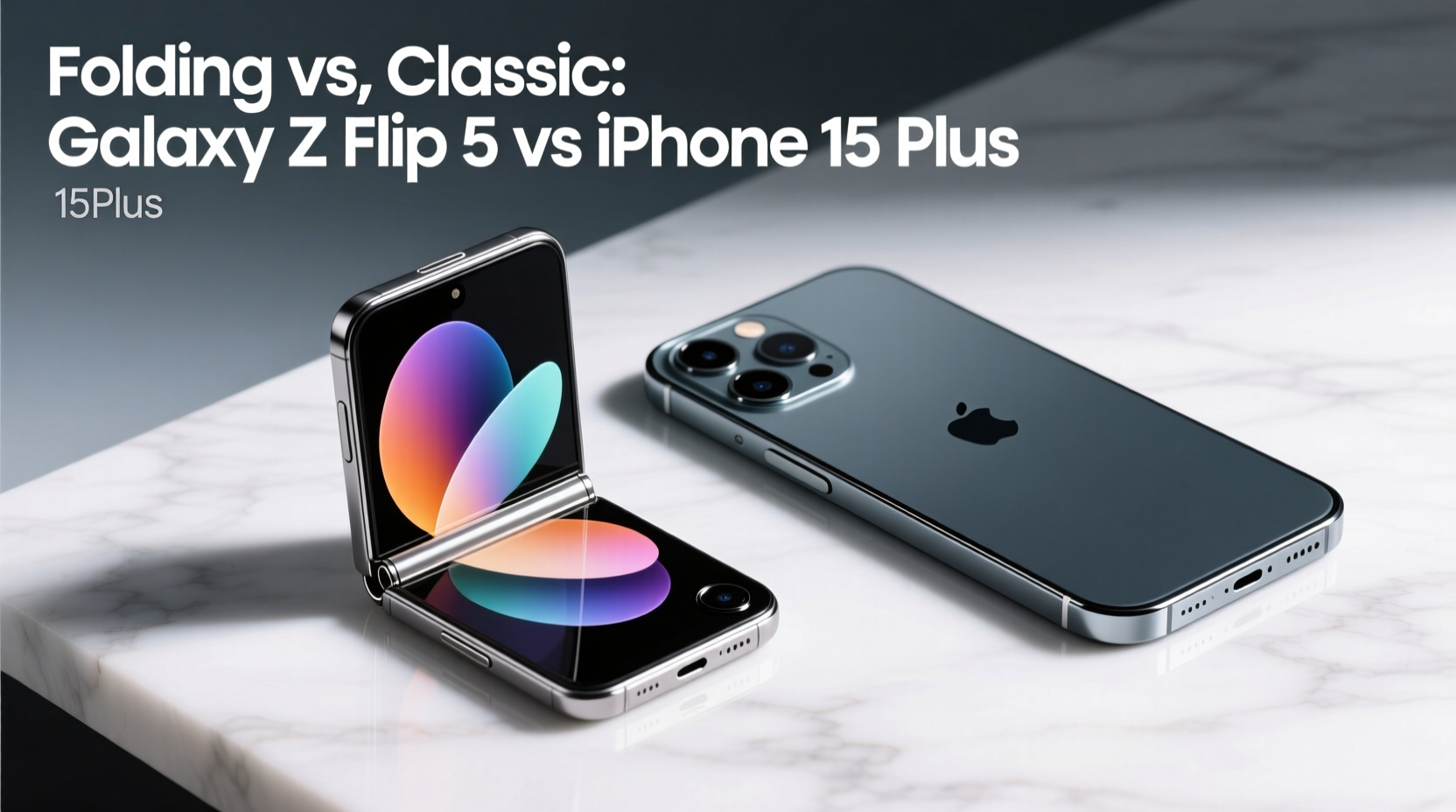
The Samsung Galaxy Z Flip 5 stands at the forefront of foldable technology. With its vertical hinge and clamshell design, it folds neatly into a compact rectangle—small enough to slip into a pocket or small handbag. When opened, it reveals a 6.7-inch Dynamic AMOLED display that matches the size of most modern smartphones. Its standout feature is the 3.4-inch external Cover Screen, which allows users to check notifications, control music, and even take selfies without unfolding the device.
In contrast, the iPhone 15 Plus follows Apple’s long-standing commitment to refinement over reinvention. It features a 6.7-inch Super Retina XDR OLED display in a familiar rectangular shape. While not as compact when folded, the iPhone offers a larger battery, longer software support, and seamless integration with the Apple ecosystem—iCloud, AirPods, Apple Watch, and more.
The core difference lies in intent. The Flip 5 is designed for convenience and style—ideal for quick interactions and social media-centric users. The iPhone 15 Plus prioritizes endurance and continuity—perfect for power users who rely on their phones throughout the day without frequent charging.
Performance and Software Experience
Under the hood, both devices are powered by top-tier chipsets. The Galaxy Z Flip 5 uses Qualcomm’s Snapdragon 8 Gen 2 (for Galaxy), optimized for multitasking and smooth app transitions. Samsung’s One UI 6.1, built on Android 14, supports split-screen mode, drag-and-drop functionality, and enhanced customization—features that take full advantage of the foldable screen.
The iPhone 15 Plus runs on Apple’s A16 Bionic chip, known for its efficiency and longevity. Despite being used in the previous-generation iPhone 14 Pro, it remains one of the fastest mobile processors available. iOS 17 delivers a clean, intuitive interface with strong privacy controls and deep integration across Apple services like iMessage, FaceTime, and iCloud Photos.
Where they diverge is in multitasking. The Flip 5 allows true multitasking with two apps side-by-side, and its Flex Mode lets the phone stand at an angle for hands-free video calls or photography. The iPhone 15 Plus supports Slide Over and Picture in Picture, but lacks native split-screen functionality, limiting its ability to run multiple apps simultaneously.
App optimization also plays a role. While most major apps now support foldables, some still don’t fully adapt to the Flip 5’s aspect ratio or Cover Screen. On iOS, developers have had years to optimize for Apple’s consistent hardware lineup, resulting in near-universal compatibility and polish.
“Foldables are no longer gimmicks—they’re maturing fast. But for mainstream productivity, iOS still offers a more predictable experience.” — David Chen, Mobile Analyst at TechInsight Weekly
Battery Life and Charging: Endurance vs. Efficiency
Battery capacity tells a clear story. The iPhone 15 Plus packs a 4,323mAh battery, consistently delivering up to 20–24 hours of mixed usage. It supports 20W wired charging and 15W MagSafe wireless charging. More importantly, iOS’s power management ensures steady performance even under heavy load.
The Galaxy Z Flip 5, meanwhile, has a smaller 4,400mAh dual-battery system (split due to the folding mechanism). In real-world use, it typically lasts around 10–12 hours with moderate use. Fast charging tops it up to 100% in about 70 minutes, and it supports wireless charging and PowerShare for charging accessories.
While the numbers suggest the iPhone wins on stamina, the Flip 5 compensates with smarter usage patterns. Because of its external screen, users often avoid unfolding the phone for simple tasks like checking time or answering calls—extending overall usability despite lower total capacity.
| Feature | Samsung Galaxy Z Flip 5 | iPhone 15 Plus |
|---|---|---|
| Battery Capacity | 4,400mAh (dual) | 4,323mAh |
| Typical Usage Time | 10–12 hours | 18–24 hours |
| Wired Charging Speed | 25W | 20W |
| Wireless Charging | Yes (Qi/PMA) | Yes (MagSafe & Qi) |
| Reverse Charging | Yes (PowerShare) | No |
Durability and Long-Term Use
Foldable phones have come a long way in durability, but concerns remain. The Galaxy Z Flip 5 uses Samsung’s Armor Aluminum frame and Gorilla Glass Victus 2 on the outer screen. The inner foldable display is protected by ultra-thin glass (UTG) and a flexible polymer layer. It’s rated for up to 200,000 folds—equivalent to five years of average use. However, the hinge remains a potential weak point, especially if exposed to dust or debris.
Apple doesn’t publish fold ratings, but the iPhone 15 Plus features a ceramic-shield front cover, aerospace-grade aluminum edges, and IP68 water resistance (up to 6 meters for 30 minutes). Real-world reports show iPhones maintaining structural integrity and resale value significantly longer than most Android counterparts.
Repair costs reflect this divide. Replacing the Flip 5’s main display can cost upwards of $300–$400, while AppleCare+ reduces iPhone screen repairs to $29. Without protection plans, foldables carry higher long-term ownership risks.
Lifestyle Fit: Who Is Each Phone For?
Choosing between these phones ultimately comes down to personal habits and priorities.
The Galaxy Z Flip 5 excels for:
- Social media creators who want a stylish, compact device for selfies and TikTok videos.
- Urban commuters who value pocketability and quick-glance interactions.
- Tech enthusiasts eager to explore new form factors and multitasking features.
The iPhone 15 Plus suits best:
- Professionals who need all-day battery for emails, navigation, and calls.
- Families embedded in the Apple ecosystem (using Macs, iPads, or Apple Watches).
- Photographers who prioritize consistent camera quality and computational imaging.
Mini Case Study: Maria’s Decision Dilemma
Maria, a 29-year-old marketing consultant in Chicago, needed a new phone after her iPhone 12 died. She loved the idea of the Flip 5—its compact size would fit perfectly in her designer clutch, and she enjoyed showing off the futuristic design at meetings. But during a week-long test, she noticed she was charging it twice daily. As someone who travels between client sites and often skips lunch, that became a burden. She also missed iMessage and couldn’t easily share photos with her husband’s iPad.
She switched to the iPhone 15 Plus. Though bulkier, it lasted through her entire workday and beyond. The larger screen made editing presentations easier, and she appreciated the consistency of her existing Apple setup. “I thought I wanted flashy,” she said, “but I really needed reliable.”
Camera Comparison: Quality vs. Versatility
Both phones deliver excellent photo quality, but with different strengths.
The iPhone 15 Plus features a dual-camera system: a 48MP main sensor and a 12MP ultrawide. Its computational photography engine produces natural colors, accurate skin tones, and superior dynamic range. The 2x telephoto zoom (achieved via cropping the main sensor) is perfect for portraits. Video recording supports 4K HDR at 60fps and advanced stabilization.
The Galaxy Z Flip 5 has a 12MP main sensor and a 10MP ultrawide/selfie combo. While the hardware is slightly behind, Samsung’s AI-powered processing enhances low-light shots and offers creative modes like Director’s View and Auto Framing. The foldable design enables hands-free vlogging—simply prop it open on a table for stable selfie videos.
In direct comparisons, the iPhone generally wins in consistency and color accuracy, especially in challenging lighting. The Flip 5 shines in flexibility—its hinge allows unique shooting angles, and the Cover Screen acts as a viewfinder for better composition during solo photography.
Checklist: Choosing Your Ideal Device
Use this checklist to guide your decision:
- ✅ Do you prioritize pocket size and portability? → Lean toward Galaxy Z Flip 5.
- ✅ Do you need all-day battery without charging? → iPhone 15 Plus is better.
- ✅ Are you invested in Apple devices (Mac, iPad, Watch)? → Stick with iPhone.
- ✅ Do you create content regularly (TikTok, Instagram, YouTube)? → Flip 5 offers unique advantages.
- ✅ Are you concerned about long-term durability and repair costs? → iPhone is more resilient.
- ✅ Do you value multitasking and split-screen workflows? → Galaxy Z Flip 5 wins.
- ✅ Is budget a concern? → Consider resale value—iPhones depreciate slower.
Frequently Asked Questions
Is the Galaxy Z Flip 5 worth the premium price?
For users who value innovation, style, and compactness, yes. However, if raw performance and longevity are your priorities, the same investment might yield better returns with an iPhone or standard Android flagship.
Can the iPhone 15 Plus last three years or more?
Absolutely. Apple guarantees five years of iOS updates, meaning the 15 Plus will receive support until at least 2028. With proper care, it can remain functional and secure far longer than most Android devices.
Does the Flip 5’s hinge wear out quickly?
Not under normal use. Samsung has improved dust resistance with the IPX8 rating (water only) and reinforced hinges. Avoid forcing the fold and keep the crease clean to maximize lifespan.
Final Verdict: Folding Future or Classic Reliability?
The Samsung Galaxy Z Flip 5 and iPhone 15 Plus represent two paths forward in smartphone evolution. The Flip 5 is a statement—a glimpse into a future where phones adapt to us, not the other way around. It’s compact, expressive, and packed with novel features that challenge conventions.
The iPhone 15 Plus, meanwhile, proves that perfection lies in refinement. It may not surprise, but it rarely disappoints. With unmatched ecosystem integration, industry-leading software support, and dependable performance, it remains one of the smartest long-term investments in mobile tech.
If you’re drawn to innovation and design, the Flip 5 offers a fresh, fun experience that turns heads and fits in your palm. But if you value peace of mind, battery endurance, and seamless connectivity across devices, the iPhone 15 Plus delivers a level of reliability that’s hard to match.
There’s no universal answer. Your choice should reflect your rhythm of life—not just today, but over the next two to three years. Foldable tech is here to stay, but classic design still holds undeniable appeal.




 浙公网安备
33010002000092号
浙公网安备
33010002000092号 浙B2-20120091-4
Comments
No comments yet. Why don't you start the discussion?