
For millions still relying on older smartphones like the Samsung Galaxy J7, the question isn’t just about desire—it’s about necessity. Released in 2016, the J7 was once a solid mid-range device praised for its design and decent specs. Fast forward to 2024, and users are grappling with sluggish performance, outdated software, and poor app compatibility. Enter the Galaxy A12, a budget-friendly successor launched in late 2020. On paper, it looks like a massive leap. But is upgrading from the J7 to the A12 truly worthwhile today? The answer depends on your usage, expectations, and how much longer you plan to keep your phone.
Performance and Hardware: A Generational Leap
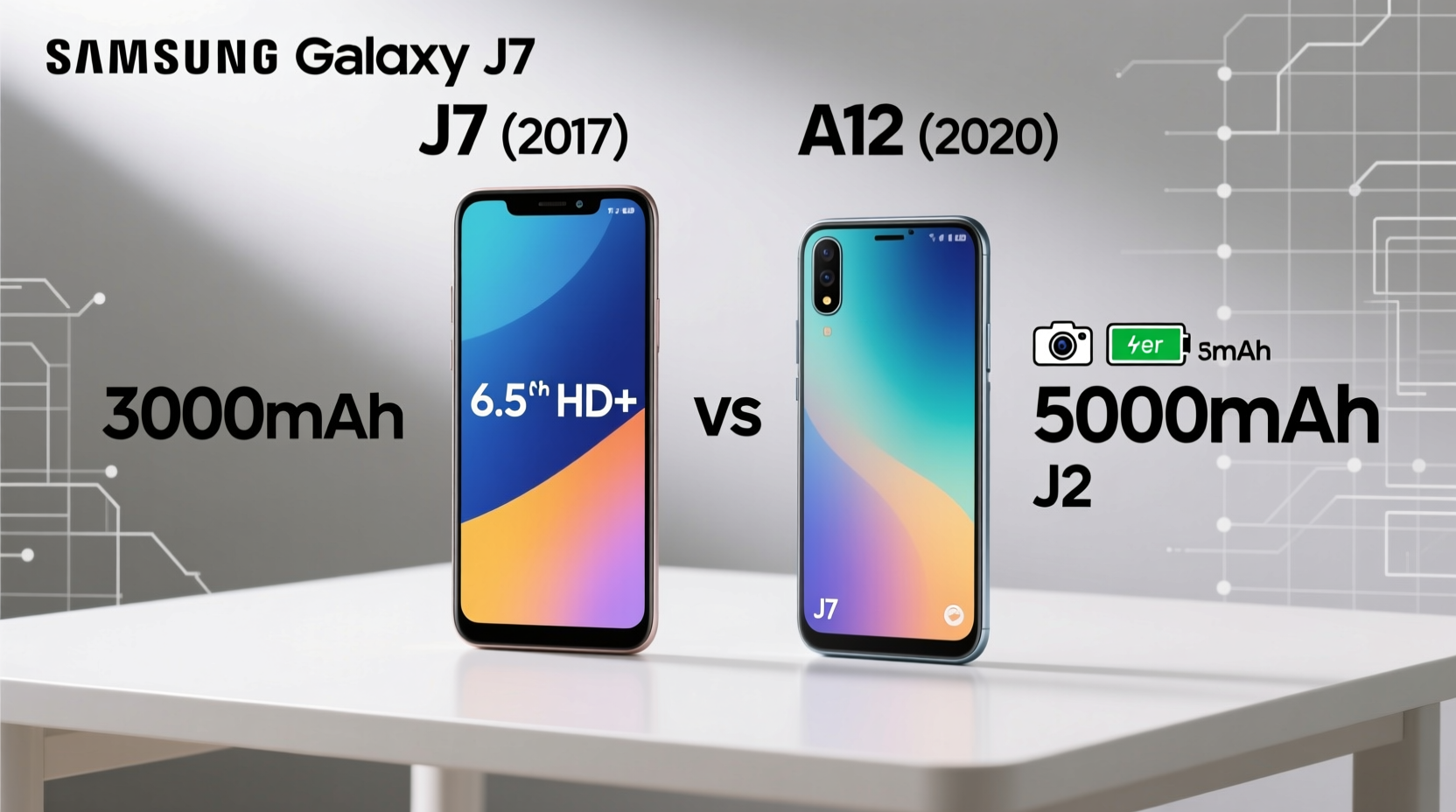
The core difference between the J7 and A12 lies in their processing power and system architecture. The J7 runs on an Exynos 7580 or Snapdragon 410 (depending on region), both octa-core chips built on older 28nm technology. By modern standards, these processors struggle with multitasking, app loading, and even basic navigation in updated Android versions.
In contrast, the A12 uses MediaTek’s Helio P35 (or occasionally the P65), a 12nm chipset that brings noticeable improvements in speed, efficiency, and thermal management. Paired with 3GB or 4GB of RAM—compared to the J7’s 2GB—the A12 handles everyday tasks like web browsing, social media, and streaming video with far greater fluidity.
Beyond raw speed, the A12 supports modern Android features like split-screen mode, better background app management, and smoother animations—all absent or poorly implemented on the aging J7.
Display and Build Quality: Bigger and Better, But Not Premium
The J7 sports a 5.5-inch HD (720p) Super AMOLED display—an excellent panel for its time, offering vibrant colors and deep blacks. However, screen size and resolution have evolved significantly since then.
The A12 steps up with a 6.5-inch HD+ (720x1600) PLS LCD display. While not as rich in color depth as AMOLED, the larger screen provides a better viewing experience for videos, maps, and reading. The taller aspect ratio (20:9) also improves one-handed usability and app layout efficiency.
Build-wise, the A12 feels more contemporary with its matte plastic back and slim bezels, though it lacks the metal frame of the J7. Durability is subjective: the J7 feels sturdier in hand, but the A12’s design reduces fingerprint smudges and offers better drop resistance due to its lighter weight.
“Moving from a 5.5-inch screen to 6.5 inches changes how people interact with their phones—especially for older users who benefit from larger text and touch targets.” — Raj Mehta, Mobile Usability Analyst
Camera Comparison: Practical Improvements Over Hype
On paper, the A12 wins by sheer numbers: a quad-camera setup (48MP main + 5MP ultrawide + 2MP macro + 2MP depth) versus the J7’s single 13MP rear sensor. But megapixels don’t tell the full story.
In low-light conditions, the J7’s larger pixel size (1.12µm) actually gives it slightly better light sensitivity than expected. However, it lacks autofocus, HDR, and night modes—features now standard on even entry-level phones. Photos often appear soft or overexposed.
The A12’s 48MP sensor uses pixel binning to produce sharper 12MP images with better dynamic range. More importantly, it includes scene optimization, portrait mode, and basic night shooting—tools that make photography accessible without technical knowledge.
| Feature | Samsung J7 (2016) | Samsung A12 (2020) |
|---|---|---|
| Rear Camera | 13MP, f/1.9, no AF | 48MP main + 3 aux sensors |
| Front Camera | 5MP, fixed focus | 8MP, AI beautification |
| Video Recording | 1080p@30fps | 1080p@30fps |
| Software Enhancements | None | HDR, Night Mode, Filters |
While neither phone competes with mid-range flagships, the A12 delivers consistently usable photos across lighting conditions—something the J7 can no longer guarantee.
Battery Life and Charging: Real-World Endurance Matters
The J7 packs a 3000mAh battery, which was adequate in 2016 but now struggles to last a full day with moderate use. After years of charge cycles, most J7 batteries have degraded significantly, often requiring midday charging.
The A12 counters with a massive 5000mAh battery—nearly 70% larger. In practice, this translates to 1.5 to 2 days of light use or solid all-day performance under heavier loads. It doesn’t support fast charging out of the box (comes with 10W adapter), but even standard charging replenishes the battery efficiently thanks to the power-efficient P35 chip.
One underrated advantage: the A12 includes a feature called “Battery Protection” in settings, which stops charging at 85% to prolong lifespan—a small but meaningful addition missing from the J7.
Software, Security, and Longevity in 2024
This is where the gap becomes undeniable. The J7 launched with Android 6.0 Marshmallow and received updates only up to Android 8.1 Oreo. It has not seen a security patch since 2019. Running such an outdated OS poses real risks: unpatched vulnerabilities, lack of Google Play Protect support, and incompatibility with newer app versions.
Many banking apps, messaging platforms, and even Google services now require Android 8 or higher—and increasingly, Android 9+. Users on the J7 may already face login issues or be blocked entirely from certain services.
The A12 launched with Android 10 and received updates up to Android 12, along with regular security patches through 2023. While it’s no longer receiving major updates, its software base remains functional and secure enough for daily use in 2024.
- App compatibility: A12 supports modern APKs and Google Play requirements
- Security: Regular patches reduce malware and phishing risks
- User interface: One UI Core offers dark mode, better notifications, and accessibility tools
Checklist: Should You Upgrade?
Answer these questions honestly before deciding:
- Does your J7 take more than 15 seconds to unlock and load the home screen?
- Have you noticed apps crashing frequently or failing to update?
- Is your battery life less than 6 hours under normal use?
- Do you use mobile banking, ride-sharing, or delivery apps regularly?
- Are you unable to install new apps from the Google Play Store?
If you answered “yes” to two or more, upgrading is not just beneficial—it’s necessary for functionality and safety.
Real-World Example: Maria’s Upgrade Journey
Maria, a 58-year-old teacher in Manila, used her Samsung J7 for seven years. She resisted upgrading due to cost and familiarity. But in early 2023, she couldn’t access her school’s new grading portal—her phone didn’t support the required browser version. Her banking app also began logging her out repeatedly.
She purchased a used A12 for $110. Within days, she noticed faster message delivery, clearer video calls with her grandchildren, and no more app crashes during online payments. “It feels like I got a new brain,” she said. “I didn’t realize how much stress the old phone caused until it was gone.”
Frequently Asked Questions
Can the Samsung J7 still be used safely in 2024?
Possibly, but not recommended for sensitive tasks. Without security updates, it's vulnerable to malware and phishing. Avoid using it for banking, shopping, or storing personal data.
Is the A12 future-proof?
No smartphone at this price point is truly future-proof. However, the A12 will likely remain functional for basic tasks through 2025. For longer-term use, consider stepping up to an A14 or A23.
Will my old accessories work with the A12?
Most Bluetooth devices and chargers will work. However, the A12 uses a different earphone jack placement and larger form factor, so cases and docks won’t be compatible.
Conclusion: Yes, Upgrading Is Worth It—If You Need Reliability
The Samsung J7 was a reliable companion in its era, but technology moves quickly. Holding onto it in 2024 means sacrificing speed, security, app access, and peace of mind. The A12 isn’t a flagship, but it bridges the gap between legacy devices and modern digital demands.
Upgrading isn’t about chasing specs—it’s about staying connected, safe, and efficient. Whether you're managing finances, communicating with family, or accessing essential services, a functional smartphone is no longer a luxury. It’s a necessity.




 浙公网安备
33010002000092号
浙公网安备
33010002000092号 浙B2-20120091-4
Comments
No comments yet. Why don't you start the discussion?