
Smartwatches have evolved from simple timepieces into full-fledged wearable computers. Among the most popular options are Samsung’s Galaxy Watch series, which offer both Bluetooth-only and LTE-enabled variants. The key difference? Connectivity. While Bluetooth models rely on a paired smartphone for calls, messages, and data, LTE watches come with built-in cellular connectivity—allowing you to leave your phone behind. But in 2024, with rising costs and increasingly capable smartphones, is the premium price of an LTE model still justified?
The answer depends on how you use your device, your daily routines, and whether true independence from your phone matters. Let’s break down the real-world value of LTE in a Samsung watch today.
Understanding the Core Differences
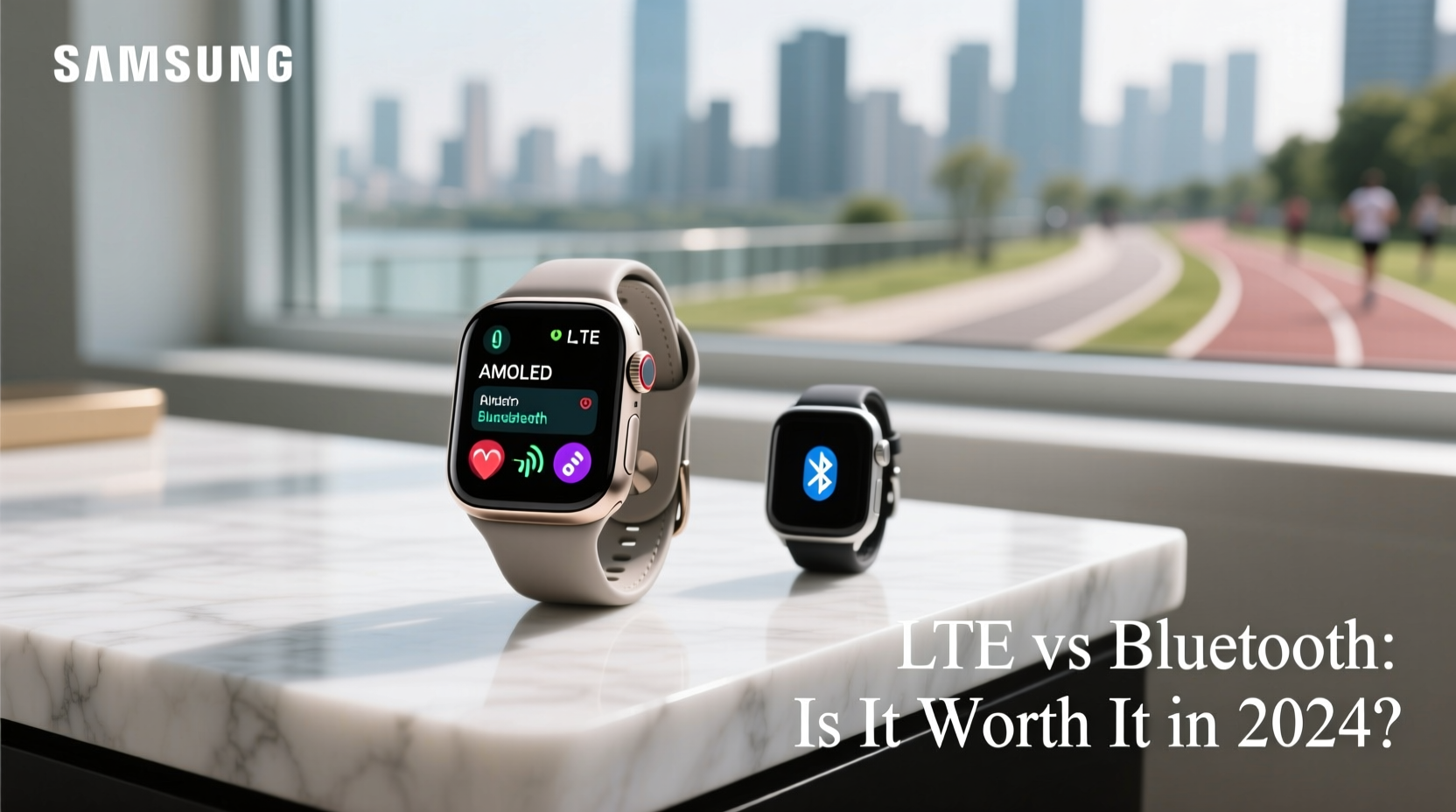
The fundamental distinction between Samsung’s LTE and Bluetooth-only watches lies in their ability to connect to networks independently. A Bluetooth model syncs with your phone via short-range wireless technology. It can receive notifications, track fitness, and control music—but only when your phone is nearby (typically within 30 feet).
In contrast, an LTE watch has its own SIM profile (eSIM) and connects directly to your carrier’s network. This means:
- You can take calls directly from your wrist, even if your phone is at home.
- Send and receive texts without needing your phone nearby.
- Stream music over Spotify or YouTube Music during workouts.
- Use GPS navigation and voice assistants like Bixby or Google Assistant offline.
- Receive emergency alerts and maintain communication during outdoor activities.
This autonomy comes at a cost—not just upfront, but also in battery life and monthly fees.
Cost Analysis: Is LTE Worth the Extra Expense?
Purchasing an LTE-capable Samsung watch typically adds $50–$100 to the base price compared to the Bluetooth version. For example, the Galaxy Watch6 Classic LTE retails for around $479, while the Bluetooth-only model starts at $399. That’s an 18% increase before recurring costs.
Then there’s the carrier fee. Most major U.S. carriers charge between $10 and $15 per month to add a smartwatch line to your existing plan. Some offer promotions—like T-Mobile’s free trial for six months—but long-term, that’s an additional $120–$180 annually.
Over three years, the total added cost exceeds $500 when factoring in both the higher purchase price and subscription fees. That’s enough to buy a mid-tier smartphone outright.
“Cellular wearables make sense for users who already live untethered—athletes, field workers, or frequent travelers. For everyone else, it's often an underused luxury.” — David Lin, Senior Analyst at Wearable Insights Group
LTE vs Bluetooth: Real-World Use Cases Compared
To determine whether LTE is worth it, consider how you move through your day. Here’s a comparison table outlining practical scenarios:
| Scenario | Bluetooth Watch | LTE Watch |
|---|---|---|
| Morning run without phone | No calls/messages; limited music unless pre-downloaded | Full call/text capability; stream music live |
| Commuting via public transit | Relies on phone in bag; may miss alerts | Receives all notifications instantly on wrist |
| Workout at gym | Fine for tracking, but can’t respond to urgent messages | Stay reachable during meetings or classes |
| Traveling abroad | Useless without phone or Wi-Fi | Can access maps, translation, and emergency services |
| Daily errands | Convenient if phone is in pocket | Slight advantage for hands-free payments and navigation |
As shown, LTE shines in situations where carrying a phone is inconvenient or unsafe. Emergency responders, delivery drivers, or parents managing kids’ schedules while jogging might find consistent value. However, office workers or those who always keep their phone close may never fully utilize the feature.
When LTE Makes Sense: A Practical Checklist
Before upgrading to an LTE model, ask yourself the following questions. Check off each one that applies:
- ✅ Do you regularly exercise without carrying your phone?
- ✅ Have you missed important calls because your phone was out of reach?
- ✅ Do you travel frequently and rely on real-time navigation?
- ✅ Are you a first responder, security personnel, or work in remote locations?
- ✅ Do you want your child or elderly parent to stay connected safely?
- ✅ Are you willing to pay $10–$15 extra per month indefinitely?
If four or more apply, LTE is likely a worthwhile investment. If fewer than three resonate, the Bluetooth model will serve you just as well—with less financial burden.
A Real Example: Sarah, the Weekend Trail Runner
Sarah lives in Boulder, Colorado, and runs mountain trails every Saturday. She used to carry her phone in a hydration pack, but found it bulky and distracting. After switching to a Galaxy Watch6 LTE, she disabled her phone’s connection entirely during runs.
During one hike, she slipped and twisted her ankle. Unable to walk far, she used her watch to call 911 directly—no need to search for her phone. Help arrived within 20 minutes. “That watch saved me,” she said. “I didn’t realize how vulnerable I was until I needed help and had no phone.”
For Sarah, the $15 monthly fee and higher initial cost were negligible compared to peace of mind and safety. Her story illustrates a core truth: LTE isn’t about convenience—it’s about capability when it counts.
Battery Life and Performance Trade-offs
One often overlooked downside of LTE watches is reduced battery life. On average, an LTE Samsung watch lasts 24–36 hours with moderate use, compared to 40–60 hours for Bluetooth models. Enabling LTE constantly drains power faster, especially during streaming or prolonged calls.
You also face software complexity. Managing eSIM activation, carrier compatibility, and network settings adds friction. Not all carriers support Samsung’s LTE models equally—Verizon and AT&T generally offer smoother integration than smaller MVNOs.
Additionally, some features like WhatsApp calling or third-party messaging apps may not function over LTE without phone dependency, limiting true independence.
Frequently Asked Questions
Can I switch from Bluetooth to LTE later?
No. The hardware difference is permanent. An LTE model contains additional radio components. You cannot upgrade a Bluetooth watch to LTE after purchase.
Does LTE affect GPS accuracy?
No. In fact, LTE can improve location lock speed by using network-assisted GPS. However, continuous LTE use may drain the battery before long GPS sessions complete.
Do I need a separate number for my LTE watch?
Most carriers use Number Share or Embedded SIM technology, meaning your watch shares your phone’s number. Calls and texts appear to come from your main line, ensuring consistency across devices.
Final Verdict: Who Should Pay for LTE in 2024?
In 2024, the value of LTE in a Samsung watch isn’t universal—it’s situational. For the average user who keeps their phone within arm’s reach, the added cost and complexity rarely justify the benefits. Bluetooth models now offer robust functionality, including offline music storage, contactless payments, and advanced health monitoring.
However, for those with active, mobile lifestyles—runners, hikers, professionals on the move, or caregivers managing others’ safety—the LTE model offers meaningful independence. It transforms the watch from a companion device into a standalone communication tool.
Technology should serve your life, not dictate it. If leaving your phone behind enhances your freedom, productivity, or safety, then yes—paying extra for LTE is worth it. But if you’re buying it “just in case,” you’re likely better off saving the money and sticking with Bluetooth.




 浙公网安备
33010002000092号
浙公网安备
33010002000092号 浙B2-20120091-4
Comments
No comments yet. Why don't you start the discussion?