
When shopping for a high-performance 4K QLED TV, Samsung’s Q700B and Q600B models often appear on the shortlist. Both deliver vibrant visuals and smart functionality, but they sit in different tiers of Samsung’s 2022 lineup. The Q700B belongs to the upper mid-range, while the Q600B is positioned as an entry-level QLED option. With a noticeable price gap between them, the question arises: does the Q700B offer enough meaningful improvements to justify spending more?
This article breaks down the key differences in display technology, processing power, audio performance, design, and smart features to help you decide whether the upgrade from the Q600B to the Q700B truly delivers value for your viewing habits and budget.
Display Technology and Picture Quality
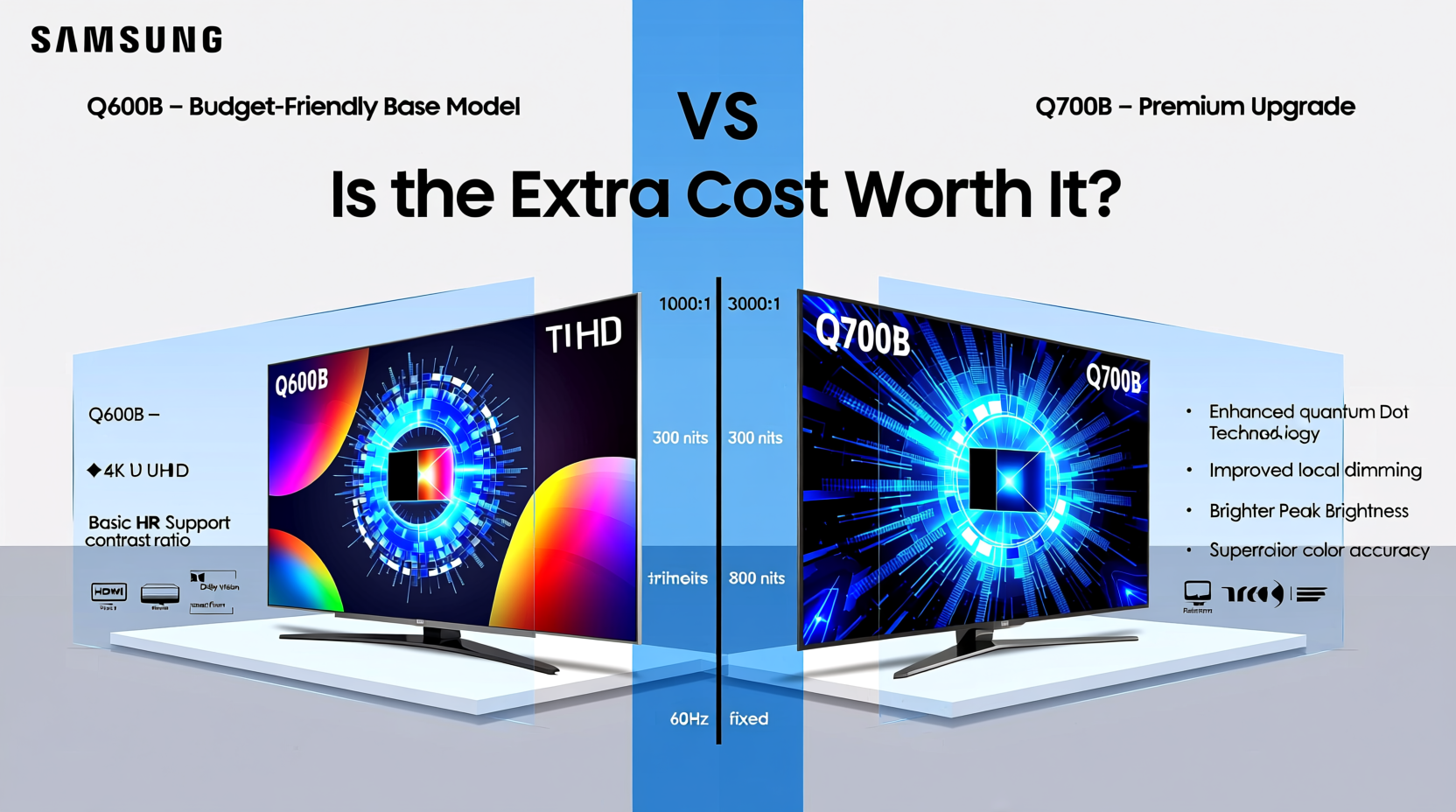
The most significant distinction between the Q700B and Q600B lies in their display architecture and image processing capabilities. While both use Samsung’s Quantum Dot technology to produce wide color gamuts and bright HDR performance, the execution differs substantially.
The Q700B features a full-array LED backlight with local dimming zones—more on larger screen sizes—which enables deeper blacks and better contrast control. This results in superior handling of dark scenes, especially in HDR content like 4K Blu-rays or streaming titles on Netflix and Disney+. In contrast, the Q600B uses edge-lit LED backlighting, which limits its ability to manage light precisely, leading to blooming around bright objects and less dynamic range.
In practical terms, this means the Q700B renders shadows with greater detail and maintains clarity in mixed lighting environments. For movie enthusiasts and gamers who prioritize cinematic realism, this difference is immediately noticeable.
Brightness and Color Accuracy
Samsung rates the peak brightness of the Q700B higher than the Q600B, typically exceeding 800 nits compared to around 500–600 nits on the Q600B. This makes the Q700B significantly better in brightly lit rooms where ambient light can wash out lower-brightness displays.
Both sets support HDR10 and HLG, but the Q700B includes better tone mapping and dynamic metadata handling through its more advanced processor. As a result, HDR content appears more balanced, with smoother gradients and fewer crushed highlights.
“Local dimming and higher peak brightness aren’t just specs—they translate directly into more immersive viewing, especially for films and console gaming.” — David Lin, Home Theater Reviewer at AV Insight
Processor and Upscaling Performance
The Q700B is powered by Samsung’s Neo Quantum Processor 4K, a step up from the Crystal 4K Processor found in the Q600B. This isn't just a naming difference—it reflects real gains in AI-based upscaling, motion handling, and noise reduction.
The Neo Quantum Processor analyzes content in real time, enhancing lower-resolution sources (like cable TV or older streaming apps) to near-4K quality. It also applies scene-by-scene optimization, adjusting contrast, color, and sharpness dynamically. Users report that even 1080p content looks crisper and more natural on the Q700B.
In contrast, the Q600B’s Crystal Processor provides basic upscaling without deep learning enhancements. While adequate for casual viewing, it struggles with compressed video signals and lacks fine-tuned adjustments.
Gaming Features and Input Lag
For gamers, the Q700B offers a clear edge. It supports Variable Refresh Rate (VRR), Auto Low Latency Mode (ALLM), and AMD FreeSync Premium, making it compatible with Xbox Series X and PlayStation 5 without screen tearing or stuttering. Input lag measures under 10ms in Game Mode, ideal for fast-paced titles.
The Q600B supports ALLM and basic VRR but lacks FreeSync certification and has slightly higher input latency. Additionally, the Q700B includes a dedicated Game Bar overlay that lets players adjust settings quickly without leaving gameplay.
| Feature | Q700B | Q600B |
|---|---|---|
| Backlight Type | Full-Array with Local Dimming | Edge-Lit |
| Peak Brightness | 800+ nits | 500–600 nits |
| Processor | Neo Quantum 4K | Crystal 4K |
| HDMI 2.1 Ports | 2 (with 4K@120Hz) | 1 (limited bandwidth) |
| VRR / FreeSync | Yes (Premium) | Limited Support |
| Audio Output | 60W with Object Tracking Sound+ | 40W with Basic OTS |
Sound Quality and Audio Immersion
Samsung equips the Q700B with its upgraded Object Tracking Sound+ (OTS+) system, which uses multiple drivers and AI to direct audio based on on-screen movement. During action sequences, you can hear helicopters pan across the room or footsteps move from left to right—a feature particularly effective when not using a soundbar.
The Q600B includes basic OTS but with fewer speakers and only 40 watts of total output. The result is flatter, less directional audio that lacks depth and spatial awareness. While acceptable for dialogue-heavy shows, it falters with immersive content.
If you plan to rely on built-in speakers, the Q700B’s audio engine adds tangible value. However, pairing either TV with a soundbar minimizes this gap.
Design and Build Differences
Aesthetically, the Q700B feels more premium. It features slimmer bezels, a sleeker rear panel, and uses higher-grade materials. The One Connect Box is optional on larger Q700B models, allowing for cleaner cable management—an appealing feature for wall-mounted setups.
The Q600B has a more utilitarian design with thicker borders and visible seams. While functional, it doesn’t convey the same sense of refinement, especially in modern minimalist living spaces.
Real-World Example: A Family’s Weekend Viewing Experience
The Thompson family owns a Q600B in their living room. They enjoy weekend movie nights but noticed that dark scenes in sci-fi films looked muddy, and subtitles were hard to read against dim backgrounds. After testing the Q700B at a retail store, they upgraded during a holiday sale. The improvement was immediate: starfields in space scenes appeared sharper, and facial details in shadowed interiors became visible. Their son, a PS5 gamer, appreciated the smoother frame rates and reduced blur during racing games. Though the price difference was $300, they felt the long-term enjoyment justified the investment.
Is the Upgrade Worth the Extra Money?
The answer depends on how you use your TV. Here’s a checklist to help determine if the Q700B is right for you:
- Do you watch a lot of HDR movies or play next-gen console games?
- Is your viewing environment bright, requiring high screen luminance?
- Do you prefer a thinner, more elegant design with minimal bezels?
- Are you sensitive to audio immersion and directional sound effects?
- Will this TV be the centerpiece of your home entertainment setup?
If you answered “yes” to three or more, the Q700B’s upgrades are likely worth the additional cost. You’re paying not just for better hardware, but for a more consistent, future-proof experience.
However, if your primary use is daytime TV, news, or standard-definition streaming, and you're on a tight budget, the Q600B remains a solid performer. It still delivers excellent color and access to Samsung’s Tizen OS with all major apps.
Frequently Asked Questions
Can the Q600B handle 4K gaming at 120fps?
Only partially. While it has one HDMI 2.1 port, bandwidth limitations may prevent stable 4K@120Hz performance. The Q700B handles this reliably across two ports, making it the better choice for serious gamers.
Does the Q700B support Dolby Atmos?
No, neither model supports Dolby Atmos decoding. However, both can pass through Atmos audio to compatible sound systems via eARC. The Q700B’s internal speakers simulate spatial audio more effectively than the Q600B.
Is there a big difference in smart features?
Both run Samsung’s Tizen OS with identical app availability (Netflix, Hulu, Prime Video, etc.). The interface responsiveness is snappier on the Q700B due to better processing and RAM, but core functionality is the same.
Final Verdict and Recommendation
The jump from the Samsung Q600B to the Q700B represents more than incremental improvements—it’s a shift from entry-level QLED to a genuinely capable home theater contender. The combination of full-array local dimming, superior processing, enhanced audio, and robust gaming support creates a noticeably richer experience.
While the price premium may seem steep initially, consider the long-term value. A TV is typically used for 5–7 years. Over that time, the Q700B’s better picture consistency, longevity, and adaptability to evolving content standards make it a smarter investment for discerning viewers.




 浙公网安备
33010002000092号
浙公网安备
33010002000092号 浙B2-20120091-4
Comments
No comments yet. Why don't you start the discussion?