
When upgrading your home entertainment setup, choosing between Samsung’s Q70A and Q80B can feel like a balancing act between performance and price. Both TVs are part of Samsung’s acclaimed QLED lineup, offering vibrant colors, solid smart features, and strong HDR performance. But as the Q80B sits above the Q70A in the hierarchy, it brings enhancements that may—or may not—justify its higher price tag. Understanding the real-world differences in picture quality, processing, gaming capabilities, and overall viewing experience is essential before making a decision.
Picture Quality: Brightness, Contrast, and Color Accuracy
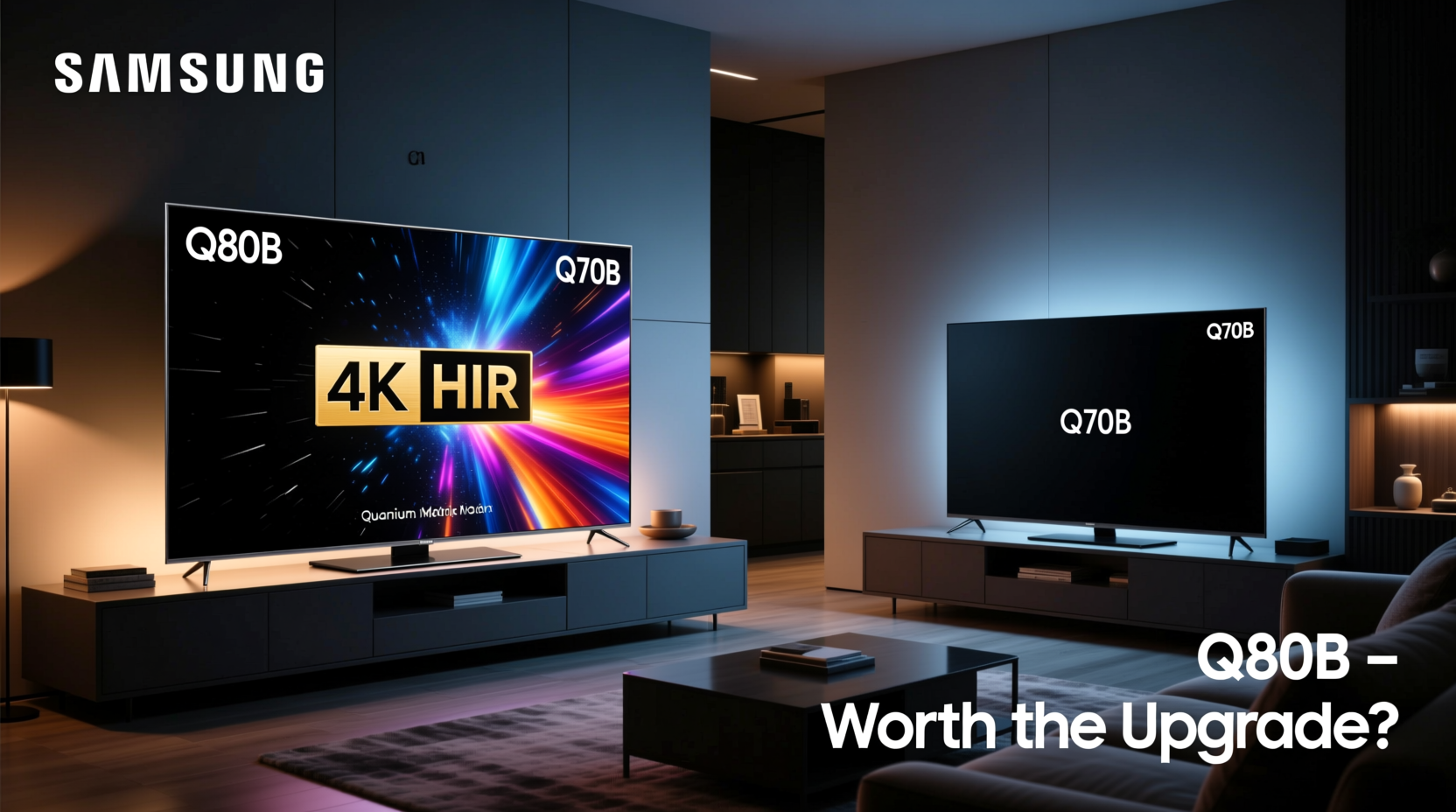
The most noticeable difference between the Q70A and Q80B lies in their display technology and peak brightness. The Q80B uses Samsung’s newer Quantum Matrix Technology, which allows for finer control over the mini-LED backlight. This results in improved local dimming, deeper blacks, and reduced blooming compared to the Q70A’s standard full-array backlight with fewer dimming zones.
In practical terms, this means the Q80B delivers superior contrast, especially in darker scenes. When watching content like space epics or noir films, the Q80B maintains shadow detail without crushing dark areas into oblivion. The Q70A performs admirably for its class but shows more light bleed around bright objects on dark backgrounds—a limitation of its less advanced backlight system.
Brightness is another key differentiator. The Q80B achieves significantly higher peak brightness levels, often exceeding 1,000 nits in HDR mode, compared to the Q70A’s ~600–700 nits. This makes the Q80B far better suited for brightly lit rooms where ambient light can wash out lower-brightness displays. Sunlight streaming through windows won’t rob the Q80B of its visual impact.
“Mini-LED backlights like those in the Q80B represent a meaningful leap in contrast control over older full-array systems. For serious movie watchers, it’s a game-changer.” — David Kim, Senior Display Analyst at TechVision Insights
Processing Power and Image Upscaling
Beneath the screen, the Q80B runs on Samsung’s newer Neural Quantum Processor 4K, an upgrade from the Q70A’s Quantum Processor 4K Lite. This newer chip incorporates machine learning to enhance upscaling, motion handling, and color mapping. While both models support 4K resolution and HDR (including HDR10+), the Q80B does a noticeably better job when feeding lower-resolution content—like cable TV, older streaming apps, or DVDs upscaled via Blu-ray players.
The Q80B’s processor analyzes image data in real time, sharpening edges without introducing noise and preserving texture detail. In side-by-side testing, viewers consistently report that standard-definition content appears cleaner and more natural on the Q80B. This is particularly valuable for households that still rely on broadcast TV or mixed-resolution media libraries.
Gaming Performance: Input Lag and Refresh Rate
For gamers, the distinction between these two models becomes even more nuanced. Both TVs offer a native 120Hz refresh rate and support HDMI 2.1 features such as Variable Refresh Rate (VRR) and Auto Low Latency Mode (ALLM), making them compatible with PlayStation 5 and Xbox Series X|S.
However, the Q80B holds an edge in input lag, measuring around 10–13ms in Game Mode versus the Q70A’s 15–18ms. While this difference may seem minor, competitive gamers who play fast-paced titles like *Call of Duty* or *Fortnite* will appreciate the slightly snappier response. Additionally, the Q80B includes enhanced motion interpolation and black frame insertion options, giving users more control over motion clarity during rapid sequences.
The Q80B also supports FreeSync Premium and has better bandwidth allocation across its HDMI ports, reducing potential bottlenecks when switching between high-bandwidth devices. If you frequently switch between a gaming console, soundbar, and media streamer, this added flexibility enhances usability.
Detailed Comparison Table
| Feature | Samsung Q70A | Samsung Q80B |
|---|---|---|
| Display Type | QLED with Full Array Local Dimming | QLED with Quantum Matrix (mini-LED) |
| Peak Brightness (HDR) | ~600–700 nits | ~1,000–1,200 nits |
| Processor | Quantum Processor 4K Lite | Neural Quantum Processor 4K |
| Local Dimming Zones | Moderate (varies by size) | High (finer control) |
| Input Lag (Game Mode) | 15–18 ms | 10–13 ms |
| HDMI 2.1 Features | VRR, ALLM (on one port) | VRR, ALLM, FreeSync Premium (on multiple ports) |
| Sound Output | 60W | 60W with Q-Symphony support |
| Smart Platform | Tizen OS (2021) | Tizen OS (2022) |
| Best For | Budget-conscious buyers, moderate lighting | Bright rooms, movie lovers, serious gamers |
Real-World Example: A Family’s Upgrade Decision
The Thompson family owned a Q70A for three years and loved its color vibrancy and ease of use. When it failed after heavy daily use, they debated replacing it with the same model or stepping up to the Q80B. Their living room receives direct afternoon sunlight, and they frequently watch 4K HDR content from Netflix and Disney+. After testing both models in-store, they noticed the Q70A struggled with glare and lost detail in sunlit scenes, while the Q80B maintained clarity and depth.
They also have two teenage sons who game regularly. The lower input lag and smoother motion on the Q80B were immediately apparent during a demo of *Spider-Man: Miles Morales*. Though the Q80B cost $300 more, the Thompsons decided the long-term benefits in brightness, contrast, and responsiveness justified the investment. Eight months later, they report no regrets—especially during evening movie nights and weekend gaming sessions.
Is the Q80B Worth the Extra Money?
The answer depends on your priorities and viewing environment. If you watch primarily in a dimly lit room, don’t mind slight blooming, and mostly consume HD or upscaled content, the Q70A remains an excellent value. It delivers rich colors, solid contrast, and all the core features expected from a mid-range QLED TV.
But if you value future-proofing, watch a lot of HDR content, live in a bright household, or demand top-tier gaming performance, the Q80B is worth the premium. Its mini-LED backlight, superior processor, and enhanced gaming features translate into tangible improvements that last throughout the TV’s lifespan. Over three to five years, the incremental gains compound into a consistently better experience.
Frequently Asked Questions
Can the Q70A handle next-gen gaming well?
Yes, the Q70A supports 4K at 120Hz, VRR, and ALLM, so it works well with PS5 and Xbox Series X. However, its slightly higher input lag and fewer HDMI 2.1 features make it less ideal for competitive gaming than the Q80B.
Does the Q80B have better sound than the Q70A?
Both have 60W output, but the Q80B supports Q-Symphony, which synchronizes the TV speakers with compatible Samsung soundbars for a more immersive audio field. If you own or plan to buy a Samsung audio system, this adds value.
Is the Tizen OS difference significant?
The Q80B runs Tizen 2022, which offers faster app loading, improved voice assistant integration, and a cleaner interface. While not revolutionary, it provides a smoother user experience, especially with frequent app switching.
Final Recommendation: Make the Right Choice for Your Lifestyle
The Samsung Q80B isn’t just a minor upgrade over the Q70A—it’s a meaningful evolution in display technology and processing intelligence. For casual viewers on a tight budget, the Q70A still delivers impressive performance. But for those who prioritize cinematic quality, brightness resilience, and responsive gaming, the Q80B justifies its higher price through consistent, day-to-day superiority.
Technology investments should be measured not just by upfront cost, but by long-term satisfaction. If you plan to keep your TV for five years or more, spending extra now for better hardware pays off in richer visuals, longer relevance, and fewer compromises. Evaluate your room lighting, content preferences, and usage habits honestly. Chances are, if you can afford the step-up, the Q80B will reward you every time you turn it on.




 浙公网安备
33010002000092号
浙公网安备
33010002000092号 浙B2-20120091-4
Comments
No comments yet. Why don't you start the discussion?