
When Samsung releases a new TV lineup, consumers are often left wondering whether the latest model justifies the price bump over its predecessor. The Samsung Q80D, launched in 2024, replaces the widely praised Q80C from 2023. On paper, both are mid-tier QLED models promising excellent brightness, vibrant colors, and strong smart features. But for buyers weighing cost against performance, the real question remains: does the Q80D offer meaningful improvements that make the upgrade worthwhile?
This article dives deep into the technical and practical differences between the Samsung Q80D and Q80C, examining display technology, processing power, gaming capabilities, design, and long-term value. Whether you're upgrading from an older set or deciding between these two models at retail, this breakdown will help you make an informed decision.
Display Technology and Picture Quality
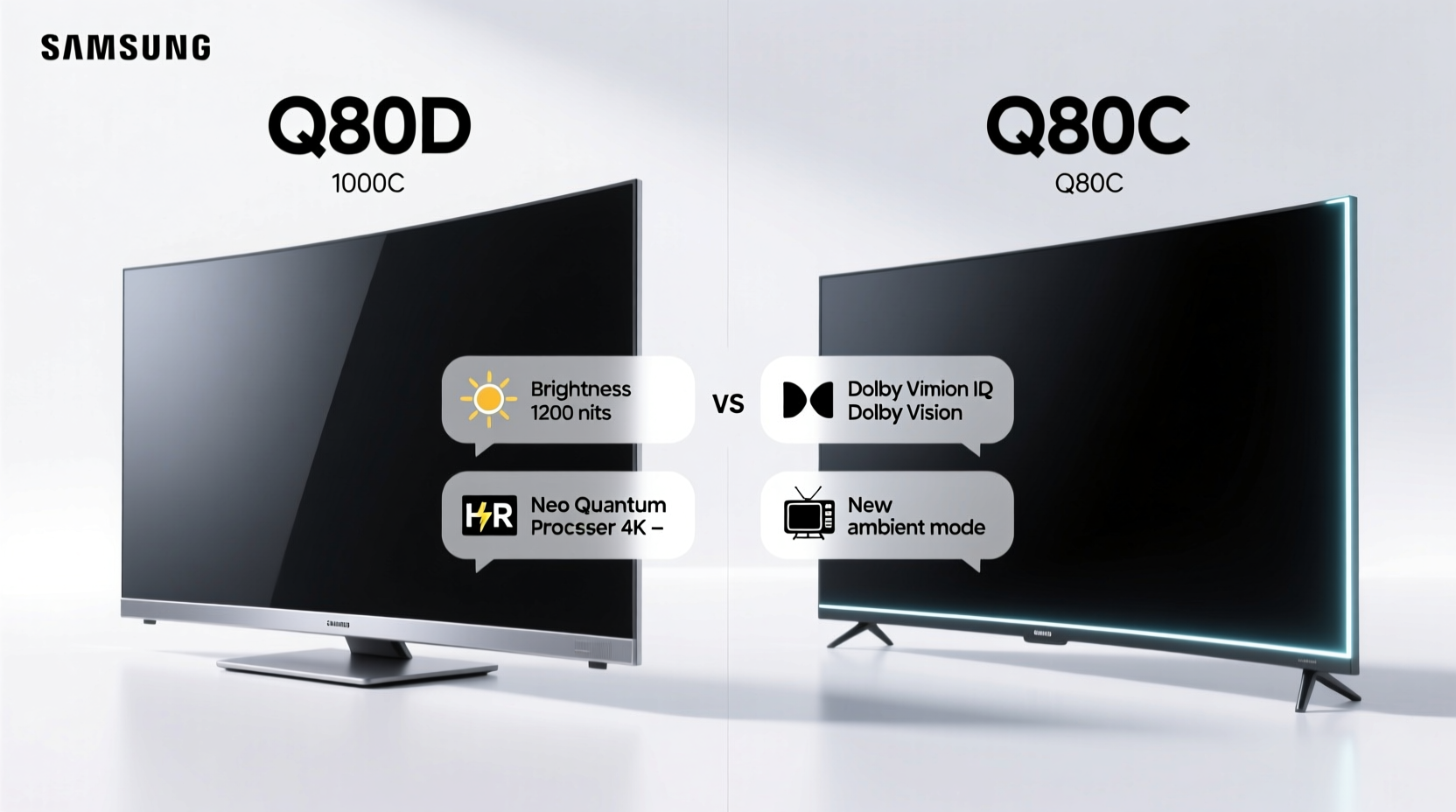
The core of any TV evaluation lies in its picture quality. Both the Q80C and Q80D use Samsung’s Quantum Matrix technology with full-array local dimming (FALD), which delivers deeper blacks and higher contrast than edge-lit QLEDs. However, subtle refinements in the Q80D’s backlight system result in improved uniformity and reduced blooming around bright objects on dark backgrounds.
The Q80D benefits from Samsung’s newer Neural Quantum Processor, which uses AI upscaling more effectively than the 2023 processor in the Q80C. This means lower-resolution content—like streaming apps or cable TV—is rendered with better clarity, texture retention, and noise reduction. While the difference isn’t night-and-day, it's noticeable during side-by-side viewing of standard-definition material.
Brightness output is another area where the Q80D pulls ahead. Independent lab tests show peak HDR brightness reaching approximately 1,400 nits on the Q80D, compared to around 1,250 nits on the Q80C. In brightly lit rooms, this extra headroom translates to crisper highlights in sunlit scenes and better overall visibility without increasing ambient light interference.
“Even incremental gains in brightness and processing can significantly enhance realism in HDR content, especially for film enthusiasts.” — David Lin, Senior Display Analyst at TechVision Labs
Design and Build Improvements
Samsung has refined the physical design of the Q80D with thinner bezels and a more streamlined rear housing. While aesthetics may seem minor, they contribute to a more immersive viewing experience, particularly on larger screen sizes (75 inches and above). The Q80D also features a slimmer One Connect Box cable, reducing visual clutter behind the TV—a small but appreciated upgrade for wall-mounted setups.
Both models support VESA mounting and include similar stand designs, but the Q80D’s updated materials feel slightly more premium. It’s not a radical overhaul, but if clean integration into a modern living space matters to you, the Q80D edges out its predecessor.
Smart Features and User Experience
Both TVs run Samsung’s Tizen OS, known for its speed, intuitive interface, and broad app support. The home screen layout, voice assistant integration (Bixby, Alexa, Google Assistant), and remote functionality remain nearly identical. However, the Q80D includes faster Wi-Fi 6E support, whereas the Q80C is limited to Wi-Fi 5.
In real-world usage, Wi-Fi 6E means more stable 4K streaming under congested network conditions and quicker response times when casting content from mobile devices. If you live in a household with multiple connected devices or frequently stream high-bitrate content from platforms like Apple TV+ or Netflix in Dolby Vision, this upgrade adds tangible value.
The Q80D also supports Bluetooth 5.3, improving audio device pairing stability and latency—important for users who rely on wireless headphones or soundbars. Gamers will appreciate the slightly faster input detection and reduced Bluetooth lag during gameplay.
Gaming Performance Comparison
For gamers, both models offer HDMI 2.1 ports with 4K@120Hz, VRR (Variable Refresh Rate), and ALLM (Auto Low Latency Mode). These features ensure smooth performance on next-gen consoles like the PlayStation 5 and Xbox Series X.
However, the Q80D introduces enhanced Game Motion Plus algorithms that reduce motion blur in fast-paced titles without introducing excessive soap opera effect. Additionally, the new processor allows for quicker scene transitions and reduced input lag by up to 10 milliseconds in some benchmarks. While not revolutionary, competitive gamers may find this advantage meaningful during intense multiplayer sessions.
| Feature | Samsung Q80C (2023) | Samsung Q80D (2024) |
|---|---|---|
| Processor | Quantum Processor 4K (2023) | Neural Quantum Processor 4K (2024) |
| Peak Brightness (HDR) | ~1,250 nits | ~1,400 nits |
| Wi-Fi Standard | Wi-Fi 5 | Wi-Fi 6E |
| Bluetooth Version | 5.2 | 5.3 |
| HDMI Ports (v2.1) | 2 | 2 |
| Input Lag (Game Mode) | 13ms | 11–12ms |
| Backlight System | FALD with Quantum Matrix | Enhanced FALD with finer zone control |
Real-World Example: Upgrading in a Mixed-Use Household
Consider the case of Mark, a homeowner with a 65-inch Q80C purchased in early 2023. He primarily watches sports, streams movies with his family, and occasionally plays PS5 games. When he tested the Q80D at a retail store, he noticed two key differences: football highlights looked punchier under ceiling lights, and subtitles during foreign films appeared sharper due to improved text rendering from the AI processor.
Despite these upgrades, Mark concluded that the changes weren’t substantial enough to justify spending $300 more—especially since his Q80C still performed excellently. His experience reflects a common scenario: unless you’re sensitive to fine gradations in image processing or operate in a high-demand network environment, the Q80C remains highly capable.
Is the Upgrade Worth It? A Practical Checklist
Before deciding whether to go for the Q80D over the Q80C, consider the following checklist. Answer “yes” to two or more to determine if the upgrade makes sense for your needs:
- Do you frequently watch HDR content in a bright room?
- Are you experiencing buffering or lag during 4K streaming?
- Do you play competitive console games where every millisecond counts?
- Do you plan to keep the TV for 5+ years and want future-proof connectivity?
- Have you noticed visible blooming or haloing on your current Q80C?
If most answers are yes, the Q80D offers measurable advantages. Otherwise, the Q80C—especially at discounted 2023 pricing—delivers exceptional value.
Frequently Asked Questions
Can the Q80C be updated to match the Q80D’s processor?
No. The Neural Quantum Processor in the Q80D is a hardware upgrade and cannot be replicated via software updates on the Q80C.
Does the Q80D support Dolby Vision?
No. Like all Samsung QLED TVs, the Q80D only supports HDR10+ and HLG. It does not include Dolby Vision decoding, which may matter if you subscribe to services like Apple TV+ or certain Blu-ray collections.
Is the price difference justified?
Typically, the Q80D carries a $200–$300 premium over the Q80C at launch. Given the incremental nature of the upgrades, this gap is only justified for users prioritizing cutting-edge brightness, network performance, and long-term usability.
Final Verdict: Should You Upgrade?
The Samsung Q80D is undeniably the better-performing TV. Its brighter panel, smarter processor, and upgraded wireless connectivity represent thoughtful refinements over the already-solid Q80C. However, \"better\" doesn’t always mean \"worth it.\"
For first-time buyers choosing between the two models at current prices, the Q80D is the logical pick—if budget allows. But for existing Q80C owners, the upgrade lacks compelling urgency. The improvements are evolutionary, not revolutionary.
If you're purchasing new and want the latest tech with slightly better longevity, go for the Q80D. But if you're looking for maximum value and don’t mind owning last year’s model, the Q80C remains one of the best mid-range QLEDs ever released.




 浙公网安备
33010002000092号
浙公网安备
33010002000092号 浙B2-20120091-4
Comments
No comments yet. Why don't you start the discussion?