
When shopping for a premium Samsung Neo QLED TV, two models often rise to the top: the QN90D and the QN85D. Both deliver stunning 4K visuals, advanced HDR support, and sleek designs. But with the QN90D typically priced several hundred dollars higher than the QN85D, consumers are left asking a critical question—does the upgrade justify the cost? The answer depends on your viewing habits, room environment, and expectations from a flagship display.
This detailed breakdown compares the two models across key performance categories, including brightness, contrast, color accuracy, gaming capabilities, and smart features. By the end, you’ll know exactly where the QN90D pulls ahead—and whether those advantages matter in your living room.
Brightness and Anti-Reflective Performance
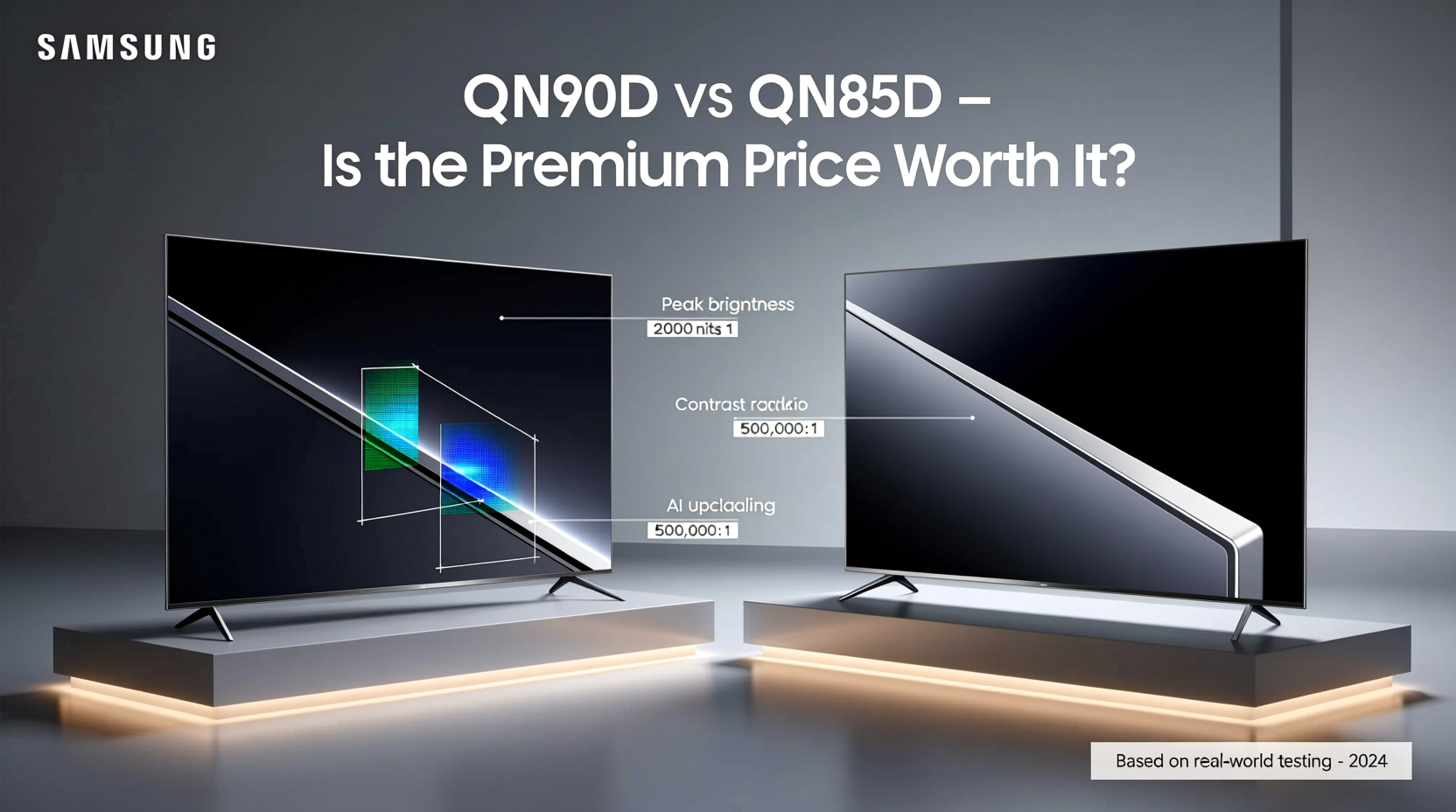
One of the most significant differences between the QN90D and QN85D lies in peak brightness and anti-glare technology. The QN90D uses Samsung’s latest **Ultra Slim One Connect** box and incorporates an upgraded anti-reflective coating that reduces ambient light interference by up to 60% compared to previous models. This makes it ideal for bright rooms with large windows or overhead lighting.
The QN90D achieves peak brightness levels of around **3,000 nits** in small highlight areas (HDR), thanks to its superior Mini LED backlight density and enhanced local dimming zones. In contrast, the QN85D reaches approximately **2,000–2,200 nits**, which is still excellent but noticeably less punchy when watching HDR content like nature documentaries or high-budget action films.
Panel Technology and Contrast Control
Both TVs use Quantum Matrix Technology with Mini LEDs for precise backlight control, but the QN90D features a denser array of dimming zones. For example, in the 65-inch size, the QN90D has **792 dimming zones**, while the QN85D has **576**. More zones mean finer control over dark and bright areas, reducing blooming (halos around bright objects on dark backgrounds) and improving overall contrast.
In a dark room, this distinction becomes apparent. Scenes with deep space vistas or nighttime cityscapes show cleaner blacks and more nuanced shadow detail on the QN90D. While the QN85D performs admirably, subtle gradients near edges can appear slightly smeared in comparison.
“Higher zone counts don’t just improve specs—they translate directly into realism. The QN90D renders starfields and candlelit interiors with a depth the QN85D can’t quite match.” — David Lin, Display Analyst at HD Benchmark Labs
Color Volume and Viewing Angles
Samsung equips both models with Quantum Dot color technology, delivering wide color gamut coverage (over 95% DCI-P3). However, the QN90D benefits from improved optical layers that maintain color accuracy at wider viewing angles. This is especially relevant in larger living rooms where viewers may sit off-center.
Side-seaters on the QN85D may notice slight color desaturation and contrast loss beyond a 30-degree angle, whereas the QN90D maintains vibrancy closer to 40 degrees. Additionally, the QN90D supports a broader color volume under HDR, meaning saturated reds, greens, and blues remain consistent even at high brightness levels—a key factor for cinematic content.
Gaming Features: Input Lag and Refresh Rate
For gamers, both TVs offer HDMI 2.1 ports, 4K@144Hz input, VRR (Variable Refresh Rate), and ALLM (Auto Low Latency Mode). However, the QN90D includes one crucial advantage: **enhanced thermal management** that sustains peak performance longer during extended gameplay sessions.
The QN90D also features a more responsive processing unit (Neo Quantum Processor 4K AI Gen 3), which delivers faster motion handling and better AI upscaling of sub-4K sources. Gamers playing fast-paced titles like *Call of Duty* or *Fortnite* will appreciate the smoother transitions and reduced blur.
| Feature | QN90D | QN85D |
|---|---|---|
| Peak Brightness (HDR) | ~3,000 nits | ~2,200 nits |
| Dimming Zones (65\") | 792 | 576 |
| Anti-Reflective Coating | Advanced multi-layer | Standard anti-glare |
| Viewing Angle Color Retention | Up to 40° | Up to 30° |
| HDMI 2.1 Ports | 2 full-bandwidth | 1 full-bandwidth |
| Processor | Neo Quantum 4K AI Gen 3 | Neo Quantum 4K AI Gen 2 |
Real-World Example: Living Room Upgrade Decision
Consider Sarah, a film enthusiast who recently upgraded her home theater setup. Her living room has floor-to-ceiling windows facing west, resulting in intense afternoon sunlight. She initially considered the QN85D due to its strong reviews and lower price tag. After testing both models side-by-side at a retail store under simulated bright conditions, she noticed the QN85D struggled with glare and lost detail in sunlit scenes from *Dune* and *Top Gun: Maverick*. The QN90D, however, maintained crisp highlights and readable shadows.
Though the QN90D cost $400 more, Sarah decided the long-term viewing experience justified the investment. “It’s not just about specs,” she said. “It’s about being able to watch what I love without adjusting blinds or waiting for sunset.”
Value Analysis: When the Premium Makes Sense
The QN90D isn’t universally necessary. For viewers in dimly lit rooms, casual streamers, or those primarily watching standard dynamic range (SDR) content, the QN85D offers nearly identical performance at a more accessible price point. Its picture quality remains outstanding, and many won’t perceive the incremental gains of the QN90D without direct comparison.
However, if you prioritize future-proofing, plan to watch a lot of HDR10+ or Dolby Vision content (supported via apps), play next-gen console games, or live in a bright environment, the QN90D delivers tangible improvements. Think of it as the difference between a luxury sedan and a well-equipped mid-tier model—the base version gets you there comfortably, but the premium option enhances every journey.
Step-by-Step: Choosing the Right Model for You
- Evaluate your room lighting. If natural or ambient light is strong, lean toward the QN90D for its anti-reflective screen and higher brightness.
- Assess your content diet. Heavy HDR, Blu-ray, or gaming usage favors the QN90D. Mostly Netflix and cable? The QN85D suffices.
- Check available HDMI ports. The QN90D includes two full-bandwidth HDMI 2.1 ports; the QN85D has only one. This matters if connecting multiple next-gen devices.
- Compare processor generations. The QN90D’s Gen 3 AI processor improves upscaling and voice response speed—useful for older content or voice-controlled homes.
- Set a budget with flexibility. If the difference is under $300 after promotions, the QN90D becomes a compelling long-term buy.
Frequently Asked Questions
Is the QN90D worth $500 more than the QN85D?
Not necessarily. If you’re sensitive to price and don’t need maximum brightness or elite gaming features, the QN85D offers 90% of the experience at 75% of the cost. However, if you want the best possible picture now and for years to come, the QN90D’s longevity may justify the premium.
Do both TVs support Dolby Vision?
No. Samsung does not license Dolby Vision for any of its TVs. Both models use HDR10+ instead, which is an open-source alternative supported by Amazon Prime Video and select 4K Blu-rays. Most major streaming platforms optimize for HDR10+, so this rarely impacts real-world usability.
Can I notice the difference in dimming zones?
Yes, but only in specific scenarios. Watch a bright object on a dark background—like credits on black or stars in space. On the QN85D, you might see faint halos. The QN90D minimizes these artifacts due to tighter local dimming control.
Final Recommendation
The Samsung QN90D is objectively the better-performing television. It shines brighter, controls contrast more precisely, resists glare more effectively, and supports more advanced connectivity. But “better” doesn’t always mean “necessary.” The QN85D remains one of the strongest mid-tier premium TVs on the market, delivering exceptional image quality for most households.
The higher price of the QN90D is worth it if you demand top-tier performance, watch a lot of HDR content, game frequently, or have challenging lighting conditions. For everyone else, the QN85D strikes an excellent balance between price and performance—one that shouldn’t be overlooked simply because it lacks the flagship badge.




 浙公网安备
33010002000092号
浙公网安备
33010002000092号 浙B2-20120091-4
Comments
No comments yet. Why don't you start the discussion?