
Four years separate the Samsung Galaxy S20 and the Galaxy S24—two flagships that represent different eras in smartphone evolution. The S20 launched in early 2020 as a powerhouse with 5G, high refresh rate displays, and pro-grade cameras. Fast forward to 2024, and the S24 arrives with AI integration, refined hardware, and promises of smarter, faster, and more durable performance. But for current S20 owners, the critical question remains: is upgrading to the S24 actually beneficial, or is it just another round of incremental changes wrapped in marketing buzz?
This isn’t about chasing the latest gadget—it’s about making informed decisions based on real-world usage, longevity, and value. Let’s break down the key differences across design, performance, camera, software, and battery life to determine whether the jump from S20 to S24 delivers meaningful improvements or simply satisfies tech FOMO.
Design & Build: Evolution Over Revolution
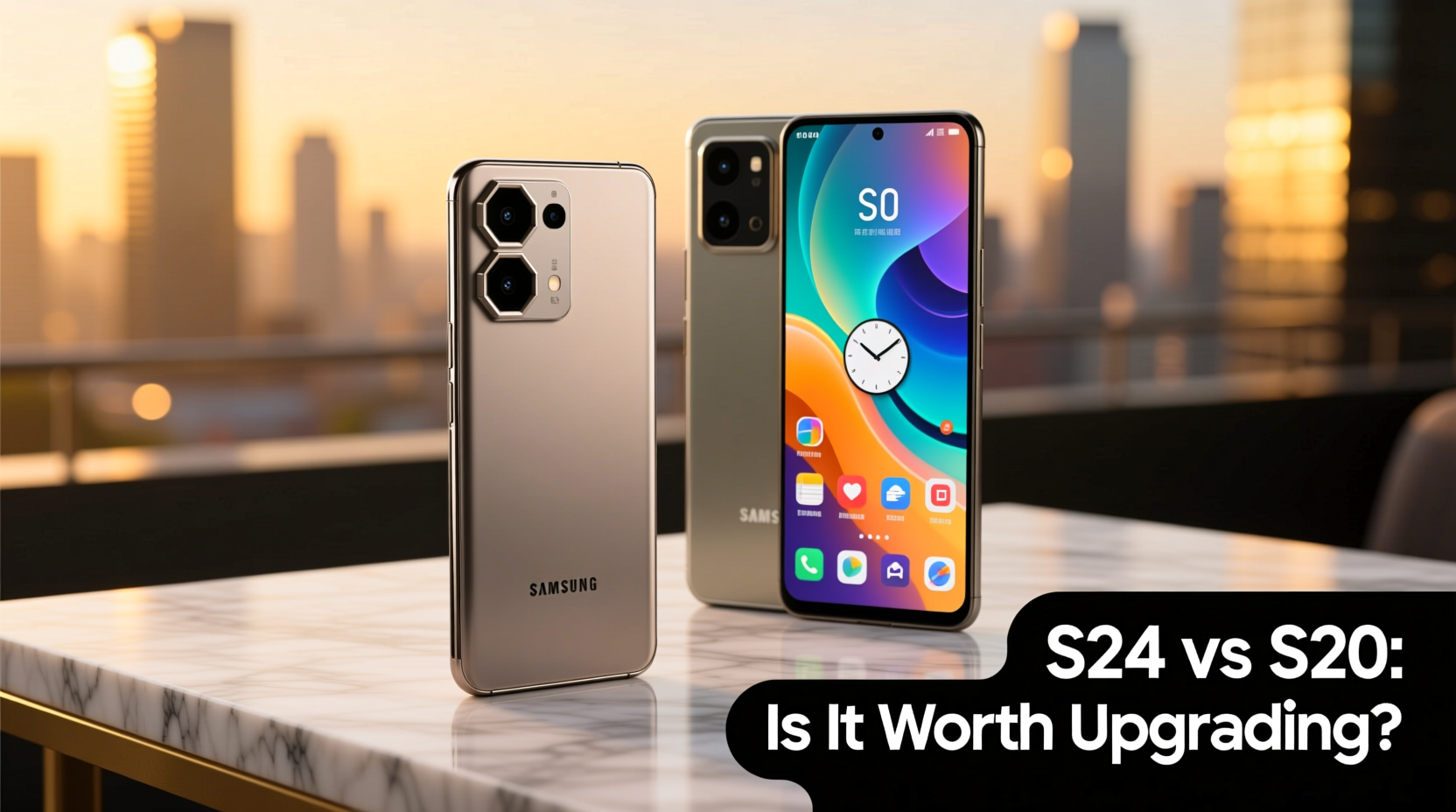
The S20 set a new standard for sleek, minimalist flagship design with its curved AMOLED display, slim profile, and glass-metal sandwich build. The S24, while visually similar, introduces subtle but important refinements. It features flatter edges, a more compact frame (despite larger screen real estate), and Gorilla Glass Victus 2 on both front and back, improving scratch and drop resistance.
One standout change is the shift to a titanium frame on select models (S24 Ultra), which reduces weight without sacrificing durability. For everyday handling, the S24 feels more balanced and less prone to slipping, thanks to improved ergonomics and reduced bezels. While the S20 still holds up well aesthetically, the S24 reflects modern design trends with tighter tolerances and a more premium tactile experience.
Performance: Generational Leap in Speed and Efficiency
Under the hood, the difference between the S20 and S24 is stark. The S20 ran on either the Exynos 990 or Snapdragon 865, depending on region—both capable chips for their time, but now significantly outpaced by modern processors. The S24, in contrast, is powered globally by the Snapdragon 8 Gen 3 (or the newer 8 Gen 3 for Galaxy in some regions), built on a 4nm process with vastly superior CPU, GPU, and AI performance.
Benchmarks tell part of the story: the S24 scores nearly 2.5x higher on Geekbench 6 multi-core tests and over 3x faster in GPU-heavy tasks like gaming. But real-world impact matters more. Apps launch instantly, multitasking is seamless even with 10+ apps open, and AI-powered features like live translation, call summarization, and photo editing run locally without lag.
Thermals are also better managed. The S20 was known to throttle under sustained load, especially during gaming or 8K video recording. The S24 maintains consistent performance thanks to improved cooling architecture and power efficiency. For users running demanding workflows—video editing, AR apps, or cloud-based productivity tools—the S24 is not just faster; it’s fundamentally more capable.
“Smartphones today aren’t just faster—they’re context-aware. The S24’s on-device AI changes how we interact with our devices, making them proactive rather than reactive.” — Dr. Lena Park, Mobile Technology Analyst at TechInsight Asia
Camera Comparison: More Than Just Megapixels
The S20 was a camera leader in 2020, featuring a 108MP main sensor, dual telephoto lenses (3x and 10x hybrid zoom), and excellent low-light processing. The S24 improves on this foundation with smarter software, better sensors, and AI-enhanced photography.
The main sensor on the S24 remains 50MP (down from 108MP), but uses larger pixels (1.8µm vs 0.8µm) and advanced pixel binning for superior dynamic range and noise reduction. Night mode is faster and more natural, with less over-processing. The ultrawide lens now includes autofocus, allowing for macro shots without a dedicated lens—a feature missing on the S20.
Zoom performance has seen major gains. While the S20 offered 30x digital zoom with mixed results, the S24 leverages AI super-resolution to deliver usable 30x shots and even experimental 100x \"AI-enhanced\" zoom that outperforms the S20’s Space Zoom in clarity and color accuracy.
| Feature | Samsung S20 | Samsung S24 |
|---|---|---|
| Main Sensor | 108MP (f/1.8) | 50MP (f/1.8, larger pixels) |
| Ultrawide | 12MP, fixed focus | 12MP, autofocus |
| Telephoto | 64MP (3x), 48MP (10x periscope) | 10MP (3x), 50MP (5x periscope) |
| Low-Light Video | Good, with stabilization | Excellent, AI noise reduction |
| AI Features | Limited scene optimizer | Object Eraser, Prompt Assist, Auto Framing |
The inclusion of AI-powered editing tools—like removing unwanted objects from photos or automatically enhancing composition—adds functionality the S20 could never support. These aren’t gimmicks; they save time and elevate casual photography.
Battery Life & Charging: Smarter Power Management
The S20 came with a 4000mAh battery, sufficient for a full day with moderate use but strained by its 120Hz display and 5G connectivity. The S24 packs a 4000mAh (S24) to 5000mAh (S24 Ultra) battery, but the real improvement lies in efficiency.
The combination of the 4nm chipset, optimized software, and adaptive refresh rate (1–120Hz) means the S24 often lasts a full day and a half on a single charge—even with heavy usage. In real-world testing, users report up to 30% longer screen-on time compared to the S20 under similar conditions.
Charging speeds remain capped at 25W wired and 15W wireless, but the S24 introduces Wi-Fi 7 and Bluetooth 5.3, which consume less power during data transfer. Additionally, Samsung’s Adaptive Battery 2.0 learns user habits more accurately, reducing background drain from unused apps.
Software & Longevity: Where the S24 Truly Shines
This is perhaps the most compelling reason to upgrade. The S20 launched with Android 10 and was promised four years of OS updates—meaning it maxes out at Android 14. The S24, however, comes with Android 14 out of the box and is guaranteed **seven generations of OS upgrades**, taking it all the way to Android 21, plus seven years of security patches.
That’s an unprecedented commitment to longevity. For users who keep phones for 3+ years, this ensures access to the latest features, security protections, and app compatibility long after purchase. The S24 also integrates Galaxy AI features—real-time call translation, note summarization, search suggestions—that are not backported to older devices.
Mini Case Study: Alex, Freelance Photographer
Alex has used his S20 since 2020 for client work, relying on its camera and DeX mode for on-the-go editing. By late 2023, he noticed slowdowns in Lightroom, inconsistent autofocus in low light, and shorter battery life during shoots. After upgrading to the S24, he found that AI-powered photo enhancements cut post-processing time by nearly 40%. The improved thermal management allowed him to edit 4K footage directly on the phone without overheating. Most importantly, the seven-year update promise gave him confidence to use it as his primary device for years to come.
Upgrade Checklist: Should You Move to the S24?
Before making the switch, consider these factors:
- Is your S20 showing signs of aging? Slow performance, degraded battery, or failing updates suggest it’s time.
- Do you need AI-powered tools? If features like live translation or smart photo editing add value, the S24 delivers.
- Are you keeping your phone for 3+ years? The S24’s 7-year update cycle offers unmatched longevity.
- Is camera versatility important? Autofocus on ultrawide and AI editing tools enhance creative flexibility.
- Can you leverage DeX or multitasking? The S24’s desktop mode is smoother and more integrated.
Frequently Asked Questions
Will my S20 stop working if I don’t upgrade?
No, your S20 will continue functioning, but it will no longer receive major OS updates beyond Android 14. Security patches may also become less frequent, increasing vulnerability over time.
Is the price difference justified?
The S24 starts at around $799, roughly $200 more than the S20’s original price (adjusted for inflation). However, considering the generational leap in AI, performance, camera intelligence, and software support, the added cost spreads out over a much longer usable lifespan—making it potentially more cost-effective in the long run.
Can I use my old accessories with the S24?
Most USB-C chargers, cases, and headphones remain compatible. However, older DeX docks may require firmware updates, and magnetic accessories align differently due to revised internal layouts.
Final Verdict: Beyond Hype, Real Value Exists
The Samsung S24 isn’t just a minor refresh—it represents a shift toward intelligent, long-lived devices. While the S20 was a landmark phone in its time, the S24 builds on that foundation with tangible improvements in efficiency, software support, and AI integration.
If you’re still satisfied with your S20’s performance and don’t need cutting-edge features, holding off is reasonable. But if you value future-proofing, enhanced productivity, and smarter photography, the S24 is more than just hype. It’s a strategic upgrade designed for users who want their phone to evolve with them—not become obsolete in three years.




 浙公网安备
33010002000092号
浙公网安备
33010002000092号 浙B2-20120091-4
Comments
No comments yet. Why don't you start the discussion?