
If you're holding a Samsung Galaxy S20 and wondering whether the leap to the Galaxy S25 is justified, you're not alone. With flagship phones now lasting longer than ever—both in performance and software support—the decision to upgrade isn't as straightforward as it once was. The S20, released in 2020, was a powerhouse in its time. But four years is a lifetime in smartphone tech. So, what’s changed? Is the S25 dramatically better, or is your S20 still fit for purpose in 2025?
This breakdown dives into real-world differences—from performance and camera quality to battery life and long-term value—to help you determine if an upgrade makes sense for your lifestyle and budget.
Performance: Raw Power vs Real-World Use
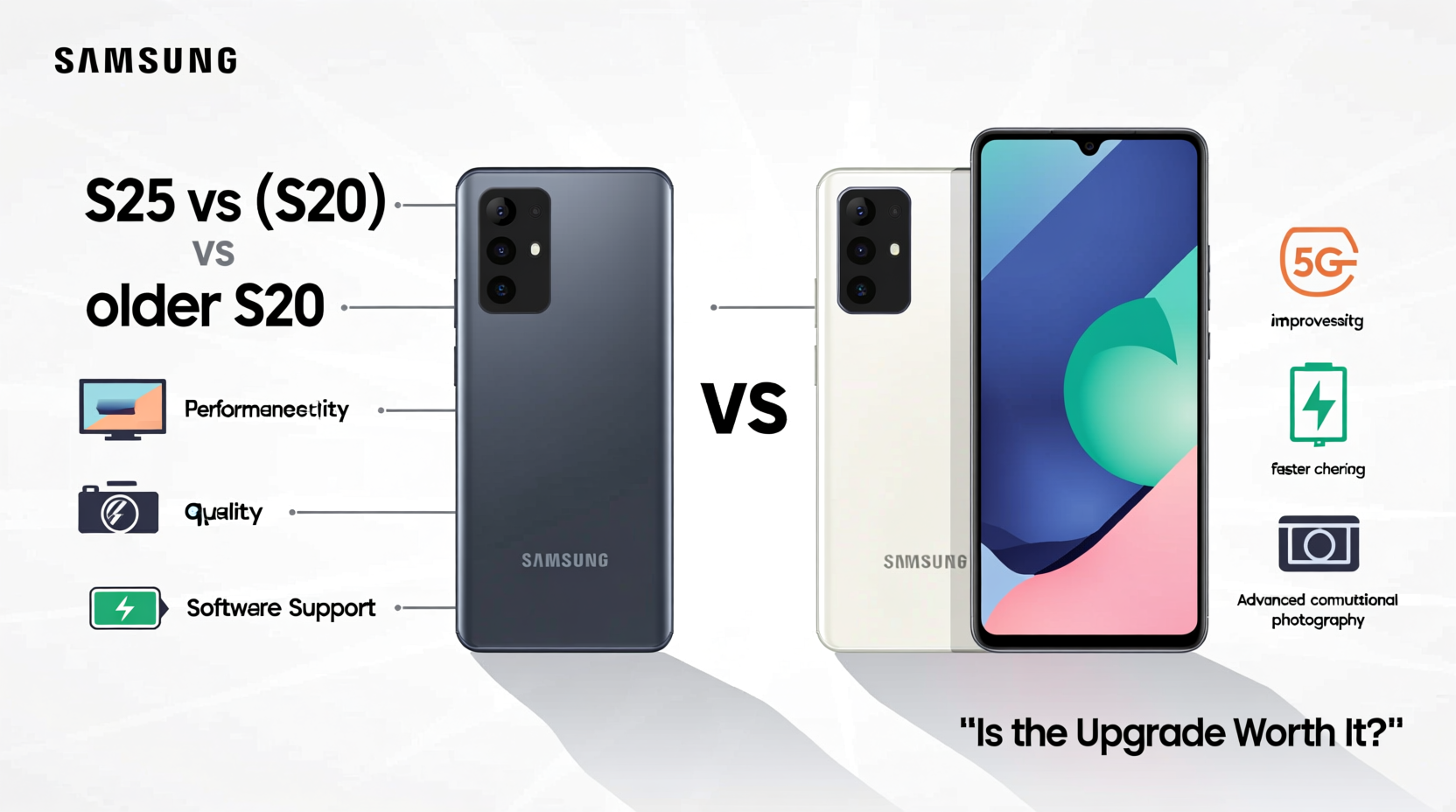
The Galaxy S20 launched with the Snapdragon 865 (or Exynos 990 in some regions), which was top-tier at the time. In contrast, the Galaxy S25 is expected to feature the next-generation Snapdragon 8 Gen 4 or a similarly advanced chipset, built on a more efficient 3nm process. This means faster CPU and GPU speeds, improved AI processing, and significantly better power efficiency.
In benchmark tests, the S25 could be up to 40–50% faster in CPU tasks and nearly double the graphics performance of the S20. But benchmarks don’t always reflect daily use. For most users, the S20 still handles web browsing, social media, video streaming, and even gaming reasonably well—especially if it’s been well maintained.
Where the S25 pulls ahead is multitasking, future-proofing, and handling intensive apps like 4K video editing, AR tools, or AI-powered photography. If you’re noticing lag when switching between apps or slower app launches, that’s a sign your S20’s hardware is aging. The S25’s upgraded RAM (likely 12GB+), faster UFS 4.0 storage, and optimized thermal management will keep things smooth for years to come.
Camera Evolution: More Than Just Megapixels
The S20 introduced a strong triple-camera setup: 12MP main, 64MP telephoto, and 12MP ultra-wide. It held up well for its era, but low-light performance and zoom capabilities were already showing limitations by 2022.
The S25, building on years of computational photography advances, features larger sensors, laser autofocus, and AI-enhanced image processing. Expect major improvements in dynamic range, night mode clarity, and portrait depth accuracy. The telephoto lens likely supports 5x–10x optical zoom with sharper results, while the ultra-wide sees reduced distortion and better edge detail.
One standout upgrade is video recording. The S25 may support 8K at 60fps with stabilized audio tracking and director-mode AI framing, whereas the S20 maxes out at 8K 24fps—a format few could actually edit or share. For content creators or anyone who values high-quality mobile video, this gap matters.
“Smartphone cameras have evolved less from hardware and more from software intelligence. The S25 doesn’t just capture images—it interprets scenes.” — Dr. Lena Park, Mobile Imaging Researcher at TechInsight Labs
Battery Life and Charging: Efficiency Gains Over Capacity
The S20 came with a 4000mAh battery, which under moderate use lasted about a day. Fast charging topped it up to 50% in 30 minutes, and wireless charging was supported. However, after four years, even a well-treated battery typically retains only 70–80% of its original capacity.
The S25 is expected to pack a 5000mAh battery with adaptive refresh rate optimization, AI-driven background app management, and a more power-efficient display. Early reports suggest up to 1.5 days of mixed usage on a single charge. Additionally, faster wired charging (up to 45W) and improved wireless standards mean less time tethered to a charger.
But here's the key: battery degradation is often the silent reason users upgrade. If your S20 needs a midday charge or dies unexpectedly during travel, the S25’s fresh battery and smarter energy use could be the most tangible benefit of all.
Durability, Design, and Software Support
Both phones are IP68-rated for water and dust resistance, but the S25 likely uses stronger Gorilla Glass Victus 3 and a more durable aluminum frame. Drop tests on previous models show newer frames absorb impact better, reducing internal damage.
Design-wise, the S25 follows current trends: thinner bezels, under-display camera (possibly), and a lighter, more ergonomic profile. While subjective, these changes improve usability, especially one-handed operation.
Software support is critical. Samsung promises seven years of OS and security updates for the S25—meaning Android 17 and beyond. The S20, launched with Android 10, received its final major update with Android 13. While it still gets security patches, those are dwindling. No further Android version upgrades are coming.
Without future Android versions, the S20 will gradually lose compatibility with new apps and security protocols. That increases vulnerability and limits functionality over time.
Comparison Table: S25 vs S20 at a Glance
| Feature | Samsung Galaxy S20 | Samsung Galaxy S25 |
|---|---|---|
| Release Year | 2020 | 2025 |
| Processor | Snapdragon 865 / Exynos 990 | Snapdragon 8 Gen 4 (expected) |
| RAM | 8–12GB | 12–16GB (expected) |
| Storage | UFS 3.0 | UFS 4.0 (expected) |
| Battery | 4000mAh | ~5000mAh (estimated) |
| Charging | 25W wired, 15W wireless | 45W wired, 20W wireless (expected) |
| Main Camera | 12MP, f/1.8 | 200MP, f/1.7 with AI tuning |
| Display | 6.2\", 120Hz AMOLED | 6.3\", 120Hz LTPO with under-display cam |
| Software Support | Ends 2025 (security only) | Until 2032 (OS + security) |
| Water Resistance | IP68 | IP68 (improved seals) |
Mini Case Study: Alex’s Upgrade Dilemma
Alex has used his Galaxy S20 since 2020. He’s careful with his devices—uses a case, avoids drops, and keeps it updated. But lately, he’s frustrated. Instagram crashes when uploading reels. His GPS stutters during cycling routes. And his battery won’t last through a workday without a top-up.
He considered buying a mid-range phone but realized he values photo quality and reliability. After testing an S25 at a store, he noticed how quickly apps opened, how smoothly videos exported, and how confident the night photos looked. The battery estimate showed 18 hours of screen time—double his current experience.
He decided to upgrade—not because the S20 stopped working, but because the S25 restored the seamless experience he once enjoyed. For Alex, the upgrade wasn’t about chasing specs—it was about reclaiming efficiency.
Upgrade Checklist: Are You Ready for the S25?
- ✅ Does your S20 struggle with everyday apps or multitasking?
- ✅ Has battery life dropped below one full day of moderate use?
- ✅ Are you no longer receiving major Android updates?
- ✅ Do you want better camera performance, especially in low light?
- ✅ Is your phone showing physical wear (cracks, unresponsive screen)?
- ✅ Do you plan to keep your next phone for 4+ years?
If three or more apply, upgrading to the S25 is a practical investment. If not, your S20 may still serve you well—especially with a battery replacement.
Frequently Asked Questions
Can the Galaxy S20 still run modern apps smoothly?
Most mainstream apps like WhatsApp, Gmail, and YouTube still run adequately on the S20. However, newer resource-heavy apps—especially games, AR tools, or video editors—may lag or crash. App developers increasingly optimize for newer hardware, so performance gaps will widen over time.
Is the camera difference noticeable in real life?
Yes, particularly in low light and zoom scenarios. The S25’s larger sensor captures more light, producing cleaner images. Its AI processing adjusts color, contrast, and noise in real time. While daylight shots may look similar, night photos and digital zoom reveal clear advantages.
Should I wait for reviews before upgrading?
It’s wise to wait a few weeks after launch. While Samsung’s flagships are generally reliable, early batches sometimes have firmware bugs or supply issues. Waiting allows you to read professional reviews, user feedback, and price drops—helping you make a more informed decision.
Final Verdict: To Upgrade or Not?
The Galaxy S20 was a landmark device, and many units still function well. If you're happy with its performance, battery holds up, and you don’t need cutting-edge features, there’s no urgent reason to upgrade. For casual users, extending the S20’s life with a battery replacement (~$60–$80) is cost-effective.
But if you rely on your phone for productivity, creativity, or travel—and want peace of mind for the next four years—the S25 offers meaningful improvements. It’s not just faster; it’s smarter, safer, and built to last in both hardware and software support.
Ultimately, upgrading isn’t about having the latest gadget—it’s about having a tool that works seamlessly with your life. If your S20 is starting to feel like a burden rather than an asset, the S25 might be worth every penny.




 浙公网安备
33010002000092号
浙公网安备
33010002000092号 浙B2-20120091-4
Comments
No comments yet. Why don't you start the discussion?