
For millions of users still holding onto their Samsung Galaxy S8, the question isn’t just about whether their phone still works—it’s about whether it still makes sense. Meanwhile, the Galaxy A32 represents a modern mid-range option with updated hardware and software support. So, if you're on an S8 and considering a jump to an A32, is the upgrade actually worthwhile? The answer depends on what you value most: raw nostalgia for flagship design, or practical improvements in longevity, security, and usability.
The Galaxy S8 launched in 2017 as a premium device—revolutionary at the time with its edge-to-edge display and sleek glass-and-metal build. Fast forward to today, and while it may still boot up and run basic apps, it's far removed from current standards. The A32, released in 2021, belongs to a newer generation with longer software support, better cameras, and more reliable connectivity. Let’s break down the real differences that matter in daily use.
Design and Build: Premium Legacy vs Modern Practicality
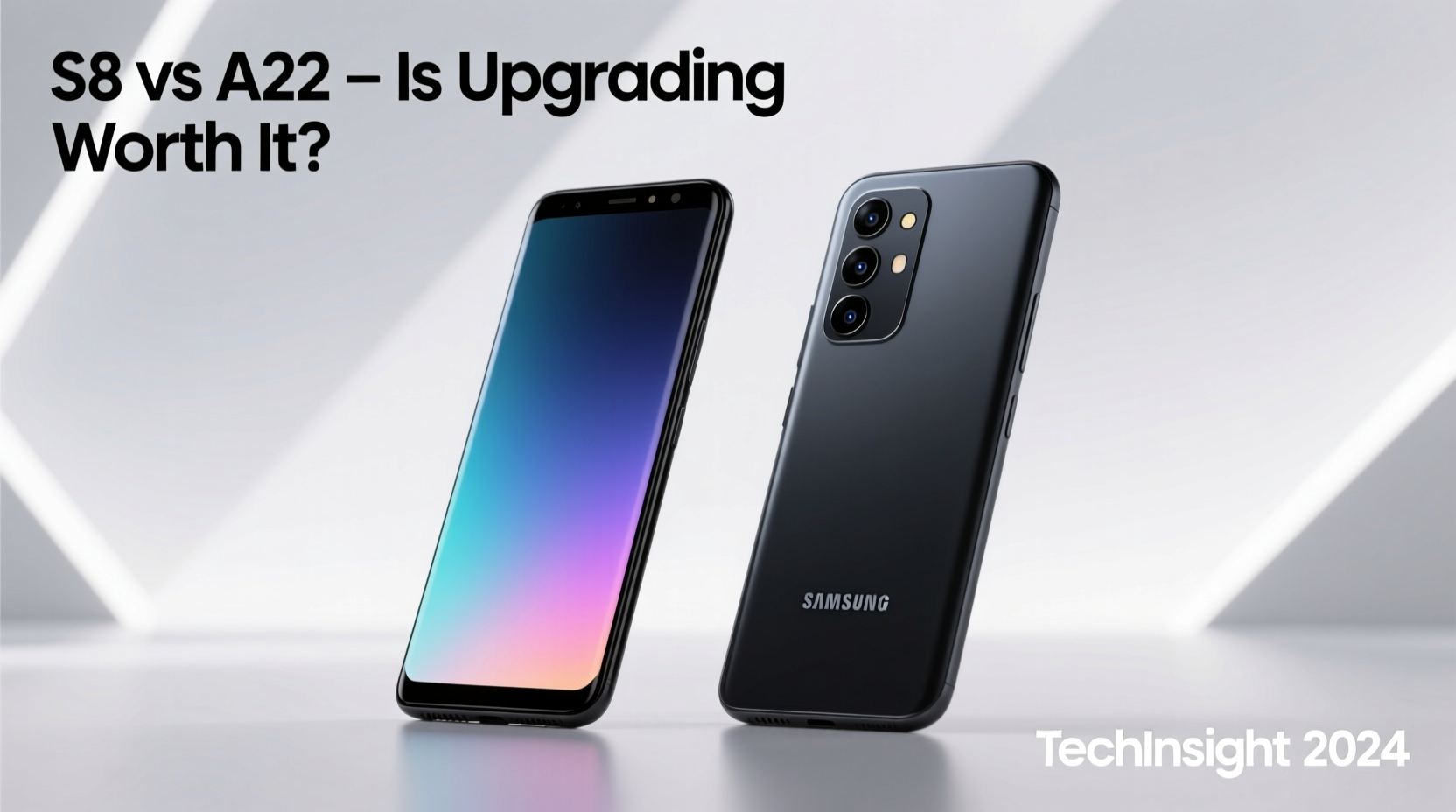
The S8 remains one of Samsung’s most iconic designs. Its curved 5.8-inch Quad HD+ Super AMOLED display was stunning in its era, offering vibrant colors and deep blacks. The glass back and aluminum frame gave it a high-end feel, though it was notoriously slippery and fragile without a case.
In contrast, the A32 takes a utilitarian approach. It has a larger 6.4-inch HD+ Super AMOLED display with a teardrop notch instead of the S8’s infinity display. While the resolution is lower, the screen is brighter and more usable under sunlight. The plastic build makes it lighter and more durable, though less luxurious. It also adds a side-mounted fingerprint sensor—a small but meaningful improvement over the S8’s awkward rear-placed sensor.
Performance and Software: Generational Gap in Real-World Use
This is where the S8 starts to show its age dramatically. Powered by the Snapdragon 835 (or Exynos 8895), the S8 was blazing fast in 2017. Today, even light multitasking can cause lag. Apps take longer to load, background processes struggle, and newer versions of Android are unsupported. The S8 topped out at Android 9 with One UI 1.0—missing out on four years of security patches and feature updates.
The A32 runs on the MediaTek Helio G80 or Snapdragon 450 (depending on region), paired with 4GB or 6GB of RAM. While not a powerhouse, this chip handles everyday tasks smoothly: web browsing, social media, video streaming, and even casual gaming. More importantly, it supports Android 11 upgradable to Android 13, with security updates expected through 2024–2025. That means safer banking, better app compatibility, and access to modern features like dark mode, improved notifications, and Google Discover.
“Software support life expectancy is now as important as hardware specs. A phone without updates is a vulnerable phone.” — David Kim, Mobile Security Analyst at TechShield Insights
Camera Comparison: From Flagship Photography to Everyday Versatility
The S8 featured a single 12MP rear camera with Dual Pixel autofocus and f/1.7 aperture—one of the best shooters of its time. In good lighting, it still produces sharp, natural-looking photos. However, low-light performance lacks the computational photography found in modern devices, and there’s no ultra-wide lens.
The A32 steps up with a quad-camera array: 64MP main sensor, 8MP ultra-wide, 5MP macro, and 2MP depth. The higher megapixel count doesn’t always mean better quality, but the processing advantages are clear. Night mode, HDR enhancements, and scene optimization make a difference in challenging conditions. The ultra-wide lens adds creative flexibility, and the front-facing 20MP camera outperforms the S8’s 8MP selfie shooter significantly.
| Feature | Samsung Galaxy S8 | Samsung Galaxy A32 |
|---|---|---|
| Display | 5.8\" Quad HD+ AMOLED | 6.4\" HD+ AMOLED |
| Processor | Snapdragon 835 / Exynos 8895 | Helio G80 / Snapdragon 450 |
| Rear Camera | 12MP (f/1.7) | 64MP + 8MP UW + 5MP Macro + 2MP Depth |
| Front Camera | 8MP | 20MP |
| Battery | 3000 mAh | 5000 mAh |
| Charging | Fast charging (wired only) | 15W fast charging |
| Software Support | Ended at Android 9 | Up to Android 13, security until 2025 |
| RAM Options | 4GB | 4GB or 6GB |
| Storage | 64GB (expandable) | 64GB or 128GB (expandable) |
| Fingerprint Sensor | Rear-mounted | Side-mounted |
Battery Life and Charging: From All-Day Anxiety to Two-Day Comfort
The S8’s 3000 mAh battery was adequate in 2017 but struggles today. With modern app demands and degraded cells over time, most S8 users report needing to charge by mid-afternoon—even with light use. Wireless charging is a nice perk, but the lack of fast charging beyond 15W limits convenience.
The A32’s 5000 mAh battery is a game-changer. It easily lasts a full day with heavy use and often stretches into a second day with moderate usage. This is especially valuable for people on the go, travelers, or those who dislike carrying power banks. Combined with consistent performance and optimized software, the A32 offers a stress-free mobile experience the S8 simply can’t match anymore.
Real-World Example: Maria’s Upgrade Journey
Maria had been using her Galaxy S8 since 2018. She loved the compact size and smooth interface when it first launched. But by 2023, she noticed constant app crashes, slow loading times on Instagram, and frequent overheating during video calls. Her phone wouldn’t accept the latest WhatsApp update, putting her at risk of losing access to messages.
She upgraded to a used A32 for $180. Immediately, she noticed the screen was easier to read outdoors, apps opened faster, and her battery lasted much longer. She could finally join her kids’ school group chats without freezing. “I didn’t realize how much I was missing until I had a phone that just worked,” she said. “It’s not flashy, but it does everything I need reliably.”
Is Upgrading Really Worth It? A Step-by-Step Decision Guide
Before making the leap, assess your current situation with these steps:
- Evaluate daily frustrations: Are you experiencing slow performance, app crashes, or failed updates?
- Check software status: Does your S8 still receive security patches? (Answer: No.)
- Test battery health: If it drops below 20% in 3 hours of light use, it’s likely degraded.
- Consider your usage: Do you use navigation, streaming, or video calls regularly? These benefit greatly from newer hardware.
- Compare cost vs. benefit: Refurbished A32 models start around $150–$200. For that price, you gain 3+ years of usable life versus 6–12 months on an aging S8.
Frequently Asked Questions
Can the Galaxy S8 still run modern apps?
Some apps will install, but many—including banking, ride-sharing, and social platforms—now require newer Android versions or more RAM. Performance will be sluggish even if they run.
Is the A32 waterproof like the S8?
No. The S8 has IP68 water resistance; the A32 has no official rating. You’ll need to be more cautious around liquids, though it does include a protective coating.
Will my accessories work with the A32?
Most Bluetooth devices (earbuds, speakers) will pair fine. However, older micro-USB accessories won’t connect unless adapted—since the A32 uses USB-C, just like the S8.
Final Verdict: Yes, Upgrading Is Worth It—for Most Users
If you’re clinging to your Galaxy S8 out of sentiment or fear of change, it’s time to reconsider. While it was a groundbreaking device, technology has moved on. The A32 may not have the same prestige, but it delivers tangible improvements: longer battery life, better cameras, modern software, and greater reliability.
Unless you’re using the S8 as a secondary device or collector’s item, upgrading to the A32—or any similarly priced modern phone—is a smart investment in usability and digital safety. The peace of mind from having a responsive, secure, and supported device outweighs nostalgic design appeal.




 浙公网安备
33010002000092号
浙公网安备
33010002000092号 浙B2-20120091-4
Comments
No comments yet. Why don't you start the discussion?