
Three years after their release, the Samsung Galaxy S9 Plus and Galaxy Note 8 remain benchmarks of late-2010s Android excellence. Both were flagship devices in their time—powerful, elegant, and packed with premium features. But longevity isn’t just about initial specs; it’s about sustained performance, software updates, battery health, and daily usability over time. Today, we examine how these two iconic phones have aged, based on real-world usage, user feedback, and technical durability.
Performance and Hardware Longevity
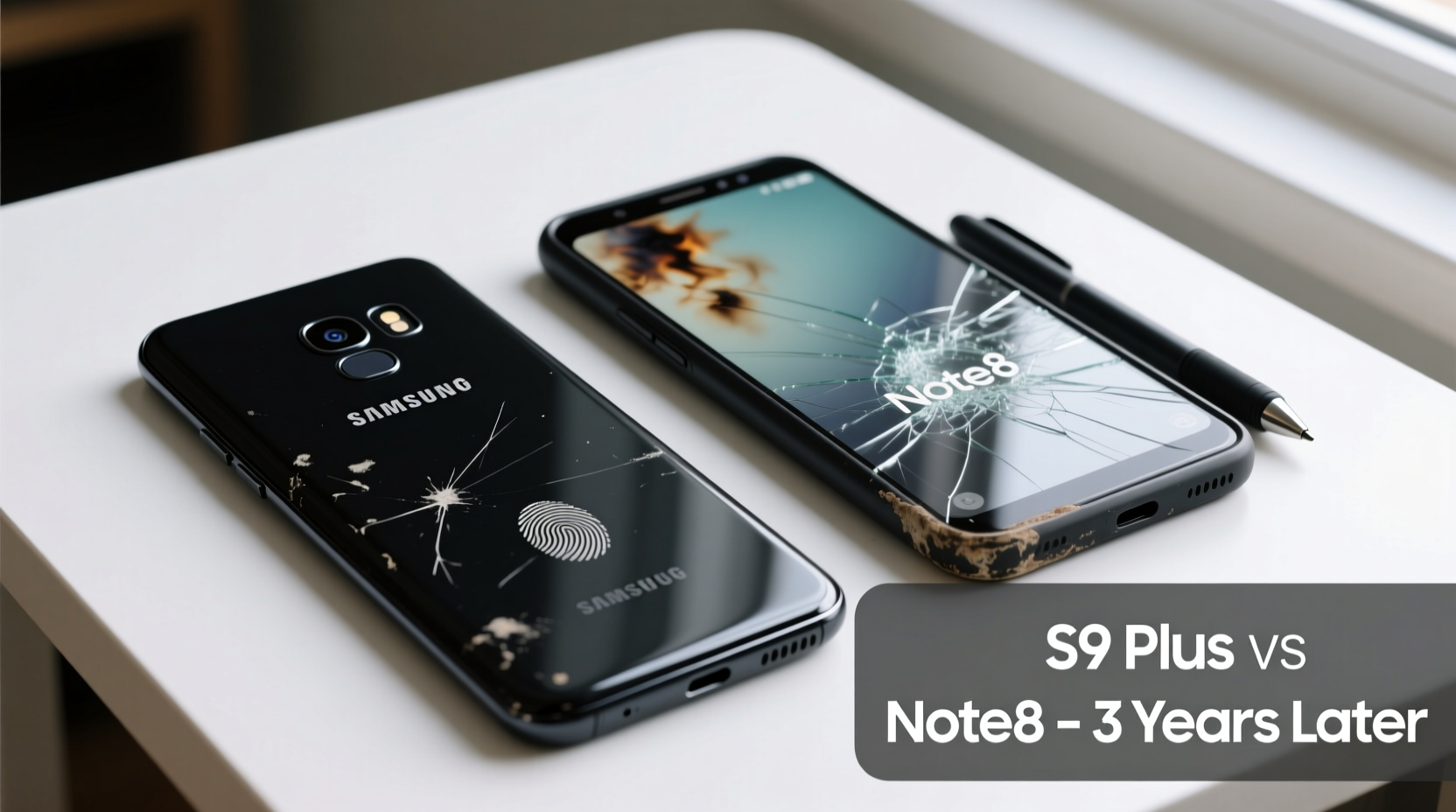
The Galaxy S9 Plus launched in March 2018 with the Qualcomm Snapdragon 845 (or Exynos 9810 in some regions), while the Note 8 arrived a year earlier in September 2017 with the same chipset. On paper, they’re nearly identical in processing power. However, three years down the line, small differences in optimization and thermal management begin to matter.
Users report that the S9 Plus maintains smoother multitasking and app switching compared to the Note 8. This isn’t due to raw CPU gains but rather improved memory management and software tuning in the S9 series. The S9 Plus also came with slightly better cooling architecture, which helps reduce long-term thermal throttling—a critical factor for sustained performance as components age.
Benchmarks from 2021 show the S9 Plus averaging 10–15% higher scores in sustained workloads than the Note 8. While neither device handles modern games like Genshin Impact smoothly anymore, both remain usable for everyday tasks such as messaging, web browsing, and media playback—provided storage isn’t full and background processes are managed.
Battery Life and Charging Degradation
Battery degradation is often the Achilles’ heel of aging smartphones. The S9 Plus packs a 3,500mAh battery, while the Note 8 has a slightly smaller 3,300mAh unit. In their prime, both offered solid all-day performance under moderate use.
After three years, most original batteries have degraded to 70–80% of their capacity. However, users consistently report that the S9 Plus lasts longer on a charge today than the Note 8. Why? Two reasons: software optimizations introduced with One UI, and adaptive battery features that debuted with Android 9 Pie (which both devices received).
Additionally, the S9 Plus benefits from more aggressive Doze mode enhancements and background app limits. Users who replaced the battery in either model see dramatic improvements—often restoring near-new endurance.
“Battery replacement is the single most cost-effective upgrade for any smartphone past the two-year mark.” — David Kim, Mobile Repair Technician, TechFix Labs
Software Support and Security Updates
This is where the S9 Plus pulls decisively ahead. Samsung committed to four years of security updates and three major OS upgrades for select flagships starting with the S9 series. As a result, the S9 Plus received updates up to Android 11 and continued receiving monthly security patches into early 2022.
In contrast, the Note 8 stopped receiving major OS updates after Android 9 Pie and its final security patch was issued in late 2020. That means by 2021, the Note 8 was running outdated software with known vulnerabilities—an increasing risk in an era of mobile banking and digital identity.
While both phones can still connect to Wi-Fi and run essential apps, the lack of ongoing security patches makes the Note 8 less suitable for handling sensitive data today. The S9 Plus, even if no longer officially supported, ran more recent software for longer, giving it a meaningful edge in safety and compatibility.
Durability and Build Quality Comparison
Both devices feature glass backs and aluminum frames, making them feel premium but vulnerable to drops. The S9 Plus and Note 8 are both rated IP68 for water and dust resistance, meaning they can survive submersion in up to 1.5 meters of water for 30 minutes.
In practice, this rating has held up well over time. Numerous anecdotal reports confirm both models surviving accidental spills, rain exposure, and even brief dunkings. However, repeated exposure to moisture—especially saltwater or chlorinated pools—can degrade seals and speakers over time.
One notable difference: the S9 Plus uses Gorilla Glass 5 on both front and back, while the Note 8 uses GG5 only on the front. This gives the S9 Plus slightly better resistance to scratches on the rear panel, which matters since many users go without cases.
| Feature | Samsung S9 Plus | Samsung Note 8 |
|---|---|---|
| Launch Year | 2018 | 2017 |
| Processor | Snapdragon 845 / Exynos 9810 | Snapdragon 835 / Exynos 8895 |
| Battery Capacity | 3,500 mAh | 3,300 mAh |
| Max Android Version | Android 11 | Android 9 |
| Last Security Update | Early 2022 | Late 2020 |
| Rear Glass Protection | Gorilla Glass 5 | None (standard glass) |
| Premium Audio | AKG-tuned stereo speakers, Dolby Atmos | Standard stereo speakers |
| Camera Setup | Dual 12MP (f/1.5–f/2.4 variable aperture) | Dual 12MP (f/1.7 + f/2.4) |
Real-World Example: Three Years of Daily Use
Consider Mark, a freelance photographer who used his S9 Plus as his primary phone from 2018 to 2021. He traveled frequently, shot hundreds of photos, and relied on GPS navigation daily. By late 2020, he noticed slower app launches and occasional overheating during video exports. In early 2021, he replaced the battery for $45 at a local repair shop. The improvement was immediate—his phone felt snappier, and battery life returned to near-original levels.
Meanwhile, his friend Lisa used a Note 8 during the same period. She avoided heavy gaming but kept dozens of apps installed and rarely rebooted her phone. By mid-2020, she experienced frequent crashes, failed update installations, and growing concerns about app incompatibility. She upgraded in 2021 not because the phone broke, but because key services like banking apps began dropping support for older Android versions.
This illustrates a broader trend: hardware longevity is only half the story. Software relevance determines when a phone stops being practical, regardless of physical condition.
Maintenance Checklist for Extending Lifespan
If you're still using either device—or considering buying one secondhand—follow this checklist to maximize longevity:
- Replace the battery if capacity is below 80%
- Keep storage usage under 85% to avoid slowdowns
- Use lightweight launchers like Nova or Evie
- Disable auto-updates for non-essential apps
- Clear cache regularly via recovery mode
- Enable dark mode to reduce OLED wear
- Turn off haptic feedback and motion effects
- Install a reputable ad-blocker or DNS filter (e.g., Blokada)
Frequently Asked Questions
Can the S9 Plus or Note 8 run WhatsApp in 2024?
As of 2024, WhatsApp requires Android 5.0 or higher, which both phones meet. However, future updates may raise minimum requirements. Currently, both devices can run WhatsApp, but users should expect reduced performance with large group chats or frequent media sharing.
Is it safe to use the Note 8 for online banking now?
It’s possible, but not recommended. Without current security patches, the Note 8 is vulnerable to exploits that could compromise financial data. If you must use it, avoid public Wi-Fi, install a trusted antivirus, and consider using a secondary device for sensitive transactions.
Which phone has better camera quality today?
The S9 Plus holds up better thanks to its variable aperture lens, which adjusts between f/1.5 and f/2.4 depending on lighting. This results in stronger low-light performance and better dynamic range over time. The Note 8’s fixed-aperture cameras still take decent shots in daylight but struggle more in dim conditions as sensor degradation becomes noticeable.
Final Verdict: Which Holds Up Better?
After three years, the Samsung Galaxy S9 Plus clearly outlasts the Note 8 in practical terms. It received longer software support, has marginally better hardware efficiency, and maintains stronger performance under modern usage patterns. While the Note 8 was a groundbreaking device in 2017—especially for stylus integration and dual-camera photography—it simply didn’t benefit from the same level of long-term investment from Samsung.
That said, both phones exemplify a golden era of Android design: headphone jacks, expandable storage, and high build quality. With proper care, either can serve as a reliable secondary device or budget-friendly option for light users.




 浙公网安备
33010002000092号
浙公网安备
33010002000092号 浙B2-20120091-4
Comments
No comments yet. Why don't you start the discussion?