
When choosing between the Samsung Galaxy Tab S8 and the Galaxy Tab A8, the decision often comes down to budget versus capability. On paper, both are Android tablets from the same manufacturer, but in practice, they serve entirely different user needs. The Tab S8 commands a significantly higher price than the A8 — but is it worth it? Understanding the tangible differences in performance, build quality, display, software support, and accessory compatibility reveals exactly what justifies that premium.
Performance: Chipset and Multitasking Capabilities
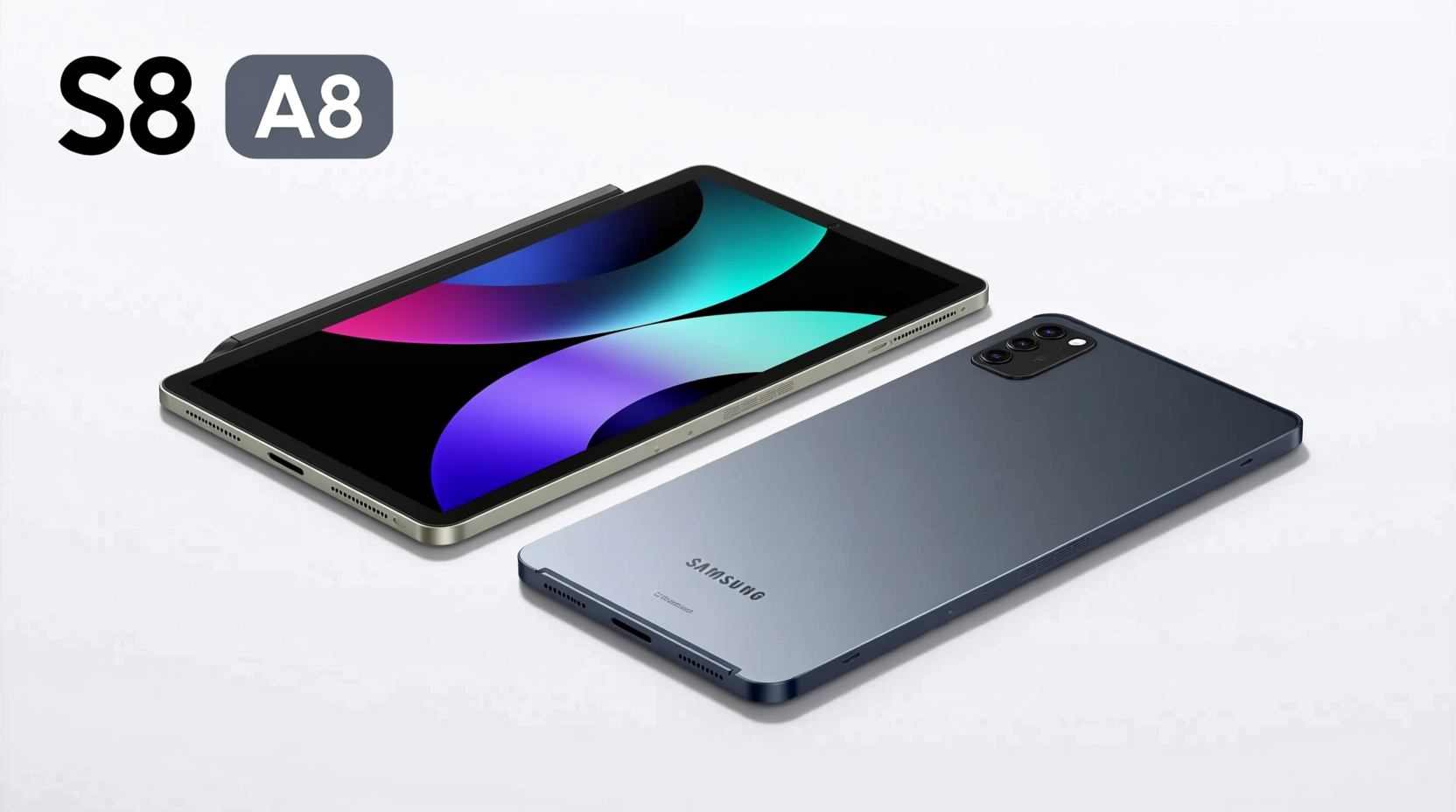
The most immediate difference lies under the hood. The Tab S8 is powered by Qualcomm’s flagship Snapdragon 8 Gen 1 processor, a chip designed for high-end smartphones and tablets. This enables smooth multitasking, rapid app launches, and seamless handling of graphically intensive tasks like video editing or gaming. In contrast, the Tab A8 uses the mid-range MediaTek Helio P514 (or similar variant), which is adequate for basic browsing, streaming, and light productivity but struggles under heavier loads.
Benchmark tests consistently show the Tab S8 outperforming the A8 by 200–300% in CPU and GPU tasks. For users who rely on their tablet as a laptop replacement — especially with Samsung DeX mode — this performance gap is not just noticeable; it's essential.
Display Quality and Design Build
The visual experience separates these two devices dramatically. The Tab S8 features an 11-inch LTPS TFT display with a 120Hz refresh rate, WQXGA resolution (2560 x 1600), and HDR10+ support. The result is vibrant colors, deep blacks, and buttery-smooth scrolling ideal for media consumption and digital art.
The Tab A8, while respectable for its class, has a 10.5-inch LCD panel with a 60Hz refresh rate and FHD+ resolution (1920 x 1200). It lacks HDR and feels noticeably less responsive when navigating UI elements or drawing with a stylus.
Build materials further widen the gap. The Tab S8 uses an aluminum unibody chassis, making it feel sturdy and premium. It’s also thinner and lighter despite housing more powerful internals. The Tab A8 relies on plastic construction, which reduces durability and gives a less refined tactile impression.
“The display and build quality of the Tab S8 place it in a completely different league — it’s built for professionals, not just casual users.” — David Lin, Mobile Tech Analyst at TechPulse Asia
Differences That Impact Productivity
For users treating a tablet as a work device, the Tab S8 offers several advantages that directly impact efficiency:
- Samsung DeX Mode: Fully supported on the Tab S8, allowing desktop-like window management, external monitor output, and enhanced keyboard shortcuts. The A8 has limited DeX functionality.
- S Pen Included: The Tab S8 ships with the S Pen, offering 2.8ms latency and pressure sensitivity ideal for note-taking and sketching. The A8 does not include the stylus and only supports newer models with reduced responsiveness.
- RAM and Storage Options: The Tab S8 starts at 8GB RAM and 128GB storage (expandable via microSD), while the A8 maxes out at 4GB RAM and 64GB internal storage, limiting long-term usability.
- Camera System: The Tab S8 includes a 13MP rear camera and 6MP ultrawide front camera optimized for video conferencing. The A8 has a basic 8MP rear and 2MP front, resulting in lower-quality calls and document scanning.
Table: Key Specifications Comparison
| Feature | Galaxy Tab S8 | Galaxy Tab A8 |
|---|---|---|
| Processor | Qualcomm Snapdragon 8 Gen 1 | MediaTek Helio P514 |
| RAM | 8GB | 3GB / 4GB |
| Storage | 128GB (up to 512GB) | 32GB / 64GB |
| Display | 11” LTPS, 120Hz, 2560x1600 | 10.5” LCD, 60Hz, 1920x1200 |
| S Pen Support | Included, Bluetooth features | Sold separately, no remote function |
| DeX Mode | Full desktop experience | Limited functionality |
| Battery | 8000 mAh | 7040 mAh |
| OS & Updates | Android 12, up to 4 OS upgrades | Android 12, up to 2 OS upgrades |
Software Support and Longevity
One often overlooked factor in the price difference is long-term software support. Samsung guarantees the Tab S8 four major Android OS upgrades and five years of security patches. This means the device will remain secure and compatible with modern apps well into the late 2020s.
The Tab A8, being part of Samsung’s entry-level lineup, receives only two OS upgrades and four years of security updates. Given that new Android versions typically introduce performance improvements and privacy features, this limitation can shorten the tablet’s effective lifespan by 1–2 years.
For students or professionals planning to use the device daily over multiple years, the extended support on the S8 adds substantial value — effectively reducing the cost-per-year of ownership.
Real-World Example: A Student’s Workflow Upgrade
Consider Maria, a university student majoring in architecture. She initially purchased the Tab A8 for taking notes and watching lectures. While functional at first, she soon hit limitations: her design apps lagged, multitasking between reference images and drafting tools was slow, and the lack of included S Pen made sketching tedious. After six months, she upgraded to the Tab S8. With full DeX mode, she connected her tablet to a monitor and used it like a mini workstation. The 120Hz screen improved precision when using CAD apps, and the included S Pen allowed her to annotate blueprints naturally. Her productivity increased, and the device integrated seamlessly into her academic workflow.
This scenario illustrates how the higher upfront cost of the S8 pays off in real-world utility for demanding users.
Checklist: Is the Tab S8 Worth the Investment?
Ask yourself the following before deciding:
- Do I need to run professional or creative apps (e.g., Photoshop, Notion, Microsoft 365)?
- Will I use multitasking or split-screen features regularly?
- Am I likely to keep this device for more than 3 years?
- Do I plan to use an S Pen for drawing, writing, or annotating?
- Is video call quality important for work or school?
- Will I connect to external displays or use desktop-mode interfaces?
If you answered \"yes\" to three or more, the Tab S8 is likely the better long-term investment.
Frequently Asked Questions
Can the Tab A8 handle online classes and basic productivity?
Absolutely. For high school students or casual users who mainly browse, watch videos, and take simple notes, the Tab A8 is sufficient and cost-effective.
Does the S Pen work on both tablets?
Yes, the S Pen is compatible with both, but only the Tab S8 includes it in the box and supports advanced features like air gestures and low-latency input.
Is the battery life significantly better on the S8?
The S8 has a larger battery (8000 mAh vs. 7040 mAh), but its higher-resolution display and faster processor balance overall endurance. Both offer all-day usage under normal conditions, though the S8 handles heavy loads without throttling.
Final Verdict: Who Should Upgrade?
The price jump from the Tab A8 to the Tab S8 reflects a shift from a consumer-grade entertainment device to a professional-grade productivity tool. The S8 delivers superior performance, a future-proof software roadmap, premium build, and full ecosystem integration — benefits that matter most to creatives, business users, and students in technical fields.
The Tab A8 remains an excellent budget option for families, younger users, or those seeking a simple streaming device. But if your tablet plays a central role in your daily workflow, the investment in the Tab S8 pays dividends in speed, responsiveness, and longevity.




 浙公网安备
33010002000092号
浙公网安备
33010002000092号 浙B2-20120091-4
Comments
No comments yet. Why don't you start the discussion?