
In the evolving world of mobile payments and digital identity, Samsung Wallet and Google Wallet stand as two major contenders shaping how users manage their finances, transit passes, loyalty cards, and even digital keys. For years, Samsung held a distinct advantage with deeper hardware integration and broader NFC capabilities on its devices. But with Google’s aggressive overhaul of Google Wallet starting in 2021, the balance is shifting. The question now isn’t just about functionality—it’s whether Google is closing the gap fast enough to challenge Samsung’s entrenched position.
Google Wallet’s resurgence isn’t just cosmetic. It reflects a strategic pivot toward seamless integration across Android devices, enhanced support for smart credentials, and tighter partnerships with banks and transit authorities. Meanwhile, Samsung Wallet continues to leverage its secure element (SE) and Knox security framework, giving it an edge in device-specific trust zones. So where does this leave consumers trying to decide which platform best suits their lifestyle?
The Evolution of Digital Wallets: From Payments to Identity
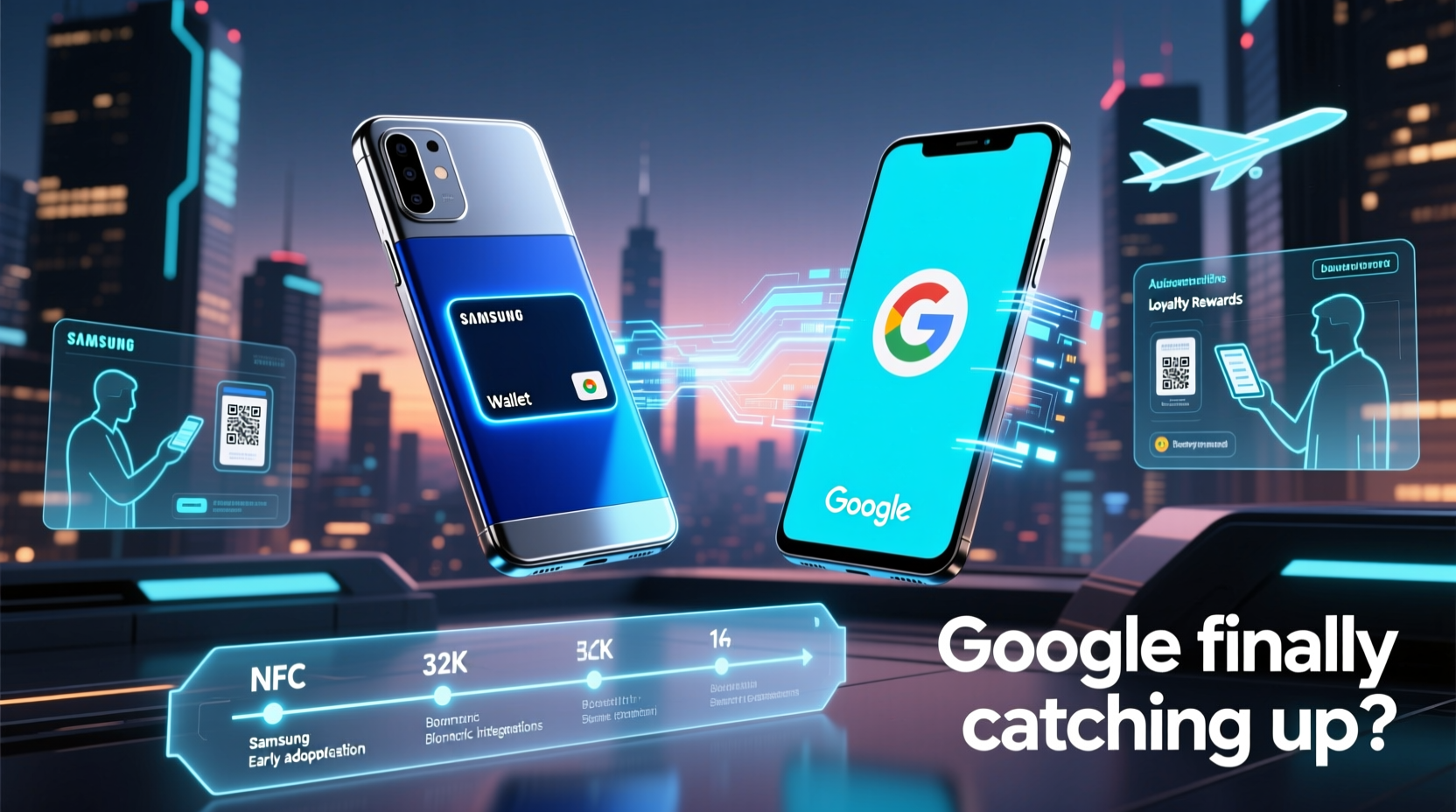
Digital wallets have moved far beyond simply storing credit cards for contactless payments. Today, they serve as central hubs for digital identity management. Both Samsung and Google now support digital driver's licenses, car keys, boarding passes, event tickets, and student IDs—features once considered futuristic but now increasingly common in daily life.
Samsung Wallet, previously known as Samsung Pay, launched in 2015 with a unique selling point: MST (Magnetic Secure Transmission), allowing it to work with older magnetic stripe terminals. This gave Samsung broad compatibility even in regions slow to adopt EMV chip readers. However, as global infrastructure modernized, MST became less relevant, and Samsung quietly phased it out in newer models.
Google Wallet, relaunched in 2021 after absorbing Android Pay and Google Pay, took a different approach. Instead of relying on proprietary technology, it focused on standardization through NFC and host card emulation (HCE). This allowed wider device compatibility across OEMs, not just Pixel phones. As a result, Google accelerated adoption by making Wallet available on nearly all modern Android devices running Android 5.0+ with NFC support.
“Digital wallets are no longer just about convenience—they’re becoming trusted containers for personal identity.” — Dr. Lena Patel, Mobile Security Researcher at MIT
Feature Comparison: Samsung Wallet vs Google Wallet
To understand whether Google is truly catching up, a side-by-side comparison reveals strengths and limitations in both platforms.
| Feature | Samsung Wallet | Google Wallet |
|---|---|---|
| Credit/Debit Cards | Yes (via SE) | Yes (via HCE & SE on supported devices) |
| Loyalty Cards & Offers | Yes, integrated with Samsung Rewards | Yes, auto-saves from Gmail and apps |
| Transit Passes | Limited (select cities like Seoul, Boston) | Broad support (London Oyster, NYC OMNY, Tokyo Suica) |
| Car Keys (UWB/NFC) | Yes (BMW, Genesis, Hyundai) | Yes (BMW, Genesis; expanding slowly) |
| Home Keys | Partner-dependent (Assa Abloy, Yale) | Limited availability |
| Driver’s License / ID | Supported in select U.S. states | Same, via state partnerships |
| Cross-Device Sync | Only within Samsung ecosystem | Full sync across Android devices |
| Security Model | Hardware-backed Knox + SE | Google Titan M2 (Pixels), vendor SE on others |
The table shows that while Samsung maintains tighter hardware-level control, Google excels in ecosystem reach and automatic data ingestion—like pulling boarding passes from Gmail or saving coupons from messages.
Real-World Example: Commuting in New York City
Consider Maria, a Brooklyn-based commuter who uses public transit daily. She recently switched from a Galaxy S21 to a Pixel 7. On her Samsung device, she added her OMNY transit pass to Samsung Wallet, but updates were manual and synchronization across devices wasn’t possible. After switching to the Pixel, she added her OMNY card directly in Google Wallet. Within seconds, her existing balance synced automatically, and future passes purchased online appeared instantly thanks to Gmail integration.
While both wallets worked for tap-to-pay entry, Google Wallet provided smoother backend management. Moreover, when Maria attended a concert at Madison Square Garden, her ticket was auto-added to Google Wallet after purchase confirmation landed in her inbox. With Samsung Wallet, she had to manually export and import the PDF.
This scenario illustrates a key shift: Google isn't just matching Samsung feature-for-feature—it’s redefining user experience through automation and cross-service intelligence.
Security and Trust: Where Hardware Meets Software
Security remains paramount in digital wallets. Samsung has long emphasized its Knox platform, which isolates sensitive data in a hardware-protected environment. Each transaction requires authentication through biometrics or PIN, and the secure element ensures card details are never exposed to the main OS.
Google Wallet also uses secure elements on supported devices, including Samsung, OnePlus, and Pixels equipped with the Titan M2 chip. However, on lower-end Android phones without dedicated SE hardware, Google relies on software-based HCE, which some experts argue is slightly more vulnerable to sophisticated attacks.
That said, Google’s Verified Boot and regular security patches help mitigate risks. Additionally, lost phone protection via Find My Device allows instant locking or remote deletion of payment cards—a feature both platforms offer robustly.
- Samsung Wallet encrypts credentials using Knox Trusted Execution Environment (TEE).
- Google Wallet leverages Google Play Services for dynamic security updates.
- Both support tokenization, ensuring actual card numbers are never shared with merchants.
Is Google Finally Catching Up? A Timeline Perspective
Let’s examine the evolution over time to assess momentum:
- 2015: Samsung Pay launches with MST + NFC, outpacing Apple Pay in terminal compatibility.
- 2018: Google Pay focuses on P2P transfers and merchant offers, neglecting core wallet utility.
- 2020: Samsung begins phasing out MST; Google announces Wallet revamp.
- 2021: Google Wallet relaunches with richer credential support and design refresh.
- 2023: Google partners with 15+ U.S. states for digital IDs; Samsung follows closely.
- 2024: Google enables third-party app integration for passes; Samsung enhances multi-device access.
The timeline reveals a clear inflection point around 2021. While Samsung rested on early innovation, Google recalibrated with a long-term vision centered on interoperability and AI-driven context awareness. The pace of new feature rollouts suggests Google isn’t just catching up—it’s building a more scalable foundation for the future of digital identity.
Frequently Asked Questions
Can I use both Samsung Wallet and Google Wallet on the same phone?
On most Samsung devices, yes. You can install and use both apps simultaneously. However, only one can be set as the default payment method for double-tap-to-pay actions.
Which wallet works better internationally?
Google Wallet generally offers broader international support, especially for transit systems in Europe and Asia. Samsung Wallet remains strong in South Korea and parts of Southeast Asia but lags elsewhere.
Do either wallet charge fees for adding cards or making payments?
No. Both Samsung Wallet and Google Wallet are free to use. Standard carrier and bank terms apply, but there are no additional service fees from the platforms themselves.
Checklist: Choosing the Right Wallet for Your Needs
Use this checklist to determine which platform aligns best with your priorities:
- ✅ Need broad transit pass support? → Google Wallet
- ✅ Use multiple Samsung devices? → Samsung Wallet for seamless sync
- ✅ Want auto-saving of tickets and offers? → Google Wallet
- ✅ Prioritize hardware-grade security? → Samsung Wallet (Knox + SE)
- ✅ Frequently switch Android brands? → Google Wallet for consistency
- ✅ Need car key support for BMW/Hyundai? → Both support equally
- ✅ Live in a region with outdated POS systems? → Samsung’s legacy MST may help (on older devices)
Conclusion: The Race Is Now Closer Than Ever
Google Wallet is no longer playing catch-up—it’s competing on equal footing and, in several areas, leading the way. While Samsung Wallet still holds advantages in security architecture and brand loyalty among Galaxy users, Google’s focus on ecosystem-wide accessibility, intelligent automation, and rapid expansion of digital identity tools positions it as the more forward-looking platform.
The real winner is the consumer. Increased competition means faster innovation, better UX, and broader adoption of digital credentials. Whether you're tapping into a subway, unlocking your car, or verifying your age at a bar, these wallets are transforming smartphones into true digital companions.




 浙公网安备
33010002000092号
浙公网安备
33010002000092号 浙B2-20120091-4
Comments
No comments yet. Why don't you start the discussion?