
The Samsung Galaxy Watch 5 offers two connectivity options: Bluetooth-only and LTE-enabled models. While the LTE version typically costs $50 to $100 more upfront—and requires a monthly carrier fee—its promise of independence from your smartphone is compelling. But does that freedom justify the added expense for most users? The answer depends on lifestyle, usage patterns, and how much value you place on seamless connectivity.
For some, LTE transforms the watch into a true standalone device. For others, it's an underused feature that adds little beyond peace of mind. This article breaks down when LTE is worth the investment, compares real-world performance, and helps you decide whether the premium model aligns with your daily routine.
Understanding the Core Differences
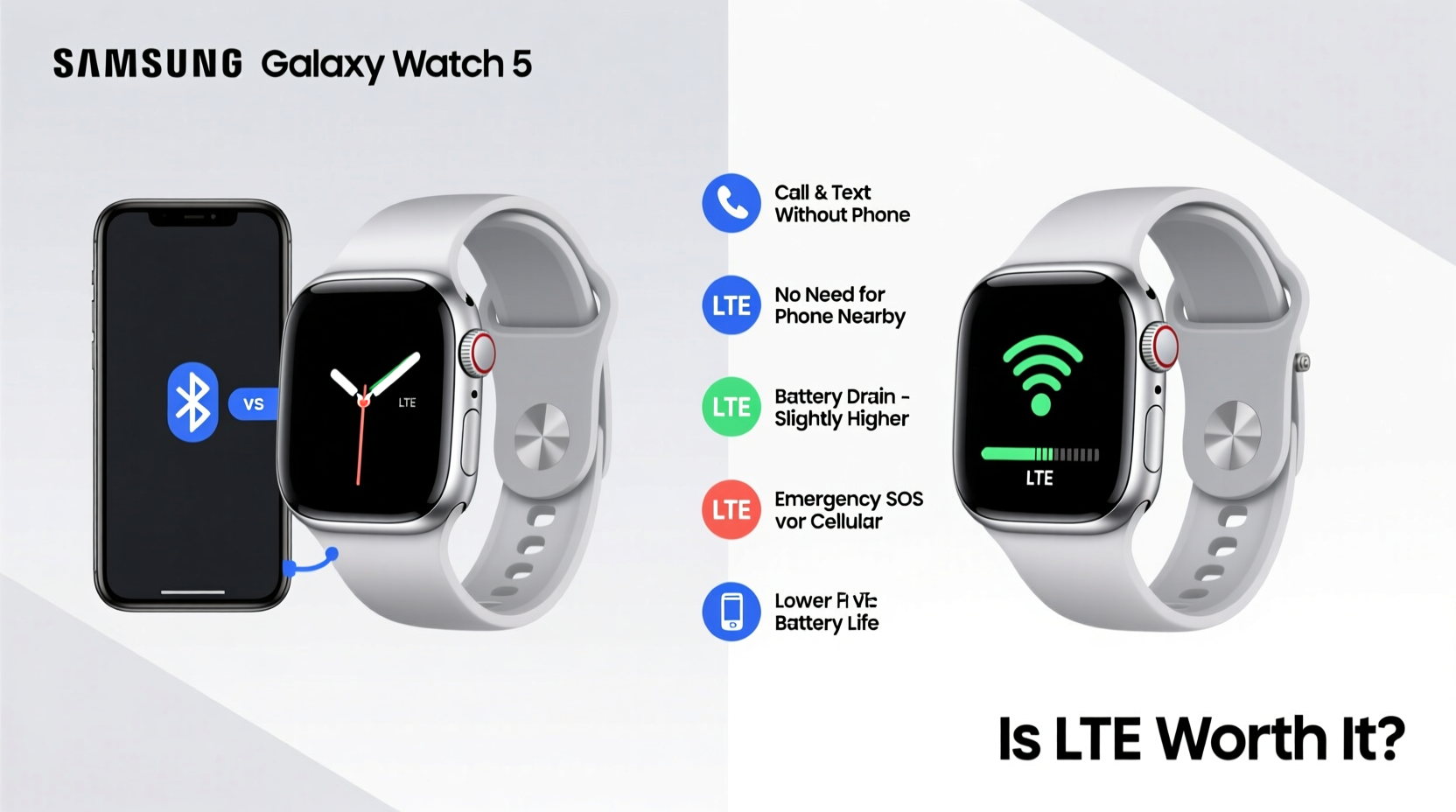
The fundamental distinction between the Bluetooth and LTE versions of the Samsung Watch 5 lies in their ability to connect to cellular networks. The Bluetooth model relies entirely on your paired smartphone for internet access, calls, messaging, and app functionality. When your phone is out of range or powered off, these features stop working.
In contrast, the LTE variant includes a built-in SIM (eSIM) that connects directly to your carrier’s network. This allows the watch to:
- Make and receive phone calls without a phone nearby
- Send and receive texts and messages independently
- Stream music or podcasts via apps like Spotify
- Use GPS navigation and live traffic updates during workouts
- Receive notifications and emails even when your phone is at home
This independence is especially useful during activities where carrying a phone is inconvenient—like running, cycling, or swimming—but staying connected matters.
Cost Breakdown: Upfront and Ongoing Expenses
Choosing LTE isn’t just about hardware—it comes with recurring costs. Most major U.S. carriers (Verizon, AT&T, T-Mobile) charge between $10 and $15 per month to add LTE connectivity to your existing mobile plan. Some offer promotions like “free for 3 months,” but long-term use will increase your bill.
Here’s a comparison of total ownership cost over two years:
| Model | Upfront Cost | Monthly Fee | Total 2-Year Cost |
|---|---|---|---|
| Samsung Watch 5 (Bluetooth) | $279 | $0 | $279 |
| Samsung Watch 5 (LTE) | $329 | $10 | $569 |
| LTE Premium Over Bluetooth | + $50 | + $240 over 2 years | + $290 total |
That’s nearly $300 more over two years. Before committing, ask whether the convenience justifies this financial difference.
“Many consumers overestimate how often they’ll use LTE on wearables. In reality, most only benefit from it during specific scenarios like solo runs or quick errands.” — David Kim, Senior Analyst at Wearable Insights Group
Real-World Use Case: The Morning Runner
Consider Sarah, a 34-year-old marketing manager who jogs every morning before work. She used to carry her phone in a waistband pouch, but found it bulky and distracting. After upgrading to the LTE version of the Galaxy Watch 5, she now leaves her phone at home.
During her 5-mile run, she:
- Streams offline playlists synced to Spotify on the watch
- Receives emergency texts from her babysitter without interrupting her stride
- Takes urgent calls using the watch’s speaker and microphone
- Tracks her route accurately using standalone GPS
For Sarah, the LTE model has eliminated friction. She no longer worries about battery drain from phone GPS or missing critical messages. Her productivity and peace of mind have improved enough to justify the $10 monthly fee.
However, if Sarah were only using the watch for step tracking and sleep monitoring—activities that don’t require constant connectivity—the LTE upgrade would offer minimal benefit.
When LTE Is Worth the Investment
Not everyone needs LTE, but certain lifestyles make it a smart choice. Here’s a checklist to help determine if you fall into that category:
✅ Do You Frequently Leave Your Phone Behind?
If you often go for walks, gym sessions, or errands without your phone, LTE ensures you remain reachable. Emergency contacts, family check-ins, or work alerts won’t go unnoticed.
✅ Do You Rely on Real-Time Navigation or Music Streaming?
Runners, hikers, and cyclists benefit from turn-by-turn directions and uninterrupted music—all without storing a phone in a backpack or armband.
✅ Are You a Parent or Caregiver Who Needs Constant Availability?
Staying connected while hands are full—changing diapers, cooking, or helping kids with homework—makes voice commands and call handling through the watch invaluable.
✅ Do You Travel Often or Work in Remote Locations?
Field workers, delivery personnel, or outdoor guides may find LTE essential when moving between areas with spotty Bluetooth range or no phone access.
Step-by-Step: How to Decide Between Bluetooth and LTE
- Track your phone habits for one week. Note how often you leave it behind and what tasks you’d need to perform on your watch.
- List key use cases. Will you make calls? Stream music? Need emergency access?
- Check carrier compatibility. Not all carriers support Samsung Watch LTE equally. Confirm coverage and pricing with your provider.
- Try a friend’s LTE watch (if possible). Borrow one for a day to experience standalone functionality firsthand.
- Calculate the 2-year cost difference. Include both device markup and subscription fees.
- Decide based on actual need, not future possibility. Avoid paying for features you might use “someday.”
Frequently Asked Questions
Can I switch from Bluetooth to LTE later?
No. The LTE capability is hardware-dependent. You must purchase the LTE model at the start. You cannot upgrade a Bluetooth-only watch to LTE later.
Does LTE drain the battery faster?
Yes. Using LTE continuously can reduce battery life by up to 30% compared to Bluetooth mode. Even with periodic use, expect slightly shorter daily endurance—especially when streaming or taking calls.
Do I need a separate phone number for the LTE watch?
No. Most carriers use Number Share or Embedded SIM technology, allowing the watch to share your phone’s number. Calls and texts appear to come from your main line.
Final Verdict: Who Should Buy the LTE Model?
The LTE version of the Samsung Watch 5 is best suited for active individuals who regularly separate from their phones but still need reliable communication. It excels for runners, fitness enthusiasts, parents, and professionals who value autonomy and responsiveness.
However, for the average user who keeps their phone within arm’s reach 90% of the time, the Bluetooth model delivers nearly identical functionality at a lower cost. Features like heart rate monitoring, sleep tracking, contactless payments, and notification alerts work perfectly without LTE.
Ultimately, the decision hinges on frequency of use, not occasional convenience. Ask yourself: *Will I use LTE multiple times per week, or just once in a while?*
Conclusion
The Samsung Watch 5 LTE offers genuine utility for those who live dynamically and move freely throughout the day. But for many, the added cost outweighs the marginal gains. By evaluating your real-world habits—not hypothetical ones—you can avoid overspending on a feature that sits idle.
If independence, safety, and seamless connectivity are priorities, the LTE model earns its premium. Otherwise, the Bluetooth version remains a powerful, cost-effective companion that integrates smoothly with your digital life.




 浙公网安备
33010002000092号
浙公网安备
33010002000092号 浙B2-20120091-4
Comments
No comments yet. Why don't you start the discussion?