
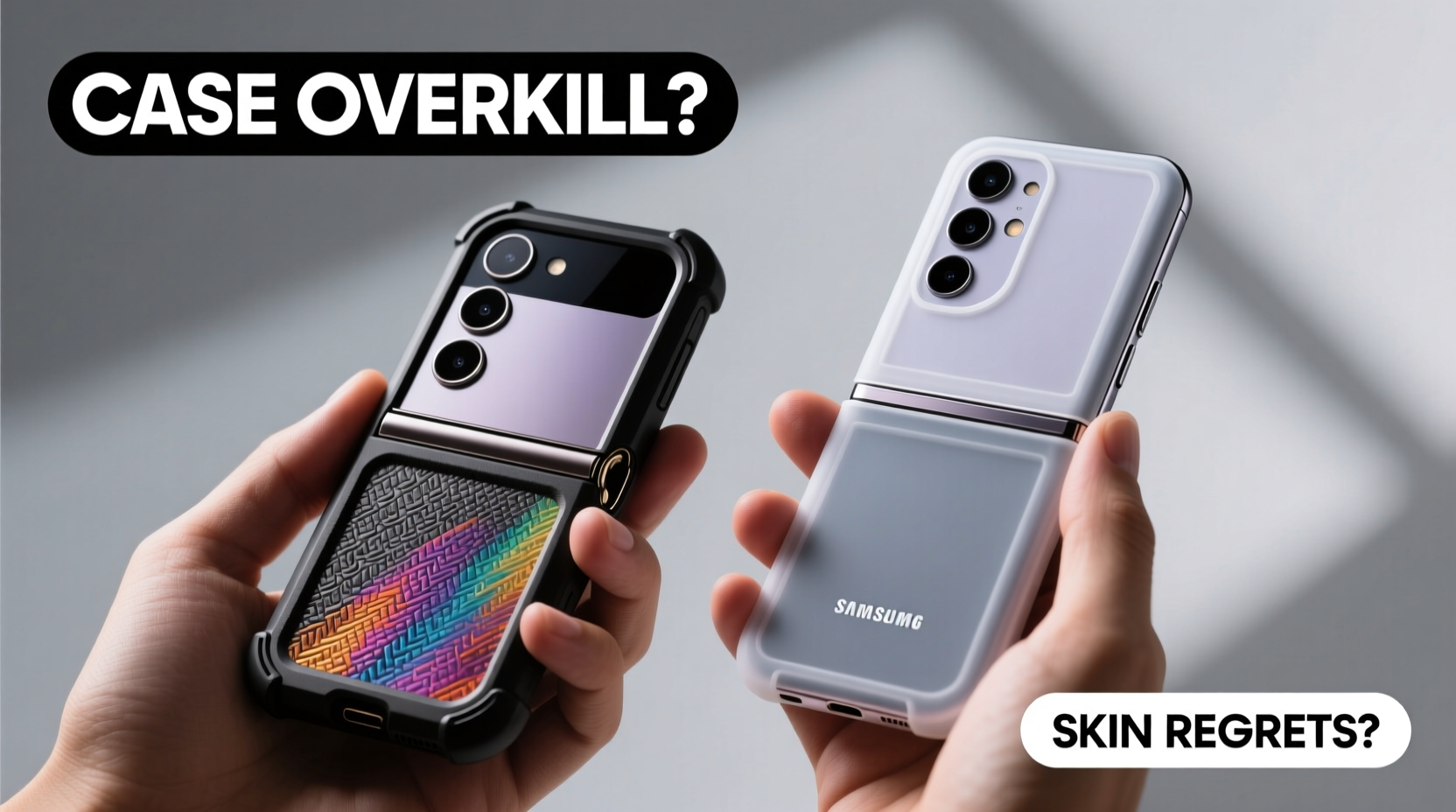
The Samsung Galaxy Z Flip series blends cutting-edge foldable technology with sleek, fashion-forward design. It’s a device meant to be seen—slim, elegant, and instantly recognizable. But that beauty comes with a vulnerability: the ultra-thin glass, flexible hinge, and creased display are all susceptible to scratches, drops, and everyday wear. So when it comes to protection, where do you draw the line? Is a rugged case overkill for such a stylish device? Or will opting for just a skin leave you staring at a cracked screen after one clumsy moment?
This isn’t just about aesthetics—it’s about balancing longevity, usability, and peace of mind. The answer depends on how you use your phone, your environment, and your tolerance for risk.
Understanding the Vulnerabilities of the Z Flip
The Z Flip’s foldable design is its standout feature, but also its Achilles’ heel. The main display uses Ultra Thin Glass (UTG), which, while more durable than early foldable plastics, is still far more delicate than traditional smartphone glass. The crease in the center remains a structural weak point. Additionally, the hinge mechanism collects dust and lint over time, potentially interfering with the folding action if not protected.
Samsung itself warns against using non-Samsung screen protectors and emphasizes avoiding liquids, pressure on the screen, and exposure to fine particles. These warnings underscore that this isn’t a device built for abuse—even minor neglect can lead to costly damage.
“Foldables like the Z Flip require a new mindset toward protection. You’re not just guarding against drops—you’re preserving mechanical integrity.” — David Kim, Mobile Device Engineer at TechShield Labs
Case vs. Skin: Breaking Down the Options
At the heart of the debate is a trade-off: full cases offer robust defense but add bulk; skins preserve the phone’s slim profile but offer minimal real-world protection.
Full Protective Cases
A well-designed case for the Z Flip typically includes:
- Elevated edges to protect the screen when placed face-down
- Shock-absorbing materials (TPU, silicone, or hybrid builds)
- Hinge coverage to reduce debris accumulation
- Folded posture support to prevent accidental closure during use
- Camera lens shielding
Premium options from brands like Spigen, OtterBox, and even Samsung’s own official cases often include kickstands and wallet functionality, enhancing utility beyond mere protection.
Skins and Film Protectors
Skins—usually made from thin polyurethane or vinyl—are designed purely for cosmetic preservation. They guard against micro-scratches and fingerprint buildup but provide zero impact resistance. Some users pair skins with tempered film screen protectors, but even those don’t prevent crease degradation or hinge damage.
While skins maintain the Z Flip’s featherweight feel and visual purity, they create a false sense of security. A drop from waist height onto concrete can still shatter the display, regardless of whether a skin is applied.
When a Case Isn’t Overkill—It’s Insurance
Consider your daily routine. Do you carry your phone in a bag alongside keys and chargers? Do you frequently use it while walking, cooking, or commuting? If so, a case isn’t overkill—it’s a necessity.
One real-world example: Sarah, a marketing consultant in Chicago, loved her Z Flip’s minimalist look and opted for only a matte black skin. Two months in, she set it on a café table while ordering coffee. A passing patron bumped the table, and the phone fell hinge-first onto tile. The impact warped the hinge mechanism, causing the screen to flicker when folded. Repair cost: $280. “I thought I was being stylish,” she said. “Turns out, I was just gambling.”
In contrast, James, a photographer in Austin, uses a Spigen Tough Armor case. It adds noticeable thickness, but he regularly shoots on construction sites and hikes with his gear. “I’ve dropped it three times already—once down a staircase. The case took the hit. The phone didn’t even scuff.”
Protection Comparison: Case vs. Skin
| Feature | Full Case | Skin Only |
|---|---|---|
| Drop Protection | High (absorbs impact) | None |
| Scratch Resistance | High (covers entire body) | Low (surface-level only) |
| Hinge Protection | Moderate to High | None |
| Screen Crease Preservation | Yes (via raised bezel) | No |
| Bulk Added | Noticeable | Negligible |
| Cost | $25–$60 | $10–$20 |
| Lifespan Impact | Extends by 6–12+ months | Limited benefit |
Step-by-Step: Choosing Your Protection Strategy
- Assess Your Lifestyle: Are you active, outdoorsy, or prone to accidents? High-risk usage demands a case.
- Consider Environment: Offices and homes are gentler than construction sites, gyms, or public transit.
- Test the Feel: Try the phone naked and with sample cases. Does added bulk ruin the experience, or is it acceptable?
- Budget for Long-Term Cost: Factor in potential repair costs ($200–$400) versus upfront case investment.
- Select Smart Features: Choose a case with auto-wake function, kickstand, or card slot if useful.
- Install Properly: Ensure the case doesn’t press against the screen when closed—this can cause permanent crease damage.
Expert Tips for Maximizing Z Flip Longevity
- Never close the phone with debris on the screen—this causes micro-scratches in the crease zone.
- Avoid pressing on the screen while the phone is folded; the internal layers aren’t designed for lateral force.
- Use Samsung-approved screen protectors only—third-party films may interfere with touch sensitivity or folding mechanics.
- Keep the phone away from extreme temperatures, which can degrade the adhesive holding the display layers.
FAQ: Common Questions About Z Flip Protection
Can I use my Z Flip without any protection?
Technically, yes—but it’s high-risk. Even light use exposes the screen to scratches from keys, coins, or pocket debris. Over time, the crease will degrade faster without a protective case that keeps pressure off the hinge.
Do clear cases yellow over time?
Most TPU-based clear cases will yellow due to UV exposure and skin oils. To avoid this, opt for matte-finish cases or replace them every 6–8 months. Silicone or polycarbonate blends tend to resist discoloration better.
Will a case affect wireless charging or signal strength?
No. Modern cases are designed to be compatible with Qi2 and MagSafe-style charging. Signal interference is negligible unless the case contains metal components, which most reputable brands avoid.
Final Verdict: Protection That Matches Your Reality
The Samsung Z Flip is a marvel of engineering, but it’s not indestructible. Calling a case “overkill” misunderstands the device’s fragility. For most users, a well-designed case is not an aesthetic compromise—it’s a rational decision to extend the life of a premium device.
A skin might preserve the look, but it won’t preserve the phone. And once the screen cracks or the hinge fails, no amount of surface-level polish will fix it. The regret of skipping protection often arrives not in days, but in moments—a single slip, one hard surface, and suddenly you’re facing a bill that could have been avoided.
If you value convenience, durability, and long-term savings, a case is essential. If you prioritize absolute minimalism and accept the risks, a skin alone might suit you—but go in with eyes open.




 浙公网安备
33010002000092号
浙公网安备
33010002000092号 浙B2-20120091-4
Comments
No comments yet. Why don't you start the discussion?