
When it comes to tracking your runs, choosing the right wearable can make a significant difference in how accurately you measure performance, monitor progress, and stay motivated. Two popular options often compared are Sanda watches—affordable fitness trackers with smartwatch features—and dedicated GPS running watches from brands like Garmin, Polar, and Coros. While both promise to log your runs, they serve different needs and deliver vastly different experiences. Understanding their strengths and limitations helps runners make informed decisions based on goals, budget, and training intensity.
Understanding the Core Differences
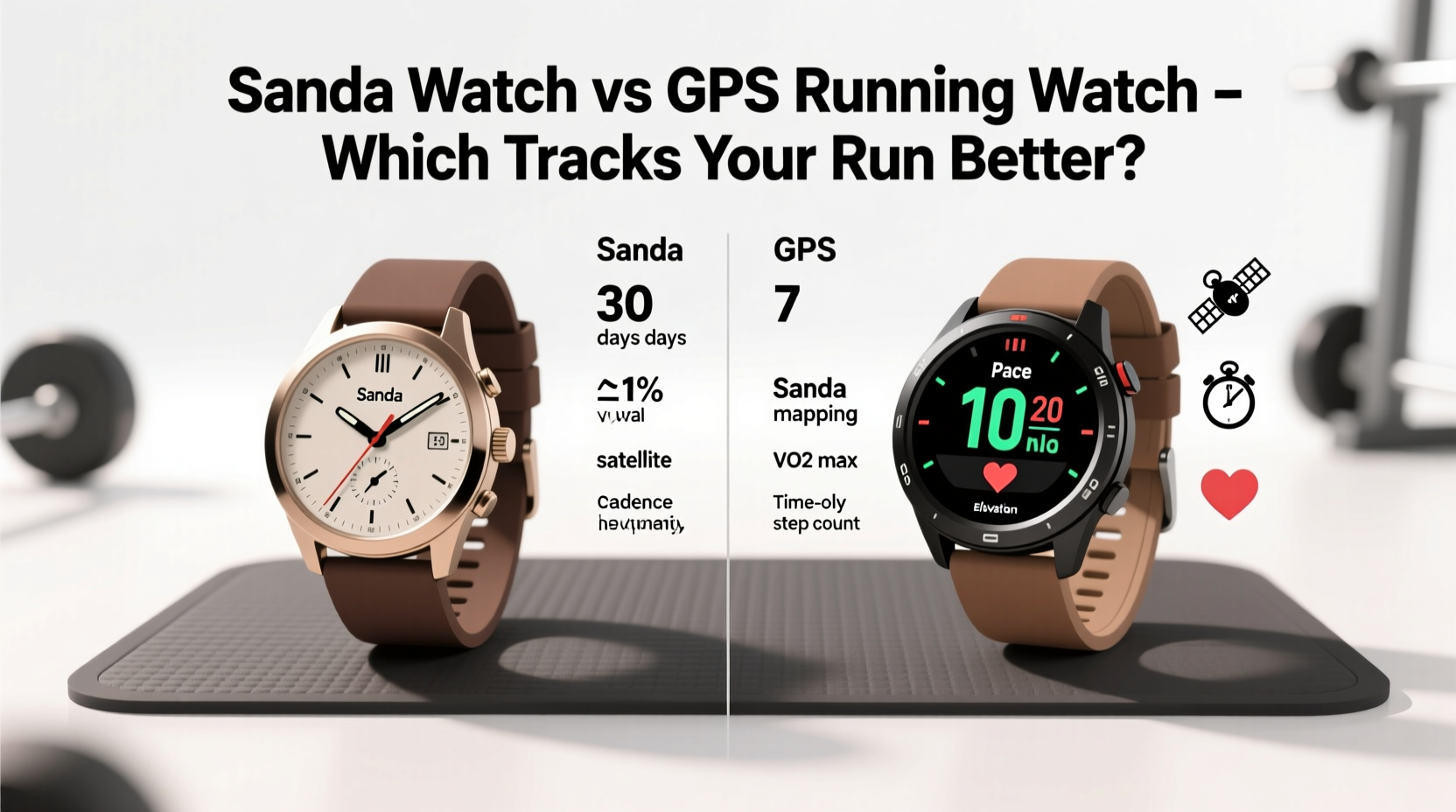
The fundamental distinction between a Sanda watch and a GPS running watch lies in purpose and precision. Sanda watches are typically multi-function smartwatches designed for general fitness tracking, notifications, sleep monitoring, and heart rate estimation. They often use optical sensors and smartphone-assisted GPS (when connected) to estimate distance and pace. In contrast, GPS running watches are engineered specifically for athletes, featuring high-sensitivity GPS chips, advanced biomechanical metrics, and longer-lasting, more reliable battery performance under continuous load.
Sanda devices appeal to casual users due to their low cost—often under $50—and sleek design. However, their accuracy during outdoor activity, especially running, tends to lag behind purpose-built sports watches. GPS running watches may cost anywhere from $200 to over $600 but offer superior satellite reception, route mapping, elevation tracking, and integration with training platforms like Strava and TrainingPeaks.
Accuracy: GPS Performance and Route Tracking
One of the most critical factors in run tracking is location accuracy. A device that misjudges distance by even 5–10% can distort training data over time, leading to incorrect pace calculations and flawed progress assessments.
Sanda watches usually rely on your smartphone’s GPS when available or use less sensitive built-in modules. This results in jagged route lines, delayed signal acquisition, and “jumpy” data—especially in urban areas with tall buildings or tree-covered trails. Users commonly report discrepancies where a 5K run appears as 5.3K or misses sharp turns entirely.
Dedicated GPS running watches, however, feature dual or multi-band satellite systems (GPS, GLONASS, Galileo), barometric altimeters, and inertial sensors that maintain accuracy even when signals drop. These watches record smoother routes, precise elevation changes, and consistent lap times. For example, a Garmin Forerunner 255 locks onto satellites within seconds and maintains connection throughout long trail runs.
“Accurate distance and elevation tracking are non-negotiable for structured training. A small error compounds over weeks and skews your entire plan.” — Dr. Lena Patel, Sports Biomechanics Researcher at Boulder Human Performance Lab
Feature Comparison: What Each Watch Offers
| Feature | Sanda Watch | GPS Running Watch |
|---|---|---|
| GPS Accuracy | Moderate to poor; depends on phone or weak internal chip | High; multi-system support, fast lock-on |
| Battery Life (in GPS mode) | 6–10 hours (varies widely) | 10–36+ hours depending on model |
| Elevation Tracking | Rough estimates via GPS only | Precise with barometric altimeter |
| Heart Rate Monitoring | Basic optical sensor; inconsistent during motion | Advanced algorithms; chest strap compatible |
| Training Metrics | Time, steps, estimated calories | VO₂ max, recovery time, stride length, cadence |
| Price Range | $30–$80 | $200–$700+ |
| Durability & Water Resistance | IP68 typical; not always suitable for swimming | Swim-proof, rugged construction |
Real-World Example: A Runner's Weekend Test
Consider Mark, a recreational runner training for his first half-marathon. He uses a Sanda Z2 for daily tracking and recently borrowed a Garmin Forerunner 265 for comparison. On a hilly 10K trail run through a forested park, the differences became immediately apparent.
The Sanda watch took nearly two minutes to acquire GPS signal, recorded an erratic route that zigzagged off the actual path, and reported a total distance of 10.7K—over 700 meters too long. It also failed to register one major climb, showing flat elevation despite steep inclines. Meanwhile, the Garmin locked onto satellites quickly, mapped a clean, accurate line along the trail, and correctly logged 10.03K with detailed ascent/descent data.
While Mark appreciated the Sanda’s notifications and sleep tracking, he realized its limitations compromised his ability to analyze effort and adjust training. After this test, he decided to invest in a mid-tier GPS watch, recognizing that reliable data was essential for goal-oriented running.
When a Sanda Watch Might Be Enough
Not every runner needs military-grade precision. For those who jog casually, walk regularly, or prioritize lifestyle tracking over performance analytics, a Sanda watch can be sufficient. It tracks basic metrics like duration, approximate distance, heart rate trends, and active minutes—all helpful for maintaining general fitness awareness.
If your primary goals include staying active, improving sleep, or reducing sedentary time, the Sanda delivers value at a fraction of the cost. It’s also ideal if you want a single device for calls, messages, music control, and light workouts without carrying a phone.
- You run occasionally for health, not competition
- You’re on a tight budget
- You prefer minimal tech and don’t analyze workout data
- You mostly exercise indoors or on treadmills
Step-by-Step: Choosing the Right Device for Your Needs
- Define your running goals: Are you training for races, improving endurance, or just staying active?
- Assess your need for accuracy: Do you care about exact splits, elevation, or weekly mileage trends?
- Check battery requirements: Will you run ultra-distances (>3 hours) without charging?
- Evaluate ecosystem compatibility: Do you use Strava, Apple Health, or Google Fit? Ensure seamless syncing.
- Test real-world performance: Borrow or trial a device before buying, especially if relying on GPS-heavy activities.
- Decide on budget vs. longevity: A $60 Sanda may last 1–2 years; a $300 GPS watch can serve reliably for 5+ years with firmware updates.
Frequently Asked Questions
Can I use a Sanda watch for marathon training?
Possibly, but not optimally. While it will track time and give a rough idea of distance, inconsistent GPS and lack of advanced metrics like pace alerts, lap markers, or recovery guidance limit its usefulness for structured training plans.
Do GPS running watches work without a phone?
Yes. Unlike many Sanda models, dedicated GPS watches have standalone functionality. You don’t need a smartphone nearby to record runs, access maps, or store workout history.
Is optical heart rate accurate on Sanda watches?
It varies. During steady-state jogging, readings may be close. But during interval training or rapid heart rate changes, inaccuracies increase significantly. For true HR zone training, consider pairing a GPS watch with a chest strap sensor.
Final Recommendation: Match Tool to Purpose
There’s no universal “better” option between a Sanda watch and a GPS running watch—it depends entirely on what you aim to achieve. Think of it like footwear: you wouldn’t wear flip-flops to a 10K race, just as you wouldn’t need racing spikes for a walk in the park.
If you're committed to improving as a runner, analyzing performance, or preparing for events, a GPS running watch is a worthwhile investment. The precision, durability, and depth of insight far exceed what budget smartwatches offer. However, if you're simply looking to stay active and enjoy light tracking alongside smart features, a Sanda watch remains a practical, affordable choice.




 浙公网安备
33010002000092号
浙公网安备
33010002000092号 浙B2-20120091-4
Comments
No comments yet. Why don't you start the discussion?