
Choosing the right bag for daily life isn’t just about style—it’s about function, comfort, and how well it fits your routine. Two popular options often compared are satchels and shoulder bags. While both serve as go-to companions for work, school, or casual outings, they differ significantly in structure, carrying method, and usability. Understanding these differences helps you make a smarter decision based on your lifestyle, not just aesthetics.
Defining the Differences: Satchel vs Shoulder Bag
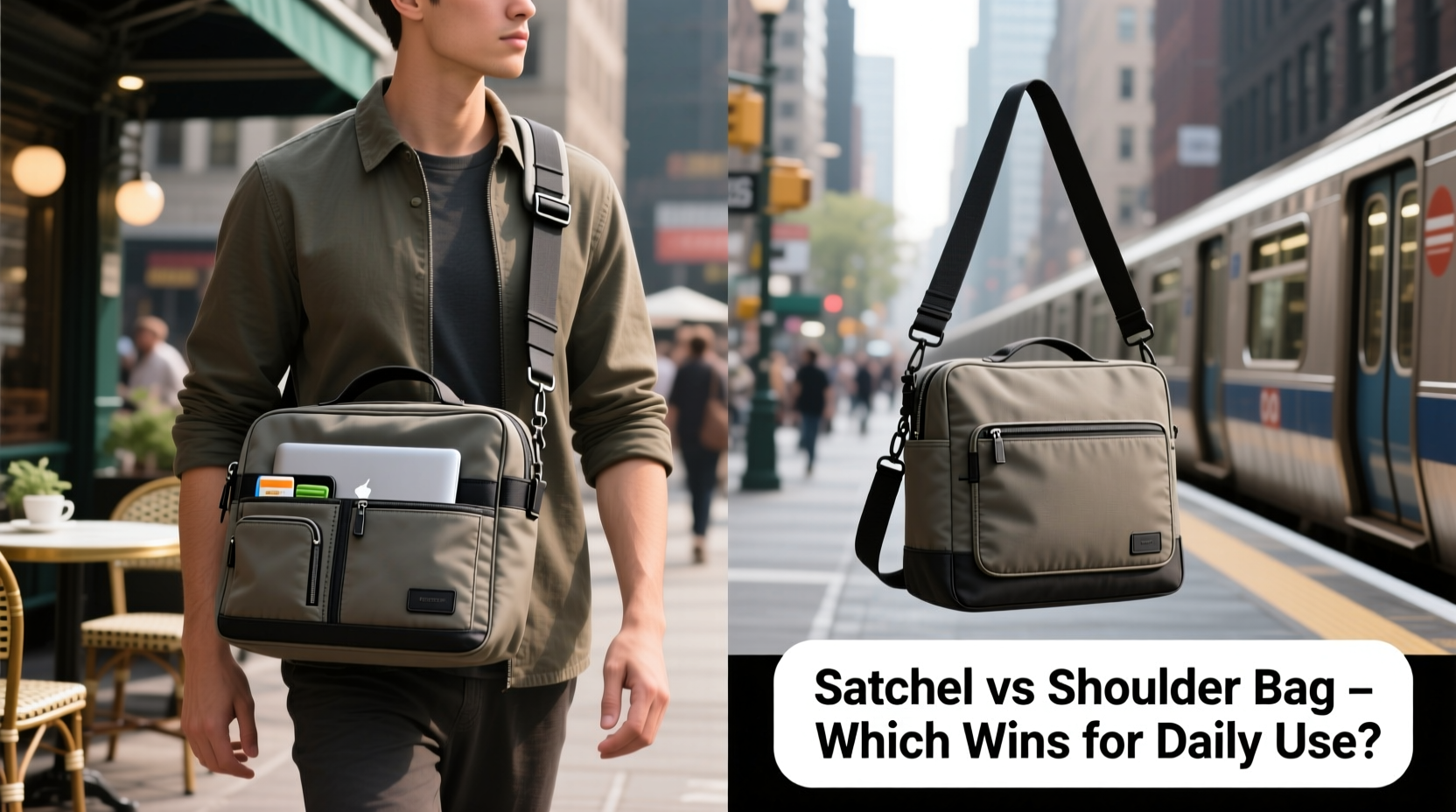
A satchel is typically a structured bag with a top handle and a crossbody strap, often closing with a flap and buckle. It maintains its shape, usually made from sturdy materials like leather or canvas, and sits flat against the body when worn across the chest. Historically inspired by schoolbags or messenger styles, satchels emphasize organization with multiple compartments.
In contrast, a shoulder bag is broader in definition. It refers to any bag designed primarily to be carried on one shoulder via a single strap. This category includes tote bags, hobo bags, and even some clutches with straps. Shoulder bags vary widely in shape—slouchy, boxy, soft—but generally prioritize ease of access over rigidity.
The key distinction lies in wearability and posture. Satchels are commonly worn across the body, distributing weight more evenly. Shoulder bags rest on one side, which can lead to imbalance during extended use. This fundamental difference impacts everything from comfort to security in crowded spaces.
Practicality Showdown: Key Factors Compared
To determine which bag wins for everyday practicality, several factors must be weighed: comfort, accessibility, capacity, security, and versatility.
| Factor | Satchel | Shoulder Bag |
|---|---|---|
| Weight Distribution | Better—strap crosses the body, reducing strain on one shoulder | Poorer—concentrates weight on one side, may cause postural fatigue |
| Security | Higher—the front-facing position makes theft harder | Lower—easily bumped or accessed when worn behind the hip |
| Accessibility | Moderate—flap closure adds protection but slows access | High—open tops or wide zippers allow quick reach |
| Capacity & Organization | Structured interiors, often with dedicated slots for tech and documents | Varies—many lack internal organization, leading to clutter |
| Versatility | Limited by formal look; better suited for office or urban environments | Wider range—from beach totes to sleek work bags |
Real-World Use Case: Office Commute vs Casual Errands
Consider Sarah, a graphic designer who commutes 45 minutes each way using the subway. She used to carry a soft leather shoulder tote because it looked professional and held her laptop, sketchbook, and lunch. However, she often found herself adjusting the strap mid-commute and worrying about pickpockets during rush hour. After switching to a medium-sized satchel with padded crossbody support and lockable zippers, she reported less back strain, quicker access to her transit card, and greater peace of mind.
On the other hand, Mark, a freelance writer who works from cafes, prefers a slouchy shoulder bag. His days involve minimal walking and frequent stops where he sets his bag on an empty chair. He values the wide opening that lets him pull out his notebook or charger without digging. For him, the shoulder bag’s relaxed aesthetic and easy access outweigh concerns about balance or theft.
These examples highlight a crucial point: practicality depends on context. There’s no universal winner—only what aligns best with your daily movements and priorities.
“Function should drive form when choosing a daily carry. A beautiful bag that slips off your shoulder or exposes your wallet isn't practical, no matter how stylish.” — Lena Torres, Urban Lifestyle Consultant
When a Satchel Wins: Ideal Scenarios
Satchels shine in situations demanding mobility, security, and organization. They’re ideal if you:
- Commute via foot, bike, or public transport
- Cary valuable items like laptops, tablets, or documents
- Prefer hands-free movement while keeping belongings visible
- Work in dynamic environments (e.g., teaching, event coordination)
Their crossbody design keeps the bag stable during motion, and the front-carry position deters opportunistic theft. Additionally, many modern satchels include RFID-blocking pockets, water-resistant linings, and ergonomic padding—features increasingly important for city dwellers.
When a Shoulder Bag Makes More Sense
Despite their drawbacks in weight distribution, shoulder bags have undeniable advantages in certain settings:
- Social or creative roles: Artists, photographers, or consultants who want a polished yet approachable look often find shoulder bags more stylistically flexible.
- Short-distance travel: If you're driving to work or only walking a few blocks, the imbalance issue becomes negligible.
- Need for rapid access: Open-top totes or magnetic-flap shoulder bags let you grab keys, phones, or notebooks instantly.
- Carrying irregular items: Groceries, gym clothes, or oversized portfolios fit better in spacious, unstructured shoulder bags.
Moreover, high-end shoulder bags now come with detachable crossbody straps, blending the best of both worlds. This hybrid trend reflects growing consumer demand for adaptable functionality.
Checklist: Choosing Your Everyday Bag
Before making a purchase, ask yourself the following:
- How many hours per day will I carry this bag?
- Do I walk or use public transit regularly?
- What essential items must it hold (laptop, water bottle, umbrella)?
- Am I in crowded areas where bag security matters?
- Do I prefer quick access or organized compartments?
- Will I be switching between sitting and standing throughout the day?
- Is weather resistance important for my climate?
Answering honestly helps narrow choices beyond trends or brand appeal.
Frequently Asked Questions
Can a satchel be too small for daily use?
Yes. While compact satchels are stylish, they may not accommodate a 15-inch laptop, water bottle, and personal items simultaneously. Measure your essentials before selecting size. Aim for at least 13–15 inches in width for true everyday utility.
Are shoulder bags bad for posture?
Carrying a heavy load on one shoulder consistently can contribute to muscular imbalances, neck strain, and spinal misalignment over time. To minimize risk, keep weight under 10% of your body weight and switch shoulders frequently. Better yet, opt for a crossbody version when possible.
Which bag type lasts longer?
Durability depends more on material and construction than category. However, satchels often use reinforced stitching and rigid frames, which resist sagging and wear. Well-made leather shoulder bags can also last years with proper care. Regular cleaning and storage away from moisture extend lifespan regardless of style.
Final Verdict: What’s Actually More Practical?
For most people navigating busy urban lifestyles, the satchel emerges as the more practical choice. Its balanced carry, enhanced security, and organizational features address common pain points of daily commuting and mobile work. It’s especially suited for those carrying electronics or sensitive documents.
However, the shoulder bag remains unmatched in versatility and ease of access for low-mobility routines. If your day involves mostly seated work, short drives, or frequent item retrieval, a well-designed shoulder bag might serve you better.
Ultimately, the “most practical” bag is the one that seamlessly integrates into your life without causing discomfort, stress, or inefficiency. Don’t default to what’s trendy—choose what supports your actual habits.




 浙公网安备
33010002000092号
浙公网安备
33010002000092号 浙B2-20120091-4
Comments
No comments yet. Why don't you start the discussion?