
Frizzy hair is a common frustration—especially upon waking. Despite using serums, oils, or anti-frizz shampoos, many people still wake up with tangled, puffy hair that defies control. One often-overlooked factor in this daily battle? The pillowcase. While cotton has long been the default fabric for bedding, satin has gained popularity as a gentler alternative for both skin and hair. But does switching from cotton to satin actually reduce frizz? The answer lies in fiber physics, moisture retention, and friction dynamics.
This article examines the tangible differences between satin and cotton pillowcases, backed by dermatological insights, material science, and user experiences. Whether you have curly, wavy, or fine-straight hair, understanding how your pillowcase interacts with your strands can help you make informed choices for smoother mornings and healthier hair over time.
The Science of Friction and Hair Frizz
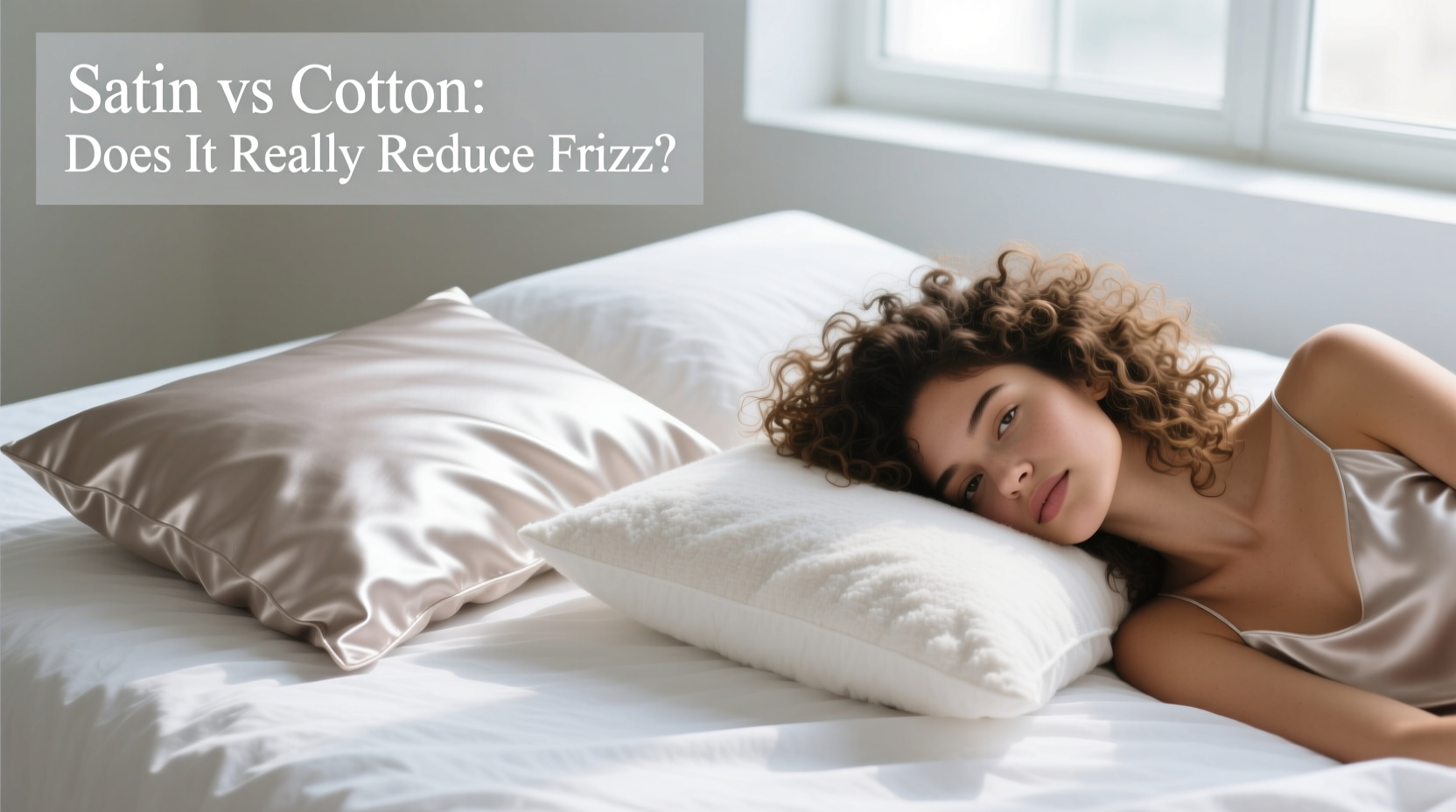
Frizz occurs when the cuticle—the outer layer of the hair shaft—lifts due to external stressors like humidity, heat, or mechanical damage. When this happens, moisture escapes from the cortex (the inner layer), and the hair absorbs moisture from the air, causing it to swell and appear unruly. One major contributor to cuticle disruption is friction.
Cotton pillowcases are woven from natural cellulose fibers that are highly absorbent and relatively rough at a microscopic level. As you move during sleep, your hair rubs against the fabric thousands of times per night. This repeated abrasion causes:
- Lifting of the hair cuticle
- Breakage and split ends
- Loss of natural oils and applied products
- Increased static and tangling
In contrast, satin—typically made from silk or high-quality polyester—is smooth and non-absorbent. It creates significantly less resistance against hair strands, minimizing cuticle disturbance. According to Dr. Angela J. Lamb, associate professor of dermatology at Mount Sinai Hospital:
“Reducing mechanical trauma during sleep is one of the simplest yet most effective ways to maintain hair integrity. Satin surfaces cause less friction, which means fewer broken strands and less frizz over time.” — Dr. Angela J. Lamb, Dermatologist
While satin won’t eliminate frizz caused by genetics or humidity, it reduces the physical triggers that exacerbate it—making it a valuable addition to a comprehensive hair care routine.
Material Comparison: Satin vs Cotton
To understand why satin outperforms cotton in reducing frizz, it’s essential to compare their structural and functional properties. The following table outlines key differences:
| Property | Cotton Pillowcase | Satin Pillowcase |
|---|---|---|
| Absorbency | High – draws moisture from hair and skin | Low – retains moisture on hair surface |
| Surface Texture | Rough microfibers create friction | Smooth, slippery surface reduces drag |
| Impact on Hair Cuticle | Promotes lifting and breakage | Preserves cuticle alignment |
| Static Buildup | Moderate to high, especially in dry climates | Minimal due to low friction |
| Durability | High – withstands frequent washing | Varies – silk requires gentle care; polyester more resilient |
| Cost | Low to moderate | Moderate to high (especially pure silk) |
The data shows that while cotton is durable and affordable, its high absorbency and abrasive texture work against hair health. Satin, particularly silk satin, offers a protective sleeping environment that preserves hydration and minimizes tugging—a crucial advantage for those prone to frizz.
Real-World Results: A Mini Case Study
Samantha, a 34-year-old graphic designer with thick, wavy hair, struggled with morning frizz despite a meticulous nighttime routine. She used leave-in conditioner, slept with a loose braid, and avoided heat styling—but still woke up with a halo of flyaways and knots.
After reading about satin pillowcases, she invested in a 100% mulberry silk option. Within two weeks, she noticed significant changes:
- Her braid stayed intact through the night
- Her hair felt softer and required less detangling
- She reduced her use of anti-frizz serum by half
“It’s not magic,” she said, “but it’s like my hair gets a full night’s rest instead of being dragged across sandpaper. I didn’t expect such a simple switch to make this much difference.”
After three months, Samantha reported a 60% reduction in frizz and fewer split ends. Her stylist even commented on improved hair condition during her next trim. This anecdote aligns with broader consumer trends: according to a 2023 survey by *Hair Care Review*, 78% of respondents who switched to satin reported visibly smoother hair within four weeks.
How to Maximize Frizz Reduction with Satin
Simply owning a satin pillowcase isn’t enough—you need to use it effectively. Here’s a step-by-step guide to get the most out of your investment:
- Choose the Right Type: Opt for 100% mulberry silk (ideally 19–22 momme) for the smoothest, most durable option. If budget is a concern, high-thread-count polyester satin is a viable alternative.
- Wash Before First Use: Remove any manufacturing residues with a gentle hand wash using pH-balanced detergent.
- Prep Your Hair: Apply a lightweight oil or leave-in conditioner before bed to seal in moisture. Avoid heavy products that may transfer onto the fabric.
- Style Strategically: Braid, twist, or use a loose bun to minimize movement and further reduce friction.
- Maintain the Pillowcase: Wash every 5–7 days using cold water and mild detergent. Air dry flat to preserve the weave.
Consistency matters. Just as skincare routines require daily commitment, hair protection during sleep should be habitual. Over time, reduced nightly damage leads to stronger, smoother strands with less frizz accumulation.
Common Myths About Satin Pillowcases
Despite growing popularity, several misconceptions persist about satin pillowcases:
- Myth: All satin is silk. False. Most affordable satin pillowcases are made from polyester. True silk is labeled as “100% mulberry silk” and typically costs more.
- Myth: Satin causes acne. Unfounded. Unlike cotton, satin doesn’t absorb sebum, so it doesn’t trap bacteria as easily. However, cleanliness is key—wash regularly to prevent buildup.
- Myth: Only curly-haired people benefit. Incorrect. Fine, straight hair also suffers from friction-induced breakage and static, leading to frizz and lack of shine.
- Myth: Results are instant. While some notice improvements overnight, lasting benefits develop over weeks as hair becomes less damaged.
Understanding these myths helps set realistic expectations. Satin isn’t a miracle cure, but a preventive tool that supports overall hair health.
Checklist: Choosing & Using a Satin Pillowcase for Frizz Control
Use this checklist to ensure you’re getting the right product and using it effectively:
- ☐ Confirm the material: 100% mulberry silk or high-quality polyester satin
- ☐ Check the momme weight (19+ for silk; higher = more durable)
- ☐ Avoid satin blends with cotton backing—they negate smoothness benefits
- ☐ Wash before first use with gentle detergent
- ☐ Style hair loosely before bed to minimize tension
- ☐ Wash the pillowcase weekly to prevent oil and product buildup
- ☐ Pair with a silk bonnet or scarf for extra protection during travel
- ☐ Monitor hair condition over 4–6 weeks for measurable changes
Frequently Asked Questions
Can a satin pillowcase stop frizz completely?
No single product eliminates frizz entirely. Humidity, genetics, and hair porosity all play roles. However, a satin pillowcase significantly reduces mechanical frizz caused by friction and moisture loss, making it easier to manage.
Is silk better than polyester satin?
Silk generally offers superior softness, temperature regulation, and hypoallergenic properties. However, high-quality polyester satin still provides excellent friction reduction at a lower price point. The key is smoothness, not necessarily the fiber source.
How long does it take to see results?
Many users report less tugging and smoother texture within the first week. Visible reductions in frizz and breakage typically become noticeable after 3–4 weeks of consistent use, especially when combined with proper hair care.
Conclusion: A Small Change With Long-Term Benefits
The question isn’t whether satin pillowcases reduce frizz—it’s how much they can improve your hair’s daily condition over time. While cotton remains the standard, its tendency to absorb moisture and create friction works against healthy hair. Satin, with its smooth surface and low absorbency, creates a protective environment that preserves hydration, minimizes tangles, and supports cuticle integrity.
For anyone battling unexplained frizz, breakage, or dullness, switching to a satin pillowcase is a low-cost, high-impact change. It won’t replace a good shampoo or deep conditioner, but it complements them by protecting your hair when you’re not actively caring for it. In the quiet hours of sleep, where damage often accumulates unnoticed, satin acts as a silent guardian of smoothness.




 浙公网安备
33010002000092号
浙公网安备
33010002000092号 浙B2-20120091-4
Comments
No comments yet. Why don't you start the discussion?