
When choosing an engagement ring or fine jewelry piece, the setting style plays a crucial role in both aesthetics and functionality. Two popular options—scalloped and band rings—often spark debate among buyers and jewelers alike. While scalloped settings are praised for their delicate, vintage-inspired elegance, traditional band settings are celebrated for their durability and simplicity. But beyond looks, does one offer better security for your stones? Or is the choice purely about personal taste?
The answer isn’t as straightforward as it seems. Both designs have strengths and trade-offs that depend on lifestyle, stone size, metal type, and even finger shape. Understanding the structural differences between scalloped and standard band rings can help you make a decision that balances beauty with long-term wearability.
What Are Scalloped and Band Ring Settings?
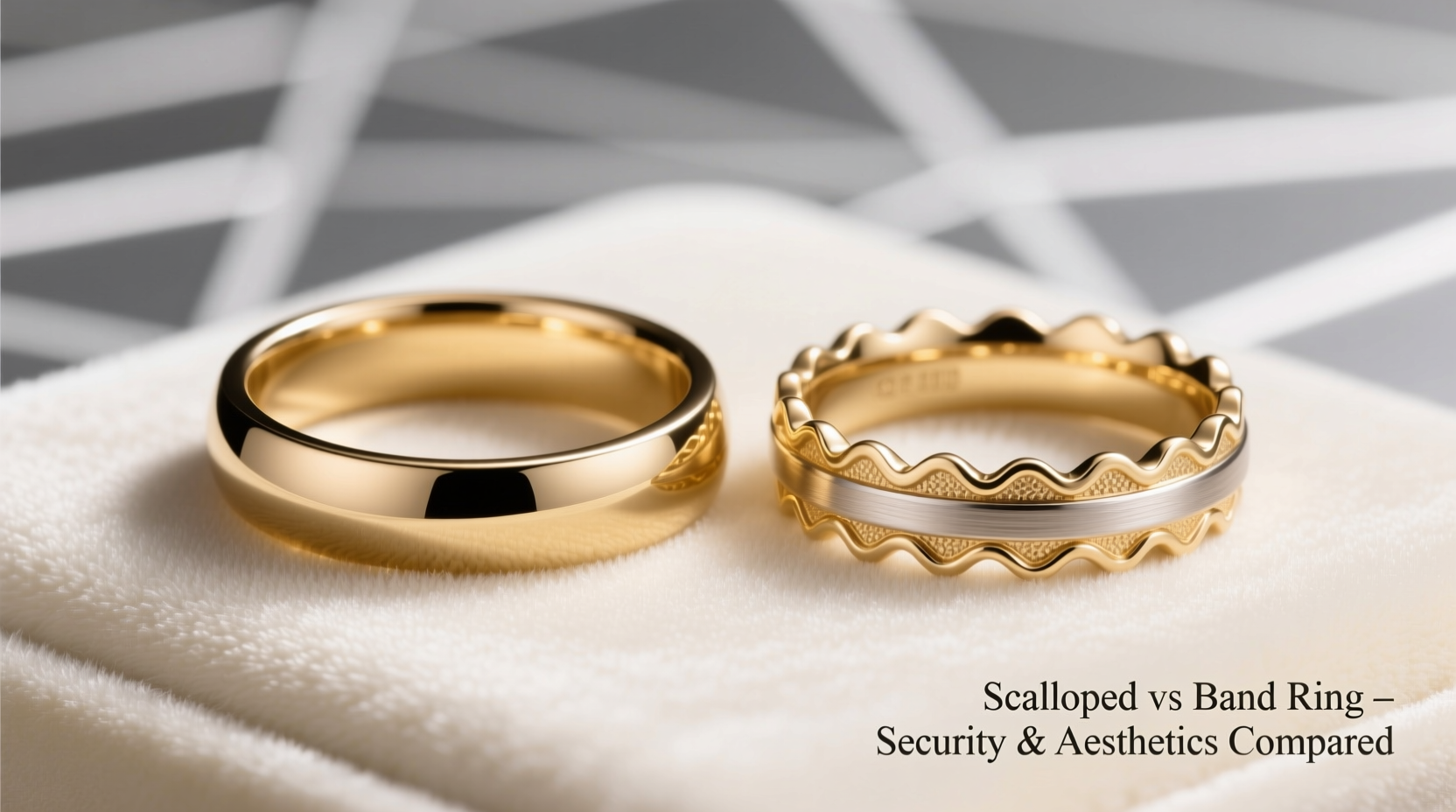
A **band ring** refers to any ring with a continuous metal band supporting the center stone and accent stones. In a classic prong or bezel setting, the side stones are typically set directly into the shank with minimal contouring. The band remains relatively uniform in thickness and curvature.
In contrast, a **scalloped setting** features a sculpted underside of the band where small indentations—or “scallop cuts”—are made beneath each pavé or accent stone. These recesses allow the prongs or beads holding the stones to be placed lower, creating a softer transition between the gemstones and the band. Visually, this gives the impression that the stones are nestled gently into the metal, enhancing light reflection and adding dimension.
“Scalloping is not just decorative—it’s a precision technique that improves how light interacts with side stones while reducing bulk under the band.” — Daniel Reyes, Master Jeweler & CAD Designer
Security: Does Scalloping Compromise Durability?
One common concern with scalloped rings is whether removing metal from beneath the stones weakens the structure. After all, less metal might suggest less protection. However, in practice, well-crafted scalloped settings do not significantly reduce ring strength when made with appropriate materials and techniques.
The key lies in craftsmanship. Reputable jewelers use just enough metal removal to create the scallop effect without undermining structural integrity. Thicker bands (typically 1.8mm or more) are ideal candidates for scalloping because they provide sufficient material to work with. For thinner bands, especially those under 1.5mm, scalloping may increase vulnerability to bending or prong damage over time.
Moreover, the placement of the scallops matters. They are usually positioned between the stones, not directly beneath them, meaning the support around each gem remains solid. The prongs themselves are often reinforced during casting or hand-filing to ensure longevity.
Design and Aesthetics: Why Scalloped Rings Stand Out
Where scalloped rings truly shine is in visual appeal. The subtle curves beneath the stones create shadow and depth, giving the ring a more dynamic appearance. This effect enhances sparkle by allowing more light to enter the sides of the accent diamonds, making them appear brighter and more integrated with the center stone.
Additionally, scalloped settings often feel more comfortable on the finger. Because the metal is contoured away from the skin in strategic places, there's less surface area pressing against the finger, which can reduce irritation and improve airflow—especially beneficial for those with sensitive skin or swelling tendencies.
Band rings, on the other hand, offer a sleeker, more modern profile. Without the sculpted detail, they tend to be easier to clean and maintain. Their minimalist look pairs well with wedding bands and appeals to those who prefer low-maintenance elegance.
Comparison Table: Scalloped vs Band Ring Features
| Feature | Scalloped Ring | Band Ring |
|---|---|---|
| Stone Security | High (with proper thickness) | Very High |
| Durability | Good (if ≥1.8mm band) | Excellent |
| Comfort Fit | Enhanced due to reduced contact points | Standard |
| Sparkle & Light Performance | Superior side-stone brilliance | Moderate |
| Cleaning Difficulty | Moderate (crevices trap debris) | Easy |
| Lifestyle Suitability | Better for office or formal wear | Ideal for active lifestyles |
| Cost | Slightly higher (labor-intensive) | Generally lower |
Real Example: Choosing Based on Lifestyle
Sophia, a graphic designer and avid gardener, initially fell in love with a scalloped pavé engagement ring. Its intricate detailing and romantic glow captivated her. However, after discussing her daily routine with her jeweler, she realized the fine crevices could trap soil and require frequent professional cleanings. She also worried about snagging the delicate prongs while working with clay and tools.
Instead, she chose a slightly wider, high-polish band ring with flush-set accent diamonds. Though less ornate, it offered peace of mind. Two years later, her ring remains scratch-resistant and easy to care for, proving that practicality doesn’t have to come at the cost of beauty.
Step-by-Step Guide: How to Choose Between Scalloped and Band Rings
- Evaluate your daily activities. Do you type all day, garden, lift weights, or work with your hands? Active lifestyles favor simpler, sturdier band rings.
- Consider comfort preferences. Try on both styles. Notice how each feels during prolonged wear—some find scalloped rings lighter and more breathable.
- Assess maintenance willingness. Are you diligent about cleaning jewelry weekly? If not, avoid intricate designs that collect grime.
- Check band thickness. Ensure the ring is at least 1.8mm thick if opting for scalloping to preserve strength.
- Think long-term. Will this ring need to last decades? Prioritize durable metals like platinum or 14k gold regardless of setting style.
- Consult a trusted jeweler. Ask for a side-by-side comparison and inquire about warranty, repair options, and reinforcement techniques.
FAQ
Can scalloped rings be resized easily?
Resizing scalloped rings is possible but more complex than with standard bands. Each scallop must be re-aligned after resizing, and excessive resizing can distort the pattern. It’s best to resize minimally (within one size) and only by experienced professionals.
Do scalloped settings increase the risk of losing stones?
Not inherently. When properly constructed, scalloped settings are as secure as traditional ones. However, because the prongs are sometimes shorter or more exposed, they may require more frequent inspections—ideally every six months—to check for wear.
Are band rings outdated compared to scalloped styles?
No. Band rings remain timeless and widely preferred for their versatility and durability. Many modern designs incorporate subtle textures or mixed finishes to add interest without sacrificing strength.
Checklist: Before You Buy
- ✅ Tried on both scalloped and non-scalloped versions
- ✅ Verified band thickness (≥1.8mm recommended for scalloped)
- ✅ Discussed resizing limitations with jeweler
- ✅ Understood cleaning requirements
- ✅ Selected a reputable jeweler with warranty service
- ✅ Chosen metal based on hardness (e.g., platinum or 14k gold)
- ✅ Scheduled regular inspection appointments (every 6 months)
Conclusion
The debate between scalloped and band rings ultimately comes down to balancing aesthetics with practicality. Scalloped settings offer undeniable charm and enhanced brilliance, particularly in romantic, vintage-inspired designs. But they demand more care and suit certain lifestyles better than others. Band rings, though less flashy, deliver unmatched resilience and ease of maintenance—qualities that grow more valuable over time.
Neither option is universally “more secure” or “prettier.” What matters most is alignment with your life, values, and vision for lasting beauty. Whether you’re drawn to the soft elegance of scalloping or the clean strength of a solid band, choose with intention—and wear it with confidence.




 浙公网安备
33010002000092号
浙公网安备
33010002000092号 浙B2-20120091-4
Comments
No comments yet. Why don't you start the discussion?