
Of all the human senses, smell is the most intimately tied to memory. A single whiff of pine resin on a crisp winter morning can transport someone back to childhood Christmases by the fireplace. The same cannot always be said for a store-bought air freshener labeled “Mountain Breeze.” While both scented pine needles and artificial sprays aim to evoke atmosphere and emotion, one holds a far more powerful grip on the mind’s ability to remember. The difference lies not just in chemistry, but in biology, psychology, and authenticity.
Natural scents like those released from real pine needles engage the brain through complex neural pathways that synthetic fragrances often fail to replicate with the same depth. This article explores why organic, plant-based aromas—particularly those from evergreen trees—serve as stronger memory triggers than their lab-created counterparts. We’ll examine the neuroscience behind olfactory processing, compare chemical compositions, and consider real-world implications for wellness, branding, and personal rituals.
The Science of Smell and Memory
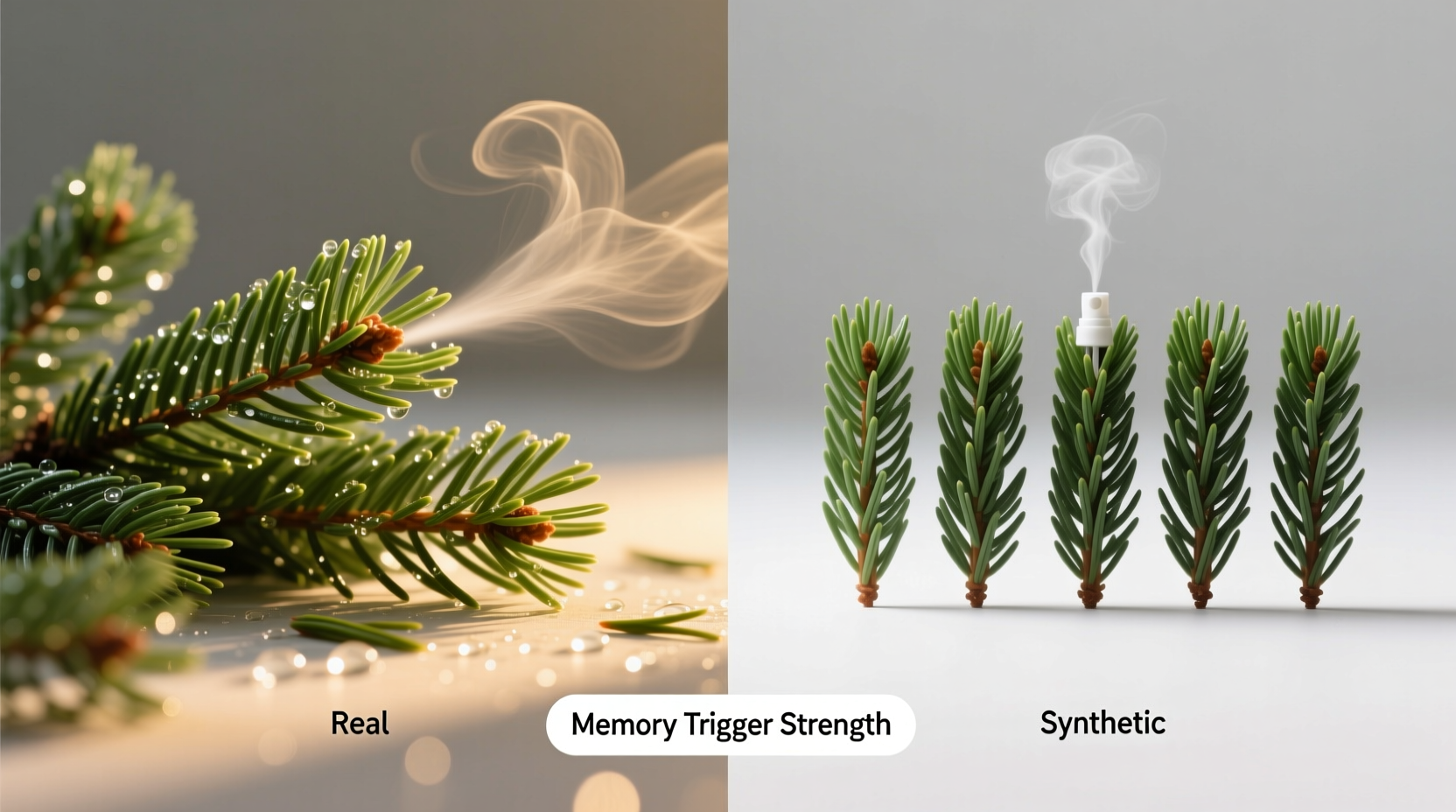
The olfactory bulb, located just above the nasal cavity, is the first stop for scent information entering the brain. Unlike other sensory inputs, smell bypasses the thalamus and connects directly to the amygdala and hippocampus—regions responsible for emotion and memory consolidation. This direct line explains why a fragrance can instantly unlock vivid recollections, often before we’re even consciously aware of what we’ve smelled.
Dr. Rachel Herz, a leading cognitive neuroscientist specializing in olfaction, puts it plainly:
“Smell is the only sense that has a direct pathway to the emotional centers of the brain. That’s why scent memories are so visceral and enduring.” — Dr. Rachel Herz, Author of *The Scent of Desire*
This neurological shortcut means that when you inhale the sharp, resinous aroma of crushed pine needles, your brain doesn’t just register a fragrance—it recalls feelings, places, and moments associated with similar past exposures. These connections are rarely generic; they’re deeply personal. In contrast, artificial sprays often deliver a one-size-fits-all scent profile that lacks the nuanced variability of nature.
Chemical Composition: Nature’s Complexity vs Lab Precision
Pine needle scent is a symphony of volatile organic compounds (VOCs), including alpha-pinene, beta-pinene, limonene, and myrcene. These naturally occurring chemicals don’t just create a fragrance—they interact with the body in subtle ways. Alpha-pinene, for instance, has been studied for its potential anti-anxiety and bronchodilator effects. Limonene is known to elevate mood and reduce stress markers.
Artificial sprays, on the other hand, rely on isolated or synthesized versions of these molecules—or entirely different compounds designed to mimic them. While they may smell similar at first glance, they lack the full spectrum of trace elements and synergistic interactions found in nature. A 2021 study published in *Environmental Health Perspectives* found that synthetic fragrances often contain phthalates and undisclosed solvents, which can irritate the respiratory system and diminish the overall sensory experience.
The brain detects this discrepancy. Natural scents carry micro-variations based on environment, season, and tree species. One batch of pine needles from a high-altitude forest will smell subtly different from another harvested near sea level. This complexity enhances memorability. Artificial sprays, engineered for consistency, sacrifice this richness—and with it, some of their emotional potency.
Comparing Memory Triggers: A Side-by-Side Analysis
| Feature | Scented Pine Needles (Natural) | Artificial Sprays |
|---|---|---|
| Olfactory Complexity | High – dozens of interacting VOCs | Low to moderate – limited molecular profile |
| Emotional Resonance | Strong – linked to personal and cultural experiences | Moderate – often generic or commercial associations |
| Memory Recall Accuracy | High – detailed, multi-sensory recollection | Lower – vague or fleeting associations |
| Likelihood of Triggering Nostalgia | Very high – especially during holidays or outdoor activities | Occasional – depends on context and exposure history |
| Duration of Effect | Moderate – fades naturally, encouraging repeated exposure | Longer-lasting but may cause olfactory fatigue |
| Health Impact | Generally positive – some compounds support respiratory health | Potentially negative – risk of headaches or sensitivities |
This comparison reveals a consistent trend: natural pine scents offer richer, more emotionally resonant experiences. Their impermanence—even their inconsistency—is part of what makes them memorable. The brain pays attention to novelty and variation, both of which are abundant in nature.
A Real-Life Example: The Cabin Experiment
In 2019, a small behavioral study conducted at the University of Vermont explored scent-triggered memory in two groups during a weekend retreat. Participants stayed in identical rustic cabins, but one was decorated with fresh-cut balsam fir wreaths and scattered pine needles, while the other used electric diffusers with a “forest pine” synthetic fragrance.
Over three days, guests engaged in storytelling sessions, meals, and outdoor hikes. One month later, researchers tested memory recall using blind scent tests. Those who had stayed in the naturally scented cabin recalled 37% more details about conversations, emotions, and events when re-exposed to real pine aroma. In contrast, the artificial spray group showed minimal improvement in recall and reported the scent felt “familiar but impersonal.”
One participant noted: “When I smelled the real pine again, I could suddenly hear my friend laughing by the fire. With the fake one, I just thought, ‘Oh, that’s the bathroom spray.’”
This case illustrates a key point: authentic sensory experiences build deeper cognitive imprints. The scent isn’t just background noise—it becomes part of the memory’s architecture.
How to Use Natural Scents for Stronger Memory Anchoring
If you want to harness the power of scent for personal or professional purposes—be it enhancing holiday traditions, improving focus, or creating meaningful brand experiences—prioritize authenticity. Here’s a step-by-step guide to building memory-rich olfactory environments:
- Choose Fresh, Natural Sources: Use actual pine branches, cones, or essential oils distilled from real evergreens. Avoid fragrance oils labeled “parfum” or “synthetic blend.”
- Engage Multiple Senses: Combine scent with touch (handling pine boughs), sound (crackling fire), and sight (natural decor). Multi-sensory input strengthens memory encoding.
- Repeat Strategically: Reintroduce the scent during similar future events. Repetition reinforces neural pathways associated with that aroma.
- Create Rituals: Light a pine-scented beeswax candle every December evening. Brew tea with spruce tips in spring. These habits form predictable scent cues.
- Store Memories with Intention: After a meaningful event, preserve a small bundle of dried pine needles in a sealed jar. Label it with the date and occasion. Later, opening it can serve as a time capsule for the senses.
Checklist: Building a Memory-Enhancing Scent Environment
- ✅ Source real pine materials (branches, cones, essential oil from reputable distillers)
- ✅ Avoid aerosol sprays containing alcohol or phthalates
- ✅ Use scent during emotionally significant moments (gatherings, milestones)
- ✅ Pair fragrance with consistent routines (weekly cleaning, seasonal decorations)
- ✅ Test for sensitivities—natural doesn’t mean universal tolerance
- ✅ Rotate scents seasonally to prevent habituation
- ✅ Document experiences—journaling after scent exposure deepens recall
Why Brands Are Missing the Mark
Many companies invest heavily in signature scents for retail spaces, hotels, or products. Yet most rely on artificial fragrances engineered for broad appeal. While this approach ensures uniformity across locations, it sacrifices emotional depth. A luxury hotel chain might diffuse a “woodland pine” scent in every lobby, but guests rarely form lasting memories from it—because it doesn’t vary, evolve, or feel real.
In contrast, boutique lodges that use locally sourced evergreen boughs report higher guest satisfaction and stronger word-of-mouth recommendations. The scent becomes part of the story—the freshness of the mountains, the care in curation, the authenticity of the stay.
As consumer preferences shift toward sustainability and experiential authenticity, businesses would do well to reconsider their olfactory strategies. Real pine isn’t just a fragrance; it’s an invitation to presence.
Frequently Asked Questions
Can artificial sprays ever trigger strong memories?
Yes, but usually only through repeated, context-specific exposure. For example, if someone grew up with a particular Christmas tree spray, it may become nostalgic over time. However, the emotional depth tends to be narrower and less multisensory than memories tied to natural scents.
Are pine-scented essential oils as effective as real needles?
High-quality, steam-distilled pine essential oil retains many of the beneficial compounds found in live needles and can be a potent memory trigger—especially when used consistently. However, cold-pressed or solvent-extracted oils may contain residues that dull the olfactory experience. Always verify sourcing and purity.
Is there a risk of allergies with real pine?
Some individuals may react to pollen or resin in fresh pine, particularly those with asthma or plant sensitivities. If irritation occurs, switch to boiled or dried preparations, which reduce airborne allergens. Always ventilate rooms well when introducing new scents.
Conclusion: Choose Authenticity for Lasting Impressions
The choice between scented pine needles and artificial sprays isn’t merely about preference—it’s about impact. Natural pine engages the brain with complexity, authenticity, and biological resonance that synthetic fragrances struggle to match. It doesn’t just fill a room with scent; it fills a mind with memory.
Whether you're decorating for the holidays, designing a calming space, or crafting a brand experience, lean into the power of the real. Let the crisp, earthy aroma of pine needles anchor your moments, deepen your connections, and preserve what matters most—not in photos or notes, but in the silent, enduring language of smell.




 浙公网安备
33010002000092号
浙公网安备
33010002000092号 浙B2-20120091-4
Comments
No comments yet. Why don't you start the discussion?