
When it comes to customizing T-shirts, two popular methods stand out: professional screen printing and DIY techniques like iron-on transfers, fabric paint, or heat presses. Both offer creative freedom, but they differ significantly in quality, longevity, and overall appearance. Whether you're designing a personal keepsake, promoting a small business, or creating merchandise for an event, understanding the differences between screen printing and DIY T-shirts is essential to making the right choice.
The Appearance: How Do They Look?
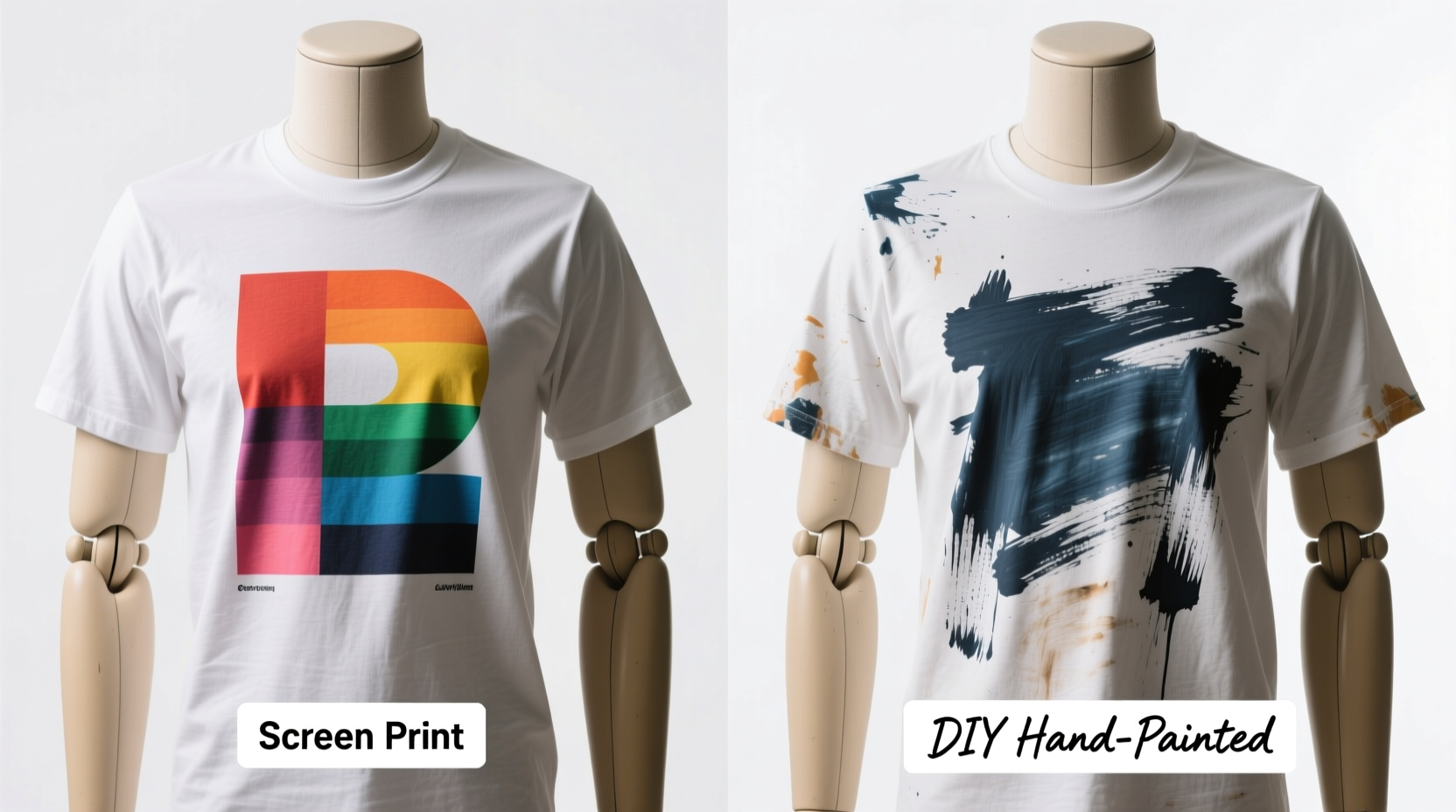
The visual impact of a printed T-shirt often determines its perceived value. Screen printing produces sharp, vibrant designs with consistent ink coverage. Because each color is applied through a mesh stencil using a squeegee, the result is a smooth, opaque layer that adheres evenly to the fabric. This method excels with bold graphics, solid colors, and large-scale production runs.
In contrast, DIY methods—especially consumer-grade iron-on transfers—often yield softer edges and less color saturation. The design may appear slightly pixelated or faded, particularly on dark fabrics. While modern at-home printers and transfer papers have improved, they still struggle to match the crispness and professional finish of screen-printed garments.
Another aesthetic consideration is texture. Screen printing typically creates a slight raised surface, especially with plastisol inks, which some wearers find appealing as a sign of authenticity. On the other hand, many DIY prints feel flatter but can crack over time, particularly around folds and seams.
Durability: Which Lasts Longer?
Longevity is where screen printing truly shines. Professionally printed shirts can withstand 50+ washes with minimal fading or cracking when cared for properly. The ink bonds deeply with the fibers, especially after curing in a high-heat dryer. This makes screen-printed apparel ideal for uniforms, band merch, or promotional items meant to last.
DIY prints, however, are more vulnerable. Iron-on transfers tend to peel after repeated washing, especially if not pressed evenly or if low-quality materials are used. Fabric paint may stiffen and crack over time, particularly on stretchy or frequently worn garments. Even advanced home heat presses rarely achieve the same temperature consistency as industrial equipment, reducing adhesion strength.
“Commercial screen printing uses inks that cure at 320°F, creating a permanent bond. Most home irons max out around 400°F but lack uniform pressure—critical for lasting adhesion.” — Marcus Lin, Textile Printing Specialist
Comparison Table: Screen Printing vs DIY T-Shirts
| Feature | Screen Printing | DIY (Iron-on/Heat Press) |
|---|---|---|
| Initial Cost | High (setup fees, screens) | Low (printer, transfer paper) |
| Per-Unit Cost | Low (for bulk orders) | High (per shirt) |
| Print Quality | Excellent (sharp, vibrant) | Fair to Good (can be blurry) |
| Durability | High (50+ washes) | Moderate (10–20 washes) |
| Color Accuracy | Precise (Pantone matching) | Variable (depends on printer) |
| Best For | Bulk orders, logos, events | One-offs, prototypes, gifts |
A Real-World Example: Band Merch That Had to Last
A local indie band needed 100 T-shirts for a summer tour. They initially considered DIY printing to save money. After testing one homemade shirt and one professionally screen-printed sample, they washed both weekly for six weeks under identical conditions. The DIY shirt began peeling at the collar and sleeves by week three. By week six, the design was noticeably faded and cracked. The screen-printed shirt showed no visible wear. Based on this test, the band invested in screen printing—and received consistent compliments on their merch throughout the tour. Their fans even commented on how “professional” the shirts looked.
This example underscores a key truth: while DIY saves upfront costs, it often sacrifices long-term value.
Step-by-Step: How to Maximize Longevity of Any Printed T-Shirt
Regardless of printing method, proper care dramatically extends a T-shirt’s life. Follow these steps:
- Wait 24 hours before washing – Allows ink or transfer to fully set.
- Turn inside out – Protects the print from abrasion during washing.
- Use cold water – Prevents ink breakdown and fabric shrinkage.
- Choose gentle cycle – Reduces mechanical stress on the design.
- Air dry or tumble dry low – High heat accelerates peeling, especially for DIY prints.
- Avoid bleach and harsh detergents – These degrade both fabric and ink.
When DIY Makes Sense
Despite its limitations, DIY printing has legitimate uses. It’s ideal for:
- One-off personalized gifts (e.g., birthday tees)
- Prototyping designs before bulk ordering
- Small batches under 10 shirts
- Home craft projects with kids
For these scenarios, the lower barrier to entry and creative control outweigh the trade-offs in durability. Plus, advancements in printable vinyl and sublimation inks have narrowed the gap for hobbyists.
Expert Checklist: Choosing the Right Method
Use this checklist to decide whether screen printing or DIY is right for your project:
- ✅ Need more than 20 shirts? → Choose screen printing
- ✅ Want photo-quality gradients? → Screen printing or DTG (direct-to-garment)
- ✅ Limited budget and only need 1–5 shirts? → DIY is practical
- ✅ Design includes fine details or small text? → Avoid DIY transfers
- ✅ Shirt will be washed frequently? → Prioritize screen printing
- ✅ Testing a design concept? → DIY is perfect for mockups
Frequently Asked Questions
Can I combine DIY and screen printing?
Yes. Many designers use DIY methods to create prototypes, then send final versions to a professional printer. Some also use printable vinyl for accents on screen-printed shirts, though layering requires careful curing to avoid adhesion issues.
Does screen printing work on all shirt colors?
It works on all colors, but white or light underbases are often added for vibrant results on dark fabrics. This step ensures opacity and color accuracy, especially with CMYK designs.
Why do some DIY prints last longer than others?
Results vary based on materials and technique. Using a high-pressure heat press (not a household iron), 100% cotton shirts, and premium transfer paper significantly improves durability. Washing habits also play a major role.
Final Verdict: Which Is Better?
If appearance and longevity are priorities, screen printing wins decisively. Its professional finish, color fidelity, and resistance to wear make it the standard for commercial apparel. It’s especially cost-effective for larger quantities, where setup costs are amortized across dozens of units.
DIY printing serves a different purpose: accessibility and experimentation. It allows anyone to create custom shirts without minimum order requirements. But it should be viewed as a short-term or small-scale solution—not a replacement for professional quality.
The choice ultimately depends on your goals. For lasting impact, invest in screen printing. For creative exploration or one-time use, DIY offers flexibility and fun.




 浙公网安备
33010002000092号
浙公网安备
33010002000092号 浙B2-20120091-4
Comments
No comments yet. Why don't you start the discussion?