
In recent years, a quiet revolution has taken place in an often-overlooked corner of daily wear: socks. What was once a simple garment tucked beneath shoes is now subject to material science, ergonomic design, and consumer obsession. At the heart of this shift is one innovation: the seamless sock. No longer just for athletes or medical patients, seamless socks have become a staple in wardrobes across lifestyles—from office workers to long-distance hikers. But what makes them so different from traditional socks? And why are so many people switching?
The Anatomy of Discomfort: Problems with Regular Socks
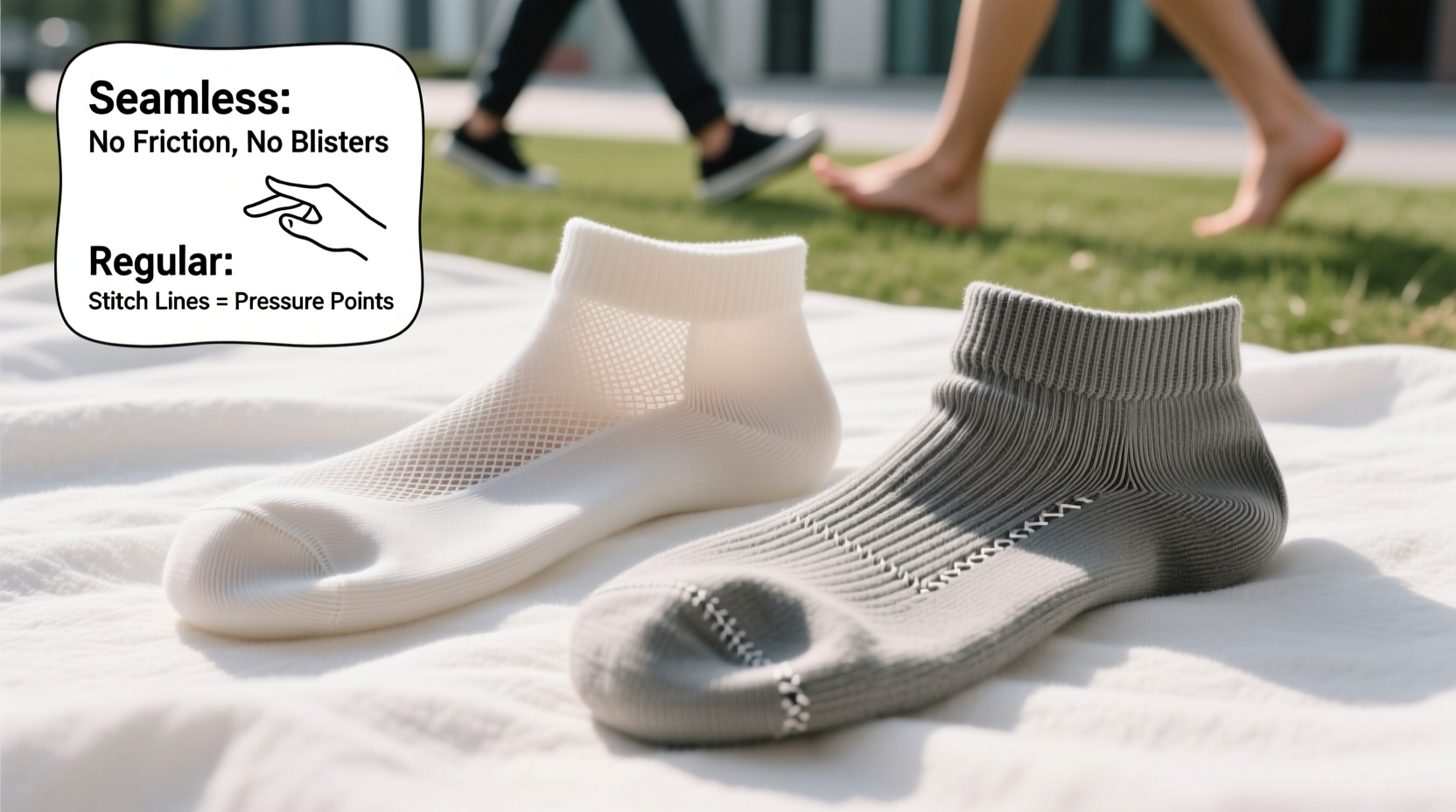
Regular socks, typically made with a visible heel seam and ribbed cuffs, have been the standard for decades. While functional, they come with inherent flaws that affect both comfort and performance. The most common issue lies in the toe seam—a raised line where the fabric is stitched together at the end. This seam creates friction against the skin, especially during extended wear or physical activity.
For many, this friction leads to hot spots, blisters, and irritation—particularly for those on their feet all day or engaging in high-movement activities like running or hiking. Even minor rubbing can escalate into discomfort over time. Additionally, the elastic bands at the top of conventional socks can dig into the calf or ankle, restricting circulation and leaving indentations.
Another drawback is fit inconsistency. Standard socks are often cut using older patterns that don’t account for natural foot contours, leading to bunching, slipping, or excess material around the toes and heels.
What Makes a Sock \"Seamless\"?
Despite the name, “seamless” doesn’t mean entirely without joins. Instead, it refers to socks knitted in a continuous loop using fine-gauge circular knitting machines. These advanced looms create a smooth, nearly invisible transition at the toe closure, eliminating the bulky, stitched ridge found in regular socks.
The construction process allows for precision shaping, meaning the sock conforms more naturally to the foot’s anatomy. Seamless socks often feature graduated compression zones, moisture-wicking yarns (like merino wool or synthetic blends), and targeted cushioning—all integrated during knitting rather than added later.
This technology originated in medical textiles, where minimizing pressure points was essential for diabetic patients and post-surgical recovery. Over time, performance brands adopted the method for athletic gear, and today, lifestyle-focused companies offer seamless options for everyday wear.
Key Features of Seamless Socks
- Toe closure without raised stitching
- 3D knitting for anatomical fit
- Reduced risk of chafing and blistering
- Breathable, moisture-managing materials
- Smooth cuff designs that don’t constrict
Comfort Science: Why Seamless Wins
The appeal of seamless socks isn’t just marketing hype—it’s rooted in biomechanics and dermatology. Friction is one of the primary causes of skin breakdown, and even low levels of repeated rubbing can trigger micro-tears, inflammation, and eventually blisters.
A study published in the Journal of the American Podiatric Medical Association found that participants wearing seamless socks experienced up to 47% fewer friction-related injuries during prolonged walking compared to those in traditional socks.
“Eliminating the toe seam removes a predictable source of mechanical stress. For anyone spending hours on their feet, that small change translates into significant comfort gains.” — Dr. Lena Torres, Podiatrist & Footwear Researcher
Beyond blister prevention, seamless socks improve overall sensory comfort. Without ridges or tight bands, the foot experiences uniform pressure distribution. This is especially beneficial for people with sensitive skin, circulatory issues, or conditions like diabetes, where foot health is critical.
Additionally, seamless socks tend to maintain their shape better over time. Because they’re engineered with elasticity built into the knit structure—not reliant on separate elastic threads—they resist sagging and bagging after multiple washes.
Seamless vs. Regular Socks: A Practical Comparison
| Feature | Seamless Socks | Regular Socks |
|---|---|---|
| Toes | Smooth, no visible seam; reduced friction | Prominent stitched seam; potential for rubbing |
| Fabric Construction | Circular-knit, 3D shaped | Flat-knit, stitched together |
| Fit | Anatomically contoured; less slippage | Generic sizing; may bunch or slide |
| Cuff Design | Soft, non-constrictive elastic integration | Tight ribbing that can leave marks |
| Durability | Holds shape longer due to structural elasticity | Elastic degrades faster; tends to sag |
| Best For | Running, travel, sensitive skin, all-day wear | Casual use, short durations, budget needs |
Real-World Impact: Who Benefits Most?
Consider Sarah, a customer service manager who spends eight hours a day on her feet, shuttling between desks, meeting rooms, and training sessions. She wore standard cotton-blend crew socks until she developed recurring blisters on her second and third toes. After switching to seamless performance socks, she reported not only an end to blistering but also less fatigue by mid-afternoon. “It’s like my feet forgot they’ve been working all day,” she said.
Similarly, marathon runners and frequent travelers have embraced seamless socks for their reliability. During long flights, swelling can make tight sock bands uncomfortable. Seamless versions expand slightly with the foot, avoiding constriction. Runners appreciate the precise fit that prevents internal shifting inside the shoe—each millimeter of unnecessary movement saved reduces energy expenditure and injury risk.
Who Should Consider Switching?
- People with diabetes or neuropathy
- Office workers transitioning to standing desks
- Frequent travelers or commuters
- Athletes and fitness enthusiasts
- Anyone prone to blisters or foot sensitivity
How to Choose the Right Seamless Sock
Not all seamless socks are created equal. With growing demand, quality varies widely. Here’s how to select a pair that delivers real benefits:
- Check the knitting density: Higher-end models use finer needles (measured in needle count, e.g., 200-needle machines), producing smoother textures.
- Look for functional fibers: Merino wool regulates temperature and resists odor; nylon adds durability; spandex ensures stretch retention.
- Assess the heel and arch support: Some seamless socks include zoned compression to stabilize the foot during motion.
- Avoid cheap imitations: True seamless construction requires specialized equipment. Extremely low-priced “seamless” socks may still have bonded seams or poor shaping.
- Try different heights: From no-show to crew, ensure the length suits your footwear and climate needs.
FAQ: Common Questions About Seamless Socks
Do seamless socks last as long as regular socks?
Yes—and often longer. While the initial cost may be higher, seamless socks typically retain their shape, elasticity, and softness through more wash cycles due to superior knitting techniques and durable yarn blends.
Can I wear seamless socks with dress shoes?
Absolutely. Many brands offer sleek, low-profile seamless dress socks in neutral colors designed specifically for formal footwear. They prevent toe creasing and eliminate unsightly seam bulges.
Are seamless socks worth the extra cost?
For anyone prioritizing foot comfort, mobility, or foot health, yes. The reduction in friction alone can prevent painful issues down the line. Think of it as preventive care for your feet.
Final Thoughts: Comfort That Makes Sense
The rise of seamless socks reflects a broader trend toward intelligent design in everyday clothing—garments that work *with* the body, not against it. What began as a niche solution for medical and athletic needs has proven universally valuable. When something is worn so close to the skin and impacts posture, circulation, and movement, even subtle improvements matter.
Choosing seamless socks isn’t about chasing trends. It’s about recognizing that comfort isn’t accidental—it’s engineered. Whether you're walking through an airport, standing during a presentation, or logging miles on a trail, your feet deserve protection from avoidable strain.




 浙公网安备
33010002000092号
浙公网安备
33010002000092号 浙B2-20120091-4
Comments
No comments yet. Why don't you start the discussion?