
When discussing the twilight years of Sega’s dominance in the console market, two systems stand out: the Sega Saturn and the Dreamcast. Released less than five years apart, both represented ambitious leaps forward—and both ultimately faced commercial failure in key markets. Yet, decades later, their legacies endure among retro gaming enthusiasts. The question remains: when we look back, which console actually had the better games?
The answer isn’t straightforward. The Saturn launched during a transitional era from 2D to 3D gaming, while the Dreamcast arrived just as online play was becoming feasible on consoles. Their game libraries reflect these differing contexts—each with strengths that appeal to different tastes. To determine which had the superior lineup, we need to examine exclusives, third-party support, innovation, and cultural impact.
Sega Saturn: The 2D Powerhouse With an Identity Crisis
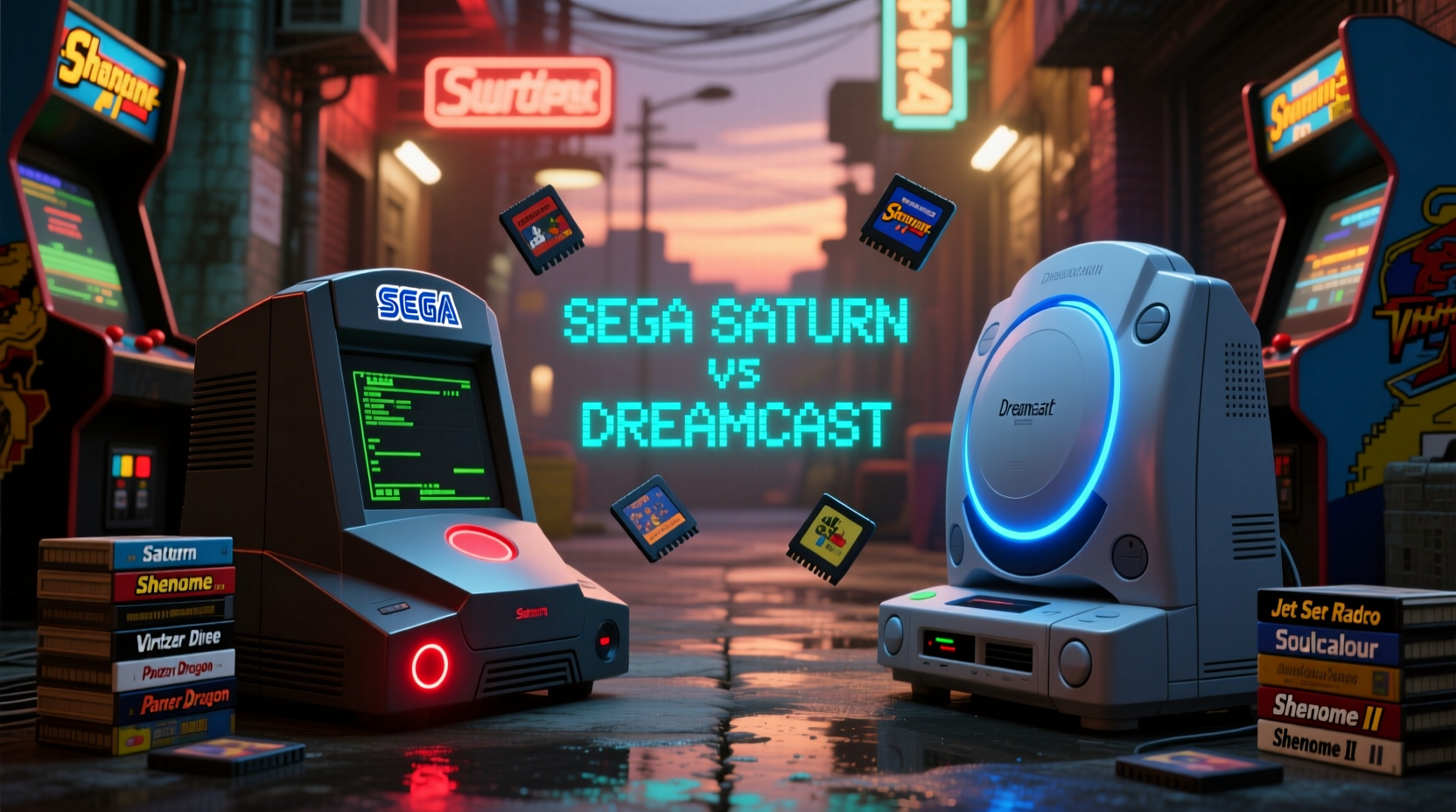
Released in 1994 in Japan and 1995 elsewhere, the Sega Saturn was designed to be a technical marvel. Its dual-CPU architecture allowed for exceptional 2D sprite handling, making it ideal for arcade-perfect ports of fighting games and shoot 'em ups. Titles like Street Fighter Alpha 2, Namco x Capcom, and Guardian Heroes ran smoother and looked sharper here than on any other home system.
However, the Saturn struggled with 3D rendering. The complex hardware made development difficult, especially for Western studios unfamiliar with its architecture. As a result, many high-profile 3D titles were either delayed, downgraded, or never released outside Japan. The infamous early U.S. launch caught retailers and developers off guard, fracturing third-party support almost immediately.
Despite these hurdles, the Saturn built a cult following thanks to its unmatched 2D library. It also hosted early entries in franchises that would later define Sega, such as Panzer Dragoon and Virtua Fighter 2. But its lack of mainstream hits beyond niche genres limited its reach.
Dreamcast: Ahead of Its Time, But Too Late?
Launched in 1998 in Japan and 1999 in North America, the Dreamcast was Sega’s final bid for console supremacy. Unlike the Saturn, it embraced 3D graphics with a unified, developer-friendly architecture. It also introduced built-in modem support, enabling online multiplayer years before Xbox Live.
The Dreamcast’s game library was both broader and more accessible. It featured genre-defining titles like Shenmue, a groundbreaking open-world experience that blended life simulation with martial arts storytelling. Soulcalibur redefined fighting games with fluid animation and weapon-based combat. Jet Set Radio brought cel-shaded visuals and a rebellious soundtrack to the forefront of game design.
Third-party publishers returned in force. Games like Quake III Arena, Resident Evil – Code: Veronica, and Unreal Tournament showed the Dreamcast could compete technically with the upcoming PlayStation 2. Even sports fans had reason to celebrate with NFL 2K and NBA 2K, which offered gameplay and presentation far ahead of EA’s Madden series at the time.
“With the Dreamcast, we weren't just making games—we were imagining the future of interactive entertainment.” — Yu Suzuki, Creator of Shenmue and Virtua Fighter
Head-to-Head Game Library Comparison
| Category | Sega Saturn | Dreamcast |
|---|---|---|
| Fighting Games | Superior 2D fighters (SF Zero, Marvel vs. Capcom) | Better 3D fighters (Soulcalibur, Dead or Alive 2) |
| Shooters | Best 2D shmups (Radiant Silvergun, DoDonPachi) | Limited but strong 3D shooters (Ikaruga, House of the Dead 2) |
| RPGs | Strong Japanese-only selection (Grandia, Sakura Wars) | Fewer but innovative (Shenmue, Skies of Arcadia) |
| Innovation | Moderate—focused on arcade fidelity | High—online play, VMU, motion-sensing |
| Western Appeal | Limited due to region locking and poor marketing | Broad—strong sports, online, and third-party support |
| Legacy Impact | Niche admiration among retro purists | Influenced modern design (open worlds, online lobbies) |
Why the Dreamcast Had Better Overall Games
While the Saturn excelled in specific niches, the Dreamcast offered a more complete and forward-thinking experience. Its library wasn’t just larger—it was more diverse and accessible to a global audience. Where the Saturn catered primarily to hardcore Japanese gamers and arcade veterans, the Dreamcast reached casual players, sports fans, and early adopters of digital culture.
Consider the timeline. By 1999, gamers expected 3D worlds, voice acting, and expansive narratives. The Saturn’s best games felt increasingly anachronistic in this context. In contrast, Skies of Arcadia delivered a sweeping JRPG adventure with airship battles and emotional depth. ChuChu Rocket! introduced real-time puzzle multiplayer over the internet—a novelty at the time. Even experimental titles like Seaman pushed boundaries in ways no Saturn game dared.
Moreover, the Dreamcast’s early death in 2001 froze its library in time—but not before leaving an indelible mark. Many of its innovations became standard in later generations. Online matchmaking, digital storefronts (via downloadable content), and motion-controlled minigames (using the microphone) all debuted or matured on the Dreamcast.
Real Example: The Collector’s Dilemma
Take Mark, a retro enthusiast based in Chicago. He started collecting Saturn games in 2015, drawn by their rarity and reputation for 2D excellence. After acquiring nearly 80 titles—including rare imports—he found himself frustrated. Many required modded hardware or region-free mods to run. Others, while technically impressive, lacked replay value.
He bought a Dreamcast on a whim. Within months, he’d played through Soulcalibur, Jet Set Radio, and Phantasy Star Online—games he kept returning to. “The Saturn feels like a museum piece,” he said. “The Dreamcast still feels alive.”
Actionable Checklist: How to Explore Both Libraries Today
- Start with emulation: Use legal BIOS files and ROMs to sample games before investing in hardware.
- Buy original hardware selectively: Dreamcast is easier to find and maintain; Saturn benefits from region modding.
- Prioritize multi-region support: For Saturn, consider importing or using a Japanese model.
- Join online communities: Forums like Saturn Shiro and Dreamcast Talk offer preservation tools and fan patches.
- Try modern re-releases: Games like Sonic Adventure and Soulcalibur are available on newer platforms.
Frequently Asked Questions
Was the Sega Saturn more powerful than the Dreamcast?
No. While the Saturn had advanced 2D capabilities, the Dreamcast used a more modern architecture with a 128-bit GPU (PowerVR CLX2), significantly faster RAM, and better 3D performance. In raw power and ease of development, the Dreamcast was superior.
Did any Dreamcast games influence later consoles?
Yes. Phantasy Star Online pioneered console-based MMORPGs. NBA 2K set the standard for sports simulations. Jet Set Radio's art style inspired games like Okami and Celeste. Even Microsoft acknowledged the Dreamcast’s online features when designing Xbox Live.
Can you still play Dreamcast games online?
Yes—through fan-run networks like DreamPi and NetBandai. These use modern Raspberry Pi setups to restore online functionality for games like Phantasy Star Online and Quake III Arena.
Final Verdict: Quality, Reach, and Longevity
The Sega Saturn was a technical marvel for its time, especially in 2D gaming. But its complexity, poor Western launch, and narrow appeal limit its standing today. The Dreamcast, though short-lived, delivered a richer, more innovative, and globally relevant library. It didn’t just have better games—it had games that pointed toward the future.
Ultimately, “better” depends on what you value. If you’re a fan of pixel-perfect arcade action and deep-cut Japanese exclusives, the Saturn has treasures few other systems can match. But if you want variety, innovation, and lasting influence, the Dreamcast wins decisively.




 浙公网安备
33010002000092号
浙公网安备
33010002000092号 浙B2-20120091-4
Comments
No comments yet. Why don't you start the discussion?