
Walking alone at night, parking in dimly lit lots, or navigating unfamiliar areas can trigger a primal sense of vulnerability. Many people turn to personal protection tools for peace of mind—and among the most popular are self-defense keychains and stun guns. At first glance, they may seem similar: compact, portable, and designed to deter threats. But when it comes to actual safety, psychological comfort, and real-world effectiveness, the differences matter. Choosing between a self-defense keychain and a stun gun isn’t just about size or price—it’s about understanding how each tool functions, where it’s legal, and what kind of confidence it truly provides.
Understanding the Basics: What Are They?
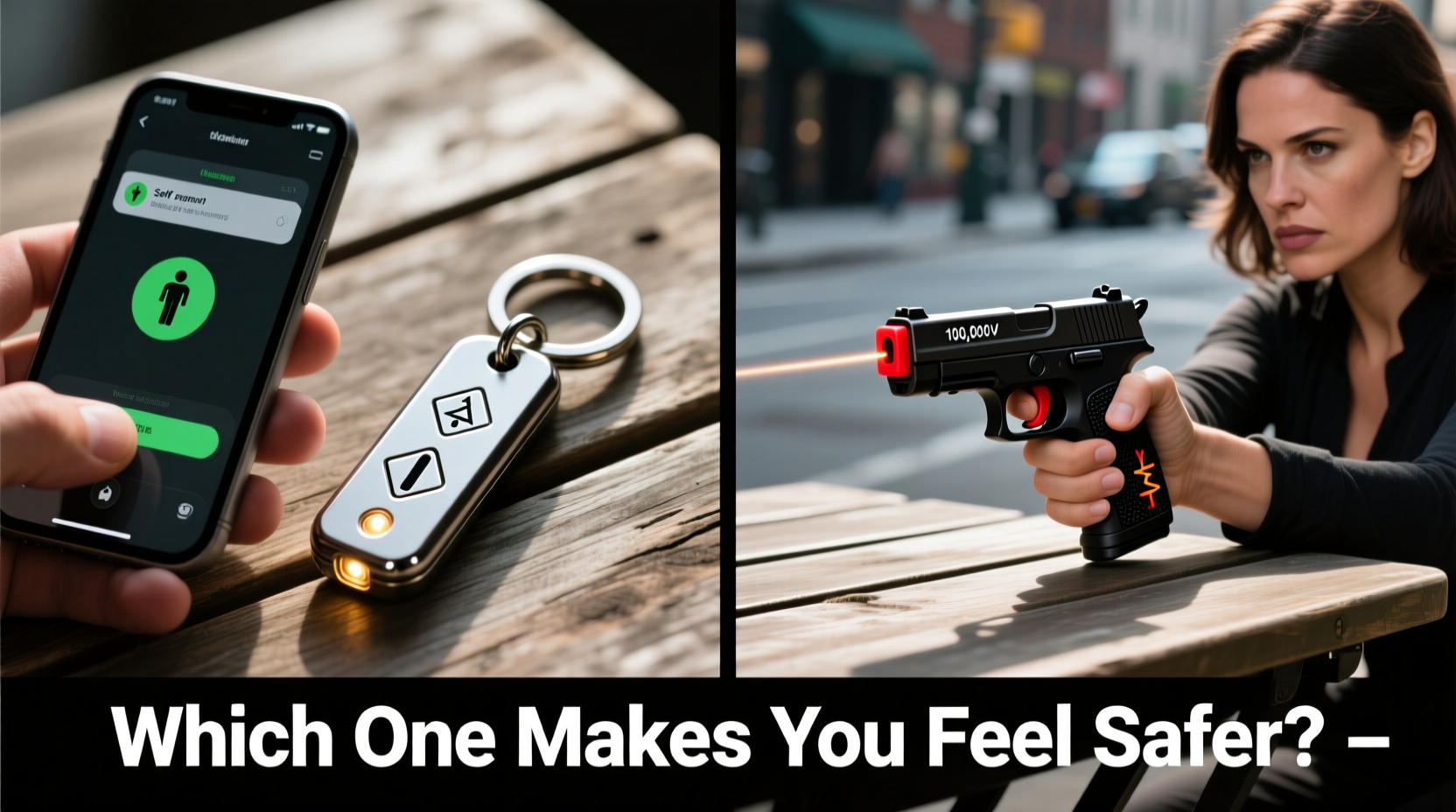
A self-defense keychain is typically a small, multi-functional device that attaches to your keys. Many models combine LED lights, alarms, and sometimes weak electric charges. These are marketed as discreet safety tools, especially for women, college students, or urban commuters. The idea is that pressing a button triggers a loud siren (often 120+ decibels) and flashing light, drawing attention and potentially scaring off an attacker.
In contrast, a stun gun delivers a high-voltage, low-amperage electrical charge capable of temporarily disabling a person through neuromuscular disruption. Most stun guns range from 50,000 to over 1 million volts and require direct contact with the attacker. They’re bulkier than keychains but offer a more aggressive deterrent—one that can stop an assailant in their tracks, if used correctly.
Effectiveness: Noise vs. Neutralization
The core difference lies in intent and outcome. Self-defense keychains rely on deterrence. Their alarm systems work on the principle that sudden noise and light will startle an aggressor, making them reconsider their actions. In many cases—especially against casual predators or those testing boundaries—this works. However, if an attacker is under the influence, emotionally volatile, or wearing headphones, the alarm may not register at all.
Stun guns, on the other hand, aim for incapacitation. When applied to large muscle groups (like the abdomen or thigh), they disrupt voluntary muscle control, causing pain, loss of balance, and temporary paralysis. This gives the user critical seconds to escape. According to data from law enforcement training programs, even brief contact (1–2 seconds) can create enough disorientation to break free from a grab or chokehold.
“Tools that rely solely on sound assume the attacker has second thoughts. Real danger often comes from individuals who don’t.” — Sgt. Daniel Reyes, Retired Police Tactical Instructor
Portability and Practicality: Convenience vs. Readiness
Keychains win on convenience. They’re always with your keys, easy to activate with one hand, and socially unobtrusive. You can carry one without raising eyebrows in public. Their small size means they fit in a pocket, purse, or clipped to a backpack strap. For daily use, especially in urban settings, this seamless integration into routine life is a major advantage.
Stun guns, while still portable, are larger and require deliberate handling. Most are about the size of a smartphone and must be drawn from a bag or holster. If stored deep in a purse or pocket, retrieval during a surprise attack becomes difficult. Some models include safety switches to prevent accidental discharge, but these add steps in high-stress moments.
| Feature | Self-Defense Keychain | Stun Gun |
|---|---|---|
| Size | Compact, key-sized | Handheld, ~5–7 inches |
| Activation | One-button press | Trigger + safety switch |
| Primary Effect | Alarm & light | Electrical shock |
| Best For | Deterrence, early warning | Close-contact defense |
| Battery Life | Months (low power) | Weeks to months (with frequent use) |
| Rechargeable | Often yes | Sometimes |
Mini Case Study: Sarah’s Late-Night Walk Home
Sarah, a 28-year-old nurse, walks to her car after a 10 PM shift. As she approaches the parking garage, a man steps out from behind a pillar and moves toward her quickly. She activates her self-defense keychain. The 125-decibel alarm blares and flashes red. The man hesitates, looks around, then retreats. Sarah reaches her car safely. In this case, the keychain worked perfectly—not because it hurt anyone, but because it created doubt and drew potential witness attention.
Now imagine the same scenario, but the man keeps advancing, shouting, “Give me your bag!” Sarah fumbles for her stun gun, pulls it out, and jabs it into his side. After two seconds of contact, he stumbles back, disoriented. She runs to her car and locks the doors. Here, the stun gun didn’t just deter—it disrupted the threat physically.
Legal and Ethical Considerations
Legality varies significantly by location. In the U.S., self-defense keychains with alarms are almost universally legal. No permit is required, and they’re allowed in most public spaces, including airports (as long as they don’t contain weapons).
Stun guns, however, face restrictions. They are banned outright in states like New York, New Jersey, Massachusetts, and Rhode Island. Other states allow them with no permit, while some require background checks or registration. Even where legal, using a stun gun can carry legal risk—if excessive force is claimed, users may face civil or criminal liability.
Psychological Impact: What Makes You *Feel* Safer?
This is where the question gets personal. Feeling safe isn’t just about statistics—it’s about perception, confidence, and control.
- Keychain users often report feeling empowered simply by having a tool that draws attention. It reduces helplessness and provides a sense of proactive preparedness.
- Stun gun users tend to feel a deeper level of security, knowing they have a physical countermeasure. That confidence can alter posture, awareness, and even deter aggression through nonverbal cues—what experts call the “guardian mindset.”
However, overconfidence is a risk. Carrying a stun gun doesn’t make someone invincible. Without proper training, it can be misused or fail when needed most. Similarly, relying solely on a keychain alarm might give false reassurance in high-risk situations.
Expert Insight: Training Matters More Than the Tool
“The best self-defense tool is situational awareness. No device replaces knowing your environment, avoiding danger zones, and practicing escape drills. A stun gun in an untrained hand is less effective than a keychain in a vigilant one.” — Dr. Lena Park, Self-Defense Psychologist and Author of *Safety Mindset*
Checklist: Choosing the Right Option for You
- ✅ Assess your daily routines: Do you walk alone at night? Travel frequently? Work late shifts?
- ✅ Research local laws: Can you legally own and carry a stun gun?
- ✅ Evaluate your comfort level: Are you prepared to make physical contact in a crisis?
- ✅ Consider storage and access: Will the device be within reach when needed?
- ✅ Test ease of use: Practice activating your chosen tool blindfolded or in the dark.
- ✅ Combine tools: Many choose both—a keychain for early warning, a stun gun for close encounters.
Frequently Asked Questions
Can a self-defense keychain really stop an attacker?
It’s unlikely to physically stop someone, but it can disrupt their focus, draw attention, and create an opportunity to escape. Its value lies in deterrence, not incapacitation.
Do stun guns cause permanent injury?
No. Modern stun guns use microsecond pulses that overload the nervous system temporarily without causing lasting damage. However, they should never be used on children, the elderly, or individuals with heart conditions.
Are there alternatives to both?
Yes. Pepper spray is widely legal, highly effective at a distance, and often recommended as a first-line defense. Personal safety apps that alert emergency contacts with GPS tracking are also gaining popularity as non-physical tools.
Conclusion: Safety Is a System, Not a Single Tool
The debate between a self-defense keychain and a stun gun isn’t about which is “better”—it’s about which aligns with your lifestyle, risk profile, and emotional needs. A keychain offers simplicity and social discretion, ideal for everyday deterrence. A stun gun provides stronger defensive capability but demands responsibility, training, and legal awareness.
Ultimately, what makes you feel safer is deeply personal. But true safety comes not from the device itself, but from how prepared you are to use it. Invest time in learning self-defense basics, practice situational awareness, and choose tools that empower—not just comfort—you.




 浙公网安备
33010002000092号
浙公网安备
33010002000092号 浙B2-20120091-4
Comments
No comments yet. Why don't you start the discussion?