
Choosing between a septum piercing and a nose ring isn’t just about style—it’s also about comfort, healing, and long-term maintenance. Both are iconic facial piercings with strong cultural roots and modern popularity, but they differ significantly in placement, pain level, healing duration, and care requirements. Understanding these differences helps you make an informed decision that aligns with your pain tolerance, daily routine, and aesthetic goals.
Whether you're drawn to the bold look of a septum or the subtle elegance of a nostril ring, knowing what to expect can ease anxiety and set you up for successful healing. Let’s break down the key factors—pain, healing time, aftercare, and lifestyle impact—to determine which piercing might be the better fit for you.
Pain Comparison: What to Expect During the Piercing Process
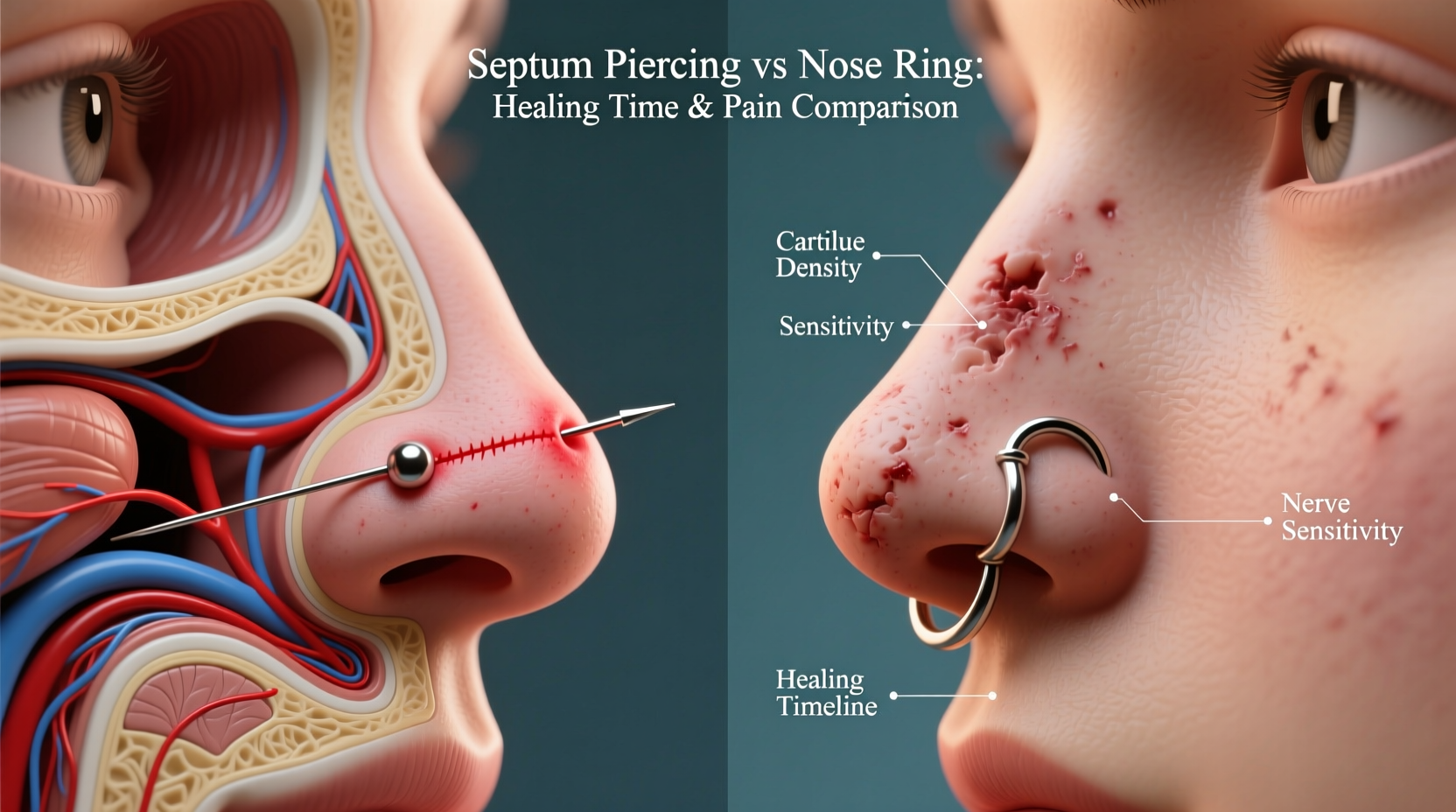
Pain is one of the most common concerns when considering any body modification. While pain is subjective, understanding the anatomy involved can help predict discomfort levels.
A **septum piercing** goes through the soft tissue at the base of the nasal septum, known as the \"sweet spot,\" just below the cartilage bridge. This area has fewer nerve endings than other parts of the nose, which contributes to a surprisingly manageable pain level for many. Most people describe the sensation as a sharp pinch followed by pressure or a \"burning\" feeling that lasts only a few seconds. Because the septum contains mucous membranes, some report a brief moment of lightheadedness or watery eyes—similar to getting a shot at the dentist.
In contrast, a **nostril piercing** (often referred to as a nose ring) passes through the side of the nostril, where thin skin meets dense cartilage. This cartilage is sensitive and requires more force to penetrate, often resulting in a sharper, more intense initial sting. The pain is usually short-lived but can feel more jarring than a septum due to localized nerve density.
“While both piercings are generally well-tolerated, I find clients often react more strongly to nostril piercings because of the cartilage resistance. The septum, despite its visibility, tends to be quicker and smoother.” — Lena Torres, Certified Master Piercer with 12 years of experience
Interestingly, individual pain thresholds vary widely. Factors like stress, hydration, and even menstrual cycles can influence how pain is perceived. However, on average, the septum piercing is considered slightly less painful than the traditional nostril piercing.
Healing Time: Which Piercing Recovers Faster?
Healing duration is a crucial factor, especially if you have events coming up or a busy lifestyle that makes consistent aftercare challenging.
The **septum piercing** typically heals faster than a nostril piercing. Average healing time ranges from **6 to 8 weeks** for initial recovery, with full internal healing taking around **2 to 3 months**. Because it's placed in vascular tissue with good blood flow, the septum responds well to cleaning and resists infection when cared for properly.
On the other hand, a **nostril piercing** involves cartilage, which naturally receives less blood supply than soft tissue. This slows down the healing process significantly. Initial healing takes **4 to 6 months**, and complete healing can extend to **6 to 8 months**, sometimes longer depending on aftercare and individual biology.
Cartilage piercings are also more prone to complications such as irritation, migration, or keloid formation, especially if bumped frequently or cleaned improperly. This extended timeline means you’ll need to commit to strict hygiene routines for much longer with a nose ring compared to a septum.
Healing Timeline Overview
| Piercing Type | Initial Healing | Full Healing | Common Risks |
|---|---|---|---|
| Septum | 6–8 weeks | 2–3 months | Irritation, minor swelling |
| Nostril (Nose Ring) | 4–6 months | 6–8+ months | Infection, bump formation, migration |
If speed of healing is a priority—whether for comfort, appearance, or convenience—the septum clearly has the advantage.
Aftercare Requirements and Daily Maintenance
Proper aftercare is non-negotiable for both piercings, but the methods and frequency differ based on location and tissue type.
For a **septum piercing**, saline soaks or sprays twice daily are usually sufficient. Because the piercing sits inside the nose, it’s exposed to mucus, bacteria, and frequent touching (like blowing your nose), increasing contamination risk. Rinsing with sterile saline solution helps flush out debris without irritating the tissue. Avoid using cotton swabs aggressively, as they can catch on jewelry and disrupt healing.
With a **nostril piercing**, external exposure means dirt, makeup, hair products, and hands pose constant threats. Cleaning involves gently rotating the jewelry during a saline soak to ensure the entire canal is cleansed. Due to slower healing, consistency over many months is essential. Skipping days or using harsh cleaners (like alcohol or hydrogen peroxide) can delay healing or cause scarring.
Both piercings benefit from avoiding submersion in pools, hot tubs, or lakes during healing. Showers are fine, but chlorinated or stagnant water increases infection risk.
Do’s and Don’ts of Nose Piercing Aftercare
| Action | Septum | Nostril |
|---|---|---|
| Saline spray 2x/day | ✅ Essential | ✅ Essential |
| Twist jewelry daily | ⚠️ Only during cleaning | ⚠️ Gently, during rinse |
| Use antibacterial soap | ❌ Harsh, avoid | ❌ Can dry tissue |
| Sleep on pierced side | ❌ Risk of pressure | ❌ High risk of irritation |
| Change jewelry early | ❌ Wait 6+ weeks | ❌ Wait 6+ months |
Ultimately, while both require diligence, the shorter healing window and simpler cleaning process give the septum an edge in ease of maintenance.
Lifestyle and Practical Considerations
Your daily habits play a major role in how smoothly your piercing heals. Consider how each option fits into your routine.
For example, people who wear glasses may find a septum piercing more problematic initially. Frames can press against the jewelry, causing friction, discomfort, or even displacement. Some opt to flip the jewelry up during healing or choose lightweight frames. In contrast, a nostril piercing is usually unaffected by eyewear unless the arm rests directly on the piercing site.
Those with active lifestyles—especially athletes or gym-goers—should consider sweat exposure. The inside of the nose (where the septum sits) can trap moisture and bacteria during workouts, potentially leading to odor or infection if not rinsed post-exercise. A nostril piercing, being external, dries faster but can still be irritated by headbands or helmets.
“I had my septum done right before starting a new job in sales. I didn’t realize how often I touch my face during meetings. It got bumped constantly, and I ended up with a small bump. My piercer told me a nostril would’ve been less disruptive since it’s not in the middle of everything.” — Marcus R., San Diego
This real-world experience highlights a key point: visibility and interaction matter. The septum is central and vulnerable to unconscious touching, sneezing, or blowing your nose. If you’re prone to fidgeting or have a high-touch profession (teaching, healthcare, etc.), a nostril piercing might be less intrusive in practice.
Step-by-Step Guide: Preparing for Your Piercing
Making the right choice starts before you sit in the studio chair. Follow this sequence to ensure confidence and safety:
- Research Reputable Studios: Look for shops with certified piercers, visible sterilization practices, and positive reviews. Ask to see their autoclave and needle packaging.
- Consultation Visit: Schedule a quick chat with the piercer. Discuss your anatomy, jewelry options, and healing expectations. They can assess whether your septum has enough soft tissue for a safe piercing.
- Choose Jewelry Wisely: For septums, a captive bead ring or circular barbell in implant-grade titanium or niobium reduces irritation. Nostril piercings often start with a straight or curved barbell for easier healing.
- Prepare Your Body: Get a good night’s sleep, eat a meal beforehand, and stay hydrated. Avoid blood thinners like aspirin or fish oil 24 hours prior.
- Post-Piercing Plan: Stock up on saline spray, plan loose clothing for the day, and block time to rest. Avoid social events where you might be tempted to show off—or worse, let people touch it.
Frequently Asked Questions
Can I flip my septum piercing while it’s healing?
Yes, but only if your piercer approves and you maintain cleanliness. Flipping shouldn’t be done excessively, as movement can irritate the tissue. Use clean hands and avoid leaving it flipped up for long periods, which can dry out the inner tissue.
Will a nose ring leave a visible hole if I remove it?
It depends. Nostril piercings often leave a small scar or dent, especially after years of wear. Septum piercings, being internal, tend to close more completely if removed early. Long-term wear may result in a faint line or slight indentation, but it’s usually less noticeable than a nostril mark.
Which piercing is more professional-looking?
Perception varies by workplace and culture. A septum can be hidden by flipping it up, making it versatile for conservative environments. A small stud in the nostril is often seen as fashionable rather than extreme. Ultimately, discretion depends more on jewelry size and style than piercing type.
Final Thoughts: Choosing What Works for You
When comparing septum piercing vs nose ring, the answer to “which heals faster and hurts less” leans decisively toward the septum. With quicker healing, slightly lower pain, and easier initial care, it’s often the more practical choice for first-time piercees. However, lifestyle compatibility, personal anatomy, and aesthetic preference carry equal weight.
A nostril piercing offers timeless appeal and avoids potential interference with glasses or frequent nose-blowing. Though it demands patience and long-term commitment, many find the classic look worth the wait.
Regardless of your choice, success hinges on working with a skilled professional, following aftercare diligently, and listening to your body throughout the healing process. Piercings are personal expressions—choose the one that feels right for your life, not just your face.




 浙公网安备
33010002000092号
浙公网安备
33010002000092号 浙B2-20120091-4
Comments
No comments yet. Why don't you start the discussion?