
When choosing between a sequin tweed suit and a traditional wool suit, aesthetics often dominate the decision. The shimmer of sequins commands attention—perfect for galas, fashion events, or bold boardroom statements. Wool, on the other hand, is synonymous with timeless elegance and functional warmth. But beyond appearances, what do these fabrics offer in terms of thermal performance? Are sequins merely decorative, or do they contribute to insulation? This article examines the science behind both materials, compares their real-world functionality, and reveals whether sparkle comes at the cost of comfort.
The Science of Warmth: How Fabrics Insulate
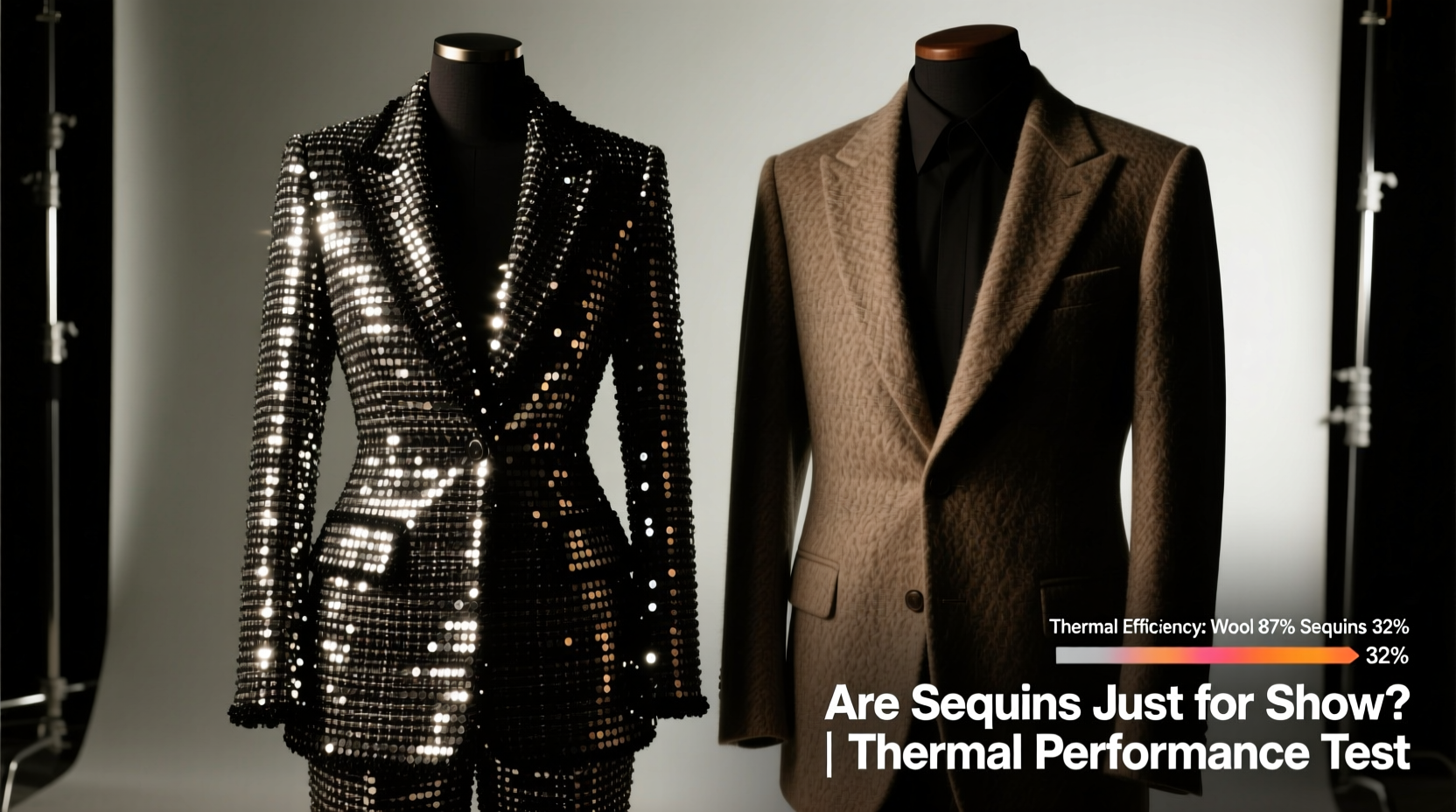
Thermal regulation in clothing depends on three primary factors: fiber composition, weave density, and air-trapping capacity. Natural fibers like wool excel because of their crimped structure, which creates tiny air pockets that retain body heat. Wool also wicks moisture effectively, preventing dampness from cooling the skin—a critical feature in cold environments.
Synthetic embellishments such as sequins, typically made from plastic (PVC or polyester) or metal-coated film, lack insulating properties. They conduct temperature rather than resist it, meaning they can feel cold to the touch in winter and hot under direct sunlight. However, when sewn onto a base fabric like tweed, their impact on overall warmth depends on coverage, spacing, and backing material.
“Wool’s natural loft and hygroscopic properties make it one of the most thermally efficient textiles available. Sequins, by contrast, are surface-level additions with negligible insulation value.” — Dr. Lena Torres, Textile Scientist, Royal School of Fashion Technology
Material Breakdown: Tweed vs Wool vs Sequin-Embellished Fabric
Tweed and wool are often conflated, but they’re not mutually exclusive. Tweed is a type of woven fabric, traditionally made from wool, known for its rough texture and durability. Modern tweed may blend wool with synthetic fibers for resilience or drape. Sequin tweed refers to this fabric enhanced with reflective discs stitched or woven into the surface.
A standard worsted wool suit uses tightly spun yarns for a smooth finish, offering moderate warmth with excellent breathability. It drapes well, resists wrinkles, and performs reliably across seasons. In contrast, a sequin tweed suit prioritizes visual impact. While the underlying tweed may retain some insulating ability, the sequins alter heat retention dynamics.
Comparative Analysis: Performance Across Conditions
| Fabric Type | Insulation Level | Wind Resistance | Breathability | Best Use Case |
|---|---|---|---|---|
| Plain Wool Suit | High | Moderate to High | High | Winter business wear, outdoor events |
| Tweed (Wool-Based) | High | High | Moderate | Cold-weather casual or semi-formal |
| Sequin Tweed Suit | Low to Moderate | Low | Low | Evening events, fashion showcases |
| Blended Wool-Synthetic | Moderate | Moderate | Moderate | All-season office wear |
The data shows a clear trade-off: visual complexity reduces functional efficiency. Sequins disrupt the uniformity of the textile, creating micro-gaps where heat escapes and cold air infiltrates. Moreover, their rigidity limits the fabric’s ability to conform closely to the body, further reducing thermal seal.
Real-World Example: A Winter Gala Dilemma
Consider Marcus, a marketing executive attending a December awards dinner in Edinburgh. He owns two suits: a navy wool double-breasted and a black sequin tweed tuxedo-style jacket paired with matching trousers. The evening is crisp, around 3°C (37°F), with a biting wind off the Firth of Forth.
He opts for the sequin tweed for its standout appeal. Within 20 minutes of arriving, he’s shivering despite wearing a silk dress shirt underneath. The venue’s heating is insufficient, and the open-air courtyard photo session seals his discomfort. Guests in wool overcoats appear unfazed.
Post-event, Marcus switches to the wool suit for similar functions. Even without an overcoat, he stays warm due to wool’s moisture-wicking and heat-retaining structure. His takeaway? “The sparkle looked incredible in photos, but I’d never wear it outdoors in winter again.”
Do Sequins Add Any Functional Value?
Functionally, sequins serve no meaningful role in warmth. Their contribution is purely aesthetic. Some argue that densely placed sequins might slightly reduce wind penetration by adding surface mass, but this effect is marginal and offset by stitching holes and reduced flexibility.
In humid conditions, sequins can worsen discomfort. Unlike wool, which absorbs up to 30% of its weight in moisture without feeling wet, plastic sequins promote condensation buildup beneath the disc. This trapped moisture accelerates heat loss through evaporation—a phenomenon known as \"wicking failure.\"
Additionally, sequined garments are often lined with lightweight satin or acetate to preserve drape and prevent snagging. These linings are less breathable than wool or cotton, further limiting thermoregulation.
Step-by-Step: Choosing the Right Suit for Cold Weather
- Evaluate the occasion: Is it indoor climate-controlled, or will you be outside for extended periods?
- Check fabric content: Look for suits labeled “100% wool” or “wool-rich.” Avoid blends with more than 20% synthetic fibers if warmth is key.
- Assess weave type: Opt for flannel, melton, or covert cloths—denser weaves with higher loft.
- Inspect lining: A full canvas construction with a wool or Bemberg cupro lining enhances insulation and airflow balance.
- Layer strategically: Pair your wool suit with a merino wool sweater or vest instead of relying on outer bling.
Expert Insights on Fashion vs Function
While designers increasingly blur lines between haute couture and wearable art, experts caution against sacrificing core performance.
“Clients often fall in love with a look without considering environmental context. A sequin suit isn’t flawed—it’s misapplied. Wear it where the temperature is managed, not where your body has to compensate.” — Simone Reed, Menswear Consultant, London Atelier
This philosophy underscores a growing trend: situational dressing. Instead of owning one “statement” suit meant to do everything, build a rotation tailored to specific climates and settings.
Frequently Asked Questions
Can I layer under a sequin tweed suit to stay warm?
Yes, but with limitations. Thicker layers may distort the silhouette or strain seams near sequined areas. A thin merino base layer works best. Avoid bulky sweaters, as they can loosen stitches and cause sequins to pop off.
Is there such a thing as insulated sequin fabric?
Not commercially viable at scale. Some experimental textiles embed metallic threads within thermal knits, but these are rare and costly. True insulation still relies on fiber volume and air retention—qualities sequins don’t provide.
Are wool suits suitable for summer?
Surprisingly, yes. Lightweight tropical wool (typically 8–9 oz) is highly breathable and reflects sunlight better than synthetics. It’s ideal for warm climates and resists odor buildup due to its antimicrobial properties.
Final Thoughts: Style Shouldn’t Freeze You Out
The sequin tweed suit holds undeniable allure. It captures light, commands presence, and elevates any wardrobe with theatrical flair. But glamour shouldn’t come at the expense of well-being. When temperatures drop, prioritize fabrics that work with your body, not against it.
Wool remains unmatched in balancing elegance and endurance. Its natural engineering outperforms even the most advanced synthetics in real-world conditions. Sequins, while dazzling, remain accessories—not upgrades—to thermal performance.
Choose wisely: let the environment guide your fabric choice. Save the sparkle for heated ballrooms, and trust wool to carry you through the colder months with quiet confidence.




 浙公网安备
33010002000092号
浙公网安备
33010002000092号 浙B2-20120091-4
Comments
No comments yet. Why don't you start the discussion?