
Long-lasting makeup is a top priority for many, especially in humid climates, during long workdays, or at events where touch-ups aren’t convenient. Two staples in the finishing phase of any makeup routine are setting powder and setting spray. While both aim to lock makeup in place, they function differently—and their performance varies depending on skin type, environment, and application technique. The real question isn’t just which product lasts longer, but which one works better under specific conditions to deliver extended wear without compromising appearance.
How Setting Powder Works
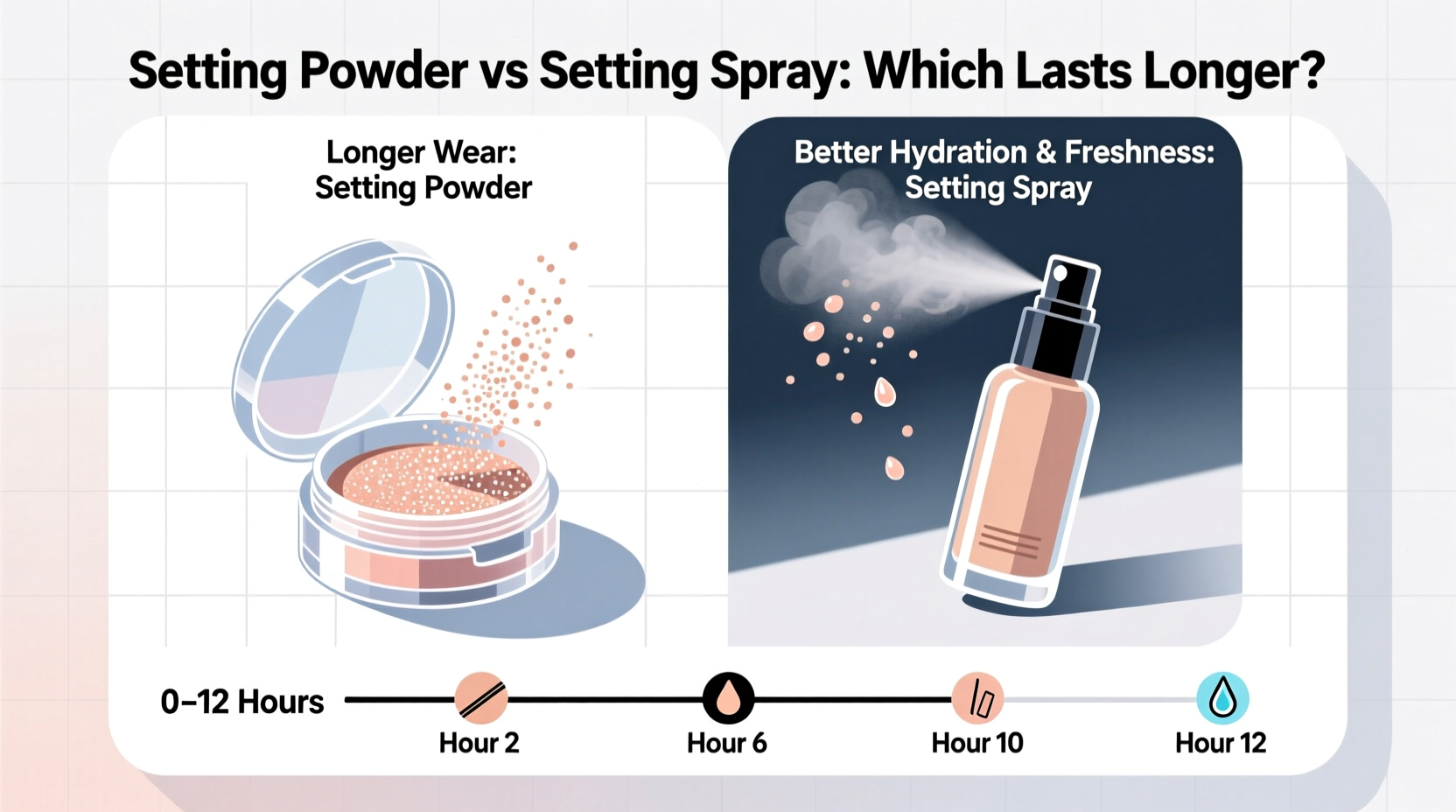
Setting powder has been a cornerstone of makeup application for decades. It’s typically applied after foundation and concealer using a brush, sponge, or puff. Its primary role is to absorb excess oil, reduce shine, and prevent makeup from creasing or sliding off the face. Most powders come in translucent or tinted formulas and can be either loose or pressed.
The mechanism behind its longevity lies in its ability to create a physical barrier between your skin and the environment. By absorbing sebum, it minimizes the breakdown of foundation caused by natural oils. However, this benefit comes with trade-offs—overuse can lead to a dry, cakey finish, particularly on mature or dehydrated skin.
How Setting Spray Functions
Setting spray, a more modern innovation, works as a fine mist that envelops the entire face. Instead of physically absorbing oil, it forms a flexible film over the makeup using polymers and humectants. This film helps bind layers of product together, preventing separation and fading throughout the day.
Unlike powder, setting spray doesn’t alter texture significantly. It maintains the original finish of your foundation—dewy, satin, or matte—while adding resilience. Many sprays also include ingredients like glycerin or aloe vera to soothe the skin, making them ideal for those with dry or sensitive complexions.
One key advantage of setting spray is its full-face coverage. While powder often misses edges or blends unevenly, a well-applied spray ensures every area of makeup is sealed uniformly.
Direct Comparison: Longevity and Performance
When evaluating which product lasts longer, it’s essential to consider multiple factors: environmental conditions, skin type, and how each product is used. To clarify the differences, here's a side-by-side comparison:
| Feature | Setting Powder | Setting Spray |
|---|---|---|
| Oil Control | Excellent – absorbs sebum immediately | Moderate – prevents oil migration but doesn’t absorb it |
| Wear Time (Average) | 6–8 hours (may require touch-up) | 8–12 hours (especially humidity-resistant formulas) |
| Skin Type Suitability | Best for oily and combination skin | Ideal for dry, normal, and sensitive skin |
| Finish Impact | Matte; may look flat or cakey if overused | Preserves original finish; adds subtle glow |
| Application Precision | Targeted (can miss spots) | Full-face, even coverage |
| Humidity Resistance | Good, but can break down if too much oil builds up | Superior in high-humidity environments |
Data suggests that while setting powder excels in immediate oil control, setting spray generally outperforms it in overall longevity, especially in challenging conditions like heat and humidity.
“Setting sprays have evolved dramatically—they now contain advanced polymers that form a breathable, durable shield. In controlled tests, some sprays kept makeup intact for over 12 hours without fading.” — Dr. Lena Torres, Cosmetic Chemist and Formulation Specialist
Real-World Example: Wedding Day Makeup Test
Consider a bride preparing for an outdoor summer wedding. Her makeup artist applies a silicone-based foundation, conceals under the eyes, and contours lightly. She has combination skin—oily T-zone, dry cheeks.
The artist uses a hybrid approach: a light dusting of translucent setting powder only on the forehead, nose, and chin, followed by three passes of a long-wear setting spray (one before, one after, and one final mist post-makeup).
Throughout the 10-hour event—with dancing, photos, and emotional moments—the bride’s makeup remains intact. Minimal touch-ups are needed, limited to blotting the nose. Photos show no flashbacks or caking. This case illustrates that while powder manages oil in critical zones, the spray provides the cohesive, lasting seal that truly extends wear.
Maximizing Longevity: A Step-by-Step Guide
For optimal results, neither product should be used in isolation. Here’s a proven method to extend makeup wear using both strategically:
- Prime the skin – Apply a primer suited to your skin type (matte for oily, hydrating for dry).
- Apply foundation and concealer – Use products formulated for long wear.
- First mist: Pre-set – Lightly spritz setting spray before powder to create a tacky base.
- Apply setting powder – Focus on high-oil areas (forehead, nose, chin). Avoid dry zones.
- Final seal: Post-set spray – Hold the bottle 8–10 inches away and apply in an “X” and “T” motion for full coverage.
- Let it dry naturally – Do not fan or wipe; allow the polymers to set fully (takes ~30 seconds).
This layered technique combines the strengths of both products: oil absorption from powder and bonding protection from spray.
Common Myths Debunked
- Myth: Setting spray makes makeup waterproof.
Truth: No spray is fully waterproof. They enhance resistance but won’t survive swimming or heavy sweating. - Myth: Powder always extends wear better than spray.
Truth: Powder controls oil but can crack or fade. Spray often provides longer seamless wear. - Myth: You need both for everyday wear.
Truth: For short outings or dry skin types, a good spray alone may suffice.
Frequently Asked Questions
Can I use setting spray over powder?
Absolutely. In fact, this is the recommended order: powder first, then spray. The powder sets the base, and the spray locks everything—including the powder—in place.
Does setting spray cause breakouts?
Not inherently. However, sprays containing alcohol or fragrance may irritate sensitive or acne-prone skin. Look for non-comedogenic, dermatologist-tested formulas if you’re prone to breakouts.
Is it worth investing in high-end setting sprays?
Yes, for frequent use. Premium sprays often contain better polymers, offer superior hold, and feel lighter on the skin. Drugstore options work well, but high-end versions typically last longer and perform more consistently across environments.
Expert Tips for Choosing the Right Product
“I tell my clients: powder stops shine, spray stops fade. If you want both, layer them. But never skip the spray—it’s the invisible armor of long-wear makeup.” — Jamal Reyes, Celebrity Makeup Artist
Conclusion: Which One Lasts Longer?
The answer depends on context, but overall, setting spray tends to provide longer-lasting wear, especially when exposed to heat, humidity, or prolonged activity. It preserves the integrity of makeup without altering texture. Setting powder, while effective for oil control, may require touch-ups and risks looking heavy over time.
The most effective strategy isn’t choosing one over the other—it’s using both intelligently. Start with targeted powder application, then seal with a quality setting spray. This dual approach delivers maximum staying power, comfort, and a fresh appearance from morning to night.




 浙公网安备
33010002000092号
浙公网安备
33010002000092号 浙B2-20120091-4
Comments
No comments yet. Why don't you start the discussion?