
In recent years, body-shaping garments have surged in popularity, driven by social media trends and celebrity endorsements. Among these, shapewear and waist trainers are two of the most commonly discussed options. While both promise a slimmer silhouette, they function differently, serve distinct purposes, and carry varying degrees of risk. Understanding the distinction between them—and which is safer—is essential for anyone considering their use, whether for special occasions or daily wear.
The confusion often arises because both products compress the midsection to create a more defined waistline. However, their design, intended duration of wear, and physiological impact differ significantly. Choosing the wrong one—or using either improperly—can lead to discomfort, breathing difficulties, digestive issues, or even long-term internal damage. This article breaks down the science, safety, and practicality behind each option so you can make an informed decision aligned with your health and aesthetic goals.
What Is Shapewear?
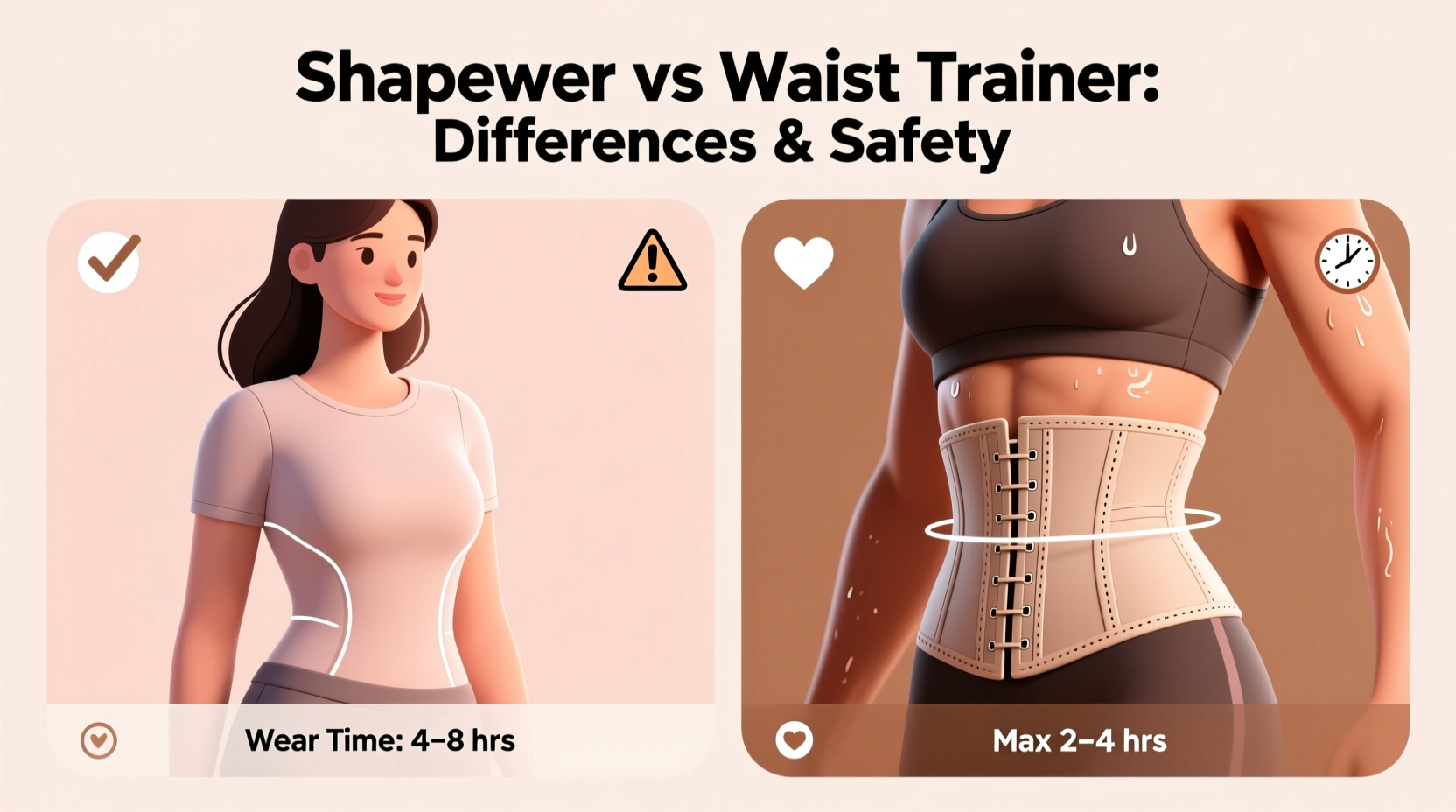
Shapewear refers to undergarments designed to smooth and contour specific areas of the body—typically the abdomen, hips, thighs, and buttocks. These garments are made from stretchable, breathable fabrics such as nylon, spandex, or microfiber and are engineered for temporary wear during events, workdays, or while wearing form-fitting clothing.
Common types include high-waisted shorts, bodysuits, camisoles with built-in control panels, and full-body suits. The compression level varies from light (for subtle smoothing) to firm (for noticeable reshaping), but it’s generally calibrated to remain comfortable over several hours without restricting movement or respiration.
Modern shapewear prioritizes functionality and comfort. Brands like Spanx, Skims, and Yandy focus on creating seamless, invisible solutions that enhance natural shape rather than drastically alter it. Most styles are meant to be worn occasionally and removed at the end of the day.
What Is a Waist Trainer?
A waist trainer is a rigid, corset-style garment typically constructed with steel boning, strong latex or neoprene material, and multiple rows of hook-and-eye closures or laces. Unlike shapewear, its primary marketing claim is permanent waist reduction through consistent, prolonged use—a practice known as “tightlacing.”
Waist trainers are often worn for several hours a day, sometimes even during workouts or sleep, with users gradually increasing tightness over weeks or months in hopes of achieving a smaller resting waist size. Influencers and fitness personalities have popularized this method, suggesting that regular use can \"retrain\" the waist to stay smaller over time.
However, medical experts widely dispute the idea of permanent change through external compression alone. While some short-term flattening may occur due to displaced fat and compressed organs, there is no scientific evidence that waist training leads to lasting structural modification of the waistline without concurrent weight loss or muscle development.
“Long-term use of extreme compression garments can displace internal organs and weaken core muscles. There’s no substitute for healthy lifestyle changes when it comes to sustainable body transformation.” — Dr. Lena Patel, Board-Certified Internal Medicine Physician
Key Differences Between Shapewear and Waist Trainers
To clarify the distinction, here's a detailed comparison highlighting critical aspects of both garments:
| Feature | Shapewear | Waist Trainer |
|---|---|---|
| Material | Flexible fabrics (nylon, spandex, microfiber) | Rigid materials (latex, neoprene, steel boning) |
| Compression Level | Light to moderate | High to extreme |
| Intended Use | Temporary smoothing under clothes | Prolonged wear for waist reduction |
| Wear Duration | Up to 8–12 hours (daily) | Often worn 6+ hours/day, sometimes overnight |
| Impact on Organs | Minimal displacement | Potential organ shifting, reduced lung capacity |
| Safety Profile | Generally safe with proper fit | Risks increase with prolonged, tight use |
| Results | Immediate, reversible contouring | Temporary slimming; no proven permanent change |
This table underscores a fundamental truth: shapewear is a cosmetic tool, while waist training ventures into the realm of physical alteration—with associated risks.
Health Risks and Safety Concerns
While mild compression from well-fitted shapewear poses little threat to most individuals, excessive or prolonged pressure—especially from waist trainers—can lead to serious health complications.
- Digestive Issues: Constant abdominal pressure can push stomach contents upward, leading to acid reflux, heartburn, or gastroesophageal reflux disease (GERD).
- Breathing Restrictions: Tight corsets reduce diaphragm expansion, limiting oxygen intake and potentially causing dizziness or fatigue.
- Muscle Atrophy: Relying on external support may weaken core muscles over time, reducing natural postural strength.
- Nerve Compression: Prolonged pressure on nerves like the lateral femoral cutaneous nerve can cause numbness or tingling in the thighs (meralgia paresthetica).
- Organ Displacement: In extreme cases, internal organs such as the liver, kidneys, or intestines may shift position, though usually returning to normal once compression stops.
A documented case involved a 35-year-old woman who wore a waist trainer for 10 hours daily over six months. She reported chronic indigestion, shortness of breath, and lower back pain. Imaging revealed mild liver compression and diaphragmatic elevation. After discontinuing use and engaging in core-strengthening exercises, her symptoms resolved within three months.
This real-world example illustrates how seemingly minor lifestyle choices can accumulate into significant health consequences when not approached with caution.
Which Is Safer? A Practical Assessment
When evaluating safety, shapewear clearly emerges as the lower-risk option. Designed for intermittent use and moderate shaping, it does not aim to alter anatomy. When properly sized and worn for limited durations, it rarely causes harm.
Waist trainers, by contrast, operate on a principle of sustained mechanical stress. Even manufacturers recommend gradual break-in periods and warn against over-tightening. Yet many users ignore these guidelines in pursuit of faster results, increasing the likelihood of injury.
The American Council on Exercise (ACE) has stated that “there is no credible evidence that waist training produces meaningful fat loss or permanent waist reduction.” Instead, any visible change is due to fluid shifts, organ displacement, and temporary skin indentation—not fat metabolism or muscle remodeling.
For those seeking a safer alternative to achieve a toned midsection, experts recommend combining targeted strength training (e.g., planks, dead bugs, Russian twists) with cardiovascular exercise and balanced nutrition. Core engagement builds functional strength and improves posture naturally, eliminating the need for artificial constraints.
Step-by-Step Guide to Safe Body Shaping
- Assess Your Goals: Determine whether you want temporary smoothing (shapewear) or long-term toning (exercise + diet).
- Select Appropriate Garments: If using shapewear, choose breathable, seamless styles in the correct size—never size down for tighter squeeze.
- Limited Wear Time: Avoid wearing compression garments for more than 8 consecutive hours. Never sleep in them.
- Listen to Your Body: Discontinue use if you feel pain, numbness, or restricted breathing.
- Strengthen Your Core: Incorporate 2–3 weekly sessions of core-focused workouts to build natural definition.
- Consult a Professional: Speak with a doctor or physical therapist before starting any restrictive regimen, especially if you have pre-existing conditions.
Checklist: Choosing the Right Option for You
- ☑ I only need smoothing for special events → Choose shapewear
- ☑ I want a quick fix for my outfit today → Choose shapewear
- ☑ I’m looking for permanent waist reduction → Focus on diet, exercise, and patience
- ☑ I’m willing to commit to daily wear for months → Consider risks carefully; consult a physician
- ☑ I have digestive issues, respiratory conditions, or hernias → Avoid waist trainers entirely
- ☑ I prioritize long-term health over short-term aesthetics → Opt for non-compressive solutions
Frequently Asked Questions
Can shapewear help with weight loss?
No. Shapewear compresses existing tissue but does not burn fat or contribute to weight loss. Any temporary inch loss is due to redistribution, not fat reduction.
Do waist trainers reshape your ribs permanently?
There is no reliable medical evidence that waist trainers permanently reshape bones. However, prolonged extreme compression may cause rib cage deformation in rare cases, particularly with excessive force over years.
Is it okay to wear shapewear every day?
Occasional daily wear is generally safe if the garment fits well and isn’t overly tight. However, constant use may hinder natural muscle activation. Allow your body recovery time without compression.
Final Thoughts: Prioritizing Health Over Hype
The allure of instant transformation is powerful, but sustainable results come from consistency, not constriction. Shapewear serves a legitimate role as a confidence-boosting tool for special occasions, offering discreet enhancement without compromising health. Waist trainers, while visually dramatic, carry risks that often outweigh their fleeting benefits.
True body confidence stems from feeling strong, energized, and aligned with your well-being—not from squeezing into a smaller size at the expense of comfort or safety. If you choose to use shaping garments, do so mindfully, with clear boundaries around duration and tightness.
Rather than relying on external devices to define your shape, consider investing in habits that enhance your natural form: nourishing food, mindful movement, restorative sleep, and self-acceptance. These practices yield deeper, longer-lasting rewards than any corset ever could.




 浙公网安备
33010002000092号
浙公网安备
33010002000092号 浙B2-20120091-4
Comments
No comments yet. Why don't you start the discussion?