
Stretch marks affect millions of people, especially during periods of rapid weight gain, pregnancy, or growth spurts. While they are not harmful, many seek ways to reduce their appearance and improve skin resilience. Among the most popular natural remedies are shea butter and cocoa butter—two rich emollients celebrated for their moisturizing properties. But when it comes to improving skin elasticity and reducing the formation of new stretch marks, which one works faster? This article dives deep into the science, benefits, and practical use of both butters to help you make an informed decision.
Understanding Stretch Marks and Skin Elasticity
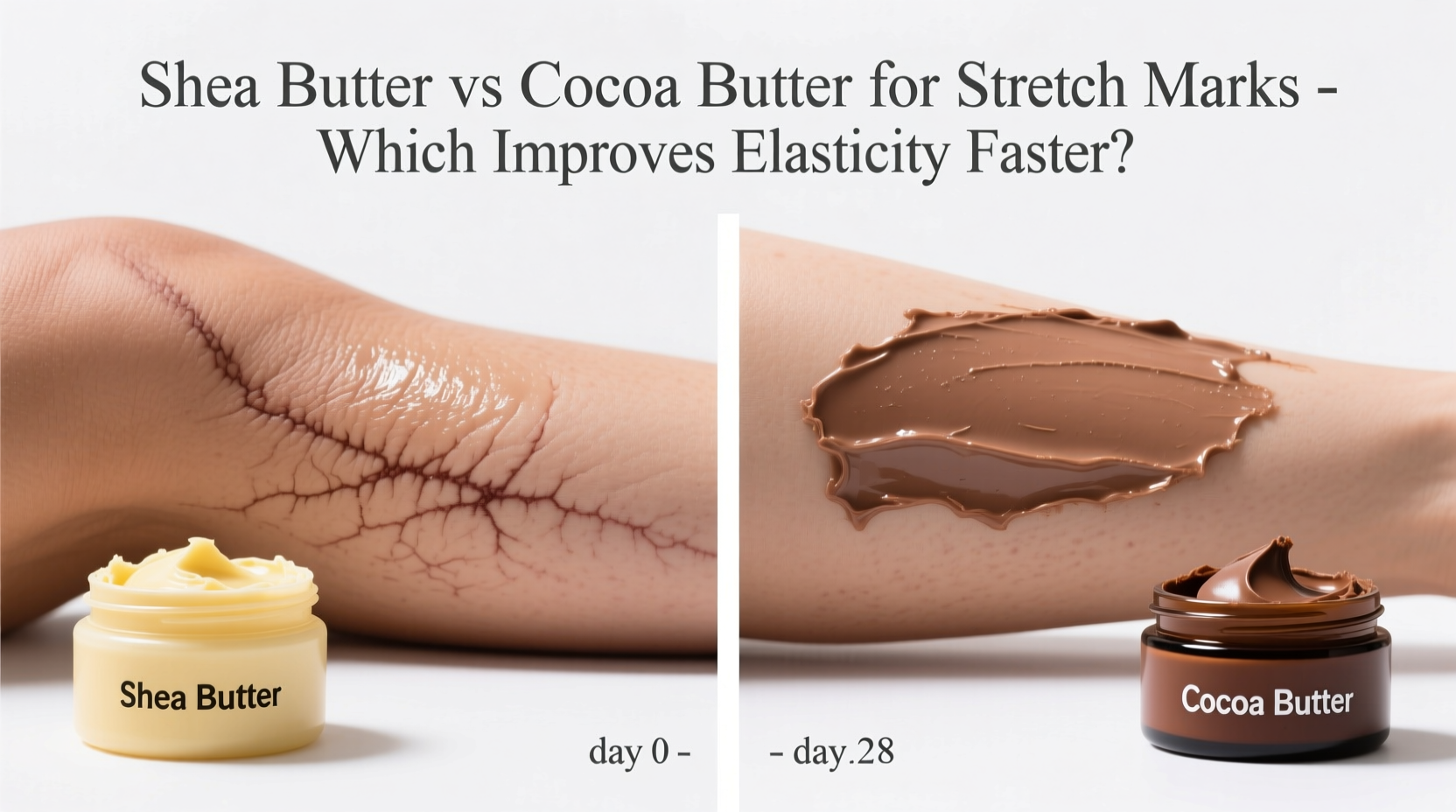
Stretch marks, or striae distensae, occur when the skin stretches rapidly beyond its capacity to rebound. This leads to micro-tears in the dermis, particularly affecting collagen and elastin fibers—the structural proteins responsible for skin firmness and flexibility. Initially appearing red or purple (striae rubra), they often fade to silvery-white lines (striae alba) over time.
Elasticity refers to the skin’s ability to stretch and return to its original shape. High elasticity reduces the risk of tearing under tension. Improving elasticity involves enhancing hydration, boosting collagen synthesis, and supporting dermal repair—all areas where topical treatments like shea and cocoa butter may play a role.
“Topical emollients can’t erase established stretch marks completely, but consistent use during high-risk phases—like pregnancy or bodybuilding—can significantly improve skin resilience.” — Dr. Lena Patel, Dermatologist and Skin Health Researcher
Shea Butter: The Healing Powerhouse
Extracted from the nuts of the African shea tree (Vitellaria paradoxa), shea butter has been used for centuries in traditional skincare. It's rich in fatty acids (oleic, stearic, palmitic, and linoleic), vitamins A and E, and contains natural compounds like cinnamic acid, known for anti-inflammatory and UV-protective effects.
What sets shea butter apart is its high concentration of unsaponifiables—components that don't turn into soap when mixed with alkali. These include triterpenes such as lupeol, which have been shown in studies to stimulate collagen production and support wound healing.
In terms of elasticity, shea butter excels due to its superior penetration and bioactive ingredients. It doesn’t just sit on the surface; it absorbs quickly and delivers nutrients directly to deeper layers of the epidermis. Clinical observations suggest that regular application increases skin suppleness within 2–4 weeks, especially in areas prone to stretching.
Key Benefits of Shea Butter for Stretch Marks
- Deeply hydrates without clogging pores
- Stimulates collagen synthesis through triterpenes
- Reduces inflammation and redness associated with new stretch marks
- Improves microcirculation, aiding tissue repair
- Natural SPF (~6) offers mild protection against environmental damage
Cocoa Butter: The Classic Moisturizer
Cocoa butter, derived from cocoa beans, is a staple in many commercial stretch mark creams. Its dense, chocolate-scented texture forms a protective barrier on the skin, preventing transepidermal water loss. It’s primarily composed of saturated and monounsaturated fats—mainly stearic and oleic acids—which contribute to its stability and long shelf life.
While cocoa butter is excellent at sealing in moisture, it penetrates more slowly than shea butter. Its action is largely occlusive: it keeps existing moisture trapped rather than actively delivering healing compounds deep into the skin. However, this property makes it ideal for maintaining hydration over extended periods, especially in dry climates or during winter months.
Studies on cocoa butter’s effect on stretch marks show mixed results. A 2017 randomized trial published in the Journal of Obstetrics and Gynaecology found no significant reduction in stretch mark development among pregnant women using cocoa butter versus placebo. However, participants reported softer, smoother skin—an important factor in comfort and perceived improvement.
When Cocoa Butter Shines
- Best for preventive care during slow, steady weight changes
- Ideal for sensitive skin due to low allergenic potential
- Provides lasting protection in harsh weather conditions
- Pleasant aroma enhances user compliance in daily routines
Direct Comparison: Which Improves Elasticity Faster?
To determine which butter improves skin elasticity faster, we must assess three factors: absorption rate, active ingredient profile, and clinical evidence of efficacy.
| Feature | Shea Butter | Cocoa Butter |
|---|---|---|
| Absorption Speed | Fast – penetrates deeply within minutes | Slow – remains on surface longer |
| Fatty Acid Profile | High in oleic & linoleic acid (moisturizing + regenerative) | High in stearic acid (occlusive, less regenerative) |
| Bioactive Compounds | Rich in triterpenes, vitamin A, cinnamic acid | Limited bioactives; mainly fat-based protection |
| Collagen Support | Yes – stimulates fibroblast activity | Minimal – indirect via hydration |
| Time to Noticeable Elasticity Improvement | 2–4 weeks with consistent use | 4–6+ weeks, mostly perceptual softening |
| Suitability for Active Stretch Mark Phases | Excellent – supports healing of new striae | Fair – better for maintenance |
The data clearly favors shea butter when speed and biological impact are priorities. Its ability to penetrate quickly and deliver compounds that enhance collagen remodeling gives it a functional edge. Cocoa butter, while beneficial, functions more as a passive protector than an active healer.
Step-by-Step Guide to Maximizing Elasticity with Natural Butters
Using these butters effectively requires consistency and proper technique. Here’s a proven routine to improve skin elasticity and minimize stretch mark formation:
- Cleanse gently: Use a mild, non-drying cleanser before application to remove dirt and oils without stripping natural lipids.
- Exfoliate 2–3 times weekly: Light physical exfoliation (e.g., soft washcloth or sugar scrub) removes dead cells and enhances product absorption.
- Apply warm butter: Scoop a small amount and rub between palms to melt slightly. Warm butter spreads more evenly and absorbs faster.
- Massage in circular motions: Focus on target areas (abdomen, hips, thighs, breasts). Massage for at least 2–3 minutes to boost circulation and encourage tissue response.
- Use twice daily: Morning and night applications yield best results. Pair with gentle exercise to naturally stimulate collagen.
- Stay hydrated and nourished: Drink plenty of water and consume foods rich in vitamin C, zinc, and protein—key building blocks for healthy skin.
Mini Case Study: Postpartum Skin Recovery
Anna, a 32-year-old first-time mother, began applying raw shea butter daily during her second trimester. She targeted her abdomen, hips, and breasts with a 5-minute massage each morning and evening. By week 30, her skin remained taut despite a 35-pound weight gain. After delivery, she noticed only faint pink lines—no deep tears or wide streaks common among her peers.
In contrast, her sister Maria used cocoa butter inconsistently during her own pregnancy. Though she applied it occasionally, gaps in usage led to visible stretch marks by month seven. While Maria’s skin felt soft, it lacked the resilience Anna experienced.
This real-world example illustrates that while both products offer benefits, the combination of active ingredients in shea butter—paired with consistent use—delivers faster improvements in elasticity and visible protection against tearing.
Checklist: Choosing the Right Butter for Your Needs
Use this checklist to decide which option aligns with your goals:
- ☐ Do I need fast improvement in skin firmness? → Choose shea butter
- ☐ Am I in a high-risk phase (pregnancy, puberty, bodybuilding)? → Choose shea butter
- ☐ Is my skin extremely dry or exposed to cold air? → Consider cocoa butter for barrier protection
- ☐ Do I prefer a mild scent and thick texture? → Cocoa butter may be more enjoyable
- ☐ Am I looking for active healing, not just moisture? → Prioritize shea butter
- ☐ Will I use it consistently every day? → Either works, but shea offers greater returns
Expert Insight: What Dermatologists Recommend
While anecdotal success stories abound, medical professionals emphasize realistic expectations. Topical treatments cannot fully eliminate mature stretch marks, but they can play a preventive role.
“The key isn’t the butter itself, but how it’s used. Consistency, early intervention, and combining moisturizers with massage techniques produce the best outcomes. Between the two, shea butter has stronger scientific backing for improving dermal strength.” — Dr. Marcus Tran, Board-Certified Dermatologist
He notes that patients who start treatment before significant stretching occurs—such as early pregnancy or pre-bodybuilding cycles—see the most noticeable improvements in elasticity and fewer severe marks.
Frequently Asked Questions
Can I use both shea and cocoa butter together?
Yes. Many users layer them for combined benefits: apply shea butter first for deep nourishment, then a thin layer of cocoa butter to seal in moisture. Alternatively, look for blends that combine both in balanced ratios.
How soon should I start using butter to prevent stretch marks?
Begin as early as possible—ideally before or at the first sign of rapid growth or weight change. Prevention is far more effective than treating established marks.
Does refined butter work as well as unrefined?
No. Refined versions lose many active compounds during processing. Unrefined, cold-pressed butters retain their full nutrient profile and are recommended for therapeutic use.
Final Verdict: Which One Wins?
When the goal is improving skin elasticity faster to combat stretch marks, **shea butter emerges as the superior choice**. Its rapid absorption, bioactive components, and demonstrated support for collagen production give it a clear advantage over cocoa butter, which primarily serves as a moisture barrier.
That said, cocoa butter still has value—particularly for those seeking gentle, fragrance-rich hydration or living in dry environments. It’s also a good option for individuals with sensitivities who find shea butter too potent.
For optimal results, prioritize unrefined shea butter, apply it consistently with massage, and begin early in any high-stretch phase. Pair it with healthy lifestyle habits, and you’ll maximize your skin’s natural ability to adapt without scarring.




 浙公网安备
33010002000092号
浙公网安备
33010002000092号 浙B2-20120091-4
Comments
No comments yet. Why don't you start the discussion?