
When winter sets in, choosing the right outerwear becomes more than a fashion decision—it’s a practical necessity. The debate between short jackets and parkas often centers on one key factor: length. While both offer protection from cold weather, their design differences influence not only thermal performance but also personal style and versatility. Understanding how length affects warmth, mobility, and aesthetic impact can help you make an informed choice that aligns with your climate, lifestyle, and wardrobe preferences.
The Science of Length and Thermal Efficiency
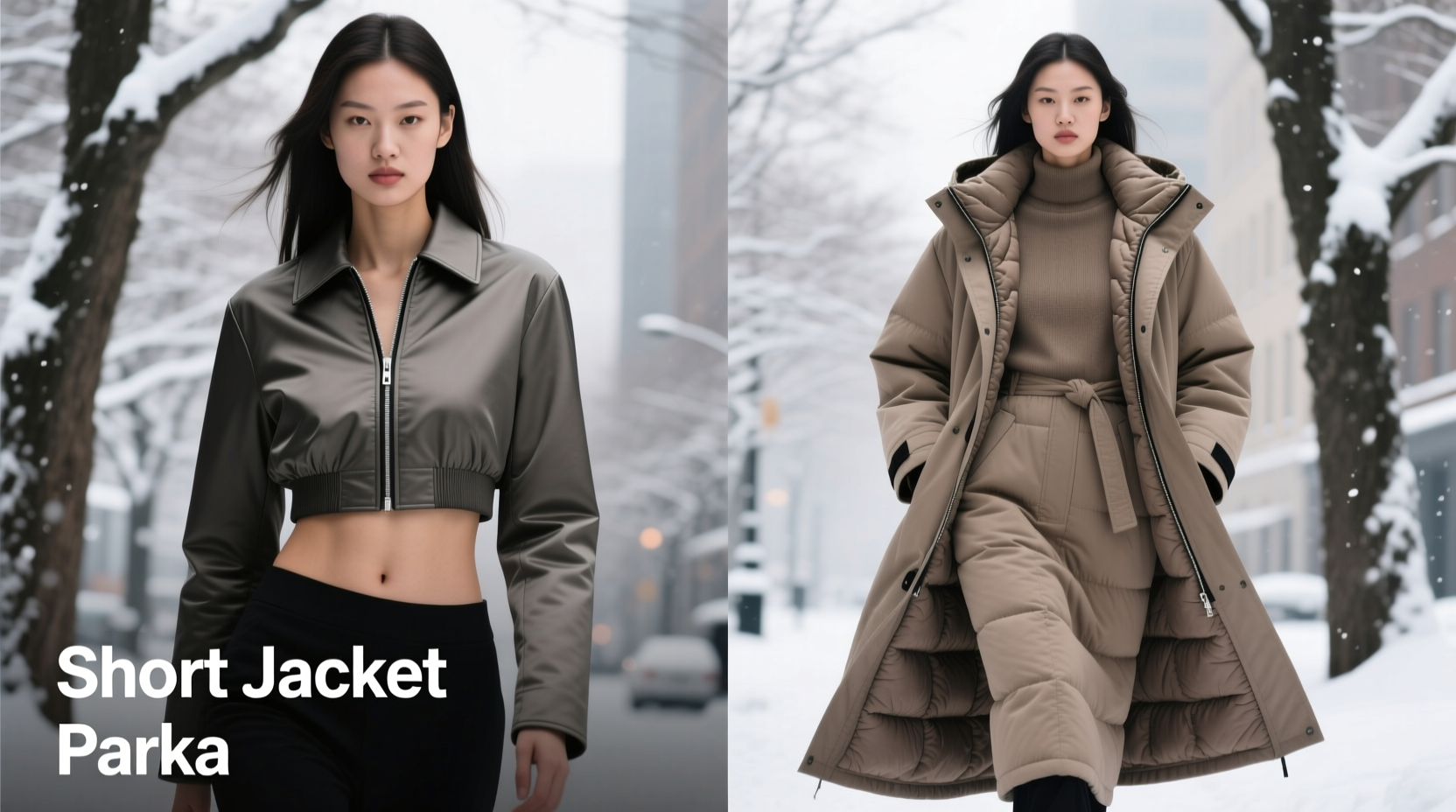
At first glance, it might seem obvious that longer coats provide better insulation simply because they cover more of the body. This is largely true. A parka typically extends below the hips—often to mid-thigh or even knee-length—offering coverage to areas most vulnerable to wind and cold: the lower back, buttocks, and upper legs. These zones lose heat quickly when exposed, especially during windy conditions or while standing still outdoors.
In contrast, short jackets end at or just below the waist, leaving significant portions of the torso and upper legs exposed. In mild winter climates or urban environments where indoor heating is frequent, this may not be a major drawback. However, in sub-zero temperatures or prolonged outdoor exposure, that extra coverage provided by a parka translates directly into retained core warmth.
Modern parkas are engineered with layered insulation systems—often combining down, synthetic fill, and wind-resistant shells—to maximize heat retention. Their extended hemlines are designed to seal in warm air and block cold drafts, particularly around the seat and thighs, which are difficult to insulate once exposed.
Style Implications: Proportion, Silhouette, and Fashion Trends
Beyond function, length dramatically alters visual proportion and overall style. Short jackets tend to emphasize the waist and create a balanced ratio between the upper and lower body, making them ideal for pairing with high-waisted pants, skirts, or tailored trousers. They offer a polished, streamlined look suitable for city commuting, casual outings, or semi-formal settings.
Parkas, due to their bulk and extended cut, project a rugged, utilitarian aesthetic. When styled correctly, they exude confidence and preparedness. However, their volume can overwhelm shorter frames if not proportioned properly. Choosing a parka with a cinched waist or internal belt helps maintain shape and prevents a boxy appearance.
Fashion cycles have seen both styles rise and fall in popularity. Recently, technical outerwear and “gorpcore” aesthetics have boosted the parka’s appeal among younger demographics who value function as much as form. Meanwhile, minimalist wardrobes favor cropped puffers and tailored short coats for their sleek integration into layered outfits.
“Length isn’t just about warmth—it’s about silhouette. A well-fitted parka can elongate the body; a poorly chosen one can chop it off visually.” — Lena Park, Fashion Stylist & Outerwear Consultant
Comparative Breakdown: Key Differences at a Glance
| Feature | Short Jacket | Parka |
|---|---|---|
| Average Length | Waist to hip | Hip to knee |
| Warmth Level | Moderate (ideal for 20–40°F / -7–4°C) | High (suitable for below 20°F / -7°C) |
| Mobility | Excellent—easy layering and movement | Good, but may restrict leg motion slightly |
| Style Flexibility | High—pairs easily with all bottoms | Moderate—requires careful bottom coordination |
| Storage & Portability | Compact, easy to pack | Bulky, requires more space |
Real-World Scenarios: When Each Excels
Consider Sarah, a graphic designer living in Minneapolis. Her daily commute includes a 15-minute walk to the subway in January, where temperatures regularly dip below 10°F (-12°C). She initially wore a stylish quilted short jacket but found her lower back and thighs freezing within minutes. After switching to a lined parka with a fur-trimmed hood, she reported significantly improved comfort—even with similar insulation ratings—due to the full coverage.
On the other hand, James, a photographer in Portland, Oregon, prefers short technical jackets despite occasional rain and chill. His work involves constant movement, climbing hills, and quick transitions between indoor galleries and outdoor shoots. He values agility and ease of layering over maximum warmth. A parka would hinder his range of motion and feel excessive during active days. For him, a lightweight, water-resistant short jacket with strategic insulation performs better.
These examples illustrate that environment and activity level are critical. Urban dwellers in milder zones may prioritize style and convenience, while those in harsh climates or leading active outdoor lifestyles benefit more from the protective envelope of a parka.
Choosing the Right One: A Step-by-Step Guide
Selecting between a short jacket and a parka doesn’t have to be arbitrary. Follow this process to ensure your choice meets both functional and aesthetic needs:
- Assess Your Climate: Determine average winter temperatures and wind exposure in your area. Below-freezing regions demand longer, more insulated options.
- Evaluate Daily Movement: Are you mostly walking, driving, or sitting? Active routines favor lighter, less restrictive layers. <3> Consider Layering Needs: Will you wear sweaters or vests underneath? Ensure the jacket allows room without puffing open.
- Analyze Your Wardrobe: Do you wear longer shirts, dresses, or high-waisted jeans? Coordinate length to avoid visual conflict.
- Test Fit and Coverage: Try on both styles. Sit down in the parka—does it ride up too high? Does the short jacket leave your back exposed when raising your arms?
- Balance Style and Substance: Choose a piece that reflects your personal aesthetic but doesn’t compromise essential protection.
Frequently Asked Questions
Can a short jacket be as warm as a parka?
Yes, if it uses high-loft insulation like premium down (e.g., 700+ fill power) and has a windproof shell. However, even with equivalent materials, the lack of lower-body coverage means more heat loss in cold, windy conditions.
Are parkas outdated or too bulky for modern fashion?
Not at all. Contemporary parkas come in slimmer silhouettes, with tailored cuts and premium fabrics that blend performance with urban style. Brands like Canada Goose, Nanga, and Acne Studios have redefined the parka as a fashion-forward staple.
Do I need a parka if I live in a city with central heating?
It depends on your exposure. If you spend minimal time outdoors and travel directly between heated spaces, a quality short jacket may suffice. But if you walk, bike, or wait for transit frequently, the added protection of a parka is worthwhile.
Final Thoughts: Warmth, Style, and Smart Selection
The difference between a short jacket and a parka goes beyond inches on a measuring tape. It’s a decision shaped by climate demands, personal habits, and sartorial identity. While the extra length of a parka undeniably enhances warmth—especially in extreme conditions—it also introduces considerations around mobility, storage, and visual balance. Conversely, short jackets offer unmatched versatility and style integration but may fall short when sustained cold exposure is expected.
Ultimately, the best outerwear serves both purpose and personality. Whether you opt for the compact efficiency of a short jacket or the fortress-like protection of a parka, prioritize fit, material quality, and real-life usability. Don’t let trends dictate your defense against the cold—let experience and intention guide you.




 浙公网安备
33010002000092号
浙公网安备
33010002000092号 浙B2-20120091-4
Comments
No comments yet. Why don't you start the discussion?