
In an age where connectivity is constant, the line between convenience and courtesy often blurs. One of the most common yet overlooked social behaviors is using a phone’s speaker mode in public. Whether you’re on a train, in a café, or standing in line at the grocery store, the sound of someone’s conversation echoing through a speakerphone is familiar to nearly everyone. But just because it's common doesn’t mean it’s appropriate. The question isn’t just about personal preference—it’s about respect, privacy, and situational awareness.
Answering calls on speakerphone in public may seem harmless or even efficient, especially when your hands are full or you're multitasking. However, this practice can disrupt others, expose sensitive information, and reflect poorly on your professionalism. Understanding when it’s acceptable—and when it’s not—can help you maintain both personal effectiveness and public decorum.
The Social Impact of Speakerphone Use
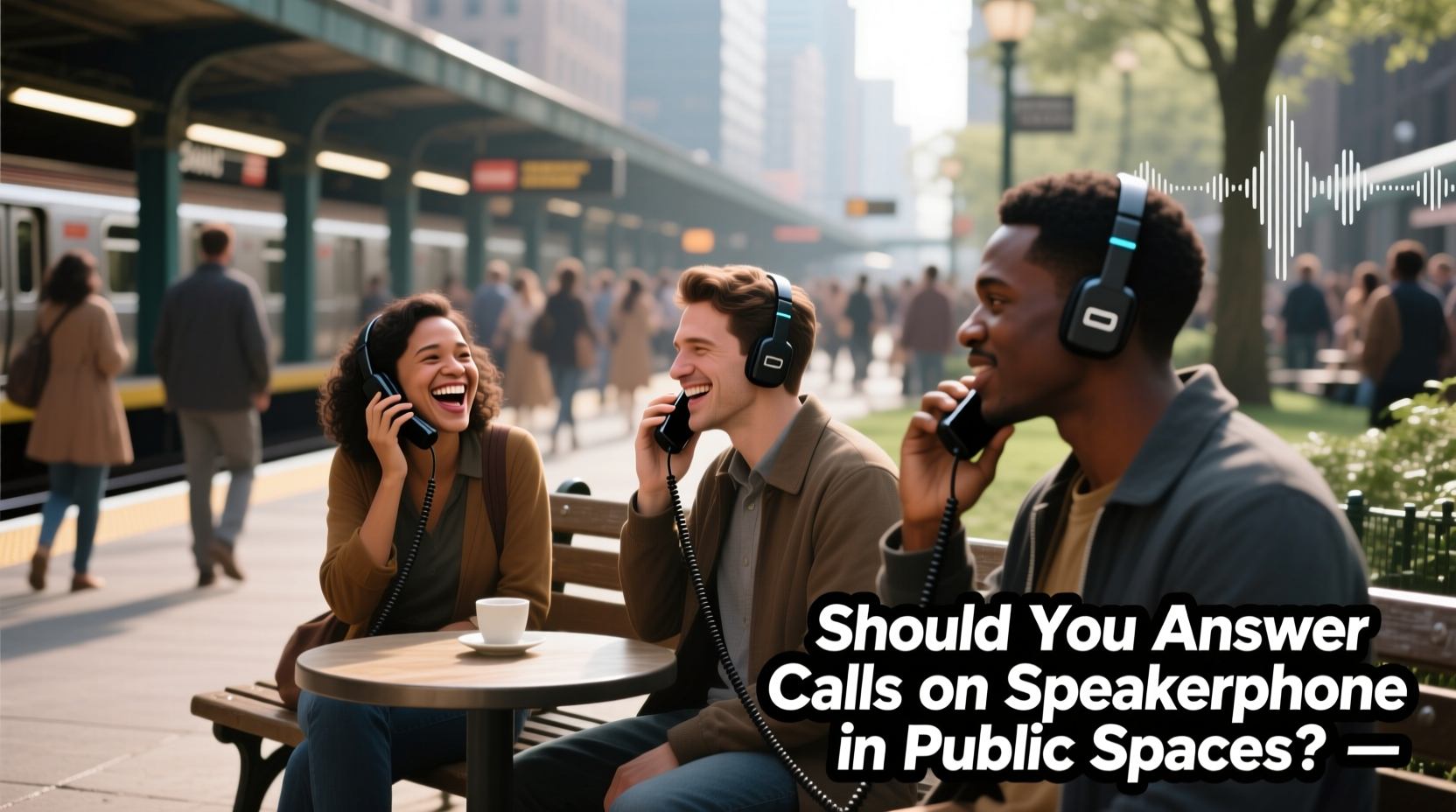
Public spaces are shared environments. When you activate speakerphone, you effectively turn a private conversation into a public broadcast. Unlike a quiet phone call where only you hear the other party, speakerphone forces those nearby to become involuntary listeners. This intrusion can be more than just annoying—it can be disrespectful.
Studies in environmental psychology show that unwanted auditory stimuli, such as loud phone conversations, increase stress levels and reduce concentration in public settings. A 2010 study published in the *Journal of Environmental Psychology* found that overhearing one-sided conversations (like phone calls) is more distracting than two-sided face-to-face discussions because the brain struggles to predict what comes next.
This cognitive disruption affects people differently—some may feel mildly irritated, while others, particularly those with sensory sensitivities or anxiety, may find it deeply unsettling. In libraries, hospitals, or transit vehicles, where silence is expected, speakerphone use can be especially jarring.
Privacy Risks and Security Concerns
Beyond social discomfort, speakerphone conversations in public pose real privacy risks—not just for you, but for others involved. Imagine discussing your medical test results, financial issues, or workplace conflicts within earshot of strangers. Even if you assume no one is paying attention, overheard details can be pieced together or misused.
Consider this scenario: You’re on a bus and receive a call from your bank about a suspicious transaction. You switch to speakerphone to free your hands and confirm account details. Unbeknownst to you, someone seated nearby memorizes your last name and partial account number. While this might seem like a stretch, data harvesting in public spaces is a documented risk, particularly in high-traffic urban areas.
Additionally, if you're discussing work-related matters—such as client names, project timelines, or internal strategies—you may inadvertently violate company confidentiality policies. Many organizations have guidelines restricting the discussion of sensitive information in public, regardless of the medium.
“Using speakerphone in public is like reading a private letter out loud in a waiting room. Just because you can doesn’t mean you should.” — Dr. Lydia Chen, Communication Ethics Researcher, University of Toronto
When Speakerphone Might Be Acceptable
There are exceptions. Not all public speakerphone use is inherently rude or risky. Context matters. In certain situations, speakerphone can be practical and even necessary—provided it’s used thoughtfully.
- Emergency Situations: If you're coordinating help during an accident or medical emergency, using speakerphone to keep your hands free while following instructions is justified.
- Accessibility Needs: Some individuals with hearing impairments or mobility limitations rely on speakerphone to communicate effectively. In these cases, the tool supports inclusion rather than disrupts it.
- Controlled Environments: Outdoor parks, empty hallways, or designated phone zones in airports may allow for brief speakerphone use without disturbing others.
The key differentiator is whether your actions impact others. If you’re in a wide-open space with no one within 15 feet, a short call may be low-risk. But if you're surrounded by people—even if they appear indifferent—assume your voice carries further than you think.
Do’s and Don’ts of Public Phone Etiquette
| Do’s | Don’ts |
|---|---|
| Step outside or into a hallway for urgent calls | Use speakerphone in quiet zones like libraries or theaters |
| Keep calls brief and volume low | Discuss personal or sensitive topics aloud |
| Use headphones with a built-in mic for hands-free needs | Assume no one minds your conversation |
| Apologize and end the call if someone appears disturbed | Insist on continuing a call after receiving disapproving looks |
| Switch to text or voicemail when possible | Yell into the phone to compensate for background noise |
A Real-World Example: The Café Incident
Jamal, a freelance graphic designer, regularly works from a local coffee shop. One afternoon, he received a call from a new client eager to discuss project details. Instead of stepping outside, Jamal placed his phone on the table and hit speakerphone. Over the next 12 minutes, he discussed deadlines, pricing, and team members—all while customers sat within earshot.
A woman at the next table, working on her own client proposal, later told staff she couldn’t concentrate due to the overlapping audio. Another patron recorded a short clip (without showing faces) and posted it online with the caption: “Why do people think public = private?” The post gained traction locally, sparking debate about digital manners.
While Jamal didn’t break any rules, his lack of awareness damaged his professional image indirectly. Word reached a potential collaborator who reconsidered working with him, citing concerns about discretion. The incident wasn’t about malice—it was about judgment.
This case illustrates how seemingly small choices can have ripple effects. In shared environments, perceived professionalism includes not just what you say, but how and where you say it.
How to Handle Calls Respectfully: A Step-by-Step Guide
If you must take a call in public, follow this sequence to minimize disruption and protect privacy:
- Assess Your Surroundings: Look around. Are people reading, working, or resting? Is the space designed for quiet? If yes, avoid speakerphone entirely.
- Delay or Redirect: If the call isn’t urgent, send a quick text: “Can’t talk now—will call back in 10.” Use voicemail when appropriate.
- Move to a Neutral Zone: Step outside, go to a lobby, or find a less crowded corner. Distance reduces auditory intrusion.
- Use Technology Wisely: Pair your phone with wireless earbuds or a discreet headset. These allow hands-free use without broadcasting sound.
- Keep It Short and Quiet: Speak softly, summarize quickly, and avoid emotional or complex discussions.
- End With Awareness: Before hanging up, glance around. If someone seemed bothered, a simple nod or “Sorry about that” goes a long way.
Frequently Asked Questions
Is it ever okay to use speakerphone on public transit?
Rarely. Buses, subways, and trains are high-density environments where noise control is essential. Even a short call can disturb multiple people. If you must respond, use headphones or reply via text. Reserve speakerphone for emergencies only.
What if I need my hands free while walking?
Use Bluetooth earphones or a smartwatch with calling capability. These tools offer the same convenience as speakerphone without the public exposure. If you don’t have access to such devices, consider pausing your activity briefly to take the call quietly.
Does speakerphone use reflect poorly on professionals?
Yes, especially in client-facing or collaborative fields. Repeatedly using speakerphone in public can signal a lack of situational awareness or respect for others’ space. Colleagues and clients may interpret it as carelessness, even if that’s not your intent.
Building Better Habits for Public Communication
The rise of mobile technology has outpaced the development of social norms. While laws regulate texting while driving, no universal rules govern phone behavior in cafes or parks. That’s why individual responsibility matters. Each person’s choices contribute to the collective experience of public life.
Think of speakerphone use like speaking a foreign language loudly in a quiet room—technically legal, but socially tone-deaf. Developing habits like checking your environment, using headsets, and prioritizing texts over calls in public can make shared spaces more comfortable for everyone.
Moreover, modeling good behavior influences others. When people see you stepping away to take a call or using headphones respectfully, they’re more likely to adopt similar practices. Small actions can shift cultural norms over time.
Conclusion
Answering calls on speakerphone in public spaces is a choice that extends beyond personal convenience. It touches on ethics, empathy, and professionalism. While there are legitimate exceptions—emergencies, accessibility needs, or truly isolated locations—the default should be restraint.
By choosing silence over sound, discretion over broadcast, and awareness over autopilot, you contribute to a more considerate public culture. Technology should enhance human connection, not diminish it through unintended intrusions.




 浙公网安备
33010002000092号
浙公网安备
33010002000092号 浙B2-20120091-4
Comments
No comments yet. Why don't you start the discussion?