
Lighting makes up nearly 15% of the average household’s electricity use. With smart LED technology advancing rapidly, many homeowners are asking: Is it worth replacing every traditional bulb in the house with a smart version? Or should you keep using reliable, low-cost incandescents and standard LEDs where they still work? The answer isn’t straightforward—it depends on your lifestyle, budget, and long-term goals.
Smart LEDs promise convenience, customization, and energy efficiency. But they come at a higher upfront cost and require integration with apps, voice assistants, or hubs. Meanwhile, basic LED bulbs have become incredibly efficient and affordable, offering most of the energy savings without the complexity. Deciding between them means weighing practicality against innovation.
The Evolution of Home Lighting
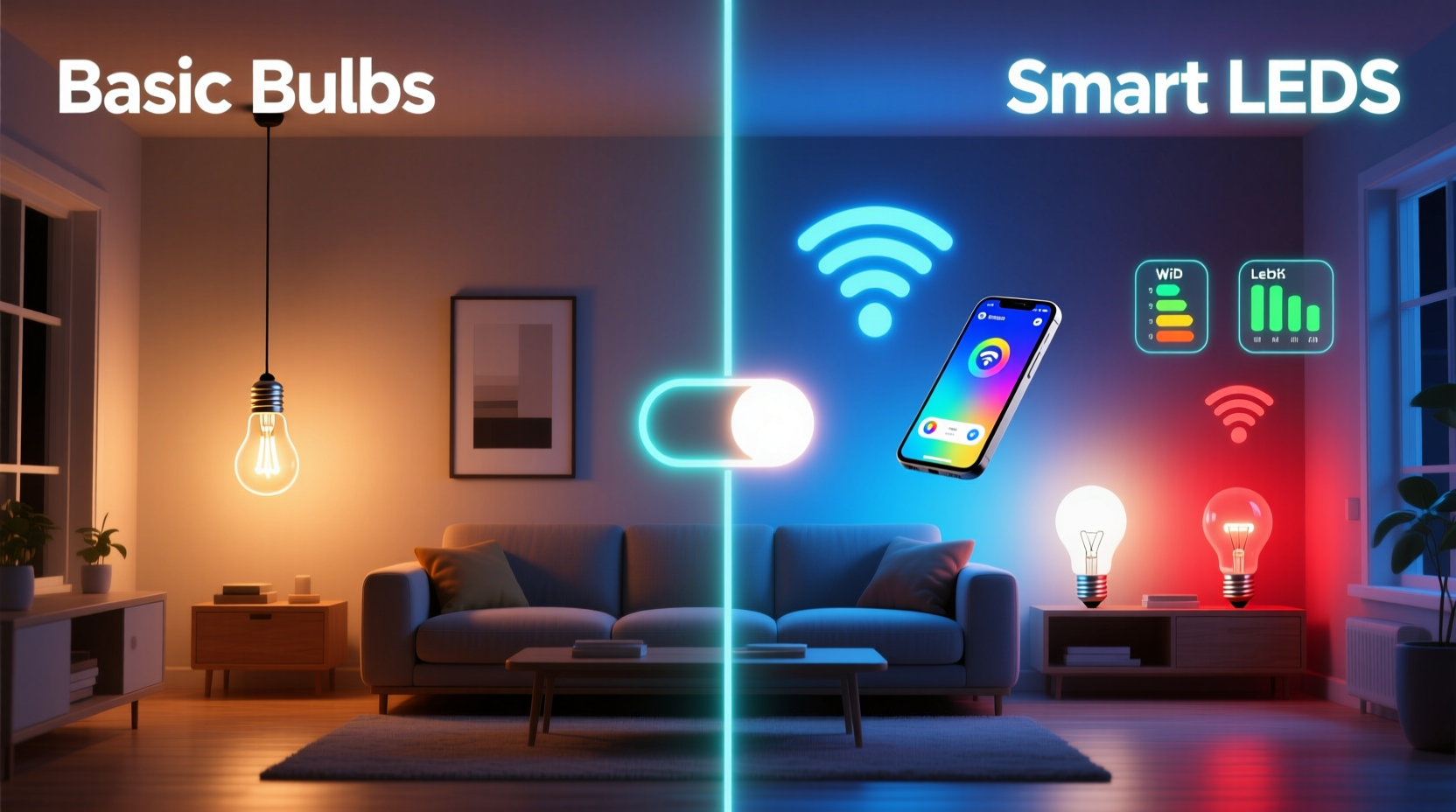
Home lighting has shifted dramatically over the past two decades. Incandescent bulbs—once the default—have been largely phased out due to inefficiency. They convert only about 10% of energy into light; the rest is wasted as heat. Halogen and compact fluorescent (CFL) bulbs offered slight improvements but came with trade-offs like warm-up time and mercury content.
Enter LED technology. Modern LEDs use up to 90% less energy than incandescents and last 25 times longer. A typical LED bulb can operate for 15,000 to 25,000 hours, compared to just 1,000 for an incandescent. This leap in performance made LEDs the new baseline for home lighting. Now, smart LEDs build on that foundation by adding wireless connectivity, color tuning, dimming, scheduling, and remote control.
These features aren’t just gimmicks. For people managing busy households, dealing with mobility challenges, or aiming for maximum energy optimization, smart lighting can be transformative. But for others, especially those in rental units or on tight budgets, sticking with basic LEDs may be the smarter move.
Cost Comparison: Smart LEDs vs. Basic Bulbs
One of the biggest barriers to adopting smart lighting is price. A single smart LED bulb typically costs between $10 and $25, depending on brand and capabilities. In contrast, a high-quality non-smart LED bulb can be purchased for $2 to $5. If you have 40 light fixtures in your home, upgrading all of them to smart bulbs could cost $400–$1,000—before considering additional hardware like hubs or bridges.
However, the long-term picture changes when factoring in energy use and lifespan. Consider this comparison:
| Bulb Type | Average Cost per Bulb | Lifespan (hours) | Wattage (equivalent to 60W incandescent) | Annual Energy Cost* (3 hrs/day) |
|---|---|---|---|---|
| Incandescent | $1.00 | 1,000 | 60W | $7.00 |
| Basic LED | $3.50 | 15,000 | 9W | $1.05 |
| Smart LED | $15.00 | 15,000 | 10W | $1.17 |
*Assumes electricity rate of $0.13/kWh
While smart LEDs consume slightly more power than basic ones due to onboard electronics, the difference is negligible. Over 15 years, a single smart bulb might cost $17.55 in electricity versus $15.75 for a basic LED—a $1.80 difference. But the initial investment gap remains significant.
Practical Benefits of Smart LEDs
Smart bulbs offer tangible advantages beyond brightness and color. Their real value lies in automation, personalization, and integration with broader smart home ecosystems.
- Remote Control: Turn lights on or off from anywhere using a smartphone app—ideal for security or peace of mind when traveling.
- Voice Activation: Work with Alexa, Google Assistant, or Siri for hands-free operation, helpful for multitasking or accessibility.
- Scheduling & Routines: Automate lights to turn on at sunset or simulate occupancy while you’re away.
- Color Tuning: Adjust color temperature from warm white (2700K) to cool daylight (6500K), supporting circadian rhythms or mood lighting.
- Scenes & Effects: Create ambiance for movie nights, parties, or relaxation with dynamic color shifts and brightness levels.
For families with children, smart lighting can ease bedtime routines. Parents can set lights to gradually dim in kids’ rooms, signaling it’s time to sleep. Similarly, elderly users benefit from voice-controlled lighting in hallways or bathrooms, reducing fall risks at night.
“Smart lighting isn’t just about convenience—it’s a tool for improving daily habits, safety, and even mental well-being through environmental cues.” — Dr. Lena Torres, Human-Centered Design Researcher at MIT Media Lab
When Basic LEDs Are the Better Choice
Despite their appeal, smart LEDs aren’t always the best fit. There are clear scenarios where basic LEDs remain the superior option:
- Rental Properties: Tenants may not want to invest in smart infrastructure they can’t take with them.
- Low-Traffic Areas: Closets, attics, and storage rooms rarely need remote access or color changes.
- Wi-Fi Limitations: Older routers or dense walls can disrupt signal reliability, making smart bulbs frustrating to use.
- Privacy Concerns: Some users prefer to minimize connected devices to reduce data exposure.
- Budget Constraints: Upfront costs may outweigh perceived benefits for cost-conscious households.
In these cases, modern basic LEDs deliver nearly all the efficiency gains of smart versions without complexity. Many now feature excellent color rendering (CRI >90), dimmability, and instant-on performance—bridging the quality gap significantly.
Mini Case Study: The Martinez Family
The Martinez family lives in a three-bedroom suburban home. They initially replaced all 32 bulbs with smart LEDs, excited by the promise of automation. However, after six months, they realized several issues:
- Their router struggled to maintain stable connections to all bulbs.
- Guests found the app confusing and often left lights on accidentally.
- They rarely used advanced features like color cycling or music sync.
They reverted to a hybrid approach: smart bulbs in the living room, kitchen, and master bedroom; basic LEDs everywhere else. This reduced clutter, improved reliability, and cut their lighting-related tech spending by 60%. They kept key automations—like turning on porch lights at dusk—but simplified maintenance and improved overall satisfaction.
Step-by-Step Guide to Making the Right Decision
Before committing to a full smart lighting overhaul, follow this practical evaluation process:
- Inventory Your Fixtures: Count how many bulbs you currently use and note their locations (e.g., ceiling, lamp, outdoor).
- Categorize by Usage: Label each fixture as “high,” “medium,” or “low” priority based on daily use and importance.
- Test One Room First: Install smart bulbs in one frequently used room to assess usability and network stability.
- Evaluate Needs: Ask: Do I want scheduling? Voice control? Color options? Security features?
- Calculate ROI: Compare total upgrade cost vs. projected energy savings and convenience benefits over 5 years.
- Adopt Gradually: Replace bulbs as they burn out, prioritizing high-impact zones first.
Checklist: Smart LED Readiness
Use this checklist before investing in smart lighting:
- ✅ Reliable home Wi-Fi coverage in key lighting areas
- ✅ Smartphone or tablet for app management
- ✅ Compatible voice assistant (Alexa, Google, Siri)
- ✅ Willingness to learn and troubleshoot minor tech issues
- ✅ Long-term residency (or plan to leave bulbs behind)
- ✅ Interest in automation, scenes, or energy tracking
If fewer than four boxes are checked, consider starting small or sticking with basic LEDs.
Frequently Asked Questions
Do smart LEDs use more energy than regular LEDs?
Only marginally. The added circuitry consumes a small amount of standby power (about 0.2–0.5 watts when off). Over a year, this adds roughly $0.30–$0.70 per bulb. The difference in active use is negligible.
Can I mix smart and basic bulbs in the same home?
Absolutely. Most homes benefit from a hybrid setup. Use smart bulbs where automation adds value (e.g., living room, entryway) and basic LEDs in low-priority areas (e.g., basement, pantry).
Are smart bulbs secure?
Most reputable brands use encryption and regular firmware updates. However, any internet-connected device carries some risk. Reduce exposure by using strong passwords, enabling two-factor authentication, and keeping apps updated.
Final Recommendation: Balance Innovation with Practicality
Replacing every bulb in your home with smart LEDs is rarely necessary—or even advisable. While the technology offers impressive features, the return on investment diminishes in low-usage areas. A strategic, zone-based approach delivers the best outcome: enjoy the benefits of smart lighting where it matters most, while relying on efficient, no-frills LEDs elsewhere.
Think of smart bulbs like premium appliances: useful in the kitchen, overkill in the garage. Prioritize rooms where lighting impacts comfort, safety, or routine. Let simplicity guide the rest.
Technology should serve your life, not complicate it. Whether you choose full automation or stick with basics, the goal is consistent, efficient, and pleasant illumination. Make choices that align with how you actually live—not just what looks futuristic in a catalog.




 浙公网安备
33010002000092号
浙公网安备
33010002000092号 浙B2-20120091-4
Comments
No comments yet. Why don't you start the discussion?