
When it comes to pet care, grooming is more than just a luxury—it’s an essential part of maintaining your pet’s hygiene, comfort, and overall health. From nail trims to full haircuts, professional pet groomers invest time, skill, and physical effort into making your furry friend look and feel their best. But after a successful session, many pet owners are left wondering: should you tip your pet groomer, and if so, how much?
Tipping practices vary across service industries, and pet grooming is no exception. Unlike restaurants or taxis, where tipping norms are widely established, pet grooming sits in a gray area for many customers. This lack of clarity can lead to uncertainty—both for clients unsure whether to tip and for groomers who may rely on tips as part of their income.
This article breaks down the etiquette, expectations, and real-world considerations behind tipping pet groomers. Whether you're a first-time pet owner or have been bringing your dog to the same groomer for years, understanding when and how much to tip helps show appreciation for skilled labor and supports fair compensation in an often underpaid profession.
Why Tipping Pet Groomers Matters
Pet grooming is physically demanding, technically skilled work. A typical grooming session involves bathing, drying, brushing, clipping, ear cleaning, nail trimming, and styling—all while managing animals that may be anxious, wiggly, or even aggressive. The job requires not only technical expertise but also patience, animal handling skills, and emotional intelligence.
Many pet groomers are paid hourly wages that hover near minimum wage, especially in chain salons or retail-based locations. In such environments, tips can make a significant difference in take-home pay. Even self-employed groomers who own their businesses face high overhead costs—equipment, supplies, insurance, and marketing—and appreciate tips as recognition of exceptional service.
“Grooming isn’t just about aesthetics. We’re checking for skin issues, lumps, overgrown nails, and ear infections. It’s preventive healthcare disguised as a haircut.” — Lisa Tran, Certified Master Groomer with 15 years of experience
Tipping acknowledges this level of care and professionalism. While not mandatory, it reinforces a culture of respect and fair compensation within the pet care industry.
Is Tipping Expected or Optional?
The short answer: tipping is not required, but it is increasingly common and deeply appreciated.
Unlike restaurants, where 15–20% is standard, there's no universal rule for pet grooming. However, industry surveys and salon policies suggest that around 60–70% of clients do leave a tip. Many upscale or independent grooming studios now include suggested tip amounts on digital receipts, signaling a shift toward normalized tipping culture.
Whether or not tipping is expected depends on several factors:
- Type of business: Independent groomers or mobile groomers often receive higher tip rates because they handle every aspect of service personally.
- Service complexity: A matted poodle requiring de-matting and a breed-specific cut demands far more effort than a simple bath for a short-haired cat.
- Client relationship: Regular clients often tip as a gesture of loyalty and appreciation for consistent quality.
How Much Should You Tip Your Pet Groomer?
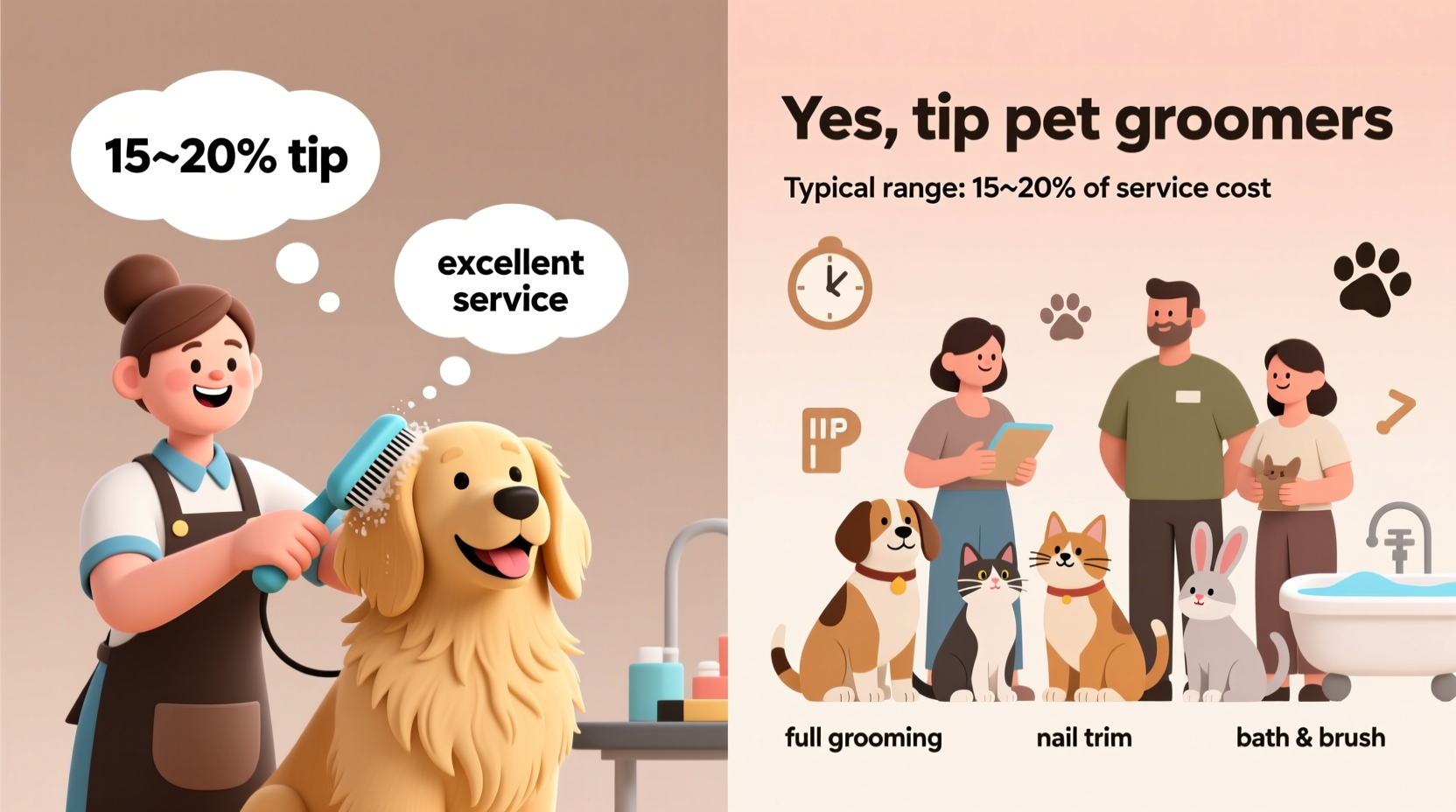
While there’s no rigid formula, most experts recommend tipping between 15% and 20% of the total service cost. This range aligns with standards in other personal care industries like hair salons or spas.
Here’s a breakdown based on average grooming prices:
| Service Type | Average Cost | 15% Tip | 20% Tip |
|---|---|---|---|
| Basic Bath & Brush (small dog) | $40 | $6.00 | $8.00 |
| Full Groom (medium dog) | $70 | $10.50 | $14.00 |
| Breed Cut + De-matting (large dog) | $120 | $18.00 | $24.00 |
| Cat Full Groom (including sedation-safe handling) | $90 | $13.50 | $18.00 |
For exceptional service—such as last-minute appointments, difficult behavioral cases, or holiday scheduling—a tip closer to 25% is a generous way to express gratitude.
Alternatively, flat-rate tipping is also acceptable, especially for routine visits. For example:
- $5–$10 for basic services
- $10–$20 for full grooms or complex work
- $20+ for premium or mobile grooming with added convenience
When to Tip More Than Usual
There are specific situations where a higher-than-average tip is warranted:
- Your pet was extremely difficult: If your dog growled, resisted handling, or needed extra calming techniques, the groomer likely exerted additional emotional and physical energy.
- De-matting was required: Severe matting can take hours to address safely and humanely. This is painful work—for both pet and groomer.
- Holiday or weekend appointments: Groomers working outside regular hours deserve recognition for their time.
- Mobile grooming at your home: Mobile groomers bring all equipment, manage waste disposal, and navigate traffic—adding layers of effort.
Mini Case Study: A High-Stress Grooming Experience
Sarah from Portland brought her 8-year-old rescue terrier mix, Benny, to a local grooming salon for the first time. Benny had never been professionally groomed and was severely matted due to neglect before adoption. The groomer, Maria, spent nearly three hours carefully de-matting Benny using a combination of hand tools and gentle sedatives approved by Sarah.
During the process, Benny became anxious and tried to bite twice. Maria remained calm, paused the session to let him rest, and used positive reinforcement throughout. By the end, Benny emerged clean, comfortable, and surprisingly relaxed.
Sarah was moved by the care Maria showed. The base price for the service was $110. Instead of tipping 15%, Sarah left a $30 tip—nearly 27%—along with a handwritten thank-you note. She later posted a glowing review highlighting Maria’s patience and skill.
Maria said the tip made her week. “It wasn’t just the money,” she shared. “It was knowing the client saw the effort. That kind of recognition keeps us going on tough days.”
Checklist: How to Decide Whether and How Much to Tip
Use this practical checklist the next time you visit a pet groomer:
- ✅ Was the groomer attentive, patient, and communicative?
- ✅ Did they accommodate special requests (e.g., specific clip styles, avoiding certain products)?
- ✅ Was your pet handled gently, especially if anxious or aggressive?
- ✅ Did the groomer point out any health concerns (skin issues, lumps, ear infections)?
- ✅ Was the service completed on time and with attention to detail?
- ✅ Are you a repeat customer building a long-term relationship?
- ✅ Was the grooming particularly challenging (mats, behavioral issues, medical needs)?
If you answered “yes” to three or more, a tip of 15–20% is appropriate. Five or more? Consider going above 20% or adding a small gift (like a coffee shop gift card) during holidays.
Common Misconceptions About Tipping Groomers
Several myths persist that discourage well-meaning pet owners from tipping:
- Myth: “The salon already charges enough.”
Reality: High prices don’t always translate to fair wages. Many groomers earn a fraction of the service fee. - Myth: “Tipping is only for humans, not pets.”
Reality: Service workers provide labor regardless of the client being human or animal. Skill and effort deserve recognition. - Myth: “If they wanted better pay, they’d charge more.”
Reality: Market competition limits pricing. Tips help bridge the gap between market rates and livable income.
Remember: tipping is discretionary, but when done thoughtfully, it supports a dignified, sustainable career path for pet care professionals.
Frequently Asked Questions
Do you tip if you’re unhappy with the haircut?
If the grooming outcome is unsatisfactory due to a mistake or miscommunication, speak with the manager first. Many salons will offer a redo at no cost. Tipping is not expected in cases of genuine error. However, if the groomer followed your instructions and the result is merely different from expectations, a reduced tip (e.g., 10%) may still acknowledge effort.
Should you tip both the groomer and the salon owner?
If the groomer is the owner, your tip goes directly to them. If it’s a team environment, tip the individual groomer unless instructed otherwise. Managers or receptionists typically don’t expect tips unless they provided direct service.
Is it okay to tip in treats or toys instead of cash?
Small gestures like homemade dog treats or a toy for the groomer’s own pet are sweet, but they shouldn’t replace a monetary tip. These extras are best given in addition to a standard tip, especially during holidays.
Final Thoughts: Recognizing the Work Behind the Fluff
Pet groomers play a vital role in animal wellness. They spot early signs of illness, reduce discomfort from matted fur, and boost confidence through a good-looking coat. Their work combines artistry, science, and compassion.
Tipping is one of the simplest ways to honor that contribution. Whether you choose 15%, 20%, or a flat $10, your gesture tells the groomer their effort matters. In an industry where burnout is high and recognition is low, that message carries weight.
Next time your dog bounds out of the grooming suite looking fresh and feeling light, consider what went into that transformation. Then, reach for your wallet—not out of obligation, but out of respect.




 浙公网安备
33010002000092号
浙公网安备
33010002000092号 浙B2-20120091-4
Comments
No comments yet. Why don't you start the discussion?