
Every day, millions of people make a silent but impactful decision: how to carry their essentials. Whether it’s a laptop, lunch, gym clothes, or just a phone and wallet, the way you transport your belongings affects your posture, energy levels, and even productivity. The two most common choices—shoulder bags and backpacks—each come with distinct advantages and trade-offs. While one might suit your commute, the other could be ideal for weekend errands. The real question isn’t which is universally better, but which aligns best with your daily routine, physical needs, and personal style.
Ergonomics and Physical Comfort
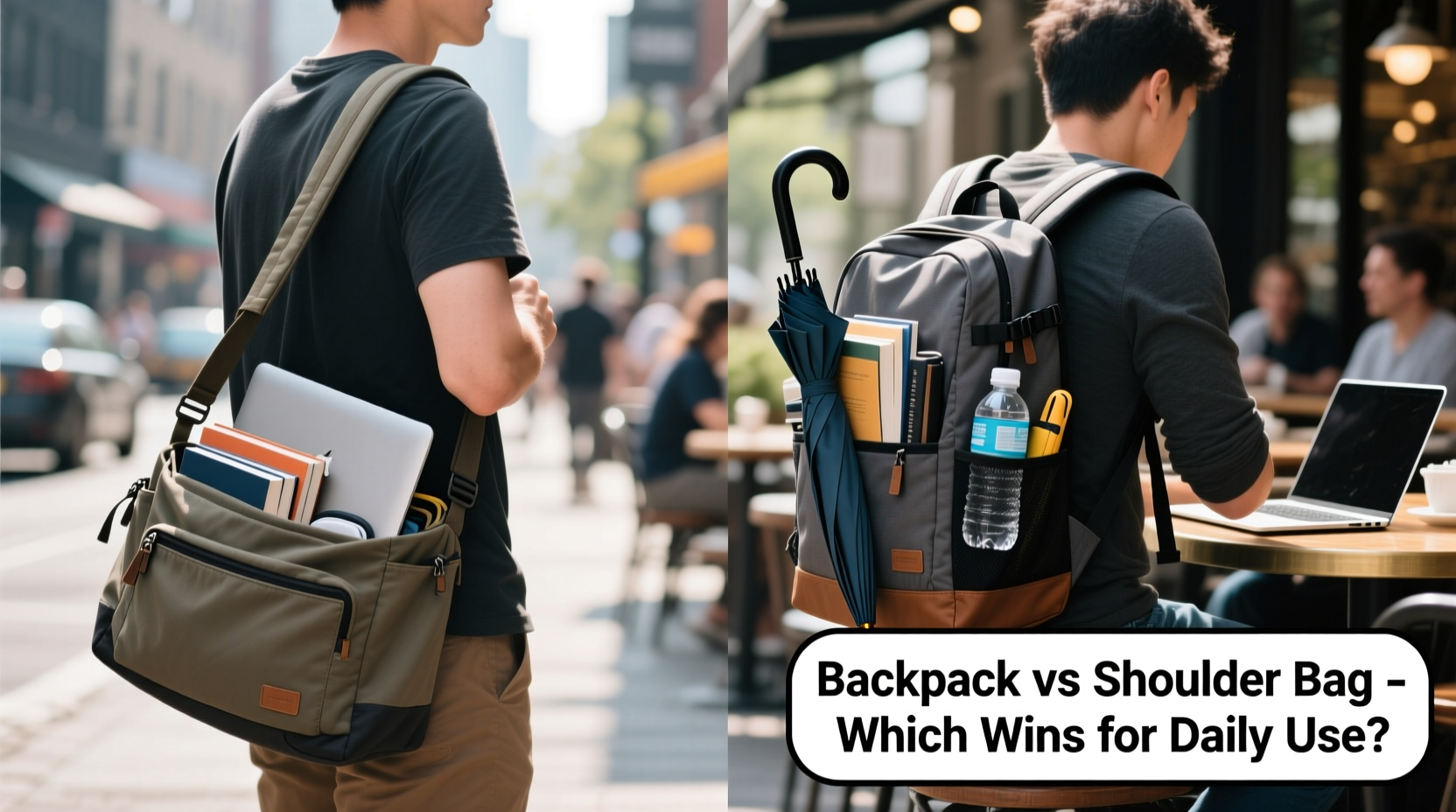
One of the most critical factors in choosing between a shoulder bag and a backpack is how it impacts your body over time. Carrying weight unevenly—especially on one shoulder—can lead to muscle imbalances, neck strain, and long-term postural issues. Shoulder bags concentrate weight on a single point, often leading to slouching or compensatory shifts in gait. Over days or weeks, this can contribute to chronic discomfort, particularly if the bag regularly exceeds 5–7 pounds.
In contrast, backpacks distribute weight across both shoulders and, when properly fitted, transfer much of the load to the hips via padded waist straps. This balanced distribution reduces spinal stress and encourages upright posture. According to Dr. Laura Chen, a physical therapist specializing in ergonomic injuries:
“Backpacks, when worn correctly, promote symmetrical loading and are far less likely to cause musculoskeletal strain than single-strap shoulder bags—especially for loads over 10% of body weight.” — Dr. Laura Chen, DPT
However, not all backpacks are created equal. Poorly designed models without adequate back support or chest stabilizers can still lead to discomfort. Similarly, crossbody shoulder bags that rest diagonally across the torso may offer slightly better weight balance than traditional shoulder styles, but they don’t eliminate asymmetry entirely.
Capacity and Practicality for Daily Use
Your daily responsibilities dictate how much you need to carry—and that directly influences which bag type makes sense. A student commuting with textbooks, a laptop, and a water bottle will naturally lean toward a backpack. These bags typically feature multiple compartments, padded laptop sleeves, and external pockets for quick access, making organization easier.
On the other hand, professionals heading to an office with only a tablet, notebook, wallet, and keys might find a sleek shoulder bag more than sufficient. Shoulder bags tend to have fewer compartments, which can simplify access but limit organizational flexibility. They’re also generally smaller in volume, which discourages overpacking—a hidden benefit for minimalist commuters.
For those who bike to work or rely on public transit, backpacks offer hands-free mobility, a major advantage when navigating stairs, holding railings, or managing groceries. Shoulder bags require at least one hand for stability, especially when full, which can become inconvenient during multitasking.
Comparison Table: Shoulder Bag vs Backpack
| Feature | Shoulder Bag | Backpack |
|---|---|---|
| Weight Distribution | Uneven (single shoulder) | Even (dual straps, hip support) |
| Capacity | Low to moderate (5–12L) | Moderate to high (15–30L+) |
| Access Speed | Faster top or front access | Slower, deeper main compartment |
| Ease of Removal | Easy (one motion) | Requires both straps off |
| Style Flexibility | High (fashion-forward options) | Limited (mostly casual/technical) |
| Hands-Free Use | No (may swing or slip) | Yes (secure fit) |
Style, Professionalism, and Social Perception
While function matters, aesthetics play a significant role in everyday decisions. Shoulder bags are widely perceived as more stylish and versatile across dress codes. A leather satchel or structured tote pairs easily with business casual attire, whereas even premium backpacks can appear too informal in conservative workplaces.
Backpacks, however, have gained ground in urban professional environments, especially in tech, creative industries, and co-working spaces. Modern minimalist backpacks in neutral tones—think matte black nylon with clean lines—blend functionality with subtle sophistication. Still, they rarely match the elegance of a well-crafted shoulder bag in formal settings.
For those prioritizing image—such as sales representatives, consultants, or frequent travelers—a shoulder bag often signals preparedness and polish. Yet, if comfort and utility outweigh appearance, a sleek backpack may be the smarter long-term choice, even if it breaks dress code norms.
Real-Life Scenario: Commuting in a Dense Urban Environment
Consider Maya, a graphic designer living in downtown Chicago. She walks 20 minutes to work, takes the subway twice daily, and often stops at a coffee shop to sketch ideas. Her current shoulder bag holds her tablet, charger, sketchbook, and water bottle—totaling about 8 pounds. After six months, she began experiencing left shoulder pain and frequent headaches.
She switched to a lightweight backpack with breathable mesh padding and a sternum strap. Though initially hesitant about the look, she chose a slim, professional-style model in charcoal gray. Within two weeks, her shoulder pain diminished significantly. She also found it easier to manage her morning rush—no more juggling the bag while swiping her transit card.
Maya’s case illustrates a growing trend: functional evolution driven by lifestyle demands. Her shift wasn’t about fashion—it was about sustainability. The backpack supported her body and routine better, proving that practical benefits can outweigh initial style concerns.
Choosing the Right Bag: A Step-by-Step Guide
Selecting between a shoulder bag and a backpack doesn’t have to be arbitrary. Follow this logical sequence to identify the best fit for your life:
- Assess your daily load: List everything you carry regularly. If it exceeds 7–8 pounds, lean toward a backpack.
- Evaluate your commute: Do you walk, bike, or use transit? Hands-free movement favors backpacks.
- Check your work environment: Is there a dress code? Will a backpack seem out of place?
- Test for comfort: Try both styles with your actual load. Walk for 10–15 minutes and note any strain.
- Consider long-term health: Prioritize spine alignment and symmetry, especially if you have existing back or neck issues.
- Balance aesthetics and function: Choose a design that meets both your professional image and physical needs.
Quick Checklist: Should You Choose a Shoulder Bag or Backpack?
- ✅ Need minimal items (wallet, phone, keys)? → Shoulder bag
- ✅ Carry 10+ lbs (laptop, books, gym gear)? → Backpack
- ✅ Work in a formal office? → Shoulder bag (or professional backpack)
- ✅ Bike, walk, or take crowded transit? → Backpack
- ✅ Experience back or shoulder pain? → Backpack with ergonomic support
- ✅ Value quick access and style? → Shoulder bag
Frequently Asked Questions
Can I use a backpack in a business setting?
Yes—provided it’s a minimalist, professional design in neutral colors. Avoid bulky outdoor styles. Many modern “business backpacks” include tailored silhouettes and premium materials suitable for offices.
Are crossbody bags better than regular shoulder bags?
They offer improved stability and weight distribution due to diagonal support across the torso. However, they still create asymmetrical loading and aren’t a complete solution for heavy loads.
How heavy is too heavy for a shoulder bag?
Anything over 5–7 pounds increases the risk of strain. If your bag feels heavy after a short walk, it’s likely too much for one shoulder. Consider redistributing weight or switching to a backpack.
Final Verdict: What’s Actually Better for You?
The answer depends entirely on your lifestyle. For most people with moderate to heavy daily loads, a well-designed backpack is the healthier, more practical option. It supports the spine, frees up your hands, and adapts to active routines. However, if you carry light, value style, and operate in formal environments, a shoulder bag remains a viable—and often preferred—choice.
The key is intentionality. Don’t default to habit. Reassess your needs periodically. Your body will thank you for choosing function over fashion when it counts, and your confidence will grow when your bag complements your identity without compromising well-being.




 浙公网安备
33010002000092号
浙公网安备
33010002000092号 浙B2-20120091-4
Comments
No comments yet. Why don't you start the discussion?