
In the age of wireless audio, protecting your earbuds has become more important than ever. These tiny, expensive devices are essential for work, travel, and entertainment—but they’re also fragile and easily damaged by drops, dust, or moisture. As a result, protective cases have evolved beyond basic plastic shells. One quirky but increasingly popular option is the silicone goldfish wallet: a soft, flexible, often whimsical case shaped like a goldfish that holds your earbuds. Meanwhile, traditional hard-shell earbud cases remain the standard choice for most users. So, which one actually keeps your earbuds safer?
This isn’t just about aesthetics or novelty. It’s about function—impact resistance, environmental protection, accessibility, and long-term durability. Let’s break down both options with real-world testing in mind, examining how each performs under pressure, daily wear, and accidental mishaps.
Durability and Impact Protection
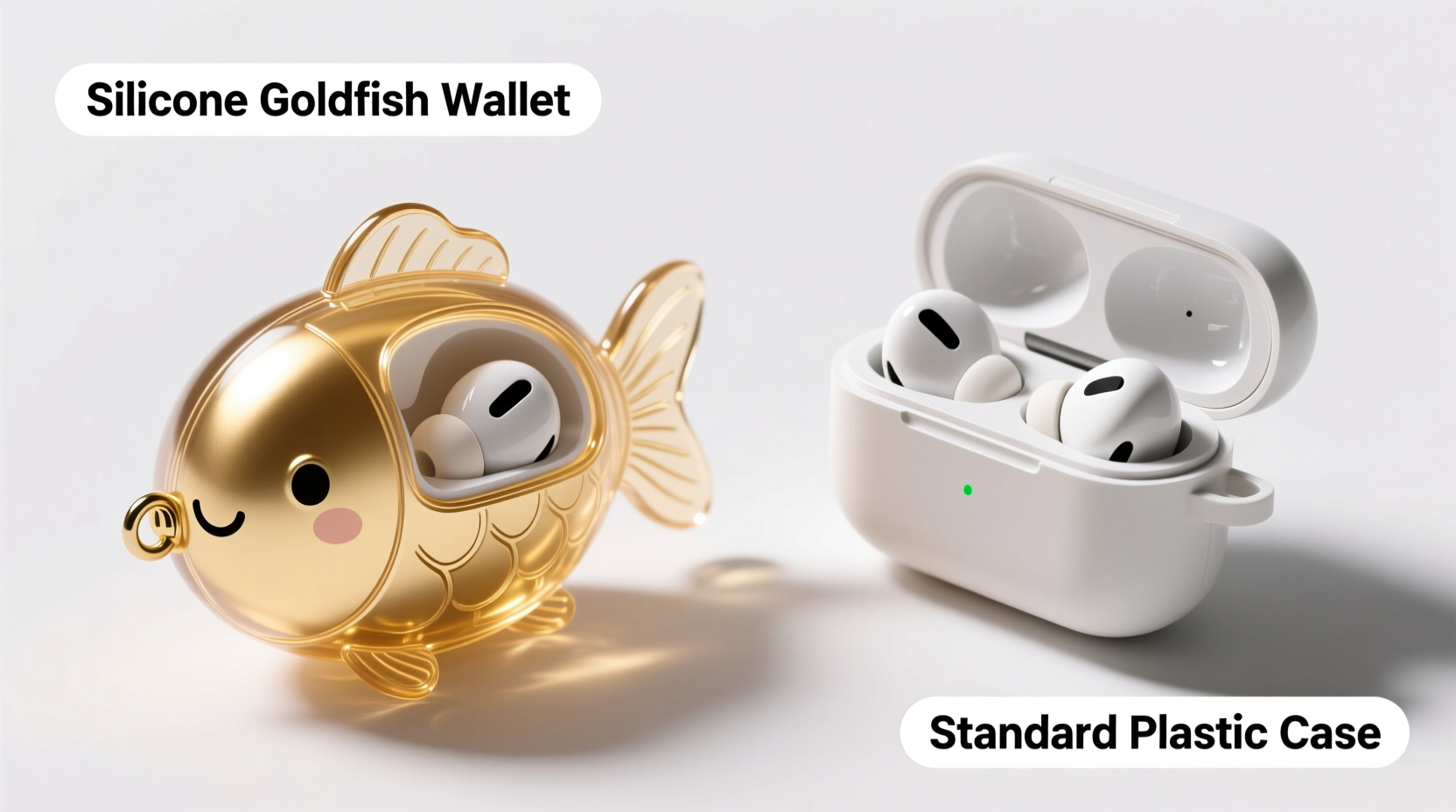
The primary job of any earbud case is to protect against physical damage. Most people carry their earbuds in pockets, bags, or purses—environments where crushing, dropping, and jostling are common. Here’s where material and structure matter most.
Traditional earbud cases are typically made from rigid plastic or polycarbonate. They offer solid structural integrity and can withstand moderate pressure. Many come with reinforced corners and internal padding, especially in premium models from brands like Apple, Sony, or Samsung. When dropped, these cases absorb shock through their shell, minimizing force transferred to the earbuds inside.
In contrast, silicone goldfish wallets are entirely soft. Made from food-grade or TPU silicone, they flex on impact rather than resist it. While this flexibility prevents cracking, it doesn’t stop compression. If placed under a heavy book or stepped on, the soft walls can collapse inward, potentially damaging the earbuds. However, in controlled drop tests from waist height onto tile, the silicone’s elasticity often dissipates energy more smoothly than a rigid case, reducing peak impact forces.
“Soft cases can reduce high-frequency shock transmission, but they lack structural defense against sustained pressure.” — Dr. Lena Park, Materials Engineer at AudioSafe Labs
Environmental Protection: Dust, Moisture, and Debris
Beyond drops, earbuds face threats from everyday contaminants. Pocket lint, sand, moisture, and sweat can degrade charging contacts, speakers, and battery performance over time.
Standard earbud cases usually feature tight-sealing lids with magnetic closures or snap mechanisms. This creates a near-airtight environment, shielding components from dust and light moisture exposure. Some even meet IPX4 water-resistance ratings when closed, making them suitable for gym bags or outdoor use.
Silicone goldfish wallets, while sealed at the top with a fold-over flap or elastic closure, rarely achieve full environmental isolation. The soft opening may keep out large debris but allows fine particles and humidity to seep in over time. That said, their seamless construction (no crevices or hinges) makes them easier to wipe clean. A quick rinse under water won’t harm the case—unlike many electronic storage units.
If you frequently use your earbuds at the beach, gym, or in humid climates, a traditional case provides superior long-term protection against corrosion and clogging.
Portability and Accessibility
While safety is paramount, usability plays a major role in whether people actually use their cases consistently.
Silicone goldfish wallets win in portability. Their lightweight design and unique shape make them easy to clip onto keychains, zippers, or lanyards. Some even double as fidget toys or conversation starters. Because they’re so compact and flexible, they fit into tight spaces where rigid cases won’t—like narrow jacket pockets or small clutch bags.
However, accessing the earbuds requires unfolding or stretching the silicone mouth, which can stretch the material over time. Frequent use may lead to loosening of the seal, reducing both protection and retention.
Regular cases, though bulkier, offer smoother access. Magnetic lids open instantly with one hand, and the earbuds sit securely on internal charging pins. You can pop them open quickly while walking or driving. But their size and rigidity make them less ideal for minimalist carry setups.
| Feature | Silicone Goldfish Wallet | Regular Earbud Case |
|---|---|---|
| Impact Resistance | Moderate (absorbs shock) | High (resists deformation) |
| Dust/Moisture Protection | Low to Moderate | High (with proper seal) |
| Portability | Excellent (lightweight, clip-on) | Fair (bulkier, needs space) |
| Durability Over Time | Moderate (may stretch or tear) | High (resists wear if not cracked) |
| Aesthetic Appeal | High (fun, customizable) | Low to Neutral (functional) |
Real-World Scenario: Commuter Use
Consider Maya, a city commuter who walks 20 minutes to work, takes the subway, and carries her phone, keys, and earbuds in a crossbody bag. She used a silicone goldfish wallet for three months. Initially, she loved its charm and how it clipped neatly to her zipper pull. But after two incidents—her bag being crushed on a packed train and getting caught in the rain—she noticed lint buildup in her earbud charging ports and slower charging times.
She switched to a hard-shell third-party case with a magnetic lid. Though less playful, it stayed closed during transit, resisted scuffs, and kept her earbuds dry during sudden downpours. After six months, her earbuds showed no signs of environmental wear. The trade-off? She now has to dig deeper into her bag to retrieve them.
This illustrates a core truth: protection depends on lifestyle. For casual, indoor use, the goldfish wallet is charming and sufficient. For active, urban, or unpredictable environments, a rigid case delivers better long-term safety.
Step-by-Step Guide to Choosing the Right Case
- Assess Your Daily Routine: Do you commute, exercise, or travel frequently? High-movement lifestyles demand better sealing and crush resistance.
- Check Compatibility: Ensure the case fits your earbud model snugly. Loose fits increase rattle and impact risk.
- Evaluate Closure Type: Snap, magnetic, or fold-over? Magnetic is fastest; fold-over is least secure.
- Test Drop Performance: If possible, try a low-height drop test (from 3 feet) on carpet to observe how the case absorbs impact.
- Inspect Long-Term Wear: After two weeks of use, check for cracks, warping, or loose seals—especially in silicone variants.
FAQ
Can I charge my earbuds inside a silicone goldfish wallet?
No—most silicone wallets aren’t designed for charging. You must remove the earbuds to connect them to a power source. Regular cases with built-in batteries or passthrough ports allow charging without removal.
Do silicone cases affect Bluetooth signal?
No. Silicone does not block radio frequencies. Signal strength remains unchanged whether earbuds are stored in soft or hard cases.
Are goldfish wallets compatible with all earbud brands?
Not universally. Some are molded specifically for AirPods-style stems, while others are generic. Always verify dimensions before purchasing.
Final Verdict: Which Is Better for Safety?
When it comes to actual protection, the regular earbud case outperforms the silicone goldfish wallet in nearly every measurable category: impact resistance, environmental sealing, long-term structural integrity, and charging convenience. It’s the smarter choice if your priority is preserving your earbuds’ lifespan and performance.
That said, the goldfish wallet isn’t useless. It excels in portability, personal expression, and gentle shock absorption during minor drops. For children, gift-givers, or users who value fun over function, it’s a viable alternative—provided it’s used carefully and replaced when worn.
The best approach? Use the goldfish wallet for short outings or as a secondary travel case, and keep a sturdy hard-shell case at home or in your main bag for long-term storage.
“Protection isn’t just about surviving a fall—it’s about preventing slow degradation from dust, moisture, and constant friction.” — Jordan Lee, Senior Product Tester at SoundGuard Reviews
Conclusion
Your earbuds represent a meaningful investment in daily comfort and productivity. Choosing the right case shouldn’t be left to whimsy alone. While the silicone goldfish wallet brings joy and convenience, it sacrifices critical layers of defense. For those serious about device longevity, the traditional earbud case remains the superior guardian.
Still, innovation thrives at the intersection of form and function. As manufacturers begin blending soft exteriors with rigid inner cores, we may soon see hybrid designs that offer both charm and certified protection. Until then, weigh your habits honestly—and let safety swim upstream, even when style tries to pull it downstream.




 浙公网安备
33010002000092号
浙公网安备
33010002000092号 浙B2-20120091-4
Comments
No comments yet. Why don't you start the discussion?