
When it comes to getting the most out of your in-ear headphones or earbuds, many users focus on drivers, codecs, and brand reputation. Yet one of the most impactful—and often overlooked—factors is something far simpler: the ear tips. The material and design of ear tips can dramatically influence sound quality, comfort, and noise isolation. Among the most common options are silicone and foam ear tips, each with passionate advocates. But do they actually improve sound quality? And if so, which one is better for your listening habits?
The answer isn’t straightforward, as it depends on individual ear anatomy, usage context, and personal preference. However, understanding the technical and physiological differences between silicone and foam ear tips can help you make a more informed decision—one that could unlock richer bass, clearer mids, and a more immersive listening experience.
How Ear Tips Influence Sound Quality
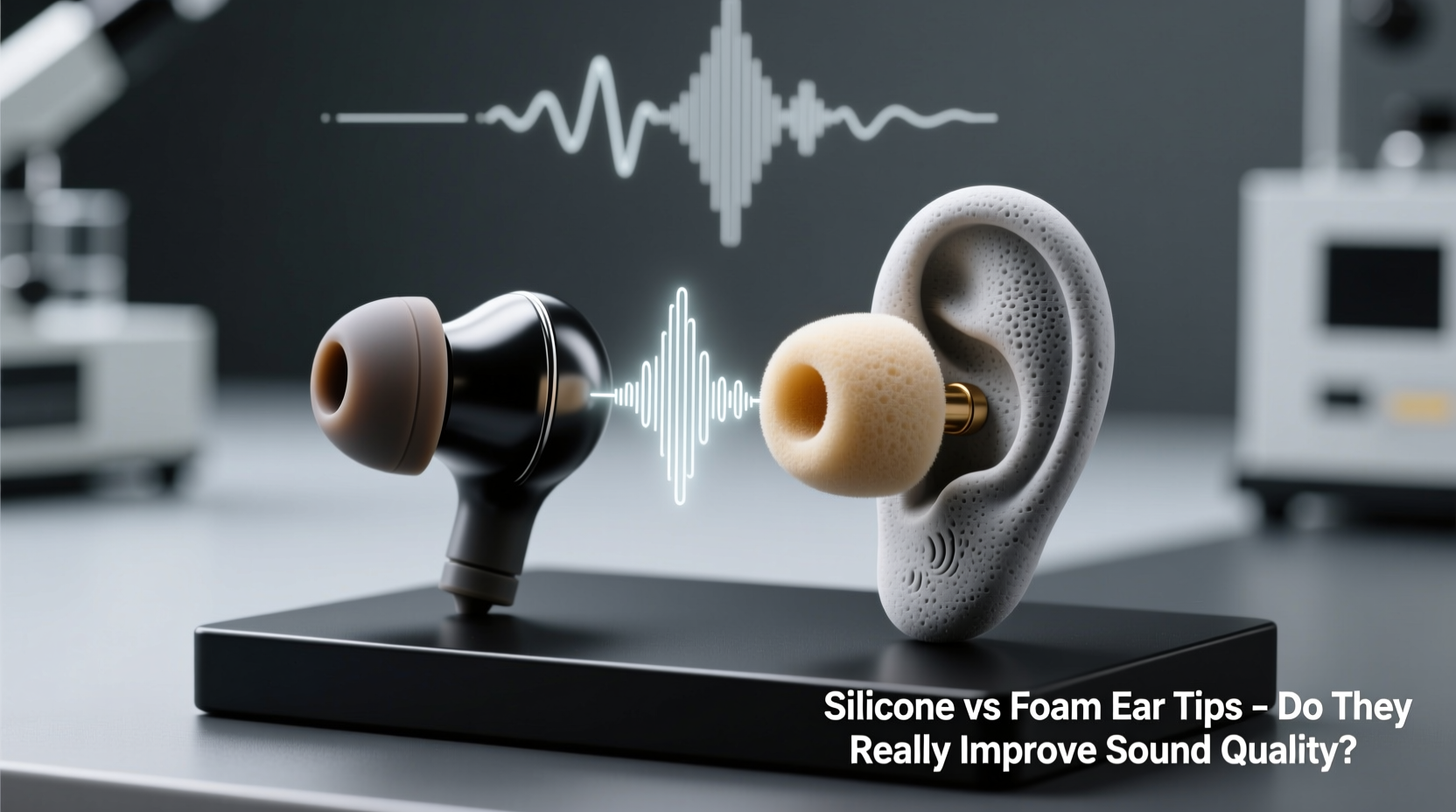
Ear tips serve more than just a comfort function—they are critical components in the acoustic chain. A proper seal between the earbud and the ear canal ensures optimal sound delivery by minimizing sound leakage and external noise interference. Without a good seal, low frequencies weaken, stereo imaging becomes diffuse, and overall clarity suffers.
The shape, material density, and fit of ear tips affect how sound waves travel into the ear. For example:
- Seal integrity: A tight seal prevents air from escaping, allowing bass notes to resonate fully inside the ear canal.
- Acoustic damping: Softer materials like memory foam absorb some high-frequency reflections, potentially smoothing harshness.
- Insertion depth: Deeper insertion (often achieved with foam tips) can shift frequency response, enhancing bass perception due to proximity effect.
In essence, switching ear tips isn't just about comfort—it's an acoustic tuning decision. Audiophiles and professionals alike often experiment with different tip types to “voicing” their earphones to suit specific music genres or environments.
Silicone Ear Tips: Durability Meets Consistency
Silicone ear tips are the standard inclusion with most in-ear monitors and consumer earbuds. They come in various shapes—single-flange, double-flange, triple-flange, and winged designs—offering flexibility in fit and stability.
Advantages:
- Durable and reusable: High-quality silicone resists tearing and degradation over months of use.
- Easy to clean: Can be wiped down with alcohol or mild soap without damage.
- Predictable sound profile: Provide a consistent frequency response across uses.
- Wide compatibility: Standard sizing fits most universal-fit IEMs.
Drawbacks:
- Less conforming: Rigid structure may not adapt perfectly to irregular ear canals.
- Potential slippage: During physical activity, single-flange tips may loosen.
- Less passive noise isolation: Compared to foam, silicone allows slightly more ambient noise in.
Silicone tips work best for users who prioritize longevity and hygiene. Their firm yet flexible nature provides reliable sealing when properly sized. Some audiophiles prefer them for analytical listening, where transparency and consistency matter more than sonic enhancement.
Foam Ear Tips: Superior Seal and Enhanced Bass
Foam ear tips—typically made from memory foam—are known for their compressibility and ability to mold precisely to the contours of the ear canal. Popular brands like Comply offer models designed specifically for enhanced audio performance and long-wearing comfort.
Advantages:
- Exceptional noise isolation: Up to 30–40% better than silicone, making them ideal for noisy environments.
- Improved bass response: The deep, snug fit increases sub-bass presence and impact.
- Custom-like fit: Expands slowly after insertion, creating a personalized seal.
- Reduced listener fatigue: Softer material reduces pressure points during extended use.
Drawbacks:
- Limited lifespan: Typically last 1–3 months before breaking down or losing resilience.
- Harder to maintain: Cannot be cleaned aggressively; water or alcohol may degrade foam.
- Slower insertion/removal: Require compression before insertion and time to expand.
- Hygiene concerns: Accumulate earwax and moisture more readily than silicone.
Foam tips are especially favored by travelers, commuters, and bass-heavy music lovers. Because they sit deeper and form a tighter seal, they effectively turn any compatible earbud into a semi-custom listening experience.
“Foam tips can add up to 5–7dB of passive noise attenuation compared to standard silicone. That’s equivalent to turning down the volume on a busy subway.” — Dr. Alan Reyes, Audio Acoustics Researcher, MIT Media Lab
Direct Comparison: Silicone vs Foam at a Glance
| Feature | Silicone Tips | Foam Tips |
|---|---|---|
| Sound Isolation | Moderate (20–25dB) | High (30–40dB) |
| Bass Response | Natural, controlled | Enhanced, warmer |
| Lifespan | 6+ months | 1–3 months |
| Comfort (Long Sessions) | Good | Excellent |
| Cleanability | Easy (soap/water/alcohol) | Limited (spot cleaning only) |
| Fit Adaptability | Medium (depends on flange count) | High (molds to ear shape) |
| Best For | Daily use, sports, hygiene-focused users | Noisy environments, bass lovers, long listening sessions |
Real-World Example: Commuter Upgrades Sound on a Budget
Consider Mark, a daily commuter in Chicago who uses Apple AirPods Pro. While satisfied with active noise cancellation (ANC), he noticed that bass felt thin on his favorite hip-hop tracks, especially on the ‘L’ train. After reading online discussions, he purchased a set of Comply Foam TIP-100s.
Upon installation, the difference was immediate. The foam tips expanded fully within 20 seconds, creating a deeper seal than his previous silicone sleeves. Not only did background train noise drop noticeably—even before turning on ANC—but the kick drums in Kendrick Lamar’s “HUMBLE.” gained punch and body. He found himself lowering the volume because the sound felt fuller at lower levels.
Mark didn’t upgrade his earbuds—he upgraded his ear tips. His experience illustrates how a $15 accessory can meaningfully enhance perceived sound quality, particularly in real-world conditions where environmental noise and imperfect fit degrade performance.
Choosing the Right Tip: A Step-by-Step Guide
Selecting between silicone and foam doesn’t have to be guesswork. Follow this practical process to determine what works best for your ears and lifestyle:
- Assess your environment: If you frequently listen in noisy places (gym, public transit, office), prioritize noise isolation—foam tips are likely superior.
- Evaluate comfort needs: Do you wear earbuds for hours? Foam generally offers better long-term comfort due to reduced pressure.
- Test your current seal: Play a track with deep bass. If it sounds weak or “boomy,” your tips may not be sealing properly. Try foam to see if bass tightens up.
- Experiment with sizes: Both silicone and foam come in small, medium, and large. Use the manufacturer’s sizing chart and test each size for comfort and sound balance.
- Monitor durability and hygiene: If you forget to clean your gear or sweat heavily, silicone may be easier to maintain.
- Compare sound signatures: Listen to the same song across both tip types. Note differences in clarity, bass weight, and soundstage width.
- Rotate based on use case: Keep foam tips for commuting and silicone for workouts or quick errands.
This methodical approach helps eliminate bias and ensures your choice is based on measurable improvements rather than marketing claims.
Expert Tips for Maximizing Performance
Regardless of material, how you use ear tips matters. Here’s a checklist to get the most from either type:
- ✅ Insert foam tips slowly and allow 15–20 seconds to expand fully.
- ✅ Replace foam tips every 4–8 weeks depending on usage.
- ✅ Clean silicone tips weekly with a damp cloth and mild detergent.
- ✅ Avoid forcing tips into earbuds; misalignment can cause leaks or damage.
- ✅ Store extra tips in a dry, cool place away from direct sunlight.
- ✅ Pair foam tips with ANC earbuds for cumulative noise reduction benefits.
FAQ: Common Questions About Ear Tips and Sound Quality
Do foam ear tips damage my earbuds?
No, high-quality foam tips are designed to fit standard nozzle diameters (usually 5–7mm). As long as they’re the correct size and inserted gently, they won’t harm your earphones. However, poorly made foam may leave residue or degrade quickly, so stick to reputable brands like Comply, SpinFit, or Azla.
Can changing ear tips void my warranty?
Generally, no. Using third-party ear tips does not void warranties unless they cause physical damage to the device. Manufacturers expect users to replace worn tips. Always check your product’s terms, but normal tip swapping is considered routine maintenance.
Why do my ears feel blocked with foam tips?
This sensation—known as the “occlusion effect”—occurs when the ear canal is deeply sealed, amplifying internal body sounds like chewing or heartbeat. It usually subsides as your brain adapts. If persistent, try a smaller foam size or switch back to silicone for a less intrusive seal.
Final Thoughts: Small Change, Big Impact
The debate between silicone and foam ear tips isn’t about declaring a universal winner—it’s about matching the right tool to the task. Silicone offers reliability, ease of care, and consistent performance. Foam delivers superior isolation, richer bass, and a custom-like fit that can transform mid-tier earbuds into high-fidelity tools.
Ultimately, both can improve sound quality—but in different ways. Silicone enhances consistency and longevity; foam enhances immersion and acoustic efficiency. The smartest listeners don’t choose one forever—they keep both on hand and switch based on need.
If you’ve never tried alternative ear tips, you may be missing out on a significant portion of your earbuds’ potential. A $10 investment in a pack of foam tips or ergonomic silicone sleeves could yield greater sonic returns than upgrading to a pricier model. Your ears deserve the best seal possible—because great sound starts not with the driver, but with the tip.




 浙公网安备
33010002000092号
浙公网安备
33010002000092号 浙B2-20120091-4
Comments
No comments yet. Why don't you start the discussion?