
For those seeking smoother hair and healthier skin overnight, the debate between silk and satin pillowcases is more than just aesthetic—it's functional. Both materials are praised for reducing friction, minimizing frizz, and preserving moisture in hair and skin. But when it comes to real-world performance, especially after repeated washing, one clearly outperforms the other in longevity and effectiveness. Understanding the differences in composition, texture, and care requirements helps clarify which option delivers lasting benefits.
The Science Behind Frizz Reduction
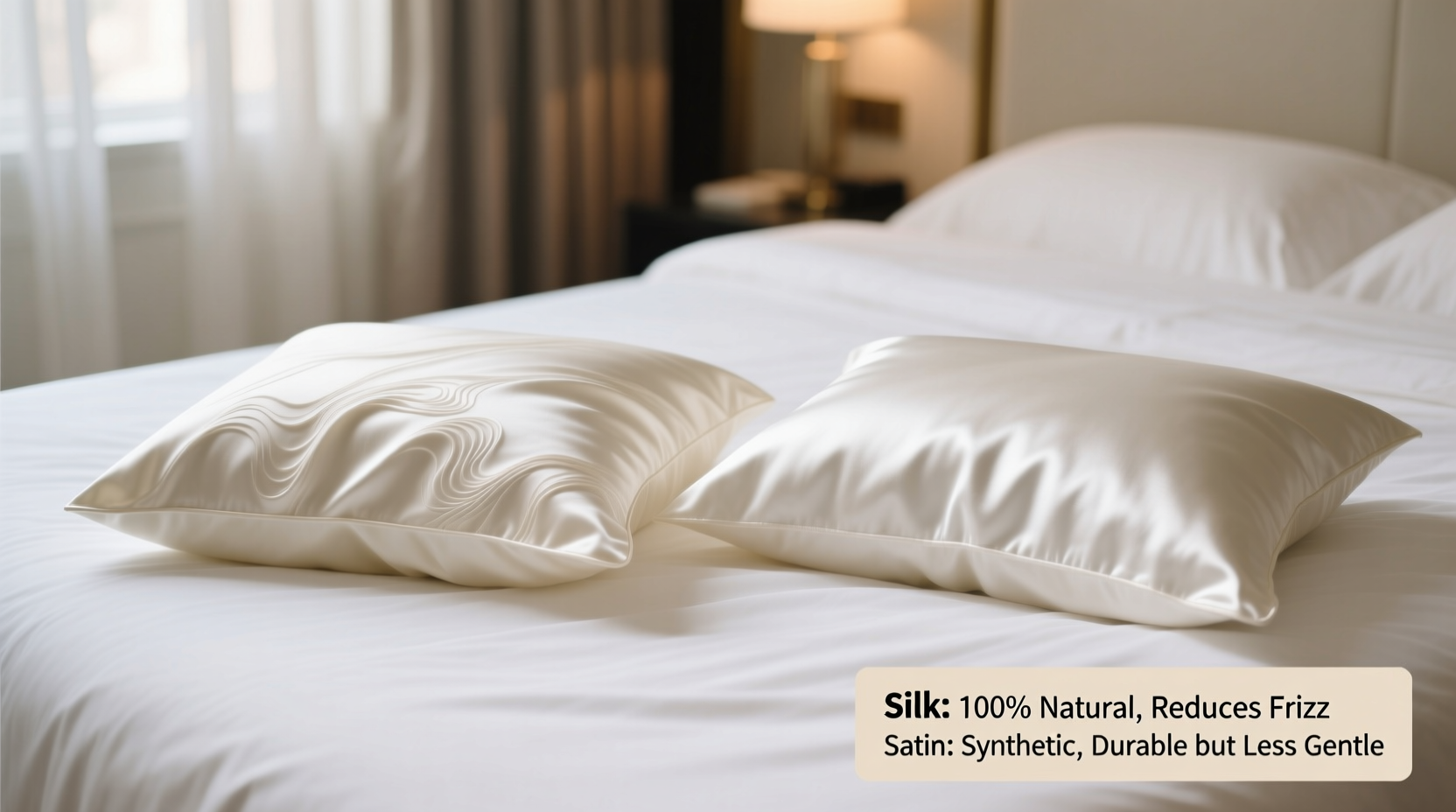
Frizz occurs when hair absorbs moisture from the air, causing the cuticle to lift. Cotton pillowcases, common in most households, are highly absorbent and create significant friction against strands during sleep. This friction strips natural oils, disrupts alignment, and increases tangles—especially in curly or textured hair types.
Silk and satin both offer a smoother surface than cotton, but their mechanisms differ. Silk is a natural protein fiber derived from silkworms. Its surface is inherently low-friction and less absorbent than cotton, helping retain hair’s natural oils. Satin, on the other hand, is not a fiber but a weave—typically made from polyester, nylon, or sometimes rayon. The tight, glossy weave creates a slick surface that mimics silk’s smoothness.
While both reduce friction, silk has a slight edge due to its natural structure. It doesn’t generate static electricity like synthetic satin, which can exacerbate flyaways. Additionally, silk wicks moisture without absorbing it, maintaining hydration in hair and skin throughout the night.
Durability Through Washes: Natural Silk vs Synthetic Satin
Longevity is where the distinction between silk and satin becomes critical. While satin may appear luxurious initially, its resilience under repeated laundering is significantly lower than genuine silk.
Polyester-based satin degrades faster when exposed to heat, agitation, and detergents. Over time, the fibers weaken, leading to pilling, loss of sheen, and eventual tearing. Most satin pillowcases begin to look worn after 15–20 machine washes, even with gentle cycles.
In contrast, high-quality mulberry silk—when properly cared for—can last two to three years or more with regular use. Silk’s tensile strength is comparable to steel (by weight), making it surprisingly durable despite its delicate feel. However, this lifespan depends heavily on washing methods. Hand-washing in cool water with mild detergent preserves integrity far better than machine cleaning.
“Silk maintains its structural integrity over hundreds of washes if treated correctly. Satin, especially polyester variants, breaks down much faster due to fiber degradation.” — Dr. Lena Patel, Textile Scientist at the Institute of Sustainable Materials
Material Comparison: Key Differences at a Glance
| Feature | Silk Pillowcase | Satin Pillowcase |
|---|---|---|
| Fiber Type | Natural protein fiber (mulberry silk) | Synthetic (usually polyester) or semi-synthetic (rayon) |
| Absorbency | Low – retains hair/skin moisture | Moderate to high – may absorb oils |
| Friction Level | Very low – smooth cuticle glide | Low – slippery surface, but prone to static |
| Wash Durability | High (100+ washes with proper care) | Moderate (30–50 washes before wear) |
| Heat Sensitivity | High – avoid hot water and dryers | Moderate – melts under high heat |
| Eco-Impact | Biodegradable, renewable resource | Non-biodegradable; microplastic shedding |
| Cost | Higher upfront ($80–$150) | Affordable ($20–$40) |
The table illustrates that while satin offers an accessible entry point, silk provides superior long-term value through durability, comfort, and environmental sustainability.
Step-by-Step Care Guide for Maximum Longevity
To get the most out of either material—especially silk—proper maintenance is non-negotiable. Follow this routine to extend the life of your pillowcase and maintain its frizz-fighting properties:
- Wash Every 5–7 Days: Oils, sweat, and product buildup degrade fibers over time. Regular cleaning prevents staining and bacterial growth.
- Use Cold Water Only: Hot water damages silk proteins and causes satin to shrink or melt slightly. Always opt for cold or lukewarm settings.
- Hand-Wash Preferred: Fill a basin with cool water and add a silk-safe detergent (like The Laundress Silk Shampoo). Gently agitate for 3–5 minutes. If using a machine, place the case in a mesh laundry bag and select “delicate” cycle.
- Rinse Thoroughly: Residual soap weakens fibers. Rinse until water runs clear.
- Air-Dry Flat or Hanging: Never tumble dry. Lay flat on a towel away from direct sunlight to prevent UV damage and color fading.
- Iron on Low (if needed): Use a pressing cloth and low heat only for silk. Satin should generally not be ironed unless specified by the manufacturer.
- Store Clean and Dry: Keep in a breathable cotton bag or drawer. Avoid plastic containers that trap moisture.
Real-World Example: One Year of Daily Use
Sophia, a freelance photographer with curly, type 3C hair, struggled with morning frizz and breakage. She purchased a $35 satin pillowcase expecting improvement. Initially, her hair felt smoother, but within four months, the fabric began to pill and lose its sheen. After six months, tiny tears appeared along the seams. Despite careful washing, the case looked worn and no longer reduced tangling effectively.
She then invested in a 22-momme mulberry silk pillowcase for $110. Following a strict hand-wash routine, she used it nightly for over 14 months. Even after frequent laundering, the fabric remained intact, retained its luster, and noticeably reduced frizz and split ends. Her scalp also experienced fewer dry patches, which she attributes to silk’s breathability and moisture retention.
This case highlights a broader trend: initial cost savings with satin often lead to replacement cycles every few months, whereas silk, though pricier, proves more economical over time.
Expert Recommendations for Choosing the Right Option
Not all silk pillowcases are created equal. To ensure you’re getting a product that truly performs, experts emphasize several key factors:
- Momme Weight: Choose 19–25 momme for optimal thickness and durability. Anything below 16 momme is too thin and prone to tearing.
- Thread Count Isn't Relevant: Unlike cotton, silk quality is measured in mommes (weight per square inch), not thread count.
- Check for OEKO-TEX Certification: Ensures the silk is free from harmful dyes and chemicals.
- Avoid \"Semi-Silk\" or \"Silk-Like\" Labels: These often refer to satin blends or artificial silk (e.g., viscose), which lack the benefits of true mulberry silk.
- Seam Quality: Look for French seams or double-stitched edges, which reinforce durability and prevent fraying.
“The best silk pillowcases feel substantial, not flimsy. If it feels transparent or tears easily, it’s likely under 19 momme and won’t last.” — Naomi Reed, Trichologist and Hair Wellness Consultant
Checklist: How to Buy a High-Quality Pillowcase That Lasts
Before purchasing, verify the following:
- ✅ Made from 100% mulberry silk (not satin or polyester)
- ✅ Minimum 19 momme weight (ideally 22)
- ✅ OEKO-TEX or GOTS certification for safety
- ✅ Includes care instructions and wash bag (for machine users)
- ✅ Double-stitched or French seams for reinforcement
- ✅ Sold by a reputable brand with transparent sourcing
Avoid products labeled “silk-feel” or “charmeuse,” as these are often synthetic weaves masquerading as silk.
Frequently Asked Questions
Can I put my silk pillowcase in the dryer?
No. Tumble drying—even on low heat—can damage silk fibers, causing shrinkage and weakening. Always air-dry flat or hang-dry away from direct sunlight.
Does satin help with frizzy hair?
Yes, temporarily. Satin reduces surface friction compared to cotton, so it can minimize tangles and frizz overnight. However, synthetic satin generates static and absorbs less moisture than silk, limiting its long-term effectiveness.
How do I know if my silk pillowcase is real?
Perform the “crunch test”: crumple the fabric in your hand. Genuine silk makes a soft crunching sound (called the *scroop* effect) and feels cool to the touch. Polyester satin remains silent and often feels warmer or plasticky.
Final Thoughts: Invest in Silk for Lasting Results
When comparing silk versus satin for frizz reduction and wash durability, silk emerges as the superior choice. While satin offers a budget-friendly alternative with short-term smoothing effects, it lacks the structural integrity, moisture regulation, and longevity of authentic mulberry silk. With proper care, a high-quality silk pillowcase can remain effective for years, delivering consistent benefits for hair and skin health.
The initial investment pays off not only in performance but also in sustainability—fewer replacements mean less waste. For anyone serious about reducing frizz, preventing breakage, and waking up with smoother, more manageable hair, genuine silk is the clear winner.




 浙公网安备
33010002000092号
浙公网安备
33010002000092号 浙B2-20120091-4
Comments
No comments yet. Why don't you start the discussion?