
In a world saturated with messaging about products, services, and brands, few ideas cut through the noise as powerfully as Simon Sinek’s “Start With Why.” Introduced in his 2009 book Start With Why: How Great Leaders Inspire Everyone to Take Action, this concept centers on the Golden Circle—a simple but transformative framework that explains how the most influential organizations and leaders achieve extraordinary results. More than just a business theory, it’s a philosophy of human motivation, decision-making, and purpose-driven action.
The Golden Circle challenges conventional thinking by flipping the script on how we communicate value. Instead of leading with what we do, Sinek argues, truly inspiring entities lead with why they do it. This shift isn’t cosmetic—it taps into the limbic brain, the part responsible for feelings, trust, and loyalty, enabling deeper connections and sustained influence.
The Structure of the Golden Circle
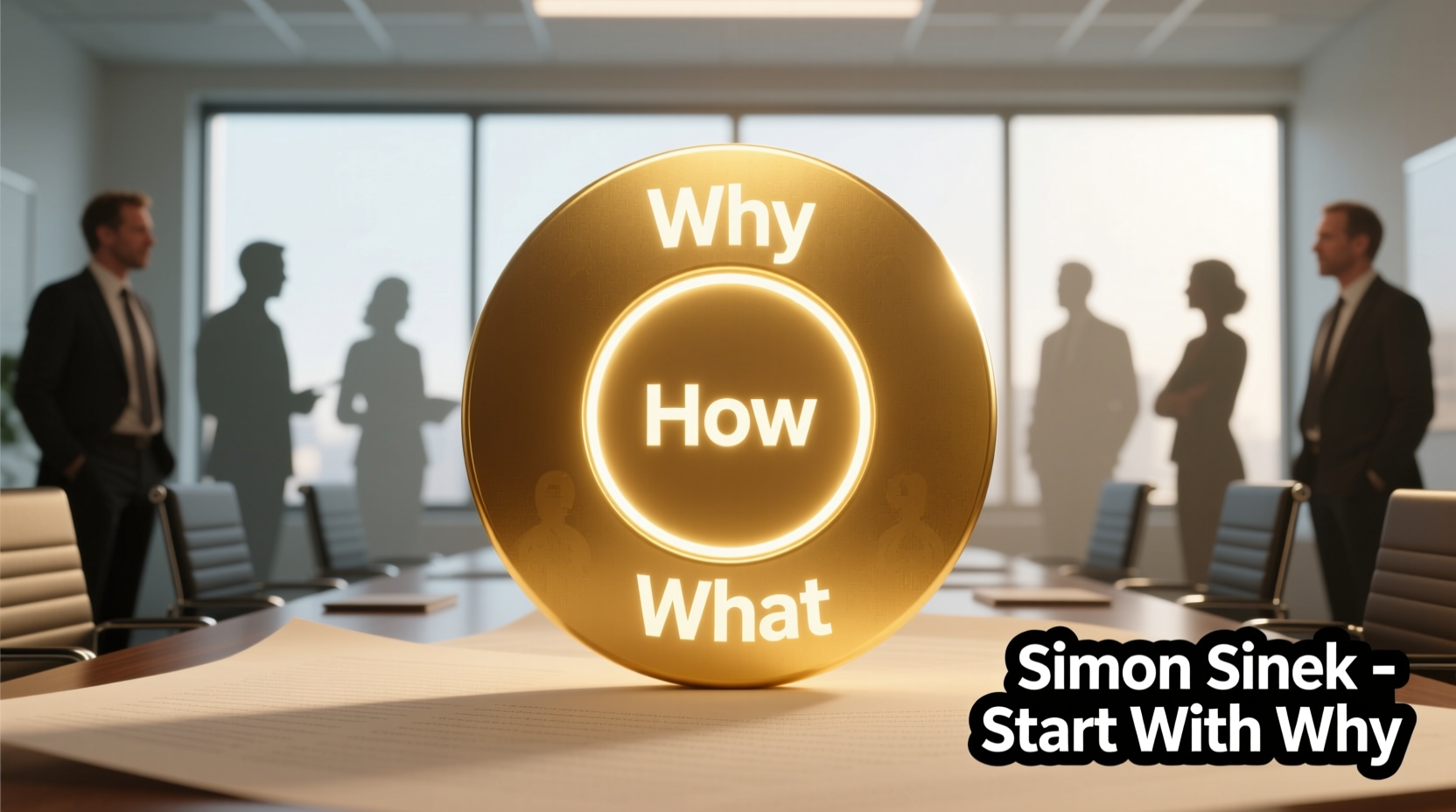
Sinek’s Golden Circle consists of three concentric layers:
- Why – Your purpose, cause, or belief. Why does your organization exist beyond making money?
- How – Your process or unique value proposition. How do you bring your why to life?
- What – The tangible product or service you offer. What do you actually do?
Most companies operate from the outside in: they tell people what they do, maybe mention how they’re different, and rarely clarify their why. But inspired leaders and organizations—like Apple, Martin Luther King Jr., and the Wright brothers—communicate from the inside out. They begin with why, creating emotional resonance before detailing logistics.
Why the Golden Circle Works: Neuroscience Meets Leadership
The effectiveness of the Golden Circle isn’t just anecdotal—it’s rooted in biology. Sinek draws on neuroscience to explain how communication impacts behavior. The neocortex (the outer layer of the brain) handles rational thought and language—this is where “what” information is processed. But deeper down, the limbic brain governs emotions, decision-making, and behavior without language.
When a message starts with why, it speaks directly to the limbic brain. People don’t just understand the logic—they feel the purpose. This feeling builds trust, loyalty, and advocacy. Consider Apple’s classic “Think Different” campaign. It didn’t focus on megahertz or memory; it celebrated rebels, dreamers, and innovators—people who believed in changing the world. That’s a why-driven message.
“People don’t buy what you do, they buy why you do it.” — Simon Sinek
This insight reframes everything from hiring to customer retention. Employees who believe in the why are more engaged. Customers who align with the why become evangelists. Organizations built on why attract talent and loyalty not through incentives, but through shared belief.
Real-World Application: A Mini Case Study
Consider two tech startups launching smartwatches. Startup A leads with features: “Our watch has a 48-hour battery, GPS tracking, and heart rate monitoring.” Startup B begins differently: “We believe everyone should live intentionally. Our technology helps you stay present, healthy, and connected to what matters.”
Both may offer similar hardware, but Startup B speaks to identity and values. It doesn’t sell a gadget—it invites users into a movement. Over time, customers of Startup B are more likely to forgive minor flaws, recommend the product, and remain loyal—even at a higher price point. This is the power of starting with why.
In contrast, companies that lack a clear why often rely on manipulation—price cuts, promotions, fear-based advertising—to drive action. These tactics work short-term but erode trust and make competition a race to the bottom.
Building Your Own Why: A Step-by-Step Guide
Finding your why isn’t always intuitive, especially in established organizations. Here’s a practical timeline to uncover and articulate it:
- Reflect on origins: Why did you or your organization start? What problem were you trying to solve?
- Identify patterns: Look across key decisions, milestones, and successes. What beliefs guided them?
- Interview stakeholders: Talk to employees, long-time customers, and partners. Ask: “What do you think we stand for?”
- Draft your why statement: Keep it concise, timeless, and belief-oriented. Example: “To empower every person and every organization on the planet to achieve more.” (Microsoft)
- Test it internally: Does it inspire your team? Does it guide tough decisions?
- Communicate consistently: Infuse the why into hiring, branding, customer service, and leadership messaging.
Common Pitfalls and How to Avoid Them
Even well-intentioned efforts can misfire. Below is a comparison of effective versus ineffective approaches to the Golden Circle:
| Aspect | Do’s | Don’ts |
|---|---|---|
| Defining Why | Focus on purpose, not profit. Make it human-centered. | Use vague terms like “excellence” or “success” without context. |
| Communication | Lead with why in all messaging—internal and external. | Save the why for the end of a presentation or website footer. |
| Leadership | Leaders model the why daily through decisions and actions. | Delegating “culture” while prioritizing quarterly metrics alone. |
| Growth | Scale only when new hires and markets align with the core belief. | Expand rapidly without ensuring cultural or philosophical fit. |
Expert Insight: Beyond Business
The Golden Circle applies far beyond corporate boardrooms. Educators, nonprofits, political movements, and individuals benefit from clarity of why. As Sinek notes:
“If you don’t know why you do what you do—and people respond to why you do what you do—then how will you ever get people to vote for you, or buy something from you, or follow you?” — Simon Sinek
This principle reshapes personal development. When individuals define their own why—whether as a parent, entrepreneur, or community leader—they make choices aligned with meaning, not just convenience. Purpose becomes the compass, not the résumé.
FAQ
Can a company change its why?
Yes, but it must be authentic. A revised why should reflect a genuine evolution in values, not a rebranding tactic. Employees and customers will notice the difference between sincerity and spin.
What if our why isn’t unique?
Uniqueness isn’t the goal—clarity and consistency are. Many companies share similar whys (e.g., “improving lives”), but what sets them apart is how deeply they live it. Authenticity trumps originality.
How do I measure the impact of starting with why?
Look beyond sales. Track employee retention, referral rates, brand sentiment, and customer lifetime value. Inspired organizations see stronger intangible metrics even during downturns.
Checklist: Is Your Organization Truly Starting With Why?
- Can every team member articulate the company’s why in their own words?
- Do hiring decisions prioritize cultural alignment over just skill fit?
- Is the why visible in day-to-day operations, not just on the website?
- Do leaders regularly connect strategic decisions back to the core purpose?
- Are customers described as believers or advocates, not just buyers?
- When faced with a tough choice, does the why serve as the deciding factor?
Conclusion
The enduring importance of Simon Sinek’s Start With Why and the Golden Circle lies in their simplicity and depth. In an age of distraction, the organizations and leaders who endure are those who stand for something meaningful. They don’t chase trends—they set them, because they begin with a question far more powerful than “what”: Why?
Whether you're building a startup, leading a team, or shaping your personal path, returning to your why isn’t optional—it’s essential. It transforms transactions into relationships, employees into disciples, and products into movements. The world doesn’t need more companies selling things. It needs more leaders willing to stand up and say, clearly and confidently, why they exist.




 浙公网安备
33010002000092号
浙公网安备
33010002000092号 浙B2-20120091-4
Comments
No comments yet. Why don't you start the discussion?