
Dicing a mango may seem straightforward, but many people struggle with slippery skins, uneven cuts, or losing precious fruit to the pit. A perfectly diced mango should be clean, consistent, and maximize yield without waste. Whether you're preparing a tropical fruit salad, blending a smoothie, or garnishing a dessert, mastering the right technique makes all the difference. With the correct tools and method, you can turn a ripe mango into neat cubes in under two minutes—without staining your hands or bruising the flesh.
Why Proper Mango Dicing Matters
A mango is more than just a sweet tropical treat—it's a nutrient-rich fruit packed with vitamin C, fiber, and antioxidants. However, its unique anatomy—a large central seed surrounded by soft, fibrous flesh—makes it tricky to handle. Poor dicing leads to wasted fruit, inconsistent pieces, and frustration. The goal is not only efficiency but also safety and presentation. When done correctly, dicing enhances both flavor distribution and visual appeal in dishes.
Professional chefs and home cooks alike agree: the method matters. Using the wrong approach can result in jagged edges, crushed pulp, or even knife slips due to unstable cutting surfaces. Learning a reliable, repeatable process ensures you get the most out of every mango, regardless of ripeness or variety.
The Three-Step Method: Safe, Fast, and Efficient
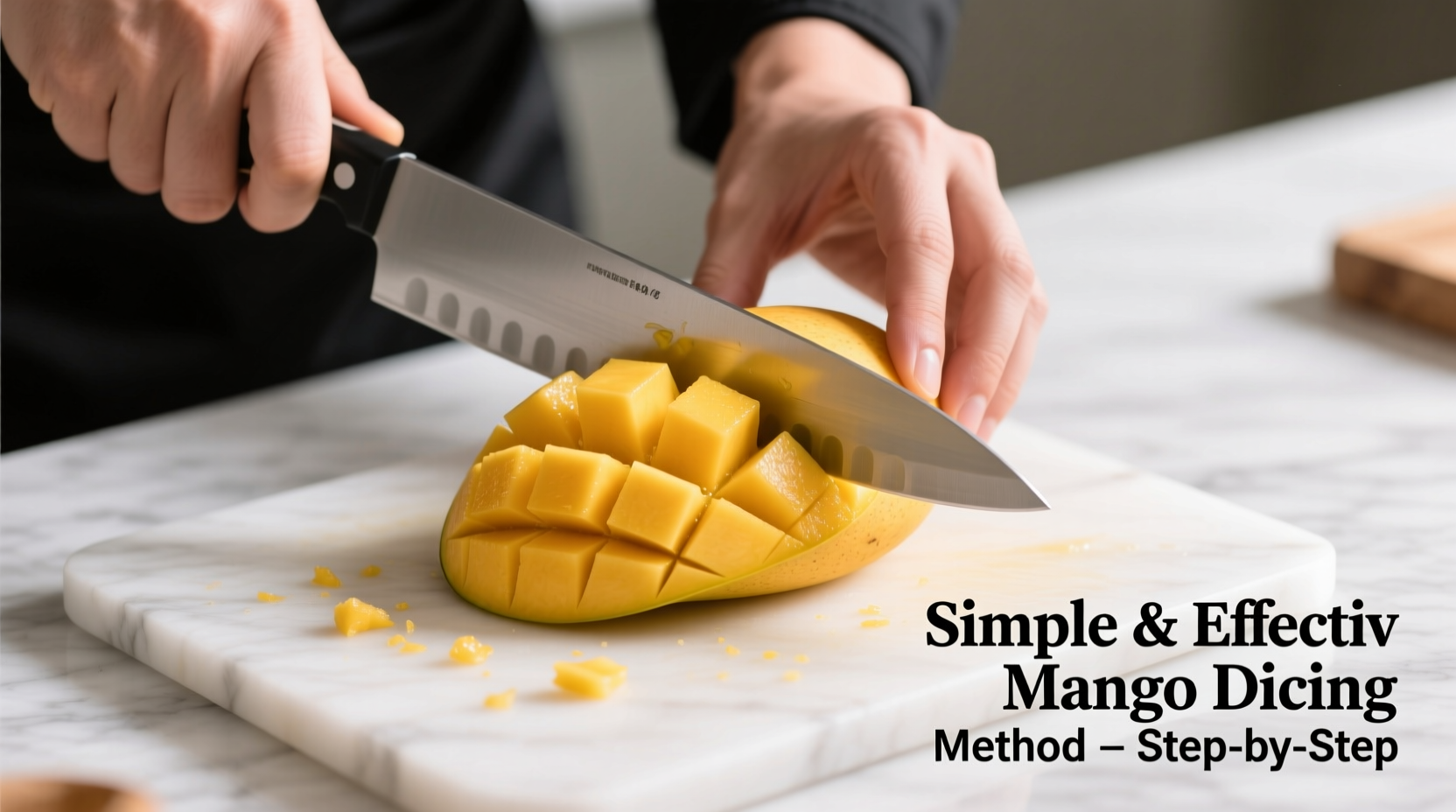
The most widely recommended technique for dicing a mango involves three distinct phases: slicing the cheeks, scoring the flesh, and turning it inside out. This method minimizes contact with the skin, reduces mess, and delivers uniform cubes ideal for eating or cooking.
- Slice off the cheeks: Hold the mango vertically with the stem end up. Identify the flat side of the large oval seed in the center. Using a sharp chef’s knife, slice down one side of the seed, about ¼ inch from the center line. Repeat on the other side to remove both “cheeks.”
- Score the flesh: Take one mango cheek and place it cut-side up. Make lengthwise and crosswise cuts through the flesh (not the skin), creating a grid pattern. Keep the cuts even—about half an inch apart—for consistent cubes.
- Turn inside out: Gently push the skin side inward so the scored cubes pop outward like a hedgehog. Now, run your knife along the surface to cleanly separate the cubes from the peel. Repeat with the second cheek.
Handling the Remaining Center Section
The narrow center portion surrounding the seed still contains edible fruit. To extract it safely:
- Hold the seed section firmly on a cutting board.
- Carefully slide your knife along the curved edges to shave off any clinging flesh.
- Rotate and repeat until only the bare seed remains.
Alternative Techniques for Different Needs
While the “hedgehog” method is ideal for fresh consumption, alternative approaches suit specific recipes or skill levels.
Method 1: The Bowl Flip (No Knife on Flesh)
This version eliminates direct knife work on the mango flesh, enhancing safety. After removing the cheeks, invert each piece into a bowl. Score as usual, then use a large spoon to scoop the cubes directly off the skin. Ideal for beginners or when serving guests.
Method 2: Peeling and Cubing (For Purees or Jams)
If you’re blending or cooking the mango, consider peeling it first. Use a vegetable peeler to remove the skin after slicing off the cheeks. Then dice the peeled flesh on a cutting board. This method prevents any bitterness from residual skin but requires slightly more precision.
Method 3: Using a Mango Splitter Tool
Specialty tools like mango splitters or dicers can speed up the process. These devices typically split the fruit around the seed and include built-in blades for scoring. While convenient, they offer less control over cube size and aren’t always effective on firmer or irregularly shaped mangos.
| Method | Best For | Pros | Cons |
|---|---|---|---|
| Hedgehog (Scoring & Flipping) | Fresh fruit salads, garnishes | Precise, minimal waste, no special tools | Requires some practice |
| Bowl Flip | Beginners, kids’ snacks | Safer, easy cleanup | Slightly slower |
| Peel-and-Cube | Jams, sauces, smoothies | No skin bits, full control | More prep time, risk of slipping |
| Mango Dicer Tool | High-volume prep | Fast, consistent results | Limited versatility, extra cost |
Common Mistakes and How to Avoid Them
Even experienced cooks make errors when dicing mangos. Recognizing these pitfalls helps refine your technique:
- Cutting too close to the seed: The seed is tough and can dull your knife. Leave a small buffer zone when slicing the cheeks.
- Using a dull knife: A sharp blade glides through mango flesh cleanly. A dull one crushes the fruit and increases slippage risk.
- Over-scoring the flesh: Deep cuts pierce the skin and make flipping difficult. Cut just deep enough to reach the peel.
- Ignoring ripeness: Underripe mangos are hard and fibrous; overripe ones turn mushy. Aim for slight give when pressed.
Expert Insight: What Top Chefs Recommend
“Efficiency starts with understanding the fruit’s structure. With mangos, symmetry is key. Always orient the seed vertically and respect its shape. One clean slice per cheek saves time and preserves texture.” — Chef Rafael Mendez, Executive Pastry Chef at Coral Sands Resort
Chef Mendez emphasizes consistency: “In professional kitchens, we train staff to score every mango the same way—half-inch grids, same depth, same flip technique. It ensures even cooking and elegant plating.”
Mini Case Study: From Frustration to Mastery
Sophia, a home cook from Miami, used to dread dicing mangos. She’d lose half the fruit trying to peel it or end up with uneven chunks that fell apart in her salsa. After watching a demonstration using the hedgehog method, she practiced twice with ripe Ataulfo mangos. By the third attempt, she was dicing a mango in 90 seconds with nearly zero waste. “I finally understood where to cut,” she said. “Now I use it for everything—from yogurt toppings to mango lassis.”
Essential Checklist for Perfect Mango Dicing
Follow this quick checklist before you begin:
- ✅ Choose a ripe mango (slightly soft at the stem end)
- ✅ Use a sharp, non-serrated knife
- ✅ Work on a stable, non-slip cutting board
- ✅ Wash the mango thoroughly (skin can carry residues)
- ✅ Prepare a bowl to collect cubes immediately after cutting
Frequently Asked Questions
Can I dice an unripe mango?
Yes, but it will be firmer and more fibrous. Unripe mangos are often used in savory dishes like salads or chutneys. Use extra care when cutting, as the flesh resists the knife more than ripe fruit.
Is mango skin safe to eat?
Technically yes, but it’s tough and can have a bitter, resinous taste. Some people experience mild irritation due to urushiol (the same compound found in poison ivy), especially if sensitive. It’s best to remove the skin unless juicing or blending.
How do I prevent my diced mango from browning?
Mangos oxidize slowly, but to preserve color and freshness, toss the cubes with a few drops of lemon or lime juice and store in an airtight container in the refrigerator for up to 2 days.
Final Thoughts: Turn Skill Into Habit
Dicing a mango doesn’t require culinary school training—just the right method and a little practice. Once you’ve mastered the three-step process, you’ll find yourself reaching for mangos more often, confident you can prepare them quickly and cleanly. Whether you're feeding a family, hosting a brunch, or simply treating yourself to a healthy snack, a well-diced mango elevates the experience.




 浙公网安备
33010002000092号
浙公网安备
33010002000092号 浙B2-20120091-4
Comments
No comments yet. Why don't you start the discussion?