
Bangle bracelets are timeless accessories, valued for their elegance and cultural significance. However, finding the perfect fit can be challenging—especially when a cherished piece is slightly too loose or snug. Rather than setting aside a favorite bangle or spending money on professional resizing, many adjustments can be made safely at home. With basic tools and a bit of patience, you can modify your bangle’s size effectively and preserve its integrity. This guide covers practical, proven techniques suitable for various materials, including metal, wood, and plastic.
Understanding Bangle Sizing Basics
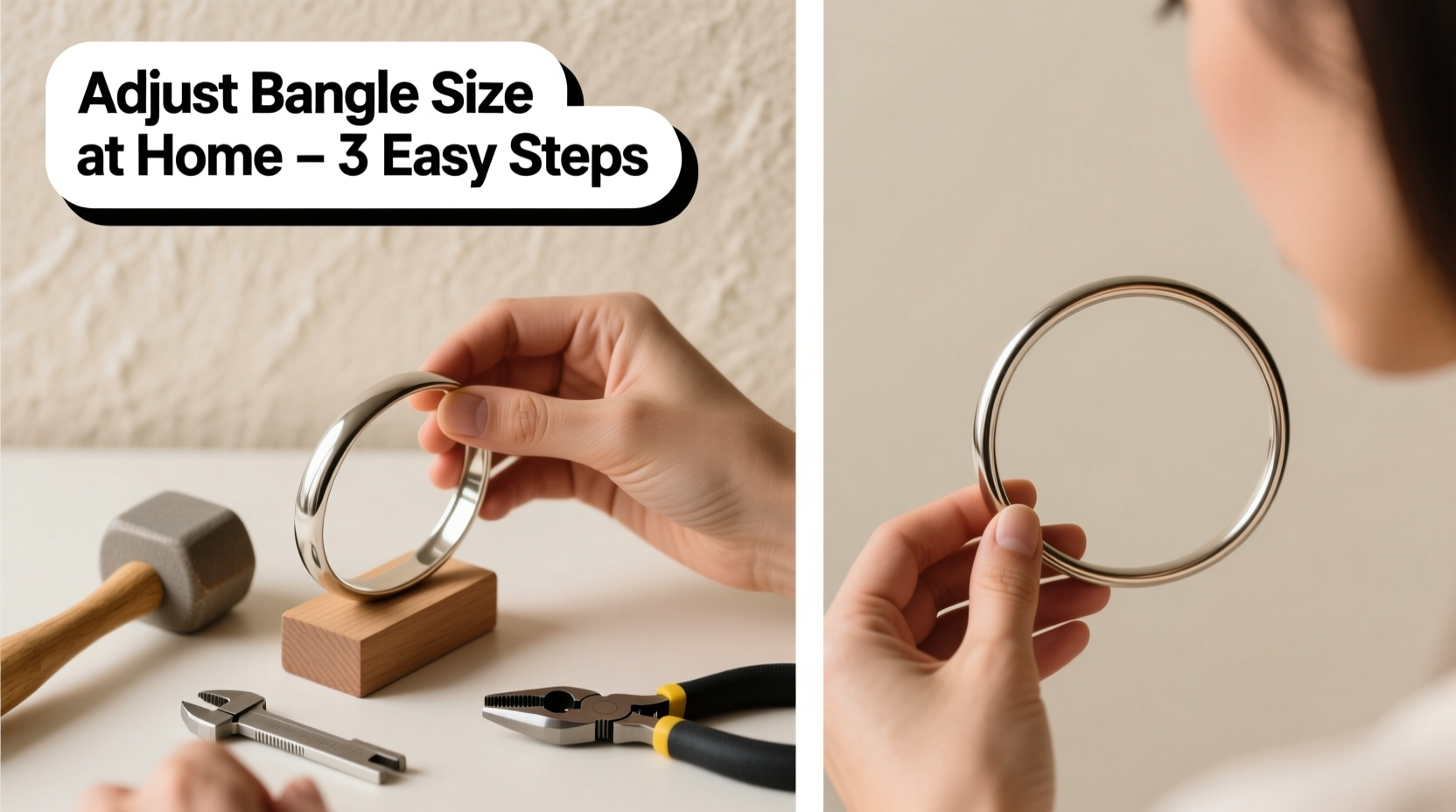
The fit of a bangle depends on both its inner diameter and the flexibility of the material. Unlike chain bracelets, bangles typically do not have clasps, so they must slide over the hand. The average wrist size for women ranges from 6 to 7 inches, but hand width—especially across the knuckles—is often the limiting factor for bangle wear. A well-fitting bangle should pass over the hand with slight resistance and rest comfortably on the wrist without spinning excessively.
Before attempting any adjustment, measure your wrist and hand:
- Use a flexible measuring tape to determine your wrist circumference just below the wrist bone.
- Measure the widest part of your hand (usually across the knuckles) to ensure the bangle can slide on.
- Compare these measurements to the bangle’s inner diameter, which can be calculated by multiplying the inside width by π (3.14).
Method 1: Using Heat and Flexing for Plastic or Resin Bangles
Plastic, acrylic, and resin bangles respond well to controlled heat application. These materials can be gently reshaped without cracking if handled correctly. This method works best for reducing the size of a bangle that’s slightly too large.
Step-by-Step Guide:
- Boil water in a kettle or pot until steaming (not boiling vigorously).
- Carefully place the bangle into the hot water using tongs. Let it soak for 1–2 minutes.
- Remove the bangle and immediately wrap it around a cylindrical object slightly smaller than your desired size (e.g., a glass bottle or tapered jar).
- Hold in place for 2–3 minutes as it cools and sets into the new shape.
- Test the fit once fully cooled. Repeat if necessary.
This technique relies on thermoplastic properties—heat makes the material pliable, allowing it to be reformed. Avoid overheating, as this can cause warping or bubbles.
“Reshaping plastic bangles with heat is safe if done gradually. Rushing the process leads to cracks.” — Lila Patel, Jewelry Artisan & Designer
Method 2: Adding Internal Spacers or Cushions
For bangles that are too loose but cannot be resized due to material or sentimental value, internal spacers offer a non-invasive solution. This method preserves the original condition while improving fit.
Common materials used include:
- Silicone tubing (available at hardware stores)
- Felt strips glued inside the bangle rim
- Elastic cord sections taped into the interior
To apply silicone tubing, cut a length slightly shorter than the bangle’s inner circumference to allow for compression. Press it into the inner groove. Felt pads can be adhered with a small amount of jewelry-safe adhesive.
| Spacer Type | Best For | Durability |
|---|---|---|
| Silicone Tubing | Metal, plastic bangles | High – reusable and washable |
| Felt Pads | Delicate or vintage pieces | Medium – may compress over time |
| Elastic Cord | Temporary fix | Low – prone to fraying |
Method 3: Adjusting Metal Bangles with Gentle Bending
Solid metal bangles (such as brass, silver, or gold-plated) can sometimes be resized by careful bending. This method requires caution to avoid kinking or breaking the metal.
What You’ll Need:
- A soft cloth or rubber padding
- A sturdy cylindrical object (like a dowel or bottle)
- Gloves to protect your hands
Process:
- Place the bangle over a form that matches your target size (smaller for tightening, larger for loosening).
- Wrap the contact points with a soft cloth to prevent scratches.
- Apply slow, even pressure with your palms, working around the circle symmetrically.
- Check the fit frequently to avoid over-bending.
Hollow metal bangles are more susceptible to denting and should be handled minimally. Solid bangles tolerate minor adjustments better. Never use pliers directly on the surface, as they can leave permanent marks.
Real-Life Example: Reviving a Heirloom Bangle
Sophie inherited a thin silver bangle from her grandmother. While the design was beautiful, it spun constantly on her narrow wrist. She didn’t want to alter the antique piece permanently. Instead, she measured the inner diameter and found it was 2.5 inches—ideal for a 7-inch hand, but her knuckle span was only 6.75 inches. After testing several options, she cut a 2-inch section of clear silicone tubing and pressed it into the interior at the bottom of the bangle. The added grip reduced slippage significantly, allowing the bangle to stay in place without modification. The fix was invisible and removable, preserving the heirloom’s original state.
Method 4: String or Chain Extenders for Tight Bangles
If a bangle is slightly too tight to slip over your hand, a flexible extender can help. This is especially useful for rigid bangles made of wood, lacquer, or thick metal.
Create a temporary bridge using:
- A thin silk cord
- A delicate chain
- A stretchy nylon thread
Attach one end to the bangle’s interior near the opening (if there is a slight gap), run it across the back, and secure the other end. When worn, the flexible section allows the bangle to expand just enough to slide over the hand, then snaps back into place. This is not suitable for daily wear but works well for occasional use.
Do’s and Don’ts of DIY Bangle Adjustment
| Do | Don’t |
|---|---|
| Test fit frequently during adjustment | Apply force unevenly or suddenly |
| Use protective padding when bending | Expose delicate finishes to excessive heat |
| Opt for reversible fixes on valuable pieces | Use super glue or harsh adhesives |
| Work in a clean, stable environment | Attempt repairs on brittle or cracked bangles |
FAQ
Can I resize a wooden bangle at home?
Wooden bangles are generally not resizable due to their rigidity and susceptibility to cracking. Instead, use internal felt pads or silicone inserts to improve grip and reduce movement.
Will heating damage my metal bangle?
Most solid metal bangles tolerate brief exposure to hot water, but prolonged or intense heat can discolor plating or weaken soldered joints. Avoid open flames or ovens.
How do I know if my bangle can be safely bent?
Inspect for seams, cracks, or hollow construction. Solid, seamless bangles are safer to adjust. If the bangle makes a tinny sound when tapped, it may be thin-walled and prone to denting.
Final Checklist for Safe Home Resizing
- Measure your wrist and hand accurately.
- Identify the bangle’s material and construction.
- Choose a resizing method compatible with the material.
- Gather appropriate tools and protective gear.
- Proceed slowly and test the fit incrementally.
- Preserve reversibility when possible, especially for heirlooms.
- Store adjusted bangles separately to prevent deformation.
Conclusion
Adjusting your bangle bracelet size at home doesn’t require specialized tools or expertise—just a clear understanding of the material and a patient approach. Whether you’re using heat to reshape plastic, adding discreet cushions, or carefully bending metal, each method offers a practical path to a better fit. The key is to prioritize preservation, especially with sentimental or valuable pieces. By applying these techniques thoughtfully, you can enjoy your favorite bangles comfortably and confidently.




 浙公网安备
33010002000092号
浙公网安备
33010002000092号 浙B2-20120091-4
Comments
No comments yet. Why don't you start the discussion?