
A stopped quartz wall clock is more than just an inconvenience—it disrupts routines, undermines decor, and can signal deeper mechanical issues. Fortunately, most problems that cause a quartz clock to stop are straightforward and often solvable without professional help. With basic tools and a methodical approach, you can diagnose and fix the issue in under an hour. This guide walks through common causes, practical solutions, and preventive steps to keep your timepiece ticking reliably.
Understanding How Quartz Wall Clocks Work
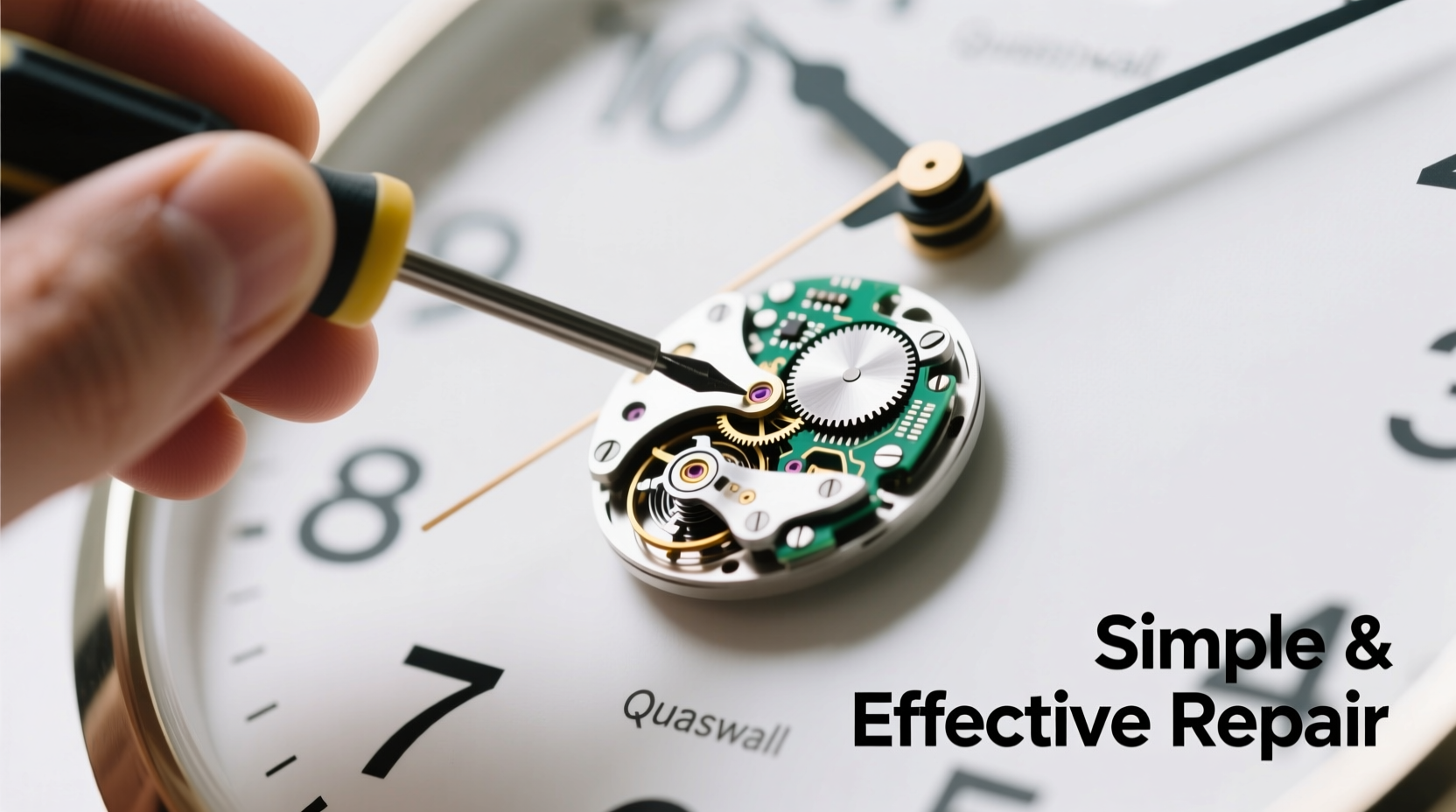
Quartz clocks rely on a battery-powered electronic oscillator regulated by a quartz crystal. When current flows from the battery, it vibrates the crystal at a precise frequency—typically 32,768 times per second. These vibrations are converted into regular electrical pulses that drive a small stepper motor, which in turn moves the clock hands. Because this system depends on both mechanical and electrical components, failure can stem from power issues, mechanical resistance, or environmental factors.
Unlike mechanical clocks, quartz models require minimal maintenance but are sensitive to poor battery quality, dust buildup, and misaligned hands. Identifying where the system fails is the first step toward repair.
Step-by-Step Diagnosis and Repair Process
Before disassembling anything, follow a logical sequence to isolate the problem. Rushing into replacement parts or complex fixes may waste time and money.
- Check the battery: Remove the battery and inspect for corrosion or leakage. Use a multimeter to test voltage—if below 1.3V for a standard AA or AAA, replace it.
- Inspect the hands: Look closely at whether any hand is touching another or the dial face. Even slight contact creates resistance that stops the motor.
- Listen for ticking: A working quartz movement produces a consistent tick once per second. No sound suggests motor failure or power interruption.
- Test the movement: If possible, connect the existing movement to a fresh battery outside the clock case to see if it runs independently.
- Examine the pendulum (if applicable): Some decorative quartz clocks have a simulated pendulum driven by a separate gear. If jammed, it may overload the motor.
Common Fixes You Can Do Today
Replace the Battery Correctly
The most frequent cause of a stopped clock is a dead battery. However, not all batteries perform equally. Alkaline batteries last longer and provide stable voltage compared to cheaper zinc-carbon types. Insert the new battery ensuring correct polarity—reversed placement won’t damage modern movements but will prevent operation.
Clear Hand Interference
If one hand touches another or the clock face, the motor cannot overcome the friction. Gently bend the offending hand away using needle-nose pliers, applying pressure near the hub rather than the tip to avoid deformation. Recheck alignment after each adjustment.
Clean Dust and Debris
Dust accumulation inside the movement housing can impede gear rotation. Use compressed air to blow out particles. Avoid liquid cleaners or lubricants unless replacing the entire movement—modern quartz mechanisms are sealed and pre-lubricated.
Reset the Time Mechanism
Sometimes, setting the time incorrectly jams the internal gears. Pull the time-setting knob out fully and rotate the hands forward (never backward aggressively) until they reach 12:00. Release and observe. If the second hand jumps erratically or stalls, the movement may need replacement.
Replace the Clock Movement
If none of the above work, the movement itself has likely failed. Replacement units cost $5–$15 and come with mounting hardware and instructions. Match the shaft length and thread size to your existing model. Installation typically takes less than 10 minutes: remove the old movement, insert the new one through the dial, secure with a nut, then reattach hands in order—second, minute, hour—and finally install the battery.
| Issue | Likely Cause | Solution |
|---|---|---|
| No ticking sound | Dead battery or faulty connection | Replace battery; clean contacts |
| Ticking but hands not moving | Hand interference or stripped gear | Adjust hands; inspect for damage |
| Erratic jumping or stuttering | Misalignment or weak power | Re-seat battery; reset hands |
| Clock runs briefly then stops | Corroded terminals or failing movement | Clean battery compartment; replace movement |
Preventive Maintenance Checklist
- 🔋 Replace batteries annually, even if still functional, to avoid leakage.
- 🧼 Wipe down the case and glass monthly with a dry microfiber cloth.
- 🌬 Use compressed air every six months to clear dust around the movement.
- 🔧 Check hand alignment quarterly for signs of rubbing.
- 🌡 Avoid placing clocks in humid areas like bathrooms or near heating vents.
- 🔌 Store spare batteries properly—heat and moisture reduce shelf life.
Real Example: Reviving a Family Heirloom Clock
Susan inherited a vintage-style quartz wall clock from her grandmother. It had stopped three weeks after hanging it in her dining room. She replaced the battery immediately, but the second hand only twitched. After checking online, she realized the minute hand was slightly bent and touching the second hand. Using tweezers, she carefully lifted the minute hand upward at the base, creating a small gap. Upon reinserting a fresh alkaline battery, the clock resumed ticking normally. Susan now checks the alignment twice a year and replaces the battery every October, keeping the clock running as a daily tribute.
“Most quartz clock failures aren’t due to movement defects—they’re preventable issues caused by environment, installation error, or delayed maintenance.” — Daniel Ruiz, Horology Technician & Watch Repair Instructor
Frequently Asked Questions
Why does my clock stop even with a new battery?
This usually indicates either hand interference, corroded battery contacts, or a failing movement. Clean the terminals with a cotton swab dipped in vinegar, ensure hands aren’t touching, and test the movement independently. If it still doesn’t run, replacement is the best option.
Can I use rechargeable batteries in my quartz wall clock?
Technically yes, but not recommended. Rechargeable AA batteries typically output 1.2V instead of 1.5V, which may fall below the threshold needed for consistent motor performance. They also discharge faster when idle. For wall clocks, use high-quality alkaline batteries for optimal reliability.
How long should a quartz clock movement last?
With proper care, a standard quartz movement lasts 10–15 years. Factors like temperature swings, humidity, and battery leakage shorten lifespan. Regular maintenance significantly extends durability.
Conclusion: Keep Time Moving Forward
A stopped quartz wall clock doesn’t mean retirement. In most cases, the fix is simpler than expected—often requiring nothing more than a fresh battery or minor hand adjustment. By understanding how these clocks operate and following systematic troubleshooting steps, you regain control over their performance. Don’t let a silent clock gather dust when a few minutes of attention can restore its rhythm. Apply these strategies today, establish a light maintenance routine, and enjoy accurate, dependable timekeeping for years to come.




 浙公网安备
33010002000092号
浙公网安备
33010002000092号 浙B2-20120091-4
Comments
No comments yet. Why don't you start the discussion?