
If your washing machine finishes a cycle but leaves behind a pool of soapy water, you're dealing with a drainage issue—one of the most common appliance problems homeowners face. While it may seem like a reason to call a technician immediately, many causes are simple to identify and resolve on your own. With a few basic tools and some methodical troubleshooting, you can often fix a washing machine that isn’t draining properly without spending a dime on professional help.
Understanding how your washer’s drainage system works is key: water exits through a pump, travels via a hose, and connects either to a standpipe or laundry sink drain. Blockages, mechanical failures, or electrical faults at any point in this path can halt drainage. The good news? Most issues fall into predictable categories, each with clear remedies.
Step-by-Step Guide: Diagnosing and Fixing Drainage Issues
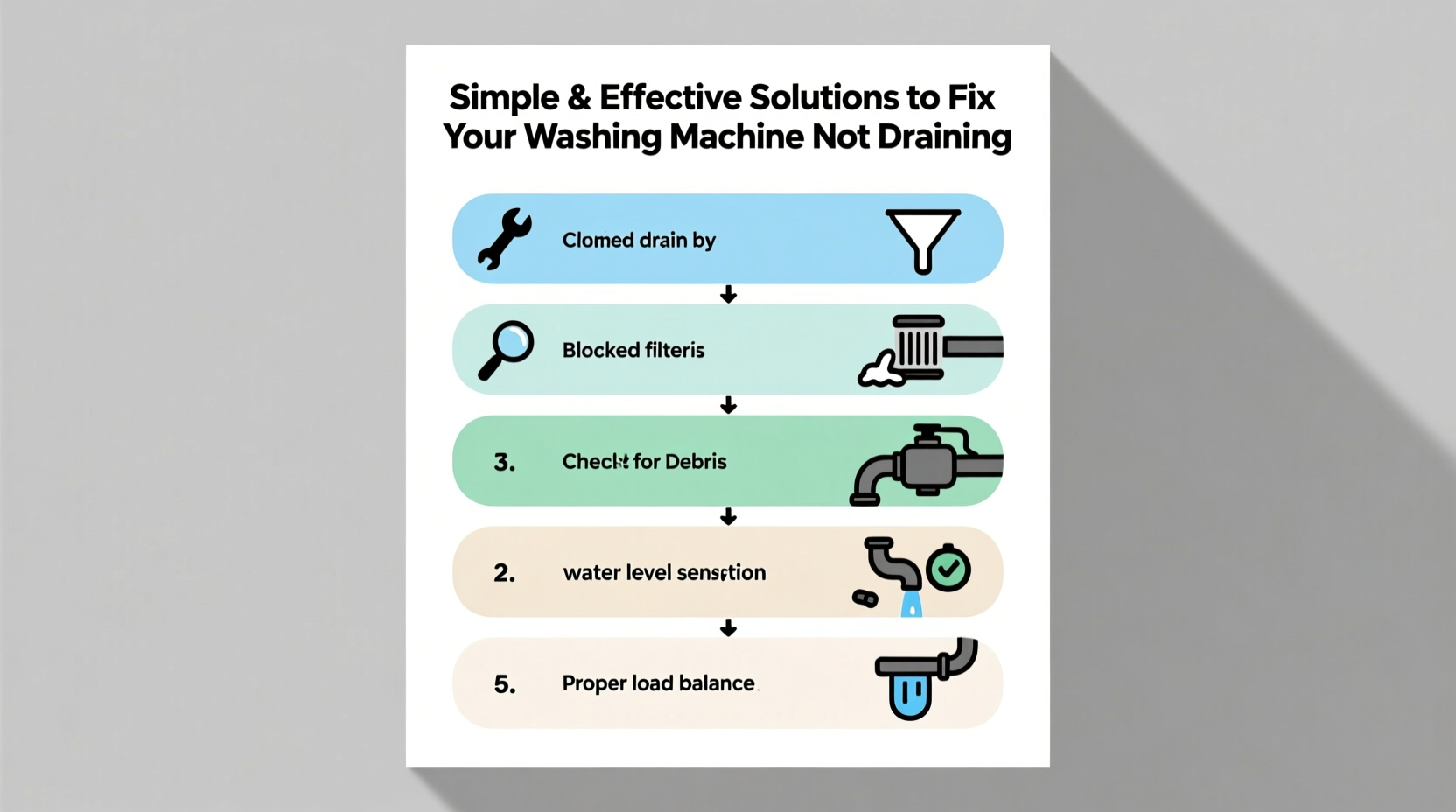
Before disassembling anything, start with the simplest possibilities. Follow this logical sequence to pinpoint and solve the problem efficiently.
- Unplug the machine for safety before performing any inspection or repair.
- Check if the cycle was interrupted. Some washers pause drainage if the lid is opened mid-cycle. Close it and restart the spin cycle.
- Inspect the drain hose for kinks, crushing, or improper height. A hose looped too high can create an airlock, preventing proper siphoning.
- Examine the lint filter or coin trap (common in front-load models). Remove any debris such as socks, hair, coins, or buttons.
- Listen for the drain pump. Restart the cycle and listen near the bottom of the machine. If you hear humming but no water movement, the pump may be jammed or failing.
- Test the pump manually by disconnecting and checking for impeller resistance or visible damage.
- Verify the drain hose connection to the standpipe or wall inlet. Ensure it's secure and not clogged.
Common Causes and Their Solutions
Drainage failure rarely stems from a single cause. Below are the most frequent culprits—and how to address them.
Clogged Drain Hose or Pump Filter
Over time, lint, fabric fibers, and small objects accumulate in the pump filter or drain hose. Front-loading machines typically have an accessible filter at the front lower panel. Turn off the power, place a shallow pan underneath, and slowly unscrew the filter cap. Remove any gunk, rinse the filter, and reassemble.
For top loaders, check where the hose attaches to the tub. Disconnect carefully and flush the hose with a garden hose to remove internal buildup.
Faulty Drain Pump
The drain pump forces water out during the spin cycle. If it’s burned out or its impeller is broken, water stays in the drum. Signs include a loud grinding noise or complete silence when drainage should occur. Use a multimeter to test for continuity. No reading means the pump needs replacement—a task requiring basic mechanical skill but often under $50 in parts.
Kinked or Improperly Installed Drain Hose
A hose bent sharply or raised more than 8 feet above the floor can prevent proper gravity-fed drainage. Ensure the hose forms a smooth arc into the standpipe, never secured tightly with zip ties that compress the interior. Also, avoid inserting the hose too deeply into the drain pipe, which can cause back-siphoning.
Lid Switch Failure (Top-Load Models)
Safety mechanisms prevent spinning and draining if the lid switch isn’t engaged. If the switch is faulty, the machine thinks the lid is open even when closed. Test by pressing the switch manually while listening for a click. Replace if unresponsive—most cost between $20–$40.
Clogged Standpipe or Wall Drain
If multiple appliances share the same drain line (e.g., washer and sink), sludge buildup can block water exit. Run hot water down the standpipe or use a plumber’s snake to clear obstructions. Pouring a mixture of baking soda and vinegar followed by boiling water can also dissolve organic residue.
| Issue | Symptoms | Solution |
|---|---|---|
| Clogged filter/hose | Water remains; gurgling sounds | Clean filter, flush hose |
| Failed drain pump | No sound, burning smell | Replace pump |
| Kinked drain hose | Slow or partial drainage | Reposition hose |
| Faulty lid switch | Lid closes but no spin/drain | Test and replace switch |
| Blocked standpipe | Backup into other drains | Snake or flush drain |
Expert Insight: What Professionals See Most Often
“Over 60% of ‘broken’ washing machines we get called for are actually just clogged filters or twisted hoses. Homeowners overlook the simplest fixes because they assume it’s a major part failure.” — Carlos Mendez, Appliance Repair Technician with 15 years of field experience
Regular maintenance dramatically reduces the risk of sudden drainage failure. Technicians emphasize that preventive habits—like cleaning the filter every three months and avoiding overloading—save both money and frustration.
Mini Case Study: Sarah’s Saturday Surprise
Sarah noticed her front-loader wasn’t finishing cycles. Water pooled at the bottom after every wash. Instead of calling a repair service, she watched a five-minute tutorial and located the access panel. She found a tangled sock wrapped around the impeller and a filter packed with pet hair. After clearing both, the machine drained perfectly. Total time: 12 minutes. Cost: $0.
This scenario reflects a typical real-world case. Most drainage problems aren’t due to manufacturing defects but everyday wear and user habits. Simple vigilance makes a significant difference.
Essential Maintenance Checklist
Prevention is always better than repair. Use this checklist monthly to keep your washing machine running smoothly:
- ✅ Clean the drain pump filter
- ✅ Inspect the drain hose for cracks or bends
- ✅ Wipe door seals (front-loaders) to prevent mold buildup
- ✅ Run a hot water cycle with vinegar monthly to clear residue
- ✅ Check that the machine is level—tilting can impair drainage
- ✅ Avoid overusing detergent, which creates excess suds that hinder pumping
Frequently Asked Questions
Why does my washer drain sometimes but not others?
Inconsistent drainage often points to a partial blockage or a failing pump that works intermittently. It could also stem from suds buildup interfering with sensor operation. Try a hot water clean cycle and inspect the hose for debris.
Can I use a drain cleaner like Drano in my washing machine?
No. Chemical drain cleaners can damage rubber hoses, pump components, and internal seals. They’re designed for kitchen sinks, not appliance plumbing. Stick to mechanical cleaning or natural flushes (baking soda and vinegar).
Is it worth fixing an older washing machine that won’t drain?
It depends on age and overall condition. If your machine is under seven years old and otherwise functioning well, repairs are usually cost-effective. For units over ten years old with recurring issues, replacement may offer better long-term value and energy efficiency.
Conclusion: Take Control Before Calling for Help
A washing machine that won’t drain doesn’t automatically mean disaster. In most cases, the fix is simpler than expected—often within reach of any homeowner willing to spend 20 minutes with a wrench and a bucket. By understanding the common causes, following a structured approach, and practicing routine maintenance, you can avoid unnecessary service calls and extend the life of your appliance.
Don’t let standing water ruin your laundry day. Equip yourself with knowledge, act promptly, and restore your machine’s performance with confidence.




 浙公网安备
33010002000092号
浙公网安备
33010002000092号 浙B2-20120091-4
Comments
No comments yet. Why don't you start the discussion?