
Wearing a watch is more than just checking the time—it’s a statement of style, precision, and personal identity. But when the link comes loose or the band stretches over time, many people assume they need to visit a jeweler or buy special equipment. That’s not always true. With a few household items and careful technique, you can safely reattach or resize your watch band at home. This guide walks through practical, tested methods that require no professional tools, ensuring your timepiece stays secure and comfortable on your wrist.
Understanding Watch Band Types
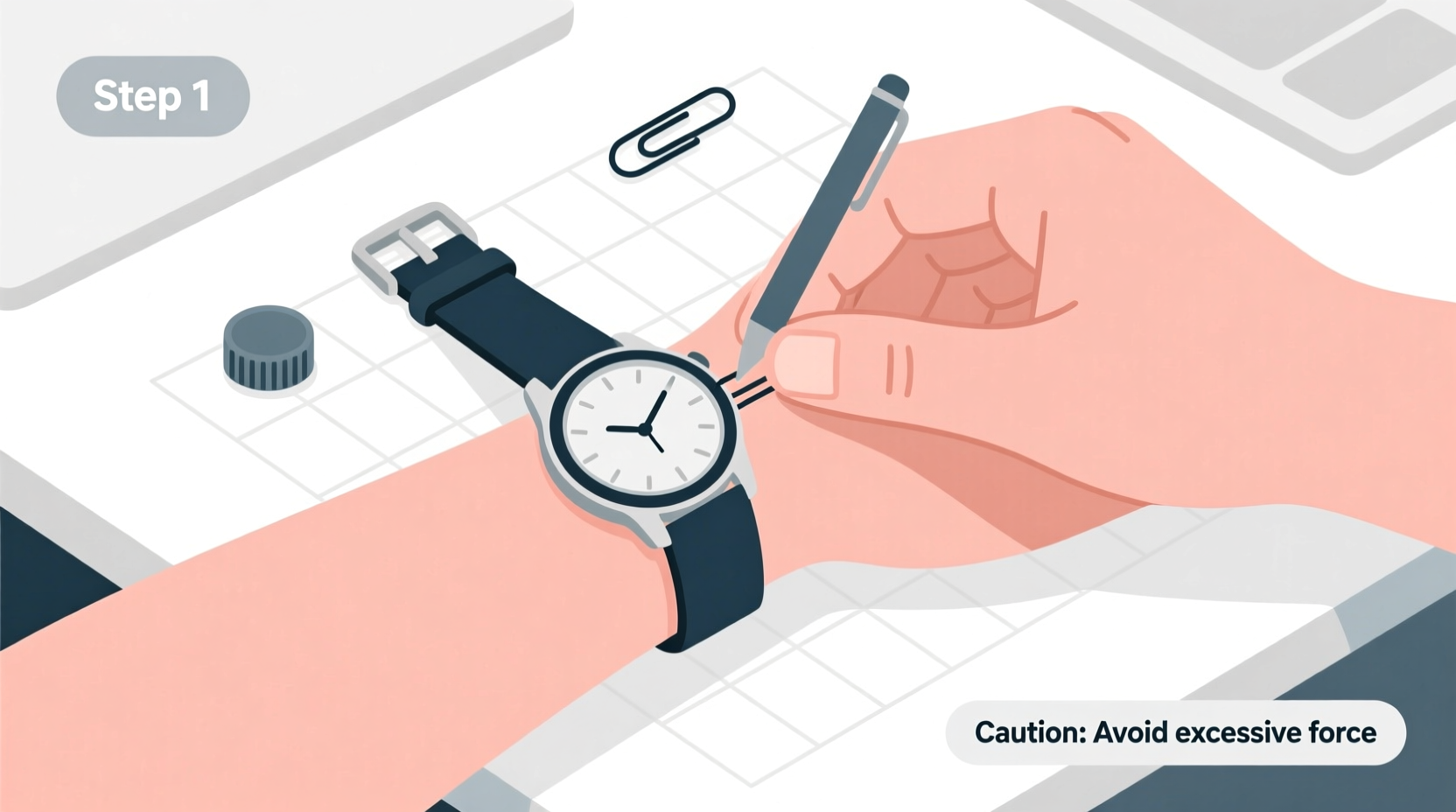
Before attempting any adjustment, it's essential to know what kind of band you're working with. The method you use depends heavily on the material and construction of the band.
- Metal bands: Typically made of stainless steel or titanium, connected by pins or screws. These often require pin removal for resizing.
- Leather or fabric straps: Attached via spring bars. These are easier to handle and usually involve swapping or reinserting a small metal rod.
- Rubber or silicone bands: Common in sport watches; attached similarly to leather but more flexible and durable.
Knowing your band type helps you choose the right approach and avoid damaging the clasp or links.
Essential Household Items You Can Use
You don’t need a full toolkit to manage basic watch adjustments. Many common household objects can serve as substitutes for professional tools. Here’s what you likely already have:
| Tool Needed | Household Substitute | Notes |
|---|---|---|
| Spring bar removal tool | Small paperclip or safety pin | Bend into a straight, rigid shape with a narrow tip |
| Pin pusher | Nail file or thin nail (e.g., 1-inch finishing nail) | Use gently to avoid bending the pin |
| Work surface | Folded towel or soft cloth | Prevents scratches and keeps parts from rolling away |
| Tweezers | Toothpick or needle-nose pliers (gently) | For handling tiny pins or spring bars |
The key is patience and control. Rushing increases the risk of losing small components or scratching the case.
Step-by-Step Guide: Reattaching a Watch Strap Safely
If your watch strap has come off—especially leather, rubber, or NATO-style bands—the process is straightforward. Most of these use spring bars, which sit inside the lugs (the protrusions on the watch case) and hold the strap in place.
- Prepare your workspace: Lay down a soft towel on a flat surface. Keep all tools and small parts contained in one area.
- Inspect the spring bar: Ensure it’s intact and the ends are not flattened. A damaged spring bar won’t lock properly.
- Align the strap: Slide one end of the spring bar into the lug hole on one side of the watch. Hold it steady.
- Compress and insert: Using a bent paperclip or safety pin, press the exposed end of the spring bar inward while guiding the other end into the opposite lug. You’ll feel a slight click when it seats.
- Test stability: Gently tug the strap to confirm it’s secure. It should move slightly (as designed) but not detach.
This same method works for removing a broken strap or replacing it with a new one. Always work slowly—spring bars can eject suddenly if released under tension.
Adjusting a Metal Bracelet Without Tools
Resizing a metal bracelet at home is trickier but possible without a pin press. Most metal bands use removable links held by pins that slide out horizontally.
“Many modern watches use half-pins or friction-fit links that can be manipulated carefully with household items.” — Daniel Reeves, Watch Technician & Horology Instructor
Follow this timeline-based process:
- Minute 0–5: Count how many links need removal. Measure your wrist and compare to the current fit.
- Minute 5–10: Locate the removal arrows on the underside of the links. These indicate the direction the pins must be pushed.
- Minute 10–20: Place the watch on a soft surface. Use a small nail or thick pin to gently tap the pin outward. Apply steady pressure—do not hammer.
- Minute 20–30: Remove the necessary links and reassemble the band. Reinsert the pin from the correct side (follow arrow directions).
- Minute 30–35: Test the fit. The clasp should close securely and the watch should sit snugly without sliding.
If the pin resists, don’t force it. Some pins are riveted and meant for professional servicing only. In such cases, stop and consult a jeweler.
Real Example: Fixing a Loose NATO Strap at Home
Sophia, a teacher and avid runner, noticed her favorite NATO strap had slipped off during a morning jog. The spring bar had partially ejected, leaving the strap dangling. Instead of waiting for a repair shop, she used a folded handkerchief and a large paperclip.
She straightened the paperclip, inserted one end of the spring bar into the left lug, then compressed the other end with the clip while aligning it with the right lug. After two careful attempts, she heard the familiar click. She tested it by shaking her wrist—no movement. The fix took less than ten minutes, and she wore the watch confidently the rest of the week.
This example shows that even under pressure, a calm, methodical approach yields reliable results.
Checklist: Safe DIY Watch Reattachment
Before starting, go through this checklist to ensure success and safety:
- ✅ Identify your band type (metal, leather, rubber, NATO)
- ✅ Gather household tools (paperclip, nail, tweezers, soft cloth)
- ✅ Work in a clean, well-lit space with minimal distractions
- ✅ Locate and follow any directional arrows on metal links
- ✅ Handle spring bars with care—keep fingers clear of ejection path
- ✅ Test fit and function before regular wear
- ❌ Do not force stuck pins or use excessive heat/moisture
Common Mistakes to Avoid
Even with good intentions, mistakes happen. Here are frequent errors and how to prevent them:
| Mistake | Consequence | How to Avoid |
|---|---|---|
| Using pliers directly on pins | Damaged threads or bent components | Use a protective layer like rubber tubing or wooden block |
| Ignoring removal arrows | Pins won’t budge or break | Always check the inner side of links for directional indicators |
| Working over hard surfaces | Scratched case or lost parts | Always use a padded, contained workspace |
| Reassembling incorrectly | Uneven fit or weak connection | Double-check alignment and secure both ends fully |
FAQ
Can I resize a watch band every time it feels loose?
It’s best to limit resizing to significant changes in fit. Frequent removal and reinsertion of pins can wear down the holes or weaken the clasp mechanism. Consider using an adjustable micro-clasp or sizing bracelet for minor adjustments.
What if the spring bar keeps popping out?
This usually means the spring bar is too short or worn out. Replace it with one matching your watch’s lug width (typically 1.2mm, 1.5mm, or 1.8mm). Measure the old bar or consult your model’s specs.
Are all metal watch pins removable?
No. Some watches use solid end links or welded pins designed for permanent assembly. If a pin doesn’t move with gentle pressure, it’s likely not meant for DIY removal. Seek professional help to avoid damage.
Final Thoughts
Putting your watch back on without professional tools is entirely feasible—with the right knowledge and caution. Whether you’re reattaching a leather strap after a swim or tightening a loose metal band, everyday items can stand in for specialized gear. The real skill lies in patience, attention to detail, and respecting the delicate mechanics of your timepiece.
By mastering these simple techniques, you gain independence from service centers for minor fixes and extend the life of your watch through proactive care. Don’t let a loose strap interrupt your day. With confidence and care, you can keep your watch secure, stylish, and running smoothly—all on your own terms.




 浙公网安备
33010002000092号
浙公网安备
33010002000092号 浙B2-20120091-4
Comments
No comments yet. Why don't you start the discussion?