
Adjusting the size of a metal watch band is often necessary for comfort and fit, but many people assume it requires a trip to a jeweler or expensive tools. In reality, removing clock links—the individual segments of a metal watch bracelet—can be done safely at home using common household items. With patience and precision, you can resize your watch band without damaging the clasp, pins, or finish. This guide walks through practical techniques, safety considerations, and real-world tips to help you achieve professional-looking results without specialized equipment.
Understanding Watch Link Construction
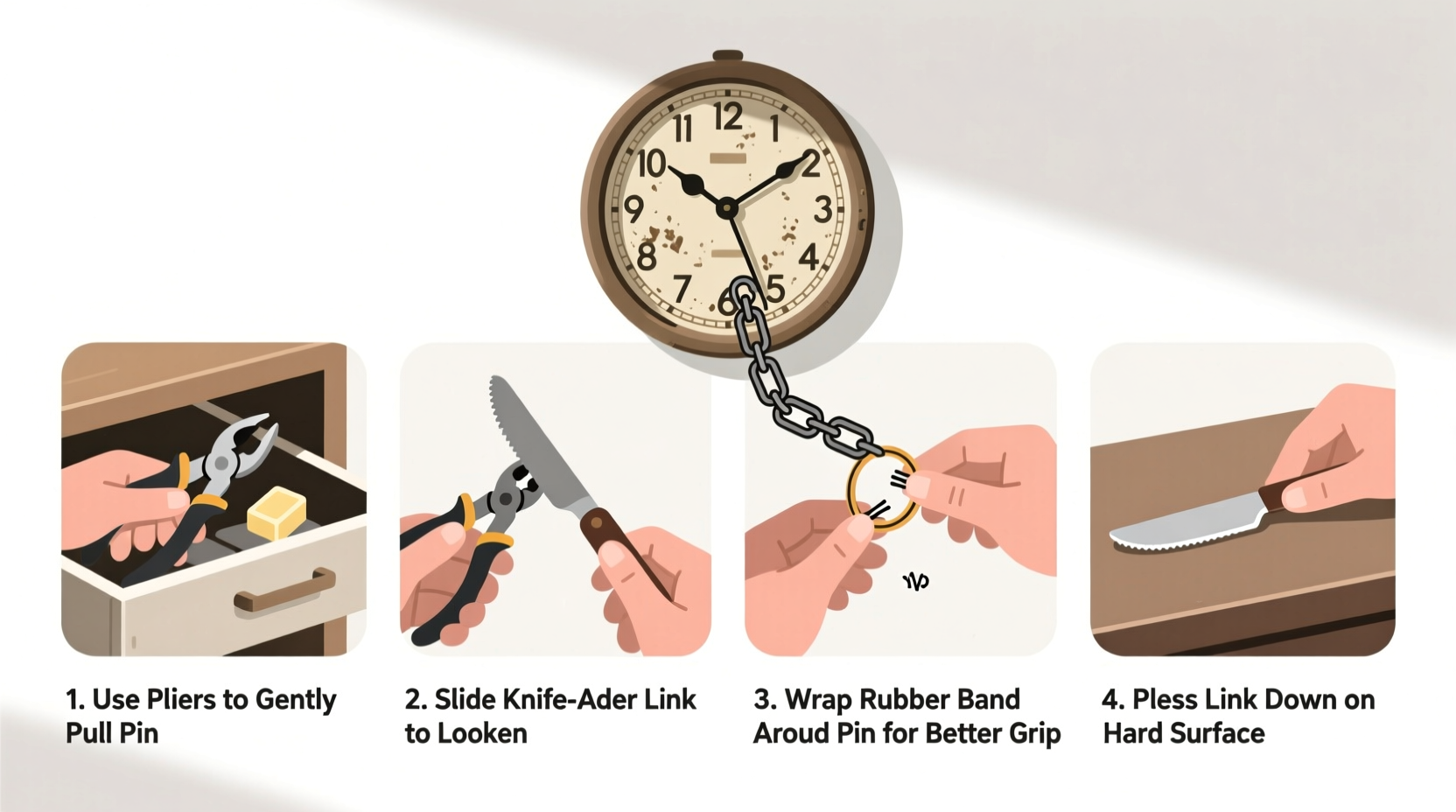
Metal watch bands are typically made up of multiple small links connected by tiny pins or screws. These pins hold the links together and allow the band to flex around the wrist. Most bands have removable links on either side of the clasp to adjust length. Identifying whether your watch uses spring bars, solid pins, or screw-in links is crucial before beginning any removal process.
Many modern watches use push-pin construction, where the connecting pins are held in place by tension rather than threads. Others may use threaded screws that require a small screwdriver. Inspect your band closely: if you see small arrows stamped inside the back of certain links, these indicate which direction the pins should be pushed out.
Essential Household Tools You Can Use
You don’t need a professional watch repair kit to remove links. Many tools found in a standard home toolkit can serve as effective substitutes:
- Thumbtack or pin: Useful for gently pushing out link pins when aligned with the hole.
- Small hammer (or nail set): A lightweight hammer can tap pins carefully when paired with a thin, sturdy object like a needle or awl.
- Needle-nose pliers: Helpful for holding the watch steady or retrieving fallen pins.
- Paperclip (unfolded): A sturdy metal paperclip can act as an impromptu pin pusher.
- Magnifying glass: Improves visibility when working with tiny components.
The key is applying even, controlled pressure. Avoid using excessive force, which can bend pins, damage the link, or scratch the watch casing.
Step-by-Step Guide to Removing Links Safely
- Count and mark the links to remove. Try on the watch and determine how many links need to be removed for a snug fit. Usually, adjustments are symmetrical—remove the same number from each side of the clasp.
- Lay the watch on a soft surface. Use a microfiber cloth or folded towel to prevent scratches.
- Locate the pins and direction indicators. Flip the watch over and look for stamped arrows inside the links. These show the correct direction to push the pin.
- Align your tool with the pin. Insert a thumbtack, paperclip end, or small nail into the pin’s opening. Ensure it's straight to avoid bending the pin.
- Gently tap the tool with a hammer. Use light taps to begin pushing the pin outward. Stop once the pin is far enough out to free the link—usually 1–2 mm protruding on the opposite side.
- Remove the link and pin completely. Once loosened, use pliers or fingers to separate the link. Keep the pin for potential reassembly.
- Reconnect remaining links. After removing the necessary links, reconnect the band by reversing the process. Reinsert the pin from the correct side until it clicks into place.
Work slowly and check alignment frequently. If resistance increases, stop and reassess—forcing the pin can cause irreversible damage.
| Tool | Best For | Risks if Misused |
|---|---|---|
| Thumbtack | Soft tapping of pins in low-tension bands | Can bend or break under heavy force |
| Unfolded paperclip | Improvised pin pusher for medium resistance | May slip and scratch the band |
| Small hammer + nail | Firm, controlled tapping | Over-hitting can deform pins or links |
| Needle-nose pliers | Holding band or retrieving pins | Jaws can mar metal if not covered |
Real Example: Adjusting a Stainless Steel Watch Band
Sarah purchased a new stainless steel watch online, but the band was too large for her slender wrist. Instead of visiting a store, she decided to resize it herself. Using a thumbtack and a small hammer, she carefully tapped out two links from each side. She placed the watch on a folded cotton T-shirt, used a magnifying glass to align the tack with the pin, and applied gentle taps. After about 15 minutes, the band fit perfectly. By storing the removed links and pins in a labeled envelope, she preserved the option to readjust later. No scratches or damage occurred, and the clasp function remained intact.
“With the right technique, most watch adjustments can be done at home—even without professional tools. The biggest mistake people make is rushing the process.” — Daniel Reyes, Master Watchmaker & Repair Instructor
Common Mistakes and How to Avoid Them
Even simple procedures can go wrong without proper attention. Here are frequent errors and how to prevent them:
- Pushing the pin from the wrong side: Some pins are directional. Pushing backward can jam or break them. Always follow the arrow indicators.
- Using excessive force: More pressure doesn’t mean faster results. It risks bending pins or cracking link holes.
- Skipping stability: Holding the watch loosely in hand leads to slips. Secure it on a non-slip, padded surface.
- Not testing fit incrementally: Remove one link at a time and test the fit before proceeding.
- Ignoring pin retention: Some pins have spring retainers. Sudden release can send them flying—cover the work area with a cloth.
Checklist: Safe Home Link Removal
- ✅ Identify pin type and direction (look for arrows)
- ✅ Gather tools: thumbtack/paperclip, hammer, pliers, soft cloth
- ✅ Determine number of links to remove
- ✅ Work on a stable, padded surface
- ✅ Align tool straight with pin hole
- ✅ Apply gentle, consistent taps
- ✅ Save removed pins and links
- ✅ Test fit after each removal
- ✅ Reassemble securely before wearing
Frequently Asked Questions
Can I remove watch links without scratching the band?
Yes, if you take precautions. Use non-metallic tools when possible, work on a soft surface, and cover metal tools with tape to reduce direct contact. Patience and control are more important than speed.
What if the pin won’t budge?
Do not force it. Some pins are tightly fitted or have retaining mechanisms. Try applying a single drop of lubricant (like WD-40 or sewing machine oil) to the joint and wait 5 minutes. Wipe clean afterward. If still stuck, consider professional help to avoid damage.
Can I reuse the removed pins?
In most cases, yes—especially with push pins. However, if a pin becomes bent or deformed during removal, replace it. Reusing damaged pins can compromise the band’s integrity.
Final Thoughts and Action Steps
Resizing a watch band at home is a practical skill that saves time and money. With everyday tools and careful execution, you can achieve a precise fit without risking damage to your timepiece. The process demands focus, but the reward is a comfortable, well-fitted watch that looks professionally adjusted.
Start by inspecting your watch band, gathering simple tools, and practicing on a less valuable piece if you’re new to this. Remember: slow and steady wins the race. Every successful adjustment builds confidence and skill.




 浙公网安备
33010002000092号
浙公网安备
33010002000092号 浙B2-20120091-4
Comments
No comments yet. Why don't you start the discussion?