
Pineapple is a tropical favorite—sweet, juicy, and packed with vitamin C and bromelain, an enzyme known for its digestive and anti-inflammatory properties. Yet, many people avoid preparing fresh pineapple because they find peeling it difficult, messy, or wasteful. The truth is, with the right technique, peeling a pineapple can be quick, clean, and yield perfectly cut fruit with minimal effort. This guide breaks down the most efficient method, shares expert tips, and helps you avoid common mistakes so you can enjoy fresh pineapple anytime without hesitation.
Why Peeling Pineapple Properly Matters
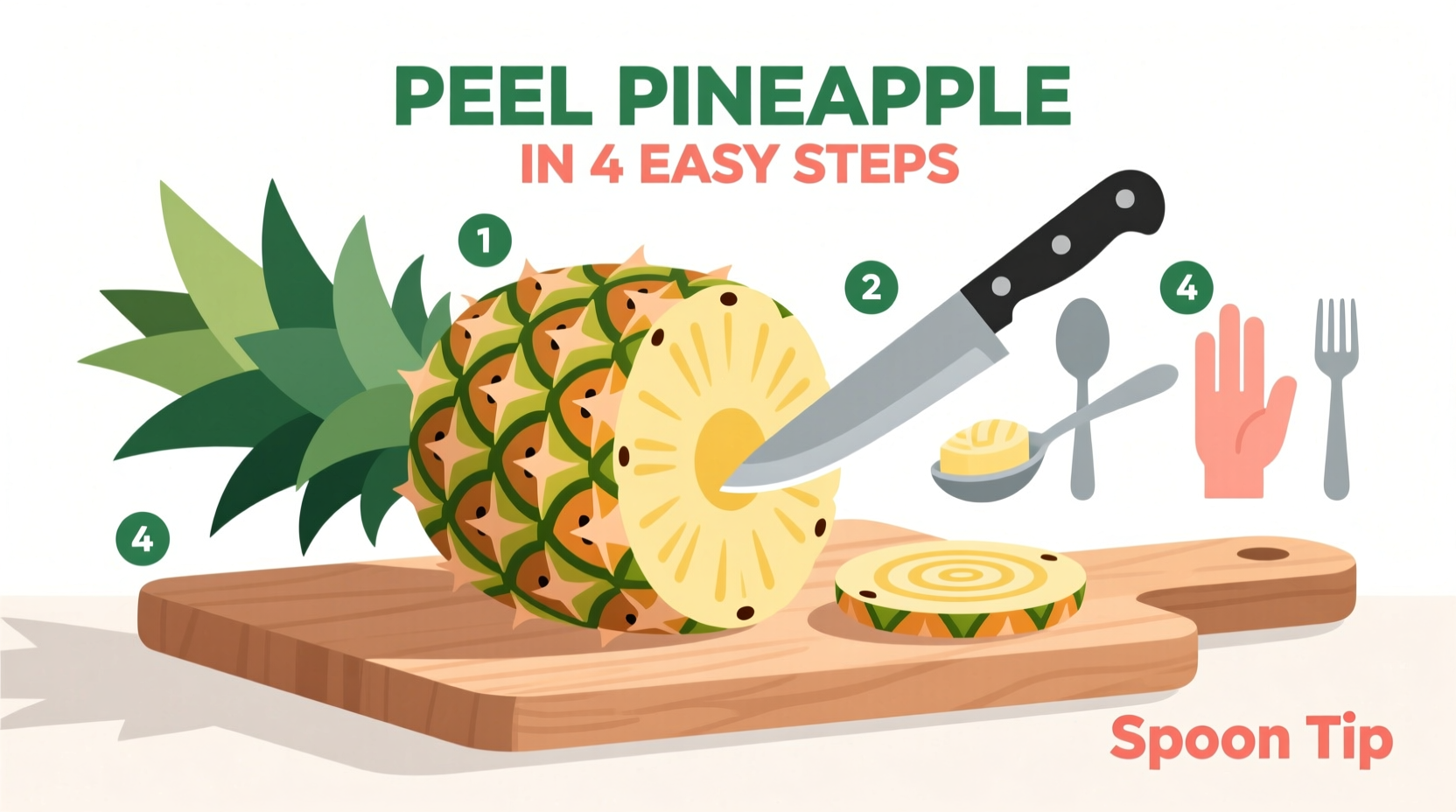
A poorly peeled pineapple often results in either wasted flesh or leftover tough core and spiky \"eyes.\" These eyes are not only unpleasant to eat but also difficult to remove if tackled haphazardly. Using a smart, systematic approach ensures maximum yield, better texture, and less cleanup. Plus, prepping pineapple correctly at home is far more economical and healthier than buying pre-cut versions, which often come with added sugars or preservatives and cost significantly more.
The Step-by-Step Method: Efficient Pineapple Peeling in 6 Steps
This method minimizes waste, removes all inedible parts, and produces neat, ready-to-eat chunks. Follow these steps carefully:
- Cut off the top and bottom. Place the pineapple on a stable cutting board. Use a sharp knife to slice about half an inch off the leafy crown and a similar amount from the base. This creates flat surfaces so the fruit can stand upright securely.
- Stand the pineapple upright. With both ends flat, the fruit will no longer roll. Position it vertically on the cutting board.
- Peel away the skin in vertical strips. Starting from the top, slice downward following the curve of the fruit. Cut just deep enough to remove the thick outer rind and the majority of the eyes. Rotate and repeat until all skin is removed. You’ll typically need 4–6 passes depending on the size.
- Remove remaining \"eyes\" diagonally. After peeling, some small brown spots may remain. Make shallow diagonal cuts along the spiral pattern of the eyes to eliminate them without removing too much flesh.
- Core and slice. Cut the pineapple into quarters lengthwise. Lay each quarter flat and slice out the tough central core—the fibrous, woody part running through the center. Discard the core or save it for smoothies or infusions.
- Cut into desired pieces. Slice each quarter into chunks, spears, or rings based on how you plan to use the fruit—whether for snacking, grilling, or adding to salads and desserts.
Bonus Efficiency Hack: The “Ring” Method (For Occasional Use)
If you prefer pineapple rings, keep the fruit whole after peeling. Use a large round cookie cutter or glass to punch out rings from each cross-section, then remove the inner core manually. However, this method wastes more flesh and isn’t as efficient as the vertical strip technique.
Do’s and Don’ts of Pineapple Preparation
| Do’s | Don’ts |
|---|---|
| Use a sharp, sturdy knife for clean cuts | Try peeling with a vegetable peeler—it won’t penetrate the thick skin |
| Work with a ripe but firm pineapple | Use a slippery or overly soft fruit—it's harder to control |
| Chill the pineapple before cutting for firmer texture | Leave cut pineapple at room temperature for over 2 hours |
| Store cut pineapple in an airtight container in the fridge | Wash the outside only after cutting—always clean it first |
| Label and date stored pineapple (lasts 5–7 days refrigerated) | Freeze uncut pineapple—it becomes mushy when thawed |
Expert Insight: What Chefs Recommend
“The key to fast, clean pineapple prep is working with gravity and structure. Stand it up, follow the grain, and cut with confidence. A well-peeled pineapple should feel like unwrapping a gift—not fighting a jungle fruit.” — Chef Rafael Mendez, Culinary Instructor & Tropical Food Specialist
Chef Mendez emphasizes that understanding the pineapple’s anatomy—its spiral eye pattern and cylindrical shape—makes all the difference. He advises home cooks to practice the method twice to build muscle memory. “After two pineapples, you’ll be faster than a pre-packaged produce aisle,” he says.
Real Example: Maria’s Kitchen Transformation
Maria, a busy mother of two in Miami, used to avoid fresh pineapple because her old method took 15 minutes and left her with uneven chunks and sticky hands. After learning the vertical strip technique from a local cooking class, she now preps a whole pineapple in under six minutes. She stores portions in reusable containers and uses them for breakfast skewers, yogurt toppings, and grilled kebabs. “It’s become my go-to fruit,” she says. “Even my kids help cut it now—safely, with supervision.” Her tip? “Always rinse the outside first. I once skipped it and tasted dirt in my smoothie.”
Checklist: How to Peel a Pineapple Like a Pro
- ☐ Wash the entire pineapple under cool water and scrub the skin
- ☐ Gather a sharp chef’s knife and stable cutting board
- ☐ Slice off the crown and base to create flat surfaces
- ☐ Stand the pineapple upright and peel skin in vertical strips
- ☐ Remove remaining eyes with diagonal cuts
- ☐ Quarter the fruit and remove the tough central core
- ☐ Cut into chunks and store or serve immediately
- ☐ Clean tools and wash hands—pineapple juice can irritate sensitive skin
Frequently Asked Questions
Can I use a pineapple corer tool instead?
Yes, but with caution. Spiral corers can be convenient but often remove too much edible flesh or get stuck in dense cores. They work best on medium-sized, uniformly shaped pineapples. For irregular or larger fruits, manual cutting offers more control and less waste.
How do I know if a pineapple is ripe before buying?
Look for golden-yellow skin (especially at the base), a sweet aroma at the stem end, and leaves that pull out easily. Avoid green-skinned fruit with dull color or fermented smells. A ripe pineapple should feel heavy for its size, indicating juiciness.
Is it safe to eat the core?
While technically edible, the core is extremely fibrous and tough. Most people find it unpleasant to chew. However, it’s rich in bromelain and fiber. Blend it into smoothies or use it to flavor water or vinegar infusions, but don’t eat it raw in large pieces.
Final Tips for Success
Practice makes perfect. Your first attempt might take longer, but each pineapple will improve your speed and precision. Keep your knife sharp, your workspace clean, and your fruit dry after washing to prevent slipping. If you're prepping multiple pineapples—say, for a party or meal prep—do one step at a time across all fruits (e.g., trim all tops, then peel all, etc.) to increase efficiency.
And remember: fresh pineapple loses sweetness and texture over time. For best flavor, consume within two days of cutting. If storing longer, add a splash of lime juice to slow browning and preserve freshness.
Take Action Today
Next time you see a fresh pineapple at the market, don’t walk past it. Grab one and try the method outlined here. In less than 10 minutes, you’ll have a bowl of sweet, golden fruit—ready to eat, share, or incorporate into your favorite recipes. Once you master this skill, you’ll wonder why you ever relied on canned or pre-cut options.




 浙公网安备
33010002000092号
浙公网安备
33010002000092号 浙B2-20120091-4
Comments
No comments yet. Why don't you start the discussion?